
Fixing Property Chain Breaks: A Common Use Of Bridging Loan
When seeking to buy a property before selling your current one, obtaining mortgage approval can be challenging.


To address this, property investors often opt for bridge loans, which serve as a temporary funding solution that bridges the gap between selling one property and purchasing another. Typically used to prevent chain breaks, a bridging loan can help manage the financial complexities of owning two properties.
Although bridging loans are frequently utilized to bridge the gap between the sale and purchase of properties, they serve various other purposes as well, such as financing property renovations, purchasing auction properties, and addressing business cash flow challenges. Bridging Trends, a report on bridging finance, indicates that in Q1 2021, 20% of loans were utilized to fund chain breaks, which is the most prevalent use. Despite a decrease from 23%, it remains the leading use for bridging finance.
As people become increasingly aware of the advantages of bridging loans, more are turning to this form of funding. To aid their clients, numerous peer-to-peer (p2p) lending platforms are now providing bridging loans.
This article will explain the concept of chain break finance and how bridging loans offer finance for chain breaks.
What Is A Property Chain?

A property chain is a sequence of buyers and sellers connected because each is purchasing and selling a property from one of the others. When one link in the chain breaks, the entire chain can fall apart, leading to significant delays and financial turmoil for those involved. Even if the delay is not caused by your end, it can still have an impact. Delays can persist for months, and in the most severe cases, transactions can ultimately collapse.
What Is Chain Break Finance?
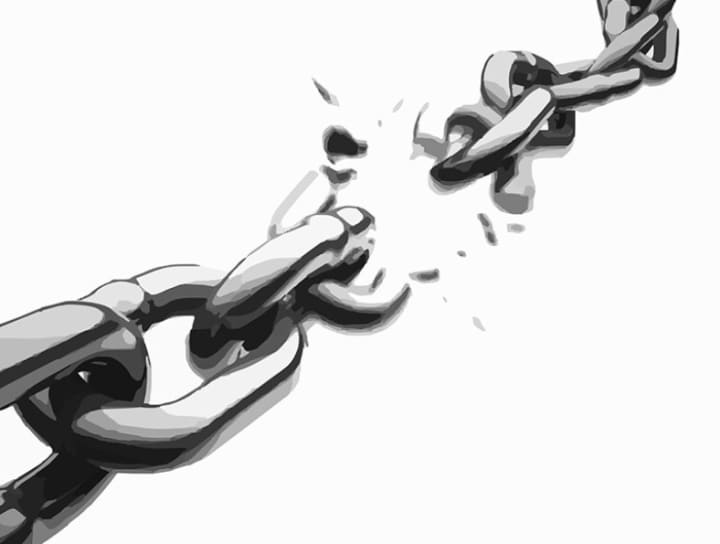
Chain break finance refers to a form of short-term funding, such as UK bridging loans are designed to provide rapid financing that bridges the gap between the current and intended funds. It enables you to purchase a new home before selling your current property. By securing this type of finance, you become a cash buyer, which enables you to continue with the purchase if your buyer withdraws, preventing the loss of your desired home. You may repay the loan when your property is sold and secure a mortgage on the new property if you require a significant amount of financing.
Chain break finance options, including bridging loans, offer fast financing to enable the purchase of a property in situations where a desirable home is available, but funds are lacking. Without quick access to financing, the property may be purchased by another buyer, resulting in a lost opportunity.
Having access to immediate funds places you in a stronger position as a cash buyer, which increases the likelihood of your offer being accepted. Additionally, you may be able to negotiate a reduction in the purchase price because the homeowner perceives you as a lower risk than a buyer waiting to sell their property or obtain mortgage approval.
How Does Chain Break Finance Work?

Bridging loans are available solely until the sale of your current property, with the loan amount needing to be repaid upon the sale's completion. If you have a mortgage on your previous property, the loan is generally secured against your new home. However, if you have adequate equity in your old property, it may be secured against it instead. Bridging lenders typically permit borrowing up to 80% of the property value.
Bridging loans typically have a loan term of one to twelve months, providing flexibility to accommodate different circumstances and allowing sufficient time to complete the property sale. Due to the heightened risk for lenders, the interest rate for bridging loans is typically higher than traditional mortgages. Therefore, a shorter loan term results in lower interest payments. Additionally, the larger the loan amount, the higher the interest payments.

Bridging loans can be either open or closed. Open bridging loans have no set end date, while closed loans have a fixed end date and require a clear exit strategy. While lenders do consider your current income and credit score when evaluating your application, they primarily focus on the viability of your exit strategy. Your exit strategy outlines how you plan to repay the loan, and lenders want to ensure that your old home has sufficient property value to repay the loan amount.
Failure to repay the bridging loan on time can result in the lender repossessing your property to recoup the loan amount. However, in most cases, you can negotiate an extension to the loan term to avoid repossession.
Bridging finance is a fast solution that can be arranged quickly, often with funds transferred to your bank account within one to two weeks.
Pros Of Using Bridging Loan

When facing a potential chain break, a fast bridging loan can provide a fast funding solution, often more suitable than a mortgage. Additionally, most lenders do not charge early repayment fees, which means you can pay off the loan amount without any penalty. However, it is essential to carefully review the loan agreement to ensure the terms and conditions meet your requirements.
Cons Of Bridging Loan

Before deciding to take out a bridging loan, it's essential to consider its drawbacks, which include the high-interest rate of 1-1.5% per month, translating to 13-19% per annum. In contrast, mortgage lenders charge only 5% per annum. Additionally, failure to repay the loan on time may result in the lender selling your property to recoup the loan amount.
Conclusion
Bridging loans remain a popular and versatile financial solution for dealing with chain breaks, offering several benefits and flexibility to borrowers to fulfill their financial obligations. They can be used to purchase a property before selling the current one. Still, borrowers should always consider the interest rate and additional charges to ensure they can afford to repay the loan.
About the Creator
Tom Jackson
Meet Tom Jackson, a talented content writer specializing in the finance niche.
Keep reading
More stories from writers in Confessions and other communities.
10 Times Rotten Tomatoes and I Disagreed
***Disclaimer*** I will be ranking these movies in the following manner: The greater the divide between Rotten Tomatoes and I, the higher up on the list (and I am referring to the critic's score, not the audience score). I will also show Rotten Tomatoes' score on each one in addition to my score. I am curious to know what everyone thinks, please let me know in the comments below!
By Madison "Maddy" Newton2 days ago in Geeks




Comments
There are no comments for this story
Be the first to respond and start the conversation.