
Will Pakistan be able to achieve its goals by attacking Afghanistan, or will further concerns arise?
Islamabad targets key Afghan cities as tensions over TTP intensify, raising fears of a broader regional conflict.

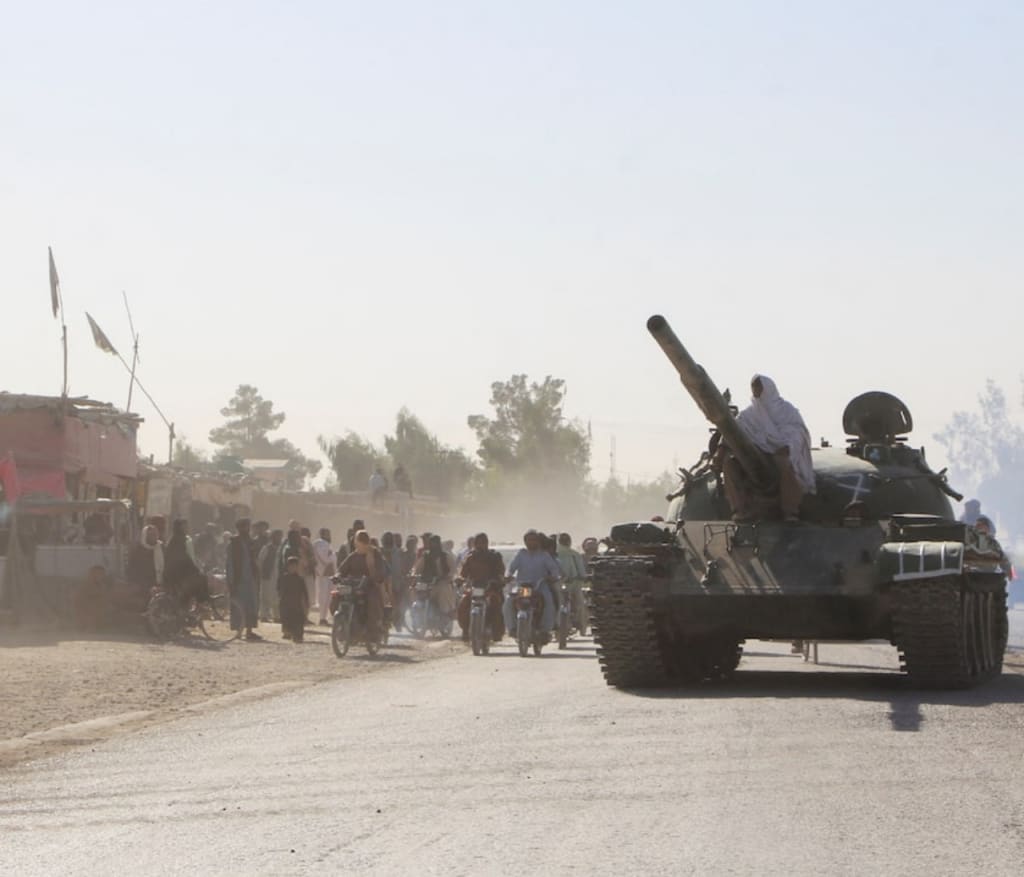
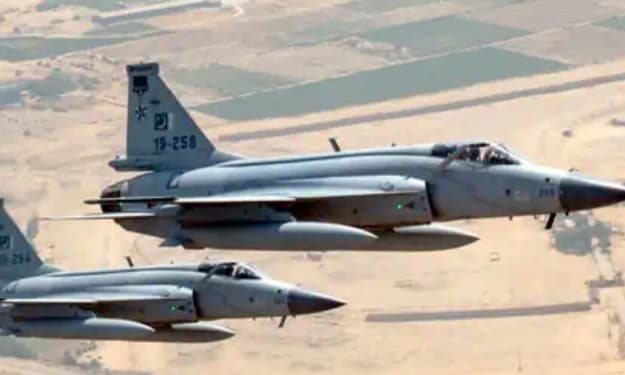
Pakistan carried out airstrikes on Friday in Afghanistan’s capital, Kabul, as well as in the key cities of Kandahar and Paktia near the Pak-Afghan border. Pakistani officials claimed that defensive targets were struck in these locations.
Although Pakistan has previously conducted airstrikes inside Afghanistan, this is the first time during the recent tensions between the two countries that major cities such as Kabul and Kandahar have been targeted.
Along with Kabul, Kandahar is a central city where the core political and military leadership of the Afghan Taliban government is based.
The airstrikes came at a time when Pakistan’s Defense Minister Khawaja Asif stated that “our patience has run out.” Addressing the Taliban government, he said, “It is now open war between us.” In a post on the social media platform X, he wrote that Pakistan had made every effort to normalize the situation directly and through friendly countries, and had pursued extensive diplomacy.
Afghan government officials claimed that more than 20 civilians were killed in the Pakistani airstrikes, a figure later confirmed by independent sources. Tensions remain high on both sides of the long Pakistan-Afghanistan border, and security forces are on high alert.
Iran has offered to mediate to reduce tensions between the two countries, while the United Nations and several friendly nations have urged both sides to de-escalate and engage in dialogue.
However, Kabul and Islamabad do not appear immediately willing to do so, and the core issue underlying the tensions remains unresolved—namely the matter of the Pakistani Taliban, or Tehrik-i-Taliban Pakistan (TTP). Pakistan has long demanded that the Afghan government prevent its territory from being used for terrorism against Pakistan. Islamabad alleges that the leadership of militant groups carrying out attacks inside Pakistan is sheltering in Afghanistan.
The Afghan government denies these allegations, maintaining that its territory is not being used for terrorist operations against any other country.
In such circumstances, how might Pakistan’s strategy of expanding the scope of airstrikes to Kabul and Kandahar affect the current tensions between the two countries?
Can Pakistan achieve its objectives through this approach, or does it risk further escalation?
Recent escalation marks a dangerous rise in tensions
Foreign affairs expert Michael Kugelman, who closely monitors political and defense matters in South Asia, said in a statement that “the current phase of violent actions between Pakistan and Afghanistan represents a dangerous escalation compared to past clashes.”
He noted that it appears Pakistan has moved beyond targeting the Pakistani Taliban and has effectively set its sights on the Taliban government itself. In response, the Taliban have vowed to continue actions against Pakistan.
He reminded that all this is happening despite several rounds of ceasefire and talks mediated by friendly countries between the two nations.
“Diplomatic efforts have not achieved much success, and the core issue of the Taliban providing shelter to the TTP remains unresolved.”
Kugelman added that “what is happening now is worrying, though not surprising.”
Can Pakistan achieve its objectives through airstrikes?
Afghanistan responded to Pakistan’s airstrikes. If Pakistan’s aim was to deter further attacks from Afghanistan, that does not appear to have been achieved.
On the same Friday, Afghanistan claimed it had carried out drone attacks at various locations inside Pakistan. Pakistan’s Information Minister Attaullah Tarar confirmed that drones were brought down in Swabi, Nowshera, and Abbottabad.
The question then arises: can expanding the scope of attacks help reduce the intensity of clashes?
“This is a very serious escalation. It may temporarily pause tensions, but it will not resolve the issue.”
“The fundamental problem is that the Afghans do not accept Pakistan’s position that their territory is being used for terrorism against Pakistan.”
He added that the Taliban likely do not want a war with Pakistan, but Afghans are deeply nationalistic and do not tolerate violations of their borders. “They will continue to respond to any kind of attack.”
He believes that expanding the scope of airstrikes could in fact have the opposite effect.
“It is true that Pakistan and Afghanistan under the Taliban are not comparable. The current government there is not elected, and there is opposition to the Taliban within Afghanistan.”
“However, these airstrikes could increase support for the Taliban within Afghanistan, because border violations are an issue that unites Afghans.
There is already resentment toward Pakistan in Afghanistan, and these strikes may further increase anti-Pakistan sentiment there.
Would a full-scale war resolve the core issues?
The apparent cause of the recent conflict is Pakistan’s insistence that the Afghan Taliban stop sheltering the TTP and other militant groups carrying out attacks inside Pakistan, and take action against them.
However, the Afghan Taliban continue to deny that their territory is being used for terrorist operations inside Pakistan.
“In my view, the TTP issue is only part of the matter. Pakistan’s deeper concern is the Taliban government’s improving relations with India.
“Pakistan would not want India to establish a presence in what it considers its backyard, and the Afghan Taliban have rapidly developed good relations with India.”
He noted that since the 1980s, Pakistan supported Afghans first against the Soviet Union and later supported the Taliban to ensure a friendly government in Afghanistan.
“Pakistan has long viewed Afghanistan as providing ‘strategic depth.’ If India establishes a presence there, that would not be acceptable to Pakistan.”
For this reason, the recent escalation is unlikely to resolve the issues. Instead, friendly countries will need to play a role, and both sides will have to engage in dialogue.
Is there a risk of real war?
Tensions remain high, with retaliatory attacks continuing from both sides. Experts on foreign affairs believe that such a situation is extremely serious and, if not de-escalated, could lead to a real war.
Michael Kugelman believes Pakistan remains firm in its position that Afghanistan is sheltering militants who carry out attacks against it.
He said that statements from the Afghan Taliban suggest they too are prepared to continue their attacks. “This is a very dangerous situation that could lead to real war.”
Meanwhile, Afghanistan expert Amin Saikal said it appears Pakistan is prepared to punish the Afghan Taliban for supporting the TTP.
“For quite some time there has been tension between the two. Now the Pakistanis seem to have decided to go for the jugular. They want to punish the Afghan Taliban for supporting the Pakistani Taliban. The Pakistani Taliban have carried out many attacks inside Pakistan in which many people have been killed.
He added that intensified tensions would be devastating for the Afghan people, who are already facing severe economic hardships.
About the Creator
Keep reading
More stories from Real content and writers in Chapters and other communities.
The Cave Part 6
If you have ever heard a tale about yourself that you cannot remember and doubtless think is made up, you will know how I felt when Tharkin related all that the eagle had seen of me before my memories were scattered. Of far distances and traveling companions that I did not recall, camping out under the stars and making our way to the mountains with deliberate purpose. The great bird had lost contact with my party once we entered the forests, and the seven other members were not seen again by him or his brethren since.
By Jamye Sharp13 days ago in Chapters
Sparrow on a Plank Chapter 18: Of Wild Parties and Annoyed Predators
The trip home was blessedly uneventful. There were sharks, whales, and the occasional seagull, but nothing attacked them or even appeared to follow them. Hajime and the other mages did a thorough search of the ship, looking for anything that didn't belong. They couldn't find anything, but that didn't mean that there wasn't anything there; it just meant that it was hidden rather well. Although they were sure that there was something hidden, they lacked the immediate means to deal with it.
By Jamais Jochim6 days ago in Chapters



Comments
There are no comments for this story
Be the first to respond and start the conversation.