
Pakistan vs Afghanistan Military Strength 2025: Full Comparison After Border Clashes
Afghanistan Military Strength 2025: What Weapons Do the Taliban Control?

Tensions between Pakistan and Afghanistan have reached a peak following border clashes on Thursday night and recent Pakistani Air Force strikes inside Afghanistan.
Both countries have claimed to have killed dozens of each other’s soldiers, seized border posts, and inflicted heavy damage on military targets.
Pakistan has named its ongoing military operations against Afghanistan Operation “Ghazab-ul-Haq.”
The United Nations, Turkey, Saudi Arabia, Malaysia, and several other Muslim countries have urged the leaders of Pakistan and Afghanistan to exercise restraint.
Meanwhile, Pakistan’s Defense Minister Khawaja Asif, in a post on X, warned Afghanistan’s interim government:
“Our patience has run out. Now there will be an open war between us. Pakistan’s army has not come from across the seas. We are your neighbors and we know your reality.”
Similar statements have also been issued by Taliban spokespersons and other Afghan leaders, threatening retaliation and war.
Many are now asking: what is the military strength of the two countries? Military experts say there is a significant difference between the military capabilities of Pakistan and the Afghan Taliban.
According to Global Firepower, in 2025 the world’s most powerful militaries included the United States, Russia, and China. Among 145 countries ranked, Pakistan was placed 12th — making it the 12th strongest military power in the world.
Pakistan’s armed forces are equipped with nuclear weapons. On the other hand, the Afghan Taliban lack sufficient military resources and face many challenges.
Air Force: A Key Component of Pakistan’s Military Strength
Pakistan allocated more than 2.55 trillion rupees (approximately $9 billion) for its armed forces in fiscal year 2025–26.
Pakistan’s armed forces include approximately 1.31 million army personnel, 110,000 navy personnel, and 78,000 air force personnel.
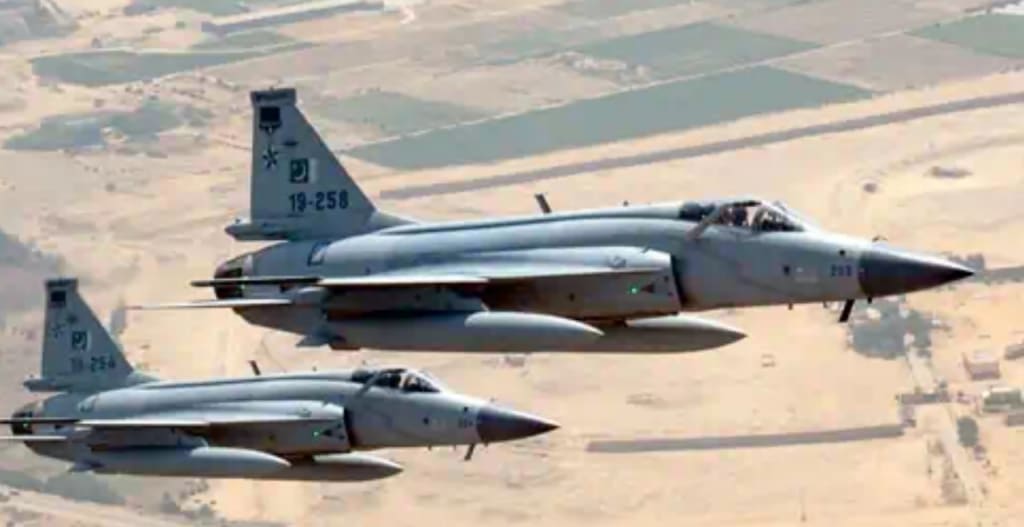
Regarding air power, the Pakistan Air Force has 11 squadrons. Each squadron typically consists of 17 to 18 fighter jets. According to Global Firepower data, Pakistan has a total of 1,399 aircraft. Of its 418 combat aircraft, 328 are fighter jets and 90 are bombers.
The most effective weapons of the Pakistan Air Force are its two fighter jets: the American-made F-16 and the Chinese-assisted JF-17 Thunder. The JF-17 was developed to be a lightweight, all-weather, day-and-night capable fighter jet. It was built at the Pakistan Aeronautical Complex in Kamra in collaboration with China’s Chengdu Aircraft Industry.
Beyond fighter jets, Pakistan possesses 64 transport aircraft, 565 trainers, 4 tanker fleets, and 430 helicopters, including 57 attack helicopters. It operates 116 air bases.
Pakistan’s Land Forces
According to Global Firepower, Pakistan has a total of 2,672 tanks.
The Al-Khalid is Pakistan’s modern tank, produced domestically with assistance from China and Ukraine. It is relatively light, weighing 46 tons, compared to Germany’s Leopard 2 and the United States’ M1 Abrams tanks, which weigh about 60 tons.
Initially, it was locally developed with Ukraine’s 6TD-2 liquid-cooled diesel engine capable of 1,200 horsepower and speeds of up to 70 km/h.
Pakistan has 2,604 armored vehicles.
In artillery, Pakistan possesses 662 self-propelled guns and 2,629 towed artillery pieces.
According to Global Firepower, Pakistan also has 600 multiple rocket launcher systems.
Pakistan’s Extensive Missile Program
Pakistan’s missile program includes cruise missiles, tactical battlefield ballistic missiles, and short- and medium-range ballistic missiles.
Its surface-to-surface rocket artillery includes the Fatah-1 and Fatah-2 missiles.
Pakistan claims it launched the Fatah-1 missile in May 2025 during a retaliatory operation against India named “Bunyan Marsous.”
The Fatah-1 is a modern short-range guided surface-to-surface missile with a range of up to 140 kilometers.
The Fatah-2, according to Pakistan’s military media wing (ISPR), has a range of up to 400 kilometers and precision targeting capability.
Tactical ballistic missiles include the Hatf-1 and Nasr missiles, capable of striking targets at ranges between 60 and 100 kilometers.
Short-range missiles include:
Abdali (200 km range)
Ghaznavi (300 km)
Ra’ad (350 km)
Babur (700 km)
Shaheen-1 (750 to 1,000 km)
Medium-range missiles include:
Ghauri-1 (1,500 km)
Ghauri-2 (over 2,000 km)
Ababeel (2,200 km)
Shaheen-2 and Shaheen-3 (2,500–2,750 km)
The Ababeel and Shaheen-3 are multiple re-entry vehicle (MRV) missiles designed to overcome ballistic missile defense systems. Experts consider them among Pakistan’s most capable missile systems.
According to Dr. Mansoor Ahmed, a strategic and defense studies professor at the Australian National University in Canberra, Ababeel is the first missile in South Asia capable of carrying multiple warheads up to 2,200 kilometers and striking different targets.
Pakistan’s Drone Program
Pakistan has steadily expanded its arsenal of military drones. It has purchased foreign drones and also developed domestic drone technology capable of surveillance, reconnaissance, and strike missions without pilots.
These drones can fly at high altitudes for long durations, conduct surveillance without being detected by radar, monitor troop movements, installations, and military bases, and carry out precision strikes.
Locally developed drones include the Shahpar series (1, 2, 3), Burraq, and Uqab.
Shahpar-3 is an advanced medium-altitude long-endurance combat drone capable of flying for 30 hours and equipped with missiles. Burraq was Pakistan’s first combat drone, used in 2015 against militants.
Uqab is used for tactical purposes such as surveillance and fire correction. Most of these drones are domestically produced, though some components such as engines are imported.
Pakistan has also imported advanced drones from Turkey and China, including the Bayraktar TB2, Bayraktar Akinci, and the Chinese CH-4, which are equipped with advanced technology for surveillance, strike missions, and long-range flight.
What Is Afghanistan’s Military Strength?
The weapons currently in the possession of the Taliban government come from three main sources: equipment from the former Afghan army, weapons left behind by U.S. and foreign forces after withdrawal, and new weapons obtained from various sources.
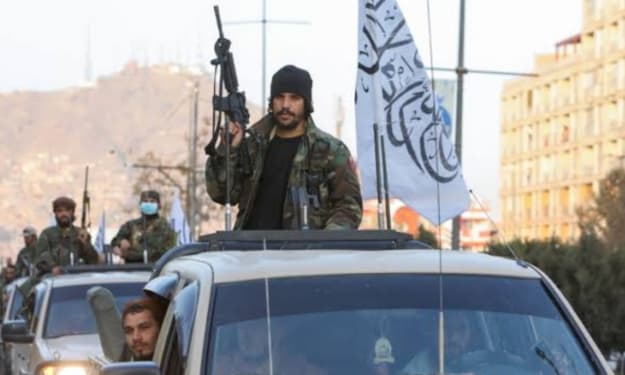
Experts say that recent videos of border clashes suggest Taliban forces primarily used light weapons against Pakistan, with little evidence of heavy or long-range weaponry.
Reports by the U.S. Special Inspector General for Afghanistan Reconstruction and the U.S. Department of Defense indicate that over the past 20 years, more than 1.6 million light and heavy weapons were provided to the former Afghan government. Approximately 70% — over 1 million weapons — ended up in Taliban hands.
Current Taliban light weapons include Kalashnikov rifles, American M16 and M4 rifles, M249 light machine guns, PKM heavy machine guns, M240 machine guns, grenade launchers, RPG-7 and AT-4 rocket launchers, and anti-tank missiles.
Pentagon reports state that heavy armored vehicles, aircraft, and other equipment supplied to the former Afghan army were also seized by the Taliban.
These include 122mm D-30 howitzers — an estimated 100 to 120 still remain in Afghanistan.
Other weapons include 155mm howitzers, Russian-made ZU-23-2 anti-aircraft guns, and older Soviet-era systems.
In 2024, the Taliban displayed heavy weapons during a military parade at Bagram Air Base, including Scud (R-17) and Elbrus R-300 missiles with ranges of about 300 kilometers.
The Luna missile (also known as Frog-7), Grad rocket launchers, Milan anti-tank missiles, and other launch systems capable of firing up to 35 kilometers were also displayed.
These weapons have reportedly not been used for at least three decades. Some are stored in the Ministry of Defense depots and others in mountainous areas such as Panjshir.
The Taliban government claims to have reactivated some of these weapons, but their technical condition and combat readiness remain unclear.
One major area of Pakistan’s superiority is its air force and modern fighter jets, as the Taliban lack a comparable air force.
The Taliban have repaired several helicopters from the former Afghan Ministry of Defense and trained pilots, but their operational readiness remains uncertain.
According to Bismillah Taban, a former Afghan Interior Ministry official and security expert, the United States did not fully equip the Afghan Air Force in its final years and destroyed some of its air weapon stockpiles before withdrawal — which is why the Taliban do not have access to air-to-air weapon systems.
According to a Pentagon report, aircraft seized by the Taliban include C-208 planes, MD-530 helicopters, Black Hawk helicopters, A-29 aircraft, Mi-17 transport helicopters, Mi-24 attack helicopters, and MD-500 light attack helicopters.
The Taliban claim to have approximately 60 aircraft and helicopters.
U.S. reports indicate that nearly 61,000 Humvees and Rangers, along with hundreds of armored vehicles, fell into Taliban hands. However, a former Afghan security official noted that rubber tires on some armored vehicles posed challenges during combat.
After fighting U.S., NATO, and former Afghan government forces for nearly two decades, the Taliban gained extensive experience in guerrilla warfare. Experts say this remains the backbone of their military strategy.
Following border clashes in October 2025, security expert Bismillah Taban said recent videos and observations suggest the Taliban still fight not as a conventional army but as a lightly armed guerrilla force.
Their strategy relies on ambush and surprise attacks.
About the Creator
Keep reading
More stories from Real content and writers in Chapters and other communities.
Pakistan–Afghanistan Border Tensions Escalate: Taliban Claims Retaliatory Strikes After Pakistani Airstrikes in Kabul, Kandahar
Taliban government spokesperson Zabihullah Mujahid announced in a post on X that Pakistani forces had carried out bombings in parts of Kabul, Kandahar, and Paktia.
By Real contenta day ago in Chapters
The Cave Part 6
If you have ever heard a tale about yourself that you cannot remember and doubtless think is made up, you will know how I felt when Tharkin related all that the eagle had seen of me before my memories were scattered. Of far distances and traveling companions that I did not recall, camping out under the stars and making our way to the mountains with deliberate purpose. The great bird had lost contact with my party once we entered the forests, and the seven other members were not seen again by him or his brethren since.
By Jamye Sharp13 days ago in Chapters
Sparrow on a Plank Chapter 18: Of Wild Parties and Annoyed Predators
The trip home was blessedly uneventful. There were sharks, whales, and the occasional seagull, but nothing attacked them or even appeared to follow them. Hajime and the other mages did a thorough search of the ship, looking for anything that didn't belong. They couldn't find anything, but that didn't mean that there wasn't anything there; it just meant that it was hidden rather well. Although they were sure that there was something hidden, they lacked the immediate means to deal with it.
By Jamais Jochim6 days ago in Chapters



Comments
There are no comments for this story
Be the first to respond and start the conversation.