


In the beginning, there was nothing—only silence and space. Then, from the chaos of the early universe, stars were born. One exploded, scattering its heavy elements through the galaxy. From this stellar ash, our Sun emerged, and around it, the planets spun into being.
Among them was Earth.
At first, Earth was fire. Its surface seethed with lava, battered by meteors and cloaked in poisonous gas. But within this chaos lay the seeds of life. Water arrived—perhaps carried by icy comets—and pooled into oceans. Lightning struck. Molecules danced. Then, something miraculous happened.
Life sparked.
Tiny, single-celled organisms appeared in the oceans, clinging to heat vents deep beneath the surface. They multiplied, adapted, and endured. Time passed, counted not in days or years, but in eons. These microorganisms transformed the atmosphere by producing oxygen, paving the way for more complex beings.
Multicellular life arose—sponges, corals, and strange jelly-like creatures. Then came the Cambrian Explosion, a flourish of diversity that filled the seas with eyes, claws, and fins. Life crept from the oceans onto land, clad in armor and fronds, and learned to breathe air and bask in the sun.
Forests rose. Dinosaurs thundered across the land. For 160 million years, they ruled. Then, without warning, a rock from space struck Earth. The sky darkened. The age of dinosaurs ended.
But life did not stop. From the ashes, mammals emerged—small, clever, and adaptable. Among them, one species began to change everything.
Humans.
They stood upright, made tools, and painted their thoughts on cave walls. They spread across continents, forming tribes, then cities, then civilizations. They built pyramids and temples, sailed across oceans, and charted the stars. They dreamed of gods and reasoned with science.
They also fought, conquered, and consumed. They cut down forests, burned fuel, and changed the air. Still, they sang. They loved. They wrote stories.
The Earth turned, quietly holding them all.
Her glaciers melted and reformed. Her mountains shifted and seas rose. Animals came and went—mammoths, saber-toothed cats, giant sloths—each leaving traces in bones and dust. In deep caves and coral reefs, Earth kept her secrets.
Then came an age of machines. In a blink of geological time, humans built cities of glass and steel. They spoke to each other across continents with invisible waves. They flew. They walked on the Moon. They peered into atoms and reached for stars.
And Earth watched.
Her forests shrank. Her oceans warmed. The air thickened with carbon. Coral reefs bleached; glaciers receded. Storms grew fierce. Species vanished. Humanity faced its reflection and asked: what future are we making?
But Earth is resilient, and so are the beings upon her. People began to listen. Scientists raised alarms. Children marched in streets. New technologies rose—clean energy, regenerative agriculture, protection for wild places. Ancient wisdom was remembered. Some began to see Earth not as a resource, but as a relative.
The planet, after all, is not just a stage, but a living character—a blue orb dancing in the void, cradling oceans, forests, deserts, and dreams. She is home to elephants and plankton, redwoods and fungi, hummingbirds and humans.
And her story is not done.
From the swirl of cosmic dust to the breath of a child, Earth’s chronicle is a miracle of time and transformation. It is written in stone, in DNA, in the rustle of leaves and the rhythm of tides. It is sung by whales in the deep and whispered by winds across deserts.
Her story is one of change—sometimes slow as the drift of continents, sometimes sudden as fire. It is a story of survival, of extinction and renewal. And now, as the Anthropocene dawns, it is a story shared, one where humanity must choose how it ends—or how it begins again.
The Earth waits—not passively, but patiently. She does not need saving. It is we who need to save ourselves, to remember that we are of her, not above her.
This is Earth’s living chronicle. A tale billions of years in the making, and still turning with each sunrise.
About the Creator
Keep reading
More stories from Zeeshan Muhammad and writers in Chapters and other communities.
The Farmer and His Sons
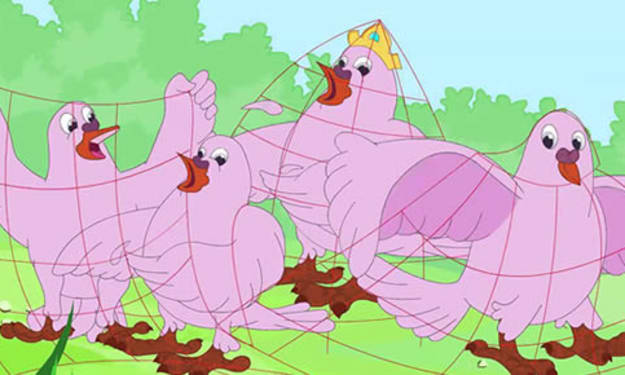
An old farmer had three quarrelsome sons who never agreed on anything. Worried about their future, he decided to teach them a lesson. He gave them a bundle of sticks tied together and asked each son to break it. They tried, but none could. Then, he untied the bundle and gave them one stick each. They easily broke them. The farmer said, “If you stay united like the bundle, no one can harm you. But if you quarrel and separate, you will be weak.” The sons understood and promised to live in harmony.
By Zeeshan Muhammad10 months ago in Chapters
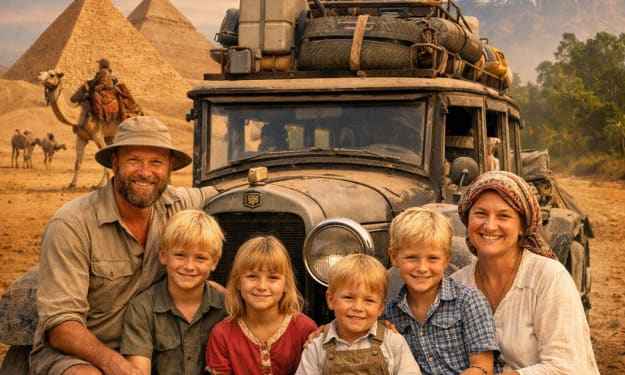
From Two Travelers to a Family of Six: The 22-Year Journey Around the World in a 1928 Car
In the late 1920s, when long-distance travel was slow, roads were rough, and the world was still largely unexplored by automobiles, a young German couple made a decision that would turn into one of the most extraordinary journeys in modern travel history. What began as a simple road trip in 1928 eventually became a 22-year global adventure. They left home as two travelers but returned as a family of six.
By Irshad Abbasi 2 days ago in Chapters
Guard Your Battery
Why are some people so attractive just by standing there? It’s not because they are "likable," but because they don’t need everyone to like them. I realized later that truly charismatic people allow themselves to be criticized, but they never criticize themselves. They never try to please the world; instead, the world stops to watch them.
By Emily Chan - Life and love sharing6 days ago in Poets


Comments (1)
i hope all people lik my story,