
The history of a art in Byzantium/Istanbul P.2
Istanbul’s Timeless Blend of History, Art, and Culture

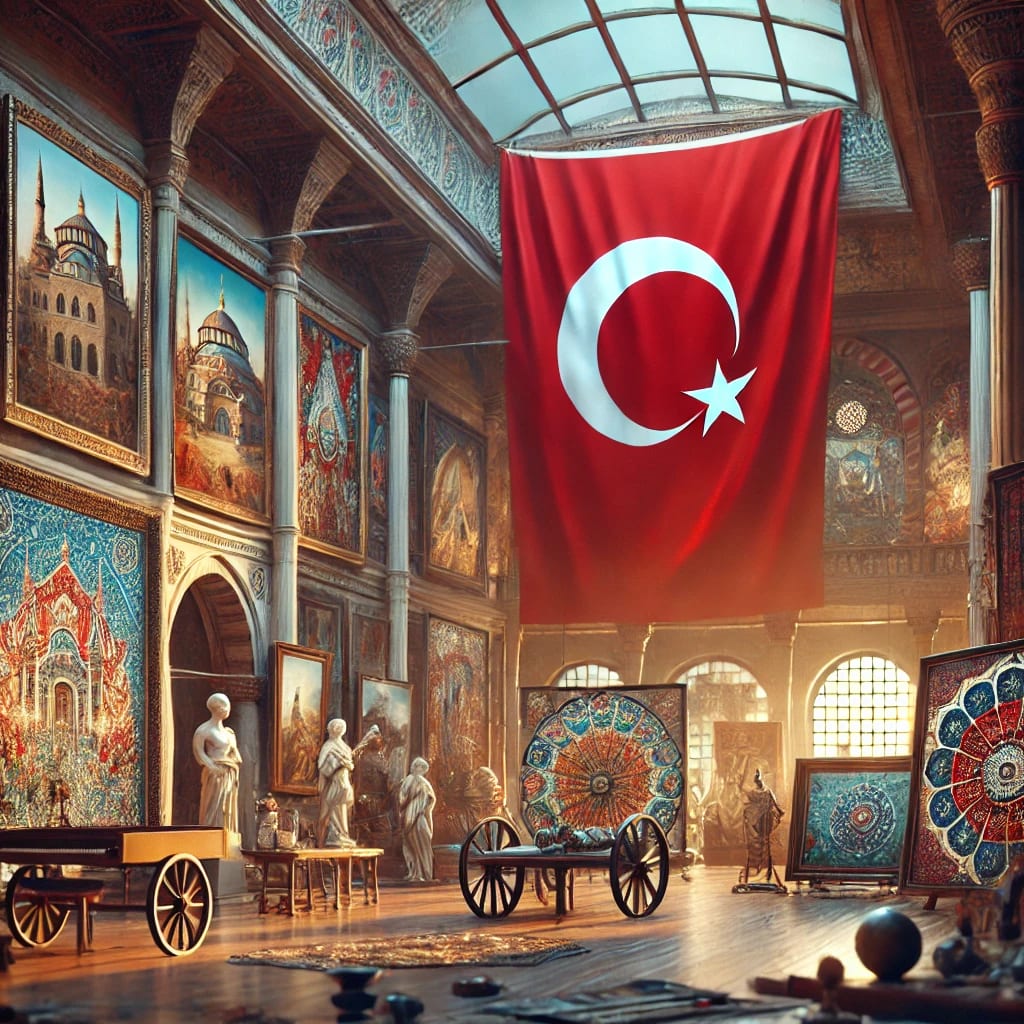
Istanbul, a city where East meets West, holds a unique place in the world’s history. Known historically as Byzantium and later as Constantinople, it has served as the capital of three great empires: Roman, Byzantine, and Ottoman. Each era has left an indelible mark on the city’s culture, architecture, and art, making it a living museum of human civilization. The city’s layered history is reflected in its diverse cultural and artistic heritage, which continues to inspire and captivate visitors from around the globe.
One of Istanbul’s most intriguing historical sites is the Basilica Cistern, an ancient subterranean reservoir constructed in the 6th century during the reign of Byzantine Emperor Justinian I. This massive underground structure, located near the Hagia Sophia, was designed to store and supply water to the city, particularly to the Great Palace of Constantinople. Spanning an area roughly the size of two football fields, the cistern is supported by 336 marble columns, many of which were recycled from earlier Roman structures. Each column rises to a height of nine meters, supporting the vaulted ceilings above and creating an otherworldly atmosphere.
Over the centuries, the Basilica Cistern continued to serve the local population. Historical records from 1565 describe how the cistern was filled with fish, and locals would navigate its waters in boats. Today, visitors can still observe fish swimming in its clear waters, a poignant reminder of its enduring legacy. The cistern’s haunting beauty and historical significance have also made it a popular filming location, most notably featured in the James Bond film “From Russia with Love,” where 007 uses a boat to covertly spy on the nefarious activities of Spectre.
A particularly fascinating feature of the cistern is the pair of Medusa heads used as bases for two columns. These heads are positioned sideways and upside down, which has given rise to various myths. One popular legend suggests that the heads were placed in such a manner to negate Medusa’s petrifying gaze, which could turn onlookers to stone. However, the more practical explanation is that these ancient relics were repurposed from earlier Roman temples and used as convenient building materials, exemplifying the ingenuity and resourcefulness of the Byzantines.
Beyond the Byzantine era, Istanbul’s Ottoman legacy is equally compelling, particularly the tradition of the hammam, or Turkish bath. Introduced as places of physical and spiritual purification, hammams evolved into vibrant social centers where people gathered to relax, socialize, and conduct business. The Zeyrek Çinili Hammam, located in the historic Fatih District, is a prime example of this tradition. Built during the reign of Süleyman the Magnificent by the renowned Ottoman architect Sinan, often called the Michelangelo of the East, the hammam stands as a testament to the architectural brilliance of the Ottoman Empire.
After undergoing a 13-year restoration, the Zeyrek Çinili Hammam reopened to the public, revealing a trove of historical treasures. During the restoration, fragments of the original 10,000 tiles, adorned with 37 unique patterns, were discovered. These exquisite 16th-century Iznik tiles, now displayed in an adjacent museum, highlight the intricate craftsmanship that characterized Ottoman art. The museum also features artifacts associated with the hammam ritual, providing visitors with a deeper understanding of this rich cultural tradition.
Istanbul’s artistic heritage extends beyond its historical sites to embrace the modern era. The city is home to a thriving contemporary art scene, shaped by a blend of traditional influences and modern innovations. The Istanbul Modern, Turkey’s first contemporary art museum, stands at the forefront of this movement. Designed by the renowned architect Renzo Piano, the museum’s striking building houses a diverse collection of works that reflect the country’s dynamic artistic evolution.
Among the notable artists featured at the Istanbul Modern is Cihat Burak, whose triptych “Death of a Poet” honors the legacy of Nazim Hikmet, one of Turkey’s most revered poets. Hikmet, who spent 14 years in prison for his political beliefs, is depicted in the painting alongside lines from his banned poetry. The artwork serves as a powerful testament to Hikmet’s enduring influence and the resilience of artistic expression in the face of adversity.
Fahrelnissa Zeid, another pioneering figure in Turkish art, exemplifies the country’s avant-garde spirit. As one of the first women to attend art school in Istanbul, Zeid merged Islamic geometric patterns with European abstraction, creating a unique visual language that earned her international acclaim. Her kaleidoscopic, immersive works, such as the five-meter-wide piece now housed in the Istanbul Modern, reflect her innovative approach and significant contributions to modern art.
Continuing the legacy of artistic innovation, Bedri Baykam, a prominent neo-expressionist, uses his work to critique Western perceptions of the East. His 1987 painting juxtaposes elements from Ingres’ “Turkish Bath” and Gérôme’s “Grand Bath at Bursa,” offering a thoughtful examination of Orientalism—the depiction of Eastern cultures by Western artists. Baykam’s work challenges these exoticized portrayals, inviting viewers to reconsider the complexities of Eastern identity.
Istanbul’s rich tapestry of history and art is a testament to its enduring significance as a cultural crossroads. From its ancient Byzantine and Ottoman roots to its vibrant contemporary art scene, the city continues to captivate and inspire. As Istanbul undergoes a cultural renaissance, with new galleries, museums, and art fairs like Istanbul Contemporary and the Biennale, it solidifies its position as a global cultural powerhouse. Art in Istanbul serves as a bridge between its storied past and its hopeful future, fostering dialogue and understanding in an ever-changing world.Another cornerstone of Istanbul’s rich cultural fabric is the Ottoman hammam, or Turkish bath, introduced as a means of physical and spiritual purification. Over time, these baths became social hubs. The Zeyrek Çinili Hammam, located in Istanbul’s Fatih District, exemplifies this heritage. Built during the reign of Süleyman the Magnificent by the celebrated architect Sinan, the hammam recently reopened after a 13-year restoration. This extensive work uncovered hundreds of fragments from the original 10,000 tiles that adorned its walls, now on display in a dedicated museum showcasing the intricate 16th-century Iznik tiles and artifacts related to the hammam ritual.
Turkey’s modern art scene is a unique blend of tradition and a desire to connect with the West, rooted in the Ottoman Empire’s westernization efforts. Contrary to popular belief, Islam does not universally prohibit the depiction of human and animal forms, as evidenced by centuries of Islamic cultural production. A notable figure in this tradition is Osman Hamdi Bay, the founder of Istanbul’s Archaeology Museum, whose painting “Girl Reading the Quran” recently sold for £6.3 million, setting a record for Turkish art.
Istanbul Modern, Turkey’s first contemporary art museum, offers a comprehensive introduction to modern Turkish art, featuring both figurative and abstract works. The museum’s new building, designed by architect Renzo Piano, houses works by significant Turkish artists. Cihat Burak’s triptych “Death of a Poet” memorializes Nazim Hikmet, a poet exiled for his leftist beliefs. Fahrelnissa Zeid, a pioneering woman in the Turkish avant-garde, combined Islamic geometric forms with European abstraction, earning her international acclaim. Bedri Baykam, a key figure in Turkey’s neo-expressionism, critiques Orientalism through works that reinterpret classic Western depictions of the East.
Istanbul’s art scene is thriving, with new galleries, museums, and cultural events like the Istanbul Biennale contributing to a renaissance. Art in Turkey serves as a critical medium for engaging with the country’s complex past and shaping a more inclusive future. Istanbul’s layered history—from its Roman and Byzantine roots to its Ottoman and modern republic eras—continues to inspire a dynamic and ever-evolving cultural landscape.
About the Creator
Ahmed mohsin
As a passionate history enthusiast, I weave captivating tales inspired by real events, with a love for movies, dramas, manga, and anime, where every story carries the echoes of history with the excitement of the fictional worlds I adore.
Keep reading
More stories from Ahmed mohsin and writers in Chapters and other communities.
The history of art in Byzantium/Istanbul P.1
Did you know Istanbul was once called Byzantium, and later, Constantinople?” Ali asked, looking over the bustling city. “It’s incredible how this place has been the capital of three mighty empires—Roman, Byzantine, and Ottoman.”
By Ahmed mohsin12 months ago in Art
Bruce Lee and The God of War: Kuan Ti
It starts with love.. The Power to the God Of War and Wealth Walk into a Chinese restaurant (even in Oklahoma, USA), a Chinese police station, a kung fu martial arts studio or even a Chinese temple and you often see a red faced warrior holding a heavy quan-do (spear like weapon).
By WILD WAYNE : The Dragon King12 days ago in Chapters
Is Living For Your Hobbies A Good Thing
When we live life do we do so for our hobbies or do we just live life to live life. Living life for your hobbies is a good thing but how can we live life for the hobbies that we have? Is it just doing the hobbies that we enjoy. Is it to make our lives the way we want to with doing the hobbies that make life the best it is for us. The more we put our hobbies and life together the more we will be living life for the hobbies that we have, and yes living for your hobbies is a good thing because, you get so much more out of life when you put your hobbies into your life. Reading, writing, blogging, re-organizing things. Just live life the way that works for you. Figure out what hobbies work for you and you will have so much more happening in life as you figure out how to put your life and hobbies together. The more you put your hobbies and life together the more you will be living for the two things and the better you will feel if you try to do this.
By Louise Barraco7 days ago in Chapters


Comments
There are no comments for this story
Be the first to respond and start the conversation.