
The history of art in Byzantium/Istanbul P.1
Echoes of Empires: The Artful Heritage of Istanbul Where East Meets West in a Tapestry of Time
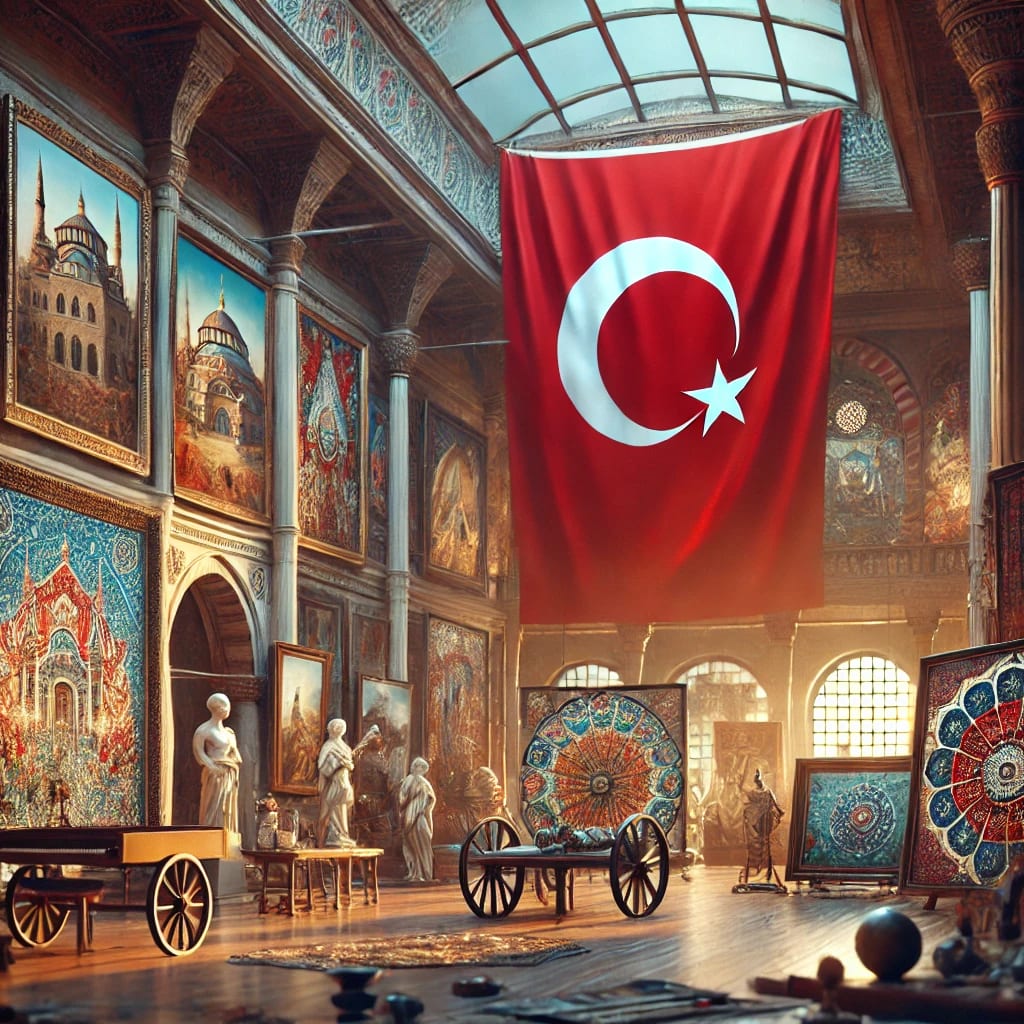
Did you know Istanbul was once called Byzantium, and later, Constantinople?” Ali asked, looking over the bustling city. “It’s incredible how this place has been the capital of three mighty empires—Roman, Byzantine, and Ottoman.”
Sema nodded, gazing across the Bosphorus. “It’s fascinating how the city bridges Europe and Asia, not just geographically but culturally too. Imagine the blend of art from these regions—Europe, Asia, and the Middle East—all in one place.
Exactly,Ali said, pointing to the Hagia Sophia in the distance. “From ancient art like Roman sarcophagi to the Ottoman’s intricate tiles in the Blue Mosque, the art here tells a story of its own.
Sema smiled, “Remember how Alexander the Great left his mark here? His legacy in Asia Minor is legendary. And Emperor Constantine? Moving the Roman Empire’s capital to Constantinople in 330 CE was such a pivotal moment.”
Ali chuckled. “Yeah, and then the Ottomans came in 1453, adding their rich cultural layers. It’s amazing how their influence lasted until 1922.”
“And now,” Sema added, “modern Turkey is carving its artistic path. The Istanbul Archaeology Museum is like a treasure trove with over 60,000 artifacts. Have you seen the Alexander Sarcophagus? It’s such a masterpiece!”
Ali’s eyes lit up. “I have! The detail is insane—battle scenes, hunting scenes—it’s like stepping into history. And to think it’s not even Alexander’s tomb but likely that of King Abdalonymus, made king by Alexander himself.”
Sema leaned in. “And did you notice the polychrome traces on the sarcophagus? Those vibrant colors must’ve been so vivid. It’s like seeing history come alive!”
“Totally,” Ali agreed. “And then there’s the Basilica Cistern. Can you believe they repurposed Roman sculptures to build it? The Medusa heads there are so eerie yet so ingenious.”
Sema nodded thoughtfully. “It’s a testament to how resourceful they were. And the cistern’s story, from supplying water to serving as a movie set for James Bond, is just wild.”
Ali grinned. “Speaking of ingenuity, the Zeyrek Çinili Hammam is another gem. The restoration unearthed so many unique tiles. It’s like stepping back in time.”
“And don’t forget Istanbul Modern,” Sema added excitedly. “It showcases contemporary Turkish art beautifully. I love how it blends traditional elements with modern influences.”
Ali glanced at his watch. “We should visit again soon. There’s always something
In the heart of Istanbul, the rich tapestry of history comes alive through its art, blending the city’s Roman, Byzantine, Ottoman, and modern influences. Three Turkish artists showcase the evolution of this legacy in the city’s vibrant art scene today.
First, there’s Cihat Burak, whose triptych Death of a Poet brings a distinctly European art form to life. His portrait of Nazım Hikmet—banned poet, leftist activist, and exile—captures the poet’s tumultuous life. Hikmet spent 14 years in prison, with his poetry forbidden and his exile in Russia marking his final years. Burak’s painting bursts with lines from Hikmet’s most celebrated poems, emerging from the confines of his prison cell, while birds flying from the scene symbolize the Peace Prize Hikmet received in 1950. The central panel, depicting his death, serves as a powerful reminder of the poet’s enduring influence on generations of protestors.
Next, Fahrelnissa Zeid stands as an exceptional figure in Turkish art. As one of the first women to attend art school in Istanbul, she was not only a princess but also a trailblazer in the Turkish avant-garde. Her works, inspired by her aerial view of Baghdad, blend Islamic geometric art with European abstraction. Zeid’s kaleidoscopic creations, like the immersive five-meter wide piece now housed in the Istanbul Modern, are radical, bold, and reflect her boundary-pushing approach. She also became the first female artist to showcase a solo exhibition at the Institute of Contemporary Arts in London in 1954.
Then, there’s Bedri Baykam, a prominent figure in neo-expressionism in Turkey. His 1987 work draws inspiration from Western depictions of the East—specifically Ingres’ Turkish Bath and Gérôme’s Grand Bath at Bursa. Baykam critiques the romanticized, often exoticized visions of the East that Western artists like Gérôme and Ingres conveyed through their paintings of harems and baths—places the artists themselves never had access to. This critique of “Orientalism” plays a crucial role in how modern Turkish artists view the intersection of East and West.
Istanbul itself has always been a bridge between continents—Europe and Asia—and this intersection is reflected in the art that continues to thrive here. The city is experiencing a cultural renaissance with new galleries, museums, and art fairs like Istanbul Contemporary and the Istanbul Biennale propelling its rise as a cultural capital. This thriving art scene engages deeply with Turkey’s complicated past, offering a way forward toward a more inclusive future.
The history of Istanbul’s art can be traced back to ancient times, from the Hellenistic art left behind by Alexander the Great in 335 BCE, to the monumental Byzantine structures like Hagia Sophia and the Basilica Cistern, a massive underground reservoir built during Emperor Justinian I’s reign. The Ottoman Empire, too, left its mark on the city, with their great monuments and artistic contributions still visible today. The Archaeology Museum in Istanbul holds 60,000 artifacts, including the famous Alexander Sarcophagus, a lavish tomb that offers insight into the history of the region.
In the museum, we find remnants of an ancient world where Greek and Persian influences merged. The Alexander Sarcophagus is a testament to this cultural fusion, depicting battle scenes between Alexander the Great and King Darius III, as well as a symbolic hunting scene that unites the two cultures. The vivid colors still visible on the sarcophagus—a rarity in ancient sculpture—remind us that classical art was once painted, showcasing the beauty of polychrome artwork.
Below the city, in the eerie Basilica Cistern, we see another example of Istanbul’s intricate history. Built in the 6th century, the cistern was a marvel of Byzantine engineering, once holding 100,000 tons of water to supply the city. Among its 336 columns, some are adorned with Medusa heads—symbolizing both the practical reuse of older sculptures and the mythical power of Medusa herself. This blending of the ancient and the modern continues to shape Istanbul, both in its art and its identity.
From ancient ruins to contemporary works, Istanbul’s artistic landscape is a vibrant reflection of its rich, multifaceted history. Whether through the works of Cihat Burak, Fahrelnissa Zeid, and Bedri Baykam, or the city’s iconic monuments and museums, art continues to play a vital role in shaping the city’s future, making Istanbul a dynamic cultural hub, where East meets West in a visual and philosophical dialogue.
About the Creator
Ahmed mohsin
As a passionate history enthusiast, I weave captivating tales inspired by real events, with a love for movies, dramas, manga, and anime, where every story carries the echoes of history with the excitement of the fictional worlds I adore.
Keep reading
More stories from Ahmed mohsin and writers in Art and other communities.
How this Japanese artist helped saving Japan’s legacy
In 1639, Japan closed its borders. It cut itself off from the outside world. Foreigners were expelled. Western culture was forbidden. Entering or leaving Japan was punishable by death. This situation lasted over 200 years. During this time, a unique Japanese art form developed. It was art for the people and was consumed widely.
By Ahmed mohsinabout a year ago in Art
Jim Sloan
By Brian D’Ambrosio At 90, Jim Sloan has lived several lifetimes’ worth of work—carpenter, sign painter, excavator, sawmiller, road-builder and the go-to rattlesnake remover of Galisteo, New Mexico. Art may be the through-line, but it has never been the source of his income, nor the center of his universe. Sloan has always kept one foot in the studio and the other in the soil, without bothering to decide which world he truly belongs to. The truth is that he fits cleanly into neither, and he has long since stopped trying.
By Brian D'Ambrosio 5 days ago in Art
How to Succeed at the Benson Directory®
Congratulations and welcome to the Benson Directory® employee #22391! As our newest call handler, you will have the privilege of speaking with dozens of unique and interesting people on a daily basis as well as the opportunity to earn bonuses for high performance. Contained within this handbook you will find a set of ease to follow instructions designed to help you settle in to your new role and begin paving the way to success.
By S. A. Crawford2 days ago in Fiction



Comments
There are no comments for this story
Be the first to respond and start the conversation.