Part 1
Roundball Rocked: With NBA Return Looming, NBC Purges Scripted Roster
NBC is making a significant shift in its programming strategy as it prepares for the return of NBA broadcasts in the 2025–26 season. The network is reportedly reducing its scripted content to accommodate a robust slate of live basketball coverage, marking a major pivot in its primetime lineup.
By Rasel Ahmed8 months ago in Chapters

‘Found’ Canceled By NBC After 2 Seasons. Content Warning. AI-Generated.
NBC has officially canceled its drama series Found after two seasons, concluding the show’s run following its Season 2 finale in May 2025. The decision comes despite the series' strong initial performance and critical acclaim.
By Rasel Ahmed8 months ago in Chapters

Vanguard: The Rise of the Arc Sentinels
The grime of Veridia City clung to Sam like a second skin. Ten years at the orphanage had taught him the art of being invisible, of being a fleeting shadow moving through backstreets that reeked of hopelessness and desperation. Veridia's steel skyscrapers pierced a gunmetal horizon that seemed endless, landmarks to a wealth that only a select few enjoyed, the rest living in the squalor that churned beneath.
By Md. Al Amin8 months ago in Chapters
2025 India-Pakistan War: Nuclear Tensions, Drone Strikes & Global Concerns
The 2025 India-Pakistan War: A Chronicle of Escalation, Misrepresentation, and Human Suffering Introduction: A Spark Ignited into a BlazeThe long-standing tensions between India and Pakistan flared into open conflict once again in early 2025, marking one of the most dangerous military confrontations in South Asia since the Kargil War of 1999. Though diplomatic channels existed, the failure of backdoor negotiations, escalations on the Line of Control, and cross-border skirmishes rapidly spiraled into a full-blown war. Both nations, armed with powerful conventional and nuclear forces, have now plunged into a dangerously volatile phase with high civilian casualties and a complete breakdown of bilateral trust. A Timeline of Escalations: From Border Skirmishes to Full-Scale Airstrikes The conflict began with intense artillery exchanges across the Line of Control (LoC) in January 2025. Indian forces accused Pakistan of harboring militants involved in attacks on Indian military installations in Jammu and Kashmir. In response, Pakistan denied the allegations and accused India of fabricating justifications for cross-border aggression. By February 2025, India launched multiple airstrikes, claiming to target terror camps in Pakistan-administered Kashmir and deeper into Pakistan’s Punjab and Khyber Pakhtunkhwa provinces. However, independent sources and on-ground reports revealed that the targets were not militant hideouts but civilian areas. The most alarming attack took place in the city of Bhakkar, where missiles struck a crowded mosque during Friday prayers, killing at least 58 civilians and injuring over 100. India's official statement referred to the site as a "radical training compound," but satellite imagery and third-party assessments confirmed that the location had no military significance. In retaliation, Pakistan launched a series of precision strikes on Indian army bunkers along the LoC and deep into Indian territory in Rajasthan and Punjab. The Pakistani government maintained that all its operations were strictly military in nature, targeting ammunition depots, radar installations, and logistic hubs. The False Narrative of 'Counter-Terrorism': India’s Claim vs. Ground Reality One of the most disturbing aspects of this conflict has been the dissemination of misleading narratives. India has consistently claimed that its airstrikes and missile attacks are aimed at "neutralizing terrorist threats." However, detailed independent investigations by international observers, including UN satellite surveillance teams and journalists from neutral countries, contradict this claim. The village of Kot Azam in South Punjab was obliterated by an Indian missile on March 3rd. Indian media stated it was a hub of Lashkar-e-Taiba operatives, yet the only buildings destroyed were a government school, a maternity clinic, and residential homes. Of the 39 casualties, 21 were women and children. This pattern repeats across multiple strike zones: Charsadda, Faisalabad outskirts, and even a refugee camp in Tharparkar, where hundreds of displaced Kashmiris were temporarily housed. India has refused to allow foreign journalists into the targeted areas under its control, raising further questions about the credibility of its public statements. Conversely, Pakistan has facilitated limited access to global media and aid organizations, albeit under military escort, showing scenes of widespread devastation in civilian zones. A Section Without Headings: The Faces Behind the Statistics The impact of this war cannot be measured solely in numbers or strategic gains. Beyond the military movements and political declarations lies a human catastrophe that both governments have failed to adequately address. In the narrow lanes of Chakwal, where a missile hit a religious seminary, the remains of children’s books, blood-stained prayer rugs, and shattered windows tell a tale that no press release can capture. Twelve children under the age of ten were killed, along with their teacher. Their parents now sit beside the rubble in silent mourning, the sound of jet engines overhead reminding them that peace is nowhere in sight. In Umerkot, where a convoy of Indian missiles hit a rural farming community, farmers who had never seen a gun in their lives now bury their dead in fields once ripe with wheat. "They said there were terrorists among us," says an elderly man who lost three grandsons. "But the only thing we were growing was grain, not hatred." Meanwhile, in Amritsar, an Indian army base was targeted by Pakistani drones. A young Indian soldier, who had just returned from leave, was among the dead. His brother, speaking to media in a hushed voice, said, “He never wanted war. He was just doing his duty.” These are not stories of enemy combatants; they are stories of sons and daughters, mothers and fathers, who are casualties in a war waged over narratives and power, not justice or survival. The Role of International Community: Silent Spectators or Strategic Players? The United Nations, despite urgent calls from both governments, has largely limited its involvement to issuing appeals for restraint. China and Russia have taken neutral stances publicly but are reportedly engaged in secret diplomacy with both sides. The United States has shown vocal support for India in its public statements, referring to India’s “right to self-defense,” but has privately expressed concern over the credibility of the intelligence guiding India’s strikes. Iran and Turkey have condemned Indian aggression, particularly highlighting the attacks on mosques and civilian homes. On the other hand, the European Union has proposed the formation of a South Asian Peace Commission to monitor the conflict and negotiate a ceasefire, though the proposal remains unapproved by both New Delhi and Islamabad. Pakistan’s Strategic and Moral Positioning in the Conflict Pakistan has tried to maintain a defensive posture, emphasizing sovereignty and protection of its population rather than seeking territorial gain. Prime Minister Shehbaz Sharif, in his address to the nation, declared, “We do not seek war, but we will not let injustice befall our people without consequence.” He further stressed the importance of unity, media integrity, and national resilience. Pakistan’s military strategy has so far avoided densely populated Indian cities, instead focusing on military logistics and air bases. Analysts suggest that Pakistan’s deliberate avoidance of civilian targets may serve to bolster its international legitimacy and moral standing. The Propaganda War: Misinformation, Digital Chaos, and Media Blackouts Another dimension of this war is being fought online. Social media platforms have become battlegrounds for misinformation, doctored videos, and psychological warfare. Indian state media has repeatedly aired footage of alleged terror compounds that upon scrutiny were either outdated, misrepresented, or entirely fictional. On the Pakistani side, national channels have focused on humanitarian tragedies, but sometimes exaggerated figures have raised concerns about factual accuracy. Internet blackouts in Kashmir, Punjab, and parts of Sindh have further clouded the ability of citizens to communicate or report events firsthand. The manipulation of information, suppression of voices, and the use of media to fuel public anger pose a long-term threat even greater than military casualties—eroding trust, fueling nationalism, and obstructing future peace.
By Umair Ali Shah 8 months ago in Chapters
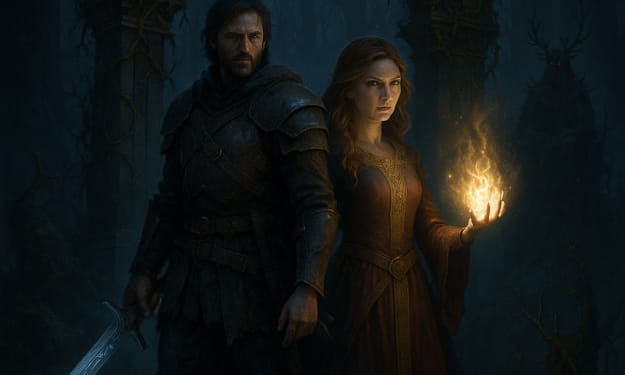
Veil of the Firstborn Part 1
The storm had been waiting for them. By the time Vaelin and Elira crested the ridge into the northern wastelands, the sky was a crushed, bruised gray, torn open by claws of black lightning. The earth itself seemed uneasy, heaving shallow tremors beneath their boots. A metallic tang hung on the air, as if the ground were bleeding somewhere unseen. Neither of them spoke for a while. In the growing distance ahead, the remains of Hearthdeep, once a proud trade town, smoldered like the dying embers of a forgotten hearth. Stone buildings, once tall and proud, were now half-swallowed by broken earth and choking vines.
By Richard Bailey8 months ago in Chapters
Choosing the Right Inflatable Boat Fabric for Your Specific Application
The versatility of inflatable boats has made them indispensable in a wide range of applications, from recreational fishing to critical rescue missions, military operations, and tourism. However, the specific demands of each of these uses require different material properties to ensure that the boat performs reliably in each environment. As the industry for inflatable boats grows, the demand for specialized Inflatable Boat Fabric has also increased, with manufacturers continuously innovating to meet the diverse needs of these various markets.
By maxmax hyi morrow8 months ago in Chapters
The Mess of the Past. Content Warning.
I'd like to think that I am not as naive as I once was. That the world has formed me into a more self aware version of myself, where decisions and thoughts aren't as reckless as they used to be. Were these circumstances a reflection of my own bad choices? Or simply just wrong place, wrong time? Or was I cursed from the very day that my umbilical cord wrapped around my neck as I came out of the womb?
By Kat Garcia8 months ago in Chapters