
Dark secret revealed
Inside the Hidden World of a Satanic Church—Truth, Myth, and the Deep Reality
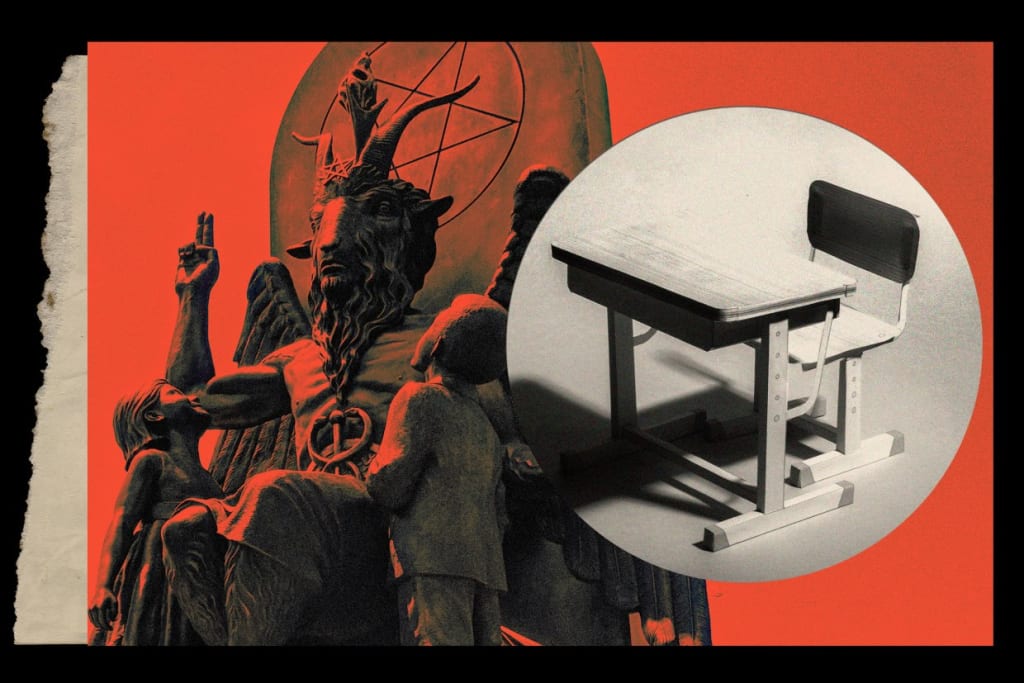
In the dim candlelight of a hidden basement beneath an ordinary-looking house on the outskirts of a quiet American town, a group gathers in silence. There are no signs of chaos, no blood-soaked altars, no grotesque rituals like the ones Hollywood would have you believe. Instead, there is calm, control, and intent. This is not a scene from a horror film. This is a real gathering inside a Satanic church—an often misunderstood and controversial facet of modern spirituality that blends philosophy, rebellion, and self-empowerment. But as we explore this hidden world, we find that the deep reality of such churches is not what many expect.
Breaking the Stereotypes
The term “Satanic” instantly evokes fear, suspicion, and confusion. For decades, media and religious institutions have painted Satanism with a single, terrifying brushstroke: a cultic force of evil, sacrificing animals, invoking dark forces, and worshipping the devil in exchange for power.
But reality is more layered. There is not one type of Satanism. Rather, there are diverse belief systems that fall under the umbrella of Satanic philosophy. The most well-known is LaVeyan Satanism, established by Anton LaVey in 1966 with the founding of The Church of Satan. It is from this movement that most modern Satanic churches draw their identity—not from literal devil worship, but from symbolic rebellion and rational individualism.
Inside the Church: Rituals and Beliefs
Visiting a Satanic church is unlike stepping into a typical place of worship. There are no sermons praising a deity. No prayers for forgiveness. Instead, the focus is on the self. In one such church visited by an investigative journalist under anonymity, the walls were draped in black, with symbols like the Sigil of Baphomet displayed proudly. Candles flickered on an altar—not to invoke evil, but to represent enlightenment and inner power.
Rituals do take place, but they are often theatrical, symbolic performances designed to express personal transformation, release emotional pain, or celebrate key life moments such as birth or death. One ceremony, dubbed the "Destruction Ritual," involved participants writing down what they wanted to let go of—past trauma, toxic relationships, old fears—and burning the paper in a controlled fire as a symbolic act of cleansing.
The Satan in these rituals is not a horned demon. He is a metaphor—a symbol of resistance, knowledge, and freedom from traditional religious structures. As LaVey once said, “Satan has been the best friend the church has ever had, as He has kept it in business all these years.”
The Philosophy: A Religion of the Flesh, Not the Spirit
At its core, the Satanic church promotes rational self-interest. It preaches indulgence, not abstinence. Responsibility to the responsible. Vengeance, not turning the other cheek. These beliefs, laid out in The Satanic Bible, aim to liberate individuals from guilt and repression. It's a philosophy that champions self-worth, personal boundaries, and human instinct.
Critics call it selfish. But adherents argue that it’s honest. “We don't pretend to be perfect or divine,” says Michael, a long-time member of a Satanic group in California. “We embrace who we are—our desires, our flaws—and we build our morality around human nature, not divine command.”
The Controversy: Myths, Crimes, and Moral Panic
Despite the clarity some Satanists try to bring, the term still fuels public panic. In the 1980s and early '90s, the U.S. experienced what is now known as the Satanic Panic—a moral hysteria that led to accusations of widespread ritual abuse, secret cults, and even child sacrifice. Many of these claims were later debunked, and some led to wrongful imprisonments.
The real Satanic churches often faced backlash, hate crimes, and legal threats despite having no involvement in criminal activity. Leaders of legitimate Satanic organizations have consistently denounced violence and criminal behavior, emphasizing that their groups function more like atheist spiritual communities or philosophical societies.
The Temple of Self
One of the growing Satanic movements today is The Satanic Temple (TST), which made headlines for challenging religious privileges in the U.S. legal system. TST doesn't worship any supernatural being but uses Satanic imagery to push for separation of church and state, bodily autonomy, and religious pluralism.
Inside TST's chapters, members engage in activism, charity, and political resistance. They hold "unbaptism" ceremonies for those leaving traditional religions, provide legal support for reproductive rights, and fight against forced prayer in public schools.
Far from a den of darkness, the temple functions more like a social justice collective with horns. “We are Satanists because we are rebels,” says Sarah, a chapter leader. “Not rebels without a cause, but rebels with a deep commitment to human freedom.”
The Hidden Reality: People Behind the Myth
The members of Satanic churches are not cloaked figures whispering in ancient tongues. They are teachers, artists, engineers, nurses—ordinary people drawn to a belief system that gives them control over their lives and rejects hypocrisy. Many come from religious backgrounds that left them with guilt, shame, or trauma. In Satanism, they find empowerment.
There is a communal element, too. Despite the emphasis on individualism, most Satanic churches offer strong emotional support networks. There are counseling groups, safe spaces for LGBTQ+ members, and a fierce commitment to mental health.
What surprises many first-time visitors is the absence of fear. There are no threats of eternal punishment, no list of sins. Instead, there is a deep, deliberate attempt to explore the darker sides of human nature—not to glorify them, but to understand and integrate them.
Final Thoughts: A Mystery Not of Evil, But of Misunderstanding
The world inside a Satanic church is not what most people imagine. There are rituals, symbols, and dark aesthetics, yes. But beneath the surface lies a philosophy that is far more about self-exploration than demonic devotion.
The mystery of Satanic churches lies not in secret evils, but in society’s refusal to look past the name. For many of its followers, Satanism is not about rebellion for rebellion's sake—it’s about taking back power from oppressive systems, redefining morality, and living honestly.
The candles flicker, the chants rise, and the people gathered are not calling on evil. They are confronting it—within themselves, in society, and in outdated beliefs.
And in that darkness, they find a light of their own. One that may never be accepted by all, but one that burns with raw, unapologetic truth.
About the Creator
Reader insights
Nice work
Very well written. Keep up the good work!
Top insight
Excellent storytelling
Original narrative & well developed characters
Keep reading
More stories from Farhan Rafid and writers in Chapters and other communities.
"Vanished Beyond the Horizon"
For decades, the Bermuda Triangle has captivated the imaginations of sailors, pilots, scientists, and mystery lovers around the globe. Stretching roughly between Miami, Bermuda, and Puerto Rico, this region of the Atlantic Ocean has long been associated with inexplicable disappearances, strange phenomena, and theories ranging from scientific to supernatural. Despite extensive research and technological advancements, the enigma of the Bermuda Triangle remains—and perhaps, it is a mystery that will never be fully unraveled.
By Farhan Rafid9 months ago in Chapters
The Cave Part 6
If you have ever heard a tale about yourself that you cannot remember and doubtless think is made up, you will know how I felt when Tharkin related all that the eagle had seen of me before my memories were scattered. Of far distances and traveling companions that I did not recall, camping out under the stars and making our way to the mountains with deliberate purpose. The great bird had lost contact with my party once we entered the forests, and the seven other members were not seen again by him or his brethren since.
By Jamye Sharp15 days ago in Chapters
Karachi Violence During Anti-US Protests: 9 Killed as Pakistan Reacts to Iran Conflict Escalation
Protests are continuing in various cities across Pakistan, including Karachi and Islamabad, against the attacks by the United States and Israel on Iran and the killing of Supreme Leader Ayatollah Ali Khamenei.
By Real contenta day ago in Chapters
Review of 'Man on the Run'
My wife and I saw Man on the Run, a nearly 2-hour documentary on Amazon Prime, about Wings, Paul McCartney's group that flew around the world from shortly after The Beatles broke up in early 1970 to shortly after John Lennon was murdered at the end of 1980, making a Beatles reunion forever impossible.
By Paul Levinson2 days ago in Beat


Comments (3)
This is really eye-opening. I had no idea Satanic churches were so misunderstood. It makes me wonder how many other beliefs out there are misrepresented. Do you think more people would be open-minded if they knew the real deal? The idea of focusing on the self in a religious setting is interesting. How does that compare to more traditional religions? And what about those symbols - what do they really mean to the people who worship there?
Keep it on
It's a perfect point you highlighted