
Meet Doctor Sahana: The Village Vet
Caring for Creatures Great and Small with Heart, Humor, and Healing Hands

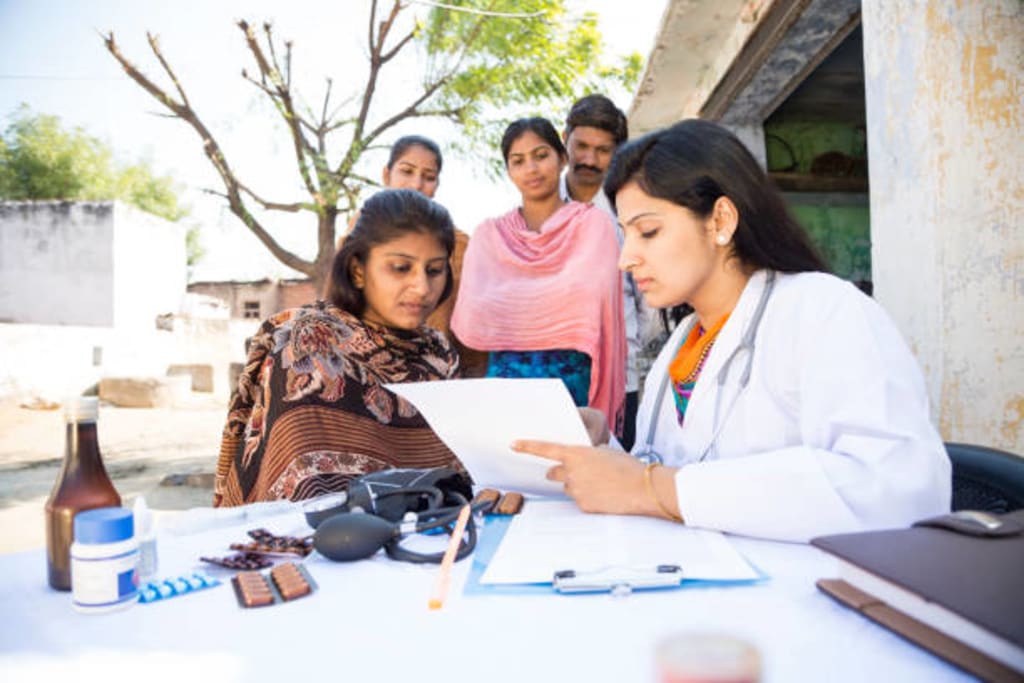
In the quiet village of Anjarpur, where the sun rose over golden fields and mango trees whispered secrets to the wind, there lived a woman who was beloved by two-legged and four-legged creatures alike. Her name was Doctor Sahana Rao, and she was known far and wide as the village vet. But she was much more than that. She was a healer, a listener, a teacher, and sometimes even a miracle worker.
Each day began before the rooster crowed. At 5:00 a.m., Sahana would lace up her sturdy boots, tuck her stethoscope into her bag, and sip her chai under the blooming gulmohar tree outside her home. The village was still, but not for long. Her first patients of the day were usually waiting when she arrived at her small clinic—a thatched-roof building painted a cheerful yellow with paw prints and hoof marks stenciled on the walls.
“Doctor Amma, my cow won’t eat!” a boy would call, leading a sluggish cow by a frayed rope.
“Doctor Didi, can you look at our parrot? He’s not singing,” an elderly man would ask, holding a cage gently as if it carried treasure.
No creature was too small or too large. Dogs with mangled tails, cats with feverish eyes, donkeys with injured legs, and even wild monkeys with bruises—Sahana treated them all. Her knowledge of animals came not just from her formal education in veterinary science, but from growing up on a farm where she learned the language of animals before she could speak her own.
Her hands were strong and gentle, her eyes bright with kindness, and her voice carried a calm that comforted both animals and their anxious owners. But what truly set Sahana apart was her humor. She joked with goats, sang to scared puppies, and nicknamed every animal something absurd and endearing—like "Captain Moo" for a stubborn bull or "Miss Fluffington" for a disheveled hen.
One monsoon season, a particularly touching case won the hearts of the whole village. A stray dog, badly injured by a passing cart, was brought in by a group of schoolchildren. His ribs showed through his muddy fur, and his leg was twisted. The children had named him "Tiger," though he was the most timid creature anyone had seen.
Sahana knelt beside him, whispering, “Don’t worry, Tiger. We’ll get you roaring again.”
She spent weeks tending to him—stitching wounds, setting his leg, feeding him by hand. Slowly, Tiger began to heal. His eyes brightened, his tail wagged, and soon he was running again, though with a limp. The village children visited daily, bringing him biscuits and stories from school. Tiger became the clinic’s honorary guard dog and the unofficial mascot of Anjarpur.
But Doctor Sahana’s work didn’t end at the clinic gates. She often traveled by bicycle to distant farms, treating animals that were too large or too sick to move. Her basket was always stocked with herbal salves, bandages, syringes, and a bag of peanuts for the monkeys who liked to trail her.
On one such trip, she was called to help a pregnant buffalo that was having difficulty delivering. The farmer’s family stood helpless and afraid. With calm authority, Sahana rolled up her sleeves and got to work. Hours later, the sun had set, the stars twinkled above, and the newborn calf took its first wobbling steps. The farmer wept with gratitude, offering Sahana a basket of fresh guavas as thanks.
She never accepted money from those who couldn’t afford it. Instead, her shelves were lined with gifts of gratitude: jars of honey, eggs, homemade pickles, and handwoven baskets. To Sahana, these meant more than any coin ever could.
Her compassion extended beyond animals. She taught children about animal care, organized vaccination camps, and trained local youth in basic veterinary aid. Under her guidance, even the most mischievous boys learned to cradle kittens with care and speak softly to nervous goats.
One day, a city reporter arrived, having heard tales of "The Village Vet with a Golden Heart." She followed Sahana for a day, observing her work, the lines of villagers outside her clinic, the laughter she shared with elders, and the silent trust she had with the animals.
The article that followed sparked attention far beyond Anjarpur. Donations poured in. Veterinary students wrote letters asking to intern with her. A foundation even offered to build her a new clinic. But Sahana declined the big-city offers. “This,” she said, spreading her arms toward the fields and the wagging tails, “is where I belong.”
Her days were long and her work was hard, but Sahana’s joy never waned. Every life she touched—be it the smallest chick or the gruffest farmer—carried a piece of her kindness. She had found her calling, not in grand hospitals or glossy journals, but in muddy paths, broken wings, and wagging tails.
On the clinic wall hung a simple wooden plaque, a gift from the children of the village. It read:
"Doctor Sahana: She speaks for those who cannot."
And indeed, she did. With heart, humor, and healing hands, Doctor Sahana stitched together not just broken limbs, but the very soul of the village.
About the Creator
Fair Exchange, No Robberies
Dark Memoirs - Index There are at least two kinds of people in the world: those who write this half-arsed kind of intro to a story that looks to separate the rare and the norm, and those who realise it's an overused framing device and don't.
By Paul Stewart15 days ago in Chapters
Sacrifices For The Balance Chapter 8: The Investigations Get Serious
Lady Astor parked her electric SUV just outside the dog rescue. She had decided to start with Maddy Tennyson; even if she couldn't get her to commit to her cause, she could be useful in gauging the political environment. She had decided to go with the jeans and boots look; she was as ready to work as she was to talk.
By Jamais Jochim2 days ago in Chapters
Silver Screen Magic with Mae West
American actress and singer Mae West became a popular film actress during the Great Depression. She started entertaining in vaudeville, then performed on Broadway, and finally went to Hollywood. She signed up with Paramount Pictures and made her debut in the 1932 film “Night After Night.” She also starred in musicals, comedies, and crime dramas. The American Film Institute named her one of the best classic Hollywood actresses.
By Rasma Raisters7 days ago in Geeks



Comments
There are no comments for this story
Be the first to respond and start the conversation.