
Chapter 8: The Peaceful Conquest of Makkah (630 CE)
A victory of mercy, forgiveness, and moral leadership


The Peaceful Conquest of Makkah (630 CE)
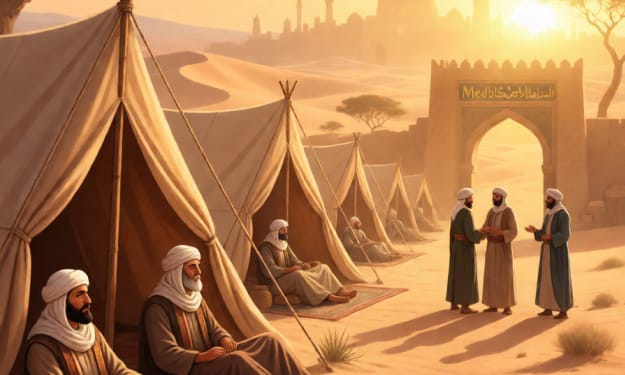
For nearly twenty years, the city of Makkah had been a place of pain for the early Muslims. It was where they were mocked, tortured, boycotted, and forced to leave their homes. Families were divided, livelihoods were destroyed, and many suffered simply for believing in one God. Even after migration to Madinah, the threat from Makkah never fully disappeared.
Yet, in the year 630 CE, something extraordinary happened. Makkah was conquered—but not through bloodshed, revenge, or destruction. Instead, it became one of the most remarkable examples of peaceful leadership in history.
The events leading to the conquest began with the Treaty of Hudaybiyyah, which had created a period of peace between the Muslims and the Quraysh of Makkah. This treaty allowed people to observe Islam freely and reduced conflict. Over time, many people accepted Islam after seeing its values practiced openly.
However, the peace did not last forever. One of the allied tribes of the Quraysh violated the treaty by attacking a tribe allied with the Muslims. This breach was serious. According to the treaty terms, such an action meant the agreement was no longer valid.
The Prophet Muhammad (peace be upon him) did not rush into war. Instead, he prepared carefully and quietly. His goal was not revenge, but to enter Makkah peacefully and end oppression without causing unnecessary harm. He gathered a large group of followers, not to intimidate, but to prevent resistance and bloodshed.
When the Muslim army approached Makkah, the size of the group alone was enough to stop most fighting. Many of the Quraysh realized that resistance would only lead to destruction. As a result, there was very little conflict. In fact, the Prophet gave clear instructions that no one should be harmed, except in cases of self-defense.
One of the most powerful moments of this event was the general amnesty declared by the Prophet. He announced that anyone who stayed in their home, took shelter in the Sacred Mosque, or sought protection would be safe. This message spread quickly and calmed the city.
When the Prophet entered Makkah, he did not enter as a conqueror full of pride. He entered with humility, lowering his head in gratitude. There were no victory speeches filled with anger. No homes were destroyed. No mass punishment followed.
The people of Makkah, who once tortured and expelled him, stood silently, expecting revenge. By all standards of that time, revenge would have been considered justified. But what happened next changed history.
The Prophet addressed the people and asked,
“What do you think I will do with you today?”
They replied,
“You are a noble brother, son of a noble brother.”
He then said words that echoed through history:
“There is no blame on you today. You are all free.”
With those words, decades of hatred ended. Forgiveness replaced revenge. Mercy replaced fear.
One of the first actions taken was the removal of idols from the Ka‘bah. The Ka‘bah was restored as a place of pure monotheistic worship. This act was symbolic, not violent. It represented a return to justice, equality, and belief in one God.
Importantly, the conquest of Makkah did not force people to accept Islam. Choice remained free. Many people accepted Islam not because they were forced, but because they witnessed character, restraint, and compassion in action.
Former enemies became allies. Old wounds began to heal. Families reunited. The city that once rejected the Prophet now became a center of peace and faith.
The peaceful conquest of Makkah showed that true victory is not about domination, but about changing hearts. It proved that power does not need cruelty, and leadership does not require revenge.
This moment marked a turning point in Islamic history. Islam was now firmly established, not through fear, but through trust. The Prophet demonstrated that even after years of injustice, forgiveness can build a stronger future than punishment ever could.
The lesson of Makkah remains relevant today. It teaches that peace is possible even after long conflict, and that moral strength can be more powerful than weapons.
About the Creator
Wings of Time
I'm Wings of Time—a storyteller from Swat, Pakistan. I write immersive, researched tales of war, aviation, and history that bring the past roaring back to life
Keep reading
More stories from Wings of Time and writers in Chapters and other communities.
Chapter 7: The Treaty of Hudaybiyyah
Chapter 7: The Treaty of Hudaybiyyah Several years after migrating to Madinah, the Prophet Muhammad ﷺ and his followers still longed for Makkah. It was their birthplace, the city of the Ka‘bah, and the center of their faith. Though they had been forced to leave, their love for Makkah never faded. In the sixth year after Hijrah, the Prophet ﷺ had a dream that Muslims would enter Makkah peacefully to perform Umrah, the lesser pilgrimage.
By Wings of Time 2 months ago in Chapters
Brass Ring Chapter 15: Lunch Between Brothers
Oliver and Cass entered the Les Enfants Bistro. The maître d' saw them, grabbed two menus, and asked them if they had a seating preference. Oliver held up his hand. “We’re looking for a guy sitting alone with circuitry on his face.” The maître d’ nodded and motioned for them to follow him. They were led to a corner table, partially in the dark. They were sat and Oliver ordered to cokes. The maître d’ disappeared.
By Jamais Jochim4 days ago in Chapters


Comments
There are no comments for this story
Be the first to respond and start the conversation.