
Are We Standing at the Edge of World War Three?
A citizen’s reflection on rising global tensions, political warnings, and the cost of reckless leadership

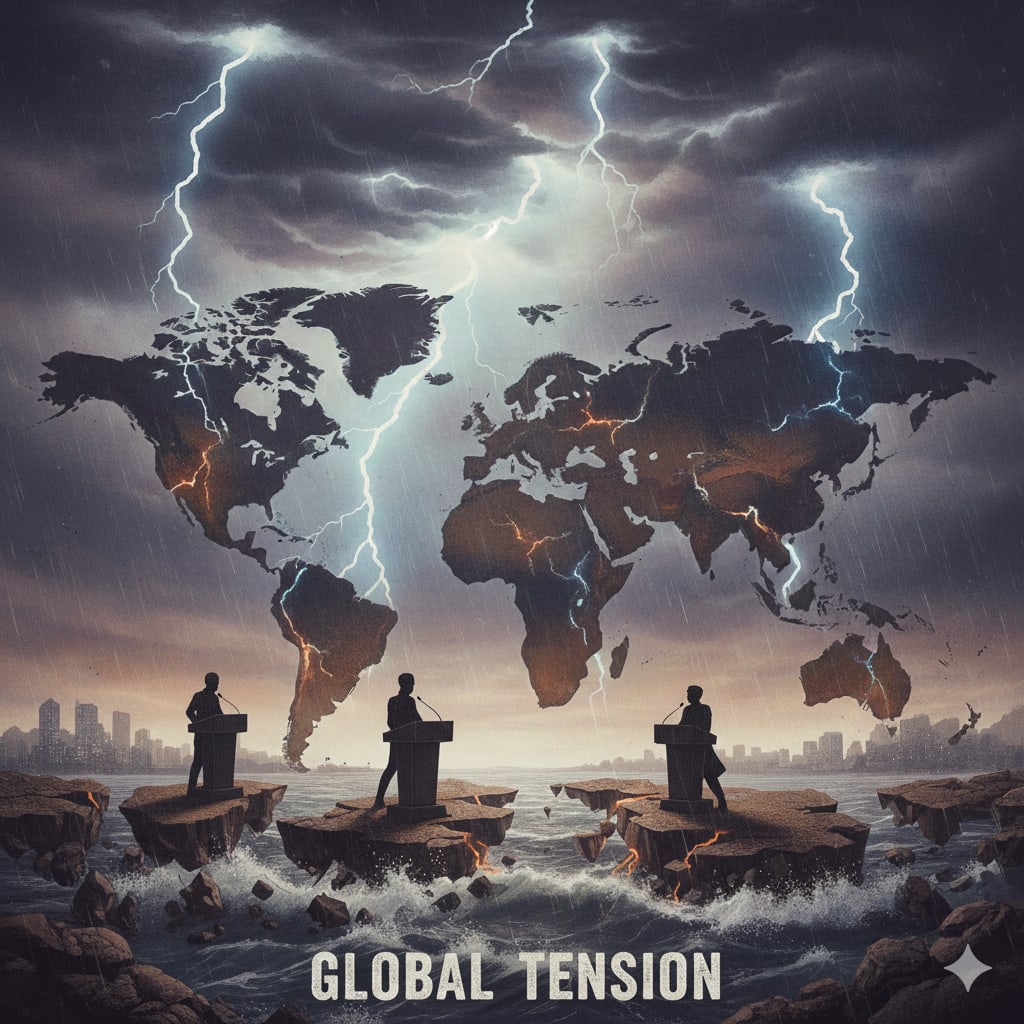
Are We Standing at the Edge of World War Three
In recent months, the phrase “World War Three” has returned to public conversations with an unsettling force. It appears in news headlines, political speeches, social media debates, and late-night discussions among ordinary people who feel the weight of uncertainty growing heavier each day. While no official declaration of a global war exists, the fear itself has become real—and fear, history teaches us, is often the first step toward catastrophe.
Across the world, conflicts are no longer isolated. Wars that once seemed regional now pull in powerful nations through alliances, weapons supplies, sanctions, and military posturing. When leaders speak carelessly or threaten force without restraint, the consequences ripple far beyond their borders. Ordinary citizens—teachers, farmers, students, parents—are left wondering whether decisions made in distant offices could one day change their lives forever.
Recent statements by political figures, including warnings about preparing for large-scale conflict, have intensified these fears. Whether such remarks are strategic, exaggerated, or politically motivated, they matter. Words from powerful leaders do not float harmlessly into the air; they land on global nerves already stretched thin. History shows us that wars rarely begin with a single explosion—they begin with rhetoric, pride, and refusal to de-escalate.
It is important to be clear: saying “World War Three will start soon” as a fact would be misleading. No responsible analysis can confirm such a claim. However, ignoring the warning signs would be equally dangerous. Rising military budgets, collapsing diplomacy, expanding proxy wars, and growing hostility between major powers are patterns, not coincidences. These patterns resemble moments in history when the world failed to slow itself down.
What makes this moment particularly alarming is how interconnected the world has become. A conflict between two nations today does not stay between two nations. Economies collapse across continents. Food prices rise. Energy shortages spread. Refugee crises grow. Information wars poison public trust. In such a fragile system, even a small spark can ignite something uncontrollable.
Citizens everywhere feel powerless watching leaders argue, threaten, and posture while claiming to act in the name of security. But security built on fear and aggression has never lasted. True global safety comes from diplomacy, accountability, and humility—qualities often missing when power goes unchecked. When leaders treat war like a negotiation tool or a political performance, it is civilians who pay the price.
The concern many people express today is not panic—it is pattern recognition. People remember how previous world wars were preceded by denial. They remember how warnings were dismissed as exaggeration. They remember how ordinary voices were told not to worry, until worry became survival.
This is why speaking carefully matters. We must challenge reckless language without spreading fear as certainty. We must demand responsible leadership without glorifying conflict. And we must remind those in power that the world is not a chessboard—each piece has a heartbeat.
If there is one lesson history offers clearly, it is this: global wars are not inevitable, but they become possible when leaders stop listening and citizens stop questioning. Silence has never prevented war. Awareness has.
The question before us is not whether World War Three will happen. The real question is whether humanity will choose restraint over ego, dialogue over dominance, and wisdom over weapons—before it is too late.
About the Creator
Wings of Time
I'm Wings of Time—a storyteller from Swat, Pakistan. I write immersive, researched tales of war, aviation, and history that bring the past roaring back to life
Keep reading
More stories from Wings of Time and writers in Chapters and other communities.
Why Fears of a Third World War Are Growing
A World on Edge: Why Fears of a Third World War Are Growing The phrase “World War Three” no longer sounds distant or fictional to many people around the world. It appears in headlines, political speeches, social media debates, and late-night conversations filled with anxiety. While no official declaration of a global war exists, the growing fear itself is worth examining. This story is not a claim that a world war will begin soon, but an exploration of why so many people believe the world is moving dangerously close to one.
By Wings of Time 3 months ago in Chapters
Valentine's Dates Over the Years
Colin grinned as Brooklyn slipped into the living room. “Is it all set?” he asked. The twenty-one year old grinned. She was in her last year of college and Colin knew that Lincoln was proud of her. Although she had been away at college, she’d eagerly helped Colin plan his surprise for Lincoln. “I’m so glad you’re finally doing this,” she said.
By Reb Kreyling28 days ago in Chapters




Comments
There are no comments for this story
Be the first to respond and start the conversation.