
Tips for Success While Designing a Book Cover
Essential Elements to Attract Readers and Reflect Your Story


A book cover could be seen as both truly inspired and entirely matter of science. It is the initial representation of your tale in a pictorial language that conveys the idea of the story while making the audience interested enough to want to read it. In the world of books, and during this fierce competition, there’s no such thing as a minor detail and appreciating the need for a beautiful cover will make you gain even more potential readers. This article guides the reader in regard to the ideas of how to create a book cover that will grab attention both in the stores and online market.
Know Who Your Target Audiences Are
Before going into the actual design, it is very important to determine who your primary audience is going to be. Considering who your reader is going to be will inform most of the design aspects such as colors, and images. For instance, consider the following factors:
Demographics: The age, gender, or even interests of your audience can be useful to make the design choices. For example, a cover for young adult fantasy genres is likely to be bright in design and may include illustrations with magic. On the other hand, a historical romance cover would be dull in decoration and would incorporate simple font designs.
Genre Expectations: Every genre has its own visual words. Literary books or novels belonging to a specific genre tend to be of a certain design. This will help you address the needs of the readers while looking for ways to make a change to the norms.
Key Elements of Effective Book Cover Design
Typography
Typography plays an important role in conveying the tone and genre of the book. Here are some tips:
Font Selection: Use different fonts according to the characteristic of the book. If it’s a thriller, bold, and sharp fonts can be used. In the case of a romance novel, nice cursive fonts can be effective.
Hierarchy: There should be a clear hierarchy. The center-piece should be the title, then the author, followed by any subtitle if there are any. Make sure that the most striking text is not concealed.
Legible: Readability is a must, in case of the smaller ones so validate your cover with respect to the size and ensure that every piece of text is still carved out.
Imagery and Graphics
Imagery acts as a persuading element as well as providing background information to the text. Always consider the:
Relevance: Make use of relevant images that can add significance to any specific theme or character in the book. The relevance attracts the potential readers right away.
Originality: Seek to be different when it comes to the cover images. Overused stock images cheapen the value of the book. Original images or drawings can do wonders to the book as they will capture the attention of the readers.
Choice of colors: Screen the images and the texts well. The images should not overwhelm the typography and vice versa. Good color balance enhances the appearance of the composition as well as directs the focus of the audience’s gaze.
Color Palette
Many authors think that colors are not that substantial and do not help readers visualize the content of a book. There are effective tips that can be used to select an attractive color scheme:
Setting of a Mood: Every color gives rise to a different mood. For instance, warm color tones of red, orange, golden yellow tend to incite great passion pale white, blue, or green cooler tones will probably be serenading moods or mystery.
Contrast: Pole apart hues should be used where one wants to bring an element forward. It not only improves visibility but also enhances the information content.
Cohesion: Maintain a magical color scheme focusing on the cover design that is in sync with the subject of your book. The intended color scheme will improve the overall mood of the cover design.
Layout and Composition
A good layout organizes and breaks the content, therefore providing a better experience for the reader. Although try to remember these points:
White Space: White space should be encouraged; it will make the design more appealing and clean, creating a more comfortable space for the reader to read. White space improves the clarity of the block and minimizes the essence of the cover.
Balance: Make sure that the elements used in the design are properly and evenly spread so as to make the design appear balanced. When the posters are well balanced, they are easy on the eye, and even the information can be read with comfort.
Focus Points: Focus on the key message of the poster and create focus points to look at. For example, if the title or any significant picture is crucial, emphasize it so that it can direct the eyes, and the most important detail of the cover is that message above utopia.
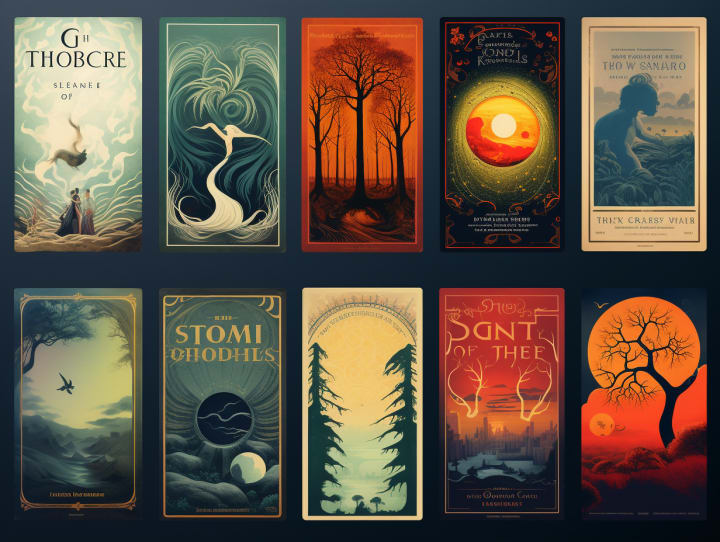
Trends in Book Cover Design
Keeping abreast of new design trends is crucial for the reasons of rekindling one’s creative juices and maintaining the relevance of one’s cover. These are some of the trends that should be considered for one’s design.
Minimalism
Minimalist designs are all about keeping things as simple as possible, most of the time including one photo with a strange design and short marketing text. This usually provides a lot of visual impact and is likely to approve the modern readers.
Illustration
The trend of utilizing hand-drawn or illustrated covers is also on the increase especially in the areas of fantasy and children’s literature. It is possible to have one's story stuck on a unique illustration, a good example of an illustration that defies the very wittiness of it.
Bold Colors and Patterns
Covers need to be outlandish in bright colors and patterns since such helps in making the covers easy to locate in congested book shelves or even online platforms. This youth-oriented trend is particularly useful.
Mixed Media
Mixing photographs into illustrations or vice versa enriches images by adding visual depth. This is however not a necessity as such but it helps to anchor a book cover further making it interesting.
The Value of Professional Designers
Occupational hygiene, some authors design their own covers book, although improving quality and sale of the book can be possible while working with any professional designer of your preference. This is because:
Expertise: Professional designers know what they are doing. They have experience and knowledge of the standard requirements in the industry. They help in eliminating avoidable mistakes and ensure that your cover is up-to-date with the market trend.
Collaboration: There is also the possibility of the two of you working around the table in such a situation. Although the designer looks at it from his point of view, you are still able to express your ideas as well, which enhances the design process.
Market Appeal: Attracting readers is not only achieved through content but also tempting covers. More sales will come in after positive word of mouth in the book industry together with good design covers.
Try Out and Collect Opinions
When you are done creating your cover, it is necessary to go ahead and try the cover which you created and get other people’s opinions. Here are some suggestions for how to go about this:
A/B Testing: There are situations where you may have two covers which you like equally. However, in this case, you can do A/B testing with your target audience to know which cover appeals most.
Feedback from Peers: Give your cover to other writers, friends, or your writing group to help you out. They can bring a fresh pair of eyes and give you Reading Suggestions.
Social Media Polls: There are several ways of getting feedback, one of which involves social media. Show some of the cover designs that you plan to use and ask the followers what they think about them.
Conclusion
All things considered, designing the ideal book cover is a complex task that requires creativity, planning, and an eye for design. Concentrating on main components of a cover’s design, typography, imagery, color scheme and arrangement, one can come up with a cover that will not only attract potential readers but also reflect the core of the book. There is always a refinement of a product or a design when one is aware of the latest trends in that industry and also seeks outside help. Treating them as if they were simple ornaments is unwise; a book cover is an essential tool in one’s marketing exercises and the first contact with the potential audience. With good planning and artistic imagination, one can develop a book cover which captures the attention of the prospective readers and motivates them to open the book and go through the content inside.
About the Creator
Michael S. Hodge
I’m an author passionate about crafting compelling stories across diverse genres to connect with readers.
Keep reading
More stories from Michael S. Hodge and writers in BookClub and other communities.
Why Do Line Editors Services Make a Difference in the Quality of Your Book?
For any author, whether seasoned or a first-timer, the process of transforming a rough manuscript into a polished, market-ready book is both challenging and rewarding. One of the most crucial aspects of this process is book editing. A well-edited manuscript not only ensures clarity and flow but also helps your book stand out in a competitive market. In this article, we’ll explore the importance of book editing, with a focus on Line Editors Services, how editing interacts with publishing, especially through Orlando Publishing Companies, and the role of ghostwriting in the writing world, considering the Cost Of Ghost Writing.
By Michael S. Hodge10 months ago in BookClub
Rachel Reviews: The Spiral Archive by Pieter Hendrik
It's difficult for me to know where to start with a review of this book as it was, for me, an entirely unique experience and one that I'll probably never have again. I don't want that to be interpreted as unenjoyable but it has left me scratching my head a little and ruminating on its content, its themes and its characters.
By Rachel Deeming3 days ago in BookClub



Comments
There are no comments for this story
Be the first to respond and start the conversation.