
Think and Grow Rich vs The Science of Getting Rich: A Deep Comparison of Two Prosperity Classics
Two Classics, One Goal: Wealth and Success

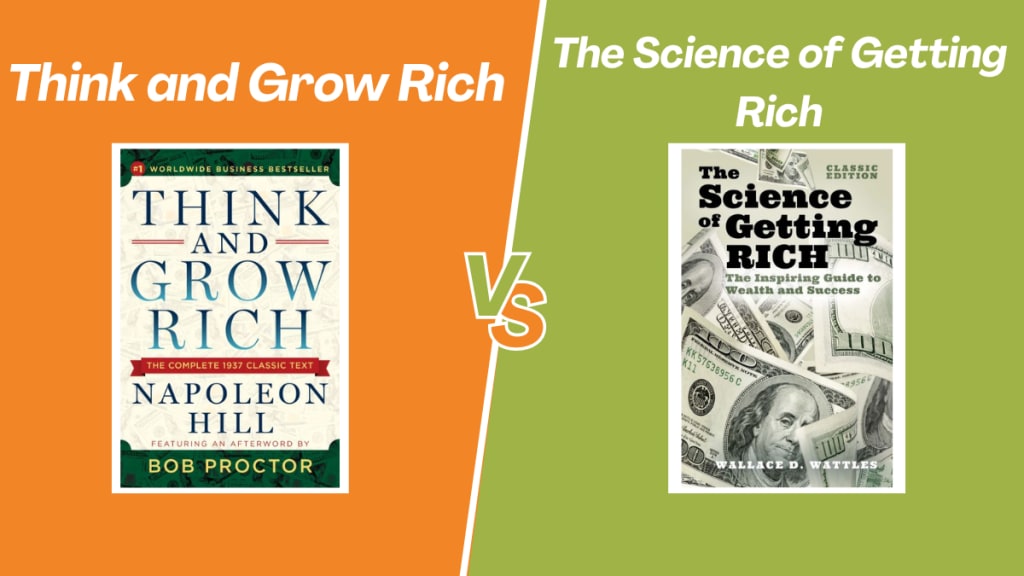
When it comes to the topic of wealth creation and personal success, two books stand out as pillars of self-help literature: Think and Grow Rich by Napoleon Hill and The Science of Getting Rich by Wallace D. Wattles. These timeless classics have inspired millions of readers around the world and continue to influence thought leaders, entrepreneurs, and success coaches today.
But which one should you read first? What makes them different? And which philosophy aligns best with your goals?
In short, Think and Grow Rich by Napoleon Hill focuses on mindset, goal-setting, and action-based success strategies, while The Science of Getting Rich by Wallace D. Wattles emphasizes spiritual alignment, visualization, and thinking in a “Certain Way.” Hill's approach is psychological and practical; Wattles' is metaphysical and concise. Both teach that thoughts shape reality, but from different angles—strategic vs. spiritual. Reading both offers a balanced perspective on achieving wealth and personal growth.
1. Overview of Each Book
Think and Grow Rich by Napoleon Hill
First published in 1937, Think and Grow Rich is based on more than 25 years of research conducted by Napoleon Hill. Hill interviewed over 500 of the most successful people of his time, including Andrew Carnegie, Henry Ford, and Thomas Edison. His goal was to uncover the secrets of wealth and success and present them in a clear, actionable format.
The book outlines 13 principles that Hill argues are essential to achieving wealth and personal success. These include desire, faith, specialized knowledge, persistence, and the power of the mastermind.
The Science of Getting Rich by Wallace D. Wattles
Published in 1910, The Science of Getting Rich predates Hill’s book by nearly three decades. Wattles presents a spiritual and metaphysical approach to wealth creation, grounded in what he refers to as “thinking in a Certain Way.” According to Wattles, wealth is not a matter of luck or environment, but the result of applying specific mental and spiritual principles.
The book emphasizes gratitude, creative visualization, and aligning one’s thoughts with the universal laws of abundance.
2. Core Philosophy:
Napoleon Hill: Success is the Result of Definiteness of Purpose + Action
Hill’s philosophy is deeply psychological and motivational. He believes that anyone can achieve success through focused desire, belief in oneself, clear goals, and persistence. While he occasionally refers to spiritual ideas, his approach is grounded more in mindset and human psychology than metaphysics.
Hill’s key message: “Whatever the mind can conceive and believe, it can achieve.”
Wallace Wattles: Getting Rich is a Scientific and Spiritual Process
Wattles takes a more metaphysical and spiritual stance. He believes that the universe operates according to fixed laws, and getting rich is about aligning with these laws. Thoughts are creative forces, and by thinking in a "Certain Way," a person can attract wealth and abundance.
Wattles' key message: “There is a thinking stuff from which all things are made... A thought, in this substance, produces the thing that is imaged by the thought.”
3. Structure and Readability

Think and Grow Rich
Hill’s book is longer and more complex, with in-depth explanations of each principle, detailed stories, and examples from his research. It is motivational and filled with anecdotes and persuasive language.
While this makes the book rich in content, some readers may find it more time-consuming to read. Hill often reiterates ideas to reinforce their importance.
The Science of Getting Rich
Wattles’ book is concise and direct, with only 17 short chapters. It is easy to read in a single sitting and has a clear, repetitive style designed to reinforce core ideas. Some readers find the language a bit outdated or overly spiritual, but many appreciate the clarity and simplicity of his message.
If you want a quick read that goes straight to the point, Wattles’ book may be more appealing.
4. Practical Application

Napoleon Hill
Hill’s book provides a step-by-step guide that readers can use to structure their goals, overcome fear, build confidence, and create wealth. His emphasis on goal-setting, persistence, and mindset continues to be relevant for entrepreneurs and professionals today.
Some of the most practical elements include:
- Writing down your major goal in life
- Repeating affirmations daily
- Creating a detailed plan and acting on it
Wallace Wattles
Wattles focuses more on internal transformation and the spiritual laws of abundance. His advice is less action-oriented and more about mental discipline and belief. The core practice he recommends is daily visualization of the life you want to create, combined with gratitude and faith.
Key practices include:
- Thinking in a “Certain Way”
- Visualizing your desired outcomes
- Expressing gratitude for current and future wealth
5. Similarities Between the Two Books
Despite their differences, both books share important similarities:
- Belief in the power of thought: Both Hill and Wattles emphasize that your thoughts shape your reality.
- Faith and persistence: Success is not instant; it requires belief and consistent effort.
- Definite purpose or vision: Knowing what you want is the first step toward achieving it.
- Gratitude and positive thinking: Both authors stress the importance of maintaining a positive mental state.
6. Think and Grow Rich vs The Science of Getting Rich Key Differences

Think and Grow Rich by Napoleon Hill and The Science of Getting Rich by Wallace D. Wattles are both classic self-help books focused on wealth and success. While they share some common principles—like the importance of mindset—they differ significantly in philosophy, structure, and tone. Here's a breakdown of their key differences:
1. Philosophical Foundation
- Think and Grow Rich (1937)
- Rooted in success psychology and the power of the subconscious mind.
- Emphasizes definiteness of purpose, faith, auto-suggestion, and mastermind groups.
- Based on interviews with 500+ successful individuals, including Andrew Carnegie, Henry Ford, and Thomas Edison.
- Uses a more analytical and structured approach to success.
- The Science of Getting Rich (1910)
- Based on New Thought philosophy—a blend of spirituality and metaphysics.
- Emphasizes that getting rich is a scientific process governed by universal laws.
- Central idea: Thinking in a "Certain Way" creates wealth through alignment with universal energy.
- Focuses heavily on gratitude and creative thought rather than competition.
2. Approach to Wealth
- Think and Grow Rich
- Sees wealth as a result of a clear plan, persistence, and applied knowledge.
- Success is a step-by-step process combining thought and action.
- Encourages developing a burning desire and taking definitive action.
- The Science of Getting Rich
- Wealth is a natural consequence of thinking and acting in harmony with universal laws.
- Less emphasis on goal-setting; more focus on mental alignment and faith in abundance.
- Promotes creating value, not competing for existing wealth.
3. Focus on Action
- Think and Grow Rich
- Strong emphasis on organized plans, persistence, and taking action.
- Action is seen as a necessary part of transforming thoughts into reality.
- The Science of Getting Rich
- Action is important but must be efficient and in alignment with right thinking.
- Stresses acting now, but not as rigidly or structurally as Hill.
7. Which One Should You Read?

It depends on your personality and goals:
- If you are more goal-oriented, practical, and prefer a structured, strategic approach to success, then Think and Grow Rich is for you.
- If you are more spiritually inclined, drawn to the law of attraction, and want a quick, powerful read, then The Science of Getting Rich will resonate more.
In fact, many successful people read both books and combine the principles for a more holistic approach to wealth and personal development.
8. Influence on Modern Thought
Both books have had a significant impact on the personal development industry:
- Think and Grow Rich has been cited by icons like Tony Robbins, Bob Proctor, and Oprah Winfrey.
- The Science of Getting Rich directly inspired The Secret by Rhonda Byrne and the broader law of attraction movement.
Their teachings have influenced millions and continue to be referenced in business, coaching, and motivational circles around the world.
Conclusion
Think and Grow Rich and The Science of Getting Rich are not just books—they are life philosophies. While one emphasizes disciplined action and psychological strategy, the other centers on spiritual alignment and visualization. Each offers valuable insights that can help transform your mindset and guide you toward financial and personal success.
For the most powerful results, consider reading both. Let Hill teach you how to think strategically and take action, and let Wattles show you how to align spiritually and manifest your desires.
Whether you choose one or both, your journey toward abundance begins with the most important step: changing the way you think.
About the Creator
pestosol
Hi.
I am Hmimda 30 years old From Algeria. I am a blogger. I like to share articles about decoration and designs
Rachel Reviews: The Spiral Archive by Pieter Hendrik
It's difficult for me to know where to start with a review of this book as it was, for me, an entirely unique experience and one that I'll probably never have again. I don't want that to be interpreted as unenjoyable but it has left me scratching my head a little and ruminating on its content, its themes and its characters.
By Rachel Deemingabout 21 hours ago in BookClub


Comments
There are no comments for this story
Be the first to respond and start the conversation.