
The Five Exit Points a Soul Plans Before Birth
Pre-Birth Intention, Timing, and the Hidden Architecture of Departure

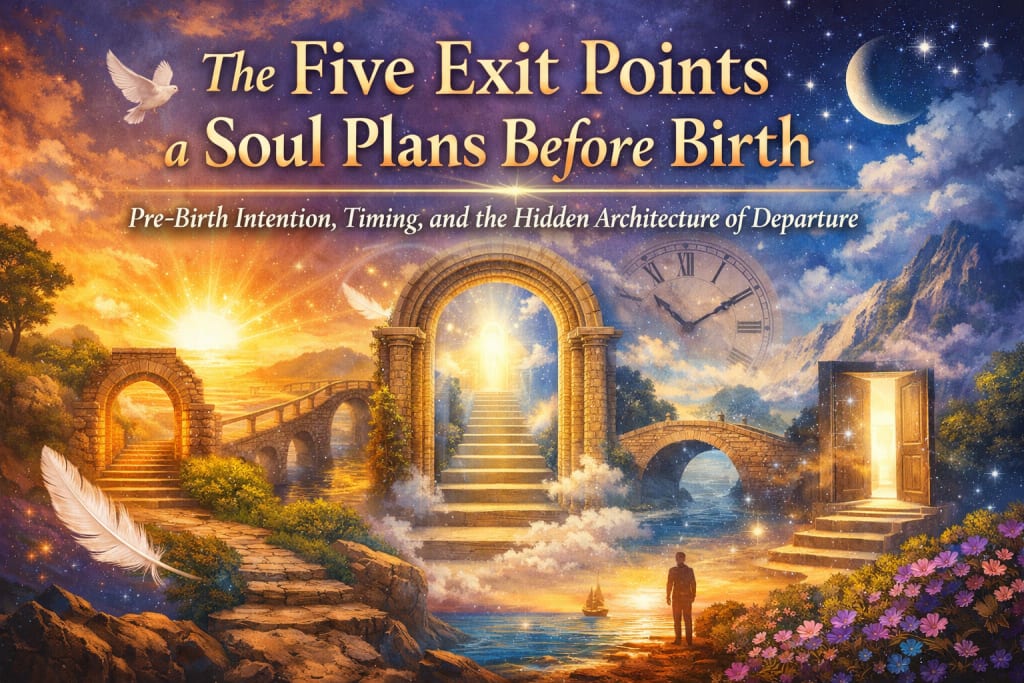
The Architecture of Arrival and Departure
Across civilizations separated by geography and century, a striking continuity appears in spiritual philosophy and metaphysical inquiry. Consciousness enters physical form through deliberate structure rather than accident. Birth is framed not as a blind beginning, but as a negotiated crossing shaped by intention, memory, and limitation. Ancient thinkers described embodiment as a descent through layers of awareness, each layer narrowing perception while preserving essential purpose. Within that descent, departure was never absent from consideration.
Early philosophical schools treated death not as an interruption, but as a companion principle to life. Greek metaphysics described cycles of choosing, forgetting, and remembering. Eastern cosmologies mapped consciousness as a traveler moving through states rather than endpoints. Mystical traditions emphasized that limitation itself creates meaning, and that time within form carries boundaries established before arrival. These boundaries were understood as flexible margins rather than rigid sentences.
Modern research into near-death experiences and pre-birth memory cases echoes the same structural logic found in older traditions. Accounts repeatedly describe moments of heightened clarity surrounding life-threatening events, accompanied by an impression of choice rather than coercion. Depth psychology adds another dimension, observing that periods of profound crisis often coincide with identity dissolution and symbolic rebirth. Such patterns suggest an underlying architecture where continuation and departure remain equally viable outcomes under specific conditions.
Within this view, mortality does not operate as punishment or randomness. Mortality functions as a regulating principle that preserves meaning, urgency, and transformation. The possibility of departure sharpens perception, intensifies attachment, and amplifies consequence. Survival past critical thresholds frequently coincides with radical shifts in values, direction, or inner orientation, reinforcing the idea that timing itself carries instructional weight.
Agency remains intact within this framework. Conditional thresholds do not remove choice, nor do predetermined possibilities diminish responsibility. Instead, structure and freedom coexist. Life unfolds within a designed range, shaped by response rather than compulsion. Meaning arises through navigation of that range, not through avoidance of its limits.
The recurrence of this structure across mystical texts, philosophical systems, and contemporary experiential accounts suggests continuity rather than coincidence. Consciousness appears to enter embodiment carrying not only intention for living, but also an awareness of when release would still honor the original design.
Memory Before the First Breath
The idea of conscious preparation before birth appears long before modern psychology or spiritual research attempted formal classification. Civilizations treated incarnation as a passage governed by law, rhythm, and intention rather than chance. Entry into physical life was framed as a narrowing of awareness, undertaken for growth, repair, or service, with limits established in advance.
Classical philosophy described this passage with remarkable clarity. In Hellenic thought, the soul was portrayed as selecting circumstances that would best challenge unresolved tendencies. Forgetting followed selection, ensuring authenticity of experience. Memory returned only through reflection, crisis, or philosophical discipline. This structure positioned life as a chosen trial rather than a random sentence.
Eastern traditions expanded this understanding through detailed cosmologies of consciousness. Transitional states between death and birth were mapped as intervals of evaluation and orientation. During these intervals, accumulated impressions shaped the next embodiment, while liberation remained possible through insight rather than avoidance. Birth conditions were not viewed as punishment, but as precise environments calibrated for learning.
Jewish mystical thought added another layer by describing descent as fragmentation. Consciousness entered matter through successive veils, carrying sparks of original intent embedded within the psyche. These sparks influenced inclination, aptitude, and recurring challenge. Destiny emerged not as fixed outcome, but as tension between remembrance and concealment.
In more recent eras, systematic investigation revealed strikingly similar narratives among individuals with no exposure to these traditions. Accounts described deliberate selection of family dynamics, physical limitation, and life themes prior to birth. Reports often included awareness of multiple potential lifespans, with conditions attached to continuation or departure. These findings challenged purely material explanations of memory and identity.
Across cultures and centuries, a consistent pattern emerges. Life appears bounded but not trapped, structured but not predetermined. Death functions not as a singular appointment, but as a series of permissible thresholds shaped by preparation, response, and completion. This continuity suggests that pre-birth planning reflects an enduring model of consciousness rather than a cultural invention.
Thresholds of Choice Within a Finite Design
Exit points exist as structural features within a lifetime rather than predetermined endings. These thresholds function as moments of evaluation embedded in the architecture of incarnation. Each represents a convergence of internal readiness and external circumstance, where continuation and departure remain equally valid expressions of fulfillment.
Such thresholds arise when core lessons have either reached completion or require redirection. At these moments, lived experience carries heightened intensity. Physical vulnerability, emotional saturation, or psychological rupture often surface simultaneously, creating conditions where ordinary momentum is interrupted. The interruption itself becomes meaningful, forcing confrontation with value, attachment, and unresolved truth.
Continuation beyond a threshold frequently produces visible transformation. Prior ambitions may lose relevance. Relationships reorganize or dissolve. Creative or service-oriented impulses intensify. Many accounts describe a lasting alteration in perception, accompanied by reduced fear of death and heightened sensitivity to meaning. Survival does not represent avoidance, but acceptance of an alternate expression of purpose prepared in advance.
Departure at such thresholds is not framed as failure or escape. Departure reflects completion within defined parameters. Reports associated with these moments often include sensations of release, familiarity, or coherence rather than panic. The presence of symbolic imagery, ancestral figures, or boundary landscapes suggests continuity of awareness rather than termination.
Patterns surrounding these thresholds recur with notable consistency. Heightened intuition, vivid symbolic dreams, and uncharacteristic calm often precede crisis events. Inner narratives shift toward review and synthesis. Emotional closure accelerates. These signals do not announce inevitability, but mark proximity to a meaningful crossroads.
Within this framework, exit points preserve both structure and freedom. The design of a life includes intervals where choice becomes concentrated rather than removed. Meaning emerges through engagement with these thresholds, whether through continuation marked by transformation or through departure marked by completion.
The Five Exit Points Explained:
The First Threshold of Embodiment
From birth through approximately age five, consciousness undergoes its first profound adjustment to the density, limitation, and interdependence inherent in human form. This stage includes the neonatal period (birth to one month), infancy (one month to one year), and early childhood (one to five years). During this window, the body experiences critical stabilization processes. Neurological development progresses rapidly, with the brain reaching approximately 80 percent of its adult volume by age three. Neural pathways involved in motor control, sensory integration, and emotional regulation are established. The cardiovascular system adjusts to independent circulation, while the respiratory and immune systems undergo maturation that supports survival outside the womb. Gastrointestinal and endocrine systems also stabilize, setting the foundation for metabolism and hormonal balance throughout life.
Mortality risk during this period is statistically higher than at later stages. Neonatal mortality remains a significant global health metric, primarily driven by preterm birth, congenital anomalies, infections, and complications during delivery. Infant mortality, particularly in the first year, is often associated with respiratory, gastrointestinal, or immunological vulnerabilities. Accidents and acute illnesses account for notable mortality in early childhood up to age five. These patterns are extensively documented in pediatric research and public health records.
Within spiritual and metaphysical frameworks, this period is understood as a threshold of initiation. Vulnerability is not considered arbitrary but symbolic, representing the initial grounding of consciousness into form. Pre-birth intention models suggest that early-life challenges, including congenital conditions or severe illness, function as catalysts for relational and emotional development. In this perspective, vulnerability is woven into the design of embodiment to shape both the child and the surrounding family system.
Illness, congenital anomalies, and sudden accidents frequently cluster during this stage. Many metaphysical traditions interpret these events as expressions of unfinished relational or karmic patterns rather than failures of the individual or family. Family dynamics transform rapidly under these circumstances. Bonds may deepen or reorganize, emotional capacities expand under stress, and resilience, grief, devotion, and compassion emerge as formative forces. These experiences catalyze long-term shifts in emotional intelligence, attachment patterns, and collective awareness within the family.
Early departure within this period is interpreted across cultures as the fulfillment of a precise yet powerful role. Such a role may involve initiating emotional growth within caregivers, resolving ancestral or relational energetic patterns, or rebalancing pre-existing dynamics. Significance is measured by the depth of influence rather than chronological lifespan. Traditions ranging from Indigenous cosmologies to Eastern mystical philosophies emphasize that transformation and relational impact hold greater value than the duration of life.
Children who survive critical illness or near-fatal events often retain subtle but persistent marks of the first threshold. Pediatric and developmental research indicates that early exposure to life-threatening conditions can accelerate cognitive and emotional maturation, heighten sensory sensitivity, and refine stress responses. Studies of infants in neonatal intensive care units demonstrate increased attentional awareness and early development of perceptual acuity. Psychologists note that these children frequently display advanced empathy, precocious recognition of emotional cues, and heightened awareness of relational dynamics. From a metaphysical perspective, such traits are interpreted as residual consciousness of the threshold itself. The experience of nearing mortality imprints on early awareness, producing an enduring sensitivity to the fragility and depth of life.
Early encounters with mortality or severe limitation also shape long-term physiological and neurological patterns. Research in pediatric neurodevelopment demonstrates that stress responses in early life can recalibrate the hypothalamic-pituitary-adrenal axis, influencing cortisol regulation and emotional resilience. Simultaneously, early sensory and emotional experiences shape synaptic pruning and the development of neural circuits critical to emotional regulation, decision-making, and social cognition. Spiritual interpretations align with these observations, suggesting that embodiment at this stage serves as a calibration of consciousness, establishing the framework for resilience, empathy, and intuitive perception.
In summary, the first threshold of embodiment, spanning birth through approximately age five, represents a period of profound physical, emotional, and spiritual formation. It integrates neurological and physiological stabilization with early relational and emotional shaping, all under the shadow of heightened vulnerability. Events in this period, whether survival of critical illness or premature departure, carry deep significance. Influence is measured not in years lived but in transformation initiated. Early embodiment leaves lasting marks, shaping perceptual sensitivity, emotional depth, and relational awareness that persist throughout life.
The Crucible of Becoming
Between approximately twelve and twenty-five years of age, identity consolidates under intense biological, psychological, and social pressures. Early adolescence (12–14), middle adolescence (15–17), late adolescence (18–21), and emerging adulthood (22–25) together form a period of accelerated transformation in both body and mind. The brain undergoes substantial restructuring, particularly in the prefrontal cortex, which governs decision-making, impulse control, planning, and risk assessment. Synaptic pruning eliminates redundant neural connections, while myelination strengthens remaining pathways, producing a nervous system capable of complex thought but heightened sensitivity to stress and reward.
Hormonal shifts during puberty and continued endocrine maturation amplify emotional intensity. Neurotransmitter activity fluctuates, increasing vulnerability to mood swings, impulsivity, and exploratory behavior. Simultaneously, social drives for peer acceptance, status, and independence become more pronounced. These forces create repeated cycles of identity dissolution and reassembly, where experimentation, boundary-testing, and confrontation with personal and social limits shape emerging selfhood.
Life-threatening circumstances often arise from impulsive or risk-laden behavior. Accidents, substance misuse, and acute mental health crises, including self-harm and suicidal behavior, occur at higher rates during this period. Motor vehicle accidents, drowning, and falls are leading causes of death in individuals aged fifteen to twenty-four according to global health data. Mental health challenges, including depression and anxiety, affect an estimated 10–20 percent of adolescents and young adults before age twenty-five. The combination of heightened neurobiological sensitivity, emotional intensity, and social pressure amplifies both vulnerability and potential for insight, creativity, and resilience.
Spiritual and philosophical traditions interpret this stage as a crucible of worth, agency, and autonomy. Questions of value, purpose, and place within society dominate inner life. Tension between inherited expectations and emerging personal meaning generates states of rebellion, despair, or risk-taking. The crucible functions as a pressure point where internal conflict meets external consequence. Classical mysticism often frames adolescence as a liminal passage, where ego, impulse, and emerging consciousness are repeatedly challenged, dissolved, and reconstructed.
Emergence from this threshold frequently results in profound reorientation. Previous aspirations may give way to creative drive, ethical commitment, or dedication to service. Artistic expression often becomes central, including music, literature, visual arts, and performance, serving as a channel for inner processing and engagement with the wider world. Philosophical inquiry deepens, sometimes accompanied by rejection of inherited belief systems in favor of personally defined meaning and values. Research in developmental psychology supports these observations, showing that individuals who navigate high-risk experiences successfully demonstrate enhanced executive function, emotional regulation, and adaptive coping.
Accounts from near-death and survival studies illustrate the transformative nature of this stage. Survivors describe heightened clarity, expanded perception of time, diminished fear of death, and an intensified sense of purpose. The crucible of becoming operates as more than a period of survival. Confrontation with mortality, limitation, and social challenge functions as a formative forge, shaping character, creativity, and existential awareness. Survival refines priorities, strengthens emotional depth, and cultivates a durable capacity for meaning.
The period between twelve and twenty-five years integrates vulnerability, exploration, and transformation. It fuses neurological, hormonal, and social development with the challenge of identity formation. This stage leaves lasting marks on perception, empathy, creativity, and moral understanding, producing a foundation for mature engagement with the world.
The Reckoning of Meaning and Direction
During the later stages of early adulthood through midlife, approximately ages twenty-six to fifty, the accumulated consequences of past choices begin to assert tangible influence. Aspirations and ambitions formed during adolescence and emerging adulthood encounter the constraints of circumstance, societal expectation, and personal limitation. Professional trajectories often reach plateaus or reveal misalignment between skills, values, and purpose. Personal relationships expose unhealed patterns, highlighting recurring dynamics or unresolved emotional needs. A persistent sense of inner dissonance may emerge, signaling tension between daily structure, external achievement, and deeper intention.
Life frequently manifests this threshold through disruption. Sudden illness, burnout, financial collapse, relational dissolution, or narrowly avoided accidents interrupt the flow of planned progress. These interruptions compel confrontation with questions of purpose rather than simply productivity. Success, recognition, or material accumulation no longer provide satisfaction when misalignment with core values persists. Psychological pressure intensifies as established identities—constructed over decades of adaptation, social expectation, or professional role—begin to lose coherence. The nervous system, now fully matured but sensitized by cumulative stress, responds with increased awareness of meaning and existential stakes.
Spiritual and philosophical traditions interpret this phase as an audit of alignment. Roles and identities adopted for survival, societal approval, or early-life expectation are stripped away, exposing core values and authentic intention. Resistance to this process often deepens crisis, while conscious engagement facilitates reorientation. Severity and intensity of events surrounding this threshold reflect the depth of misalignment, not moral failure. In classical metaphysical frameworks, this stage represents a rite of discernment, where life’s external patterns are tested against internal truth.
Continuation beyond this stage frequently produces decisive transformation. Vocational paths may shift toward meaningful contribution, emphasizing work that integrates skill, purpose, and ethical commitment. Spiritual curiosity often matures into structured inquiry, contemplative practice, or disciplined ethical exploration. Inherited belief systems lose automatic authority, replaced by direct engagement with lived experience and personal discernment. Relationships either restructure to align with authentic values or dissolve, reflecting natural selection of social and emotional environments. Psychological research identifies this phase as a critical period of self-redefinition, often associated with midlife transition or crisis. Adaptive resolution enhances resilience, self-efficacy, and emotional regulation.
Neuroscientific study indicates that prefrontal cortical function, already mature, continues to support advanced reflective processing during this stage. Episodic memory integration, perspective-taking, and executive decision-making converge, allowing adults to reinterpret past experiences, anticipate long-term consequences, and reframe identity narratives. Psychological literature often describes this period as resembling ego death rather than collapse. Former life narratives disintegrate, creating the cognitive and emotional space necessary for reintegration at a higher level of coherence.
Individuals who navigate this threshold successfully describe it as an ending that did not end, followed by emergence with clearer intention, reduced attachment to external validation, and heightened discernment of personal meaning. The reckoning of meaning and direction functions as a crucible. Through loss, disruption, and recalibration, a more authentic alignment emerges, integrating past experience, present choice, and anticipated future trajectory. This stage solidifies mature agency, deepens existential understanding, and establishes the foundation for sustained contribution, creative engagement, and ethical living in subsequent decades.
The Passage From Striving to Stewardship
During later adulthood, roughly spanning ages fifty-one to seventy-five, orientation gradually shifts from accumulation toward integration. Early and mid-adulthood emphasize achievement, acquisition, and expansion of identity. Later adulthood marks the natural transition from building toward refining. Ambition diminishes in urgency, replaced by reflection on legacy, relational depth, and the continuity of influence across generations. Cognitive processes consolidate accumulated knowledge and experience, while emotional regulation tends to stabilize, allowing deeper appreciation for nuanced social and moral dynamics. Physical vitality declines as the musculoskeletal system, cardiovascular health, and metabolic efficiency gradually diminish. Sleep patterns, recovery time, and sensory acuity change, signaling the body’s limitations with increasing clarity.
Health challenges become more frequent during this stage. Chronic conditions such as hypertension, diabetes, and osteoarthritis often emerge, alongside increased susceptibility to cardiovascular events, cerebrovascular accidents, and acute infections. Mortality risk rises with age, making sudden medical crises more common. These events reflect biological reality and the cumulative impact of prior lifestyle and environmental exposures. Awareness of mortality sharpens attention toward unresolved goals, relational repair, and generativity rather than material accumulation. Studies in gerontology confirm that reflection and adaptive adjustment during this period contribute significantly to psychological resilience, life satisfaction, and emotional well-being.
Relational dynamics take precedence in later adulthood. Longstanding conflicts may resurface, inviting opportunities for reconciliation or forgiveness. Family, community, and social networks often become primary arenas for meaningful engagement. Expressions of gratitude, mentorship, and relational repair gain depth and urgency. The transmission of knowledge, values, and experience becomes a central concern. Contribution shifts from individual productivity to sustained presence and guidance, emphasizing influence through example rather than direct instruction. Intergenerational connection becomes a primary medium for shaping legacy and sustaining cultural or familial continuity.
Survival and thriving during this stage frequently initiate a quieter but profound period of influence. Teaching and leadership manifest through demonstration and subtle guidance rather than authority or formal roles. Narratives, storytelling, and lived example convey accumulated wisdom, providing direction without imposing control. Stewardship replaces ambition, emphasizing care for communities, traditions, ecosystems, and cultural memory. Engagement focuses on sustaining continuity, fostering resilience, and supporting growth in others while accepting the natural limitations of the body and personal influence.
Spiritual and philosophical traditions consistently describe later adulthood as a stage of voluntary detachment rather than decline. Attachment to status, material achievement, and social validation loosens as identity expands beyond role, occupation, or societal recognition. Acceptance emerges, supplanting resistance, while meaning consolidates through coherence, presence, and relational integrity rather than conquest or accumulation. Classical wisdom literature, from Confucian reflections on elder responsibility to Stoic and Indigenous teachings, emphasizes that this stage refines rather than diminishes life. Depth of insight, relational authenticity, and the capacity for generative influence increase as physical scope narrows.
The passage from striving to stewardship represents a transition in which life’s earlier exertion evolves into intentional guidance and legacy. It integrates biological, psychological, and social realities with reflective consciousness, producing a phase where significance is measured not by achievement or accumulation, but by the coherence, care, and wisdom imparted to those who follow. In this stage, life narrows in form while deepening in meaning, offering the opportunity for enduring contribution, ethical alignment, and generative presence across communities and generations.
The Final Completion Exit
The final completion exit, often occurring during later adulthood or advanced age, represents the stage in which the cumulative lessons of life reach their full expression and resolution. The typical age range for this exit varies widely depending on health, environment, and circumstance, but it most frequently occurs after age seventy-five. This stage marks the culmination of developmental, relational, and spiritual trajectories. Observations from palliative care, hospice practice, and end-of-life counseling consistently describe this transition as characterized by peace, clarity, and a sense of readiness rather than fear or resistance. Physical decline often aligns naturally with psychological and spiritual reconciliation, creating conditions in which departure is perceived as completion rather than interruption.
During this stage, heightened awareness and altered states of consciousness frequently manifest. Reports from hospice staff, nurses, and spiritual caregivers indicate that individuals nearing this exit often experience vivid dreams of preparation, visits from deceased loved ones, or profound moments of intuition. These phenomena may reflect integrative neurological and psychological processing of life events combined with deep emotional and spiritual reflection. Studies in gerontology and palliative psychology suggest that the brain continues to consolidate memories, prioritize emotionally salient experiences, and reinforce relational bonds even as systemic physiological decline progresses.
The final completion exit also illustrates the interplay between free will and life’s threshold points. These exits coexist with volitional choice rather than negating it. Conscious decisions influence whether transition occurs smoothly or is delayed by lingering attachment, unfinished relational dynamics, or unprocessed experiences. Consciousness appears to adapt plans in response to life events, activating alternative life themes or resolving latent developmental trajectories. In this framework, survival to this stage may serve as a final opportunity to complete tasks, transmit knowledge, or enact generative influence prepared earlier in life.
This dynamic approach aligns conceptually with models of probability and non-linear outcomes. Rather than deterministic fate, the final completion exit reflects a system in which multiple potential pathways converge based on cumulative experience, conscious choice, and relational alignment. Evidence from end-of-life studies demonstrates that clarity, purposeful reconciliation, and symbolic timing often precede peaceful transition, suggesting that these exits integrate biological, psychological, relational, and spiritual processes.
From a broader perspective, the final completion exit embodies the full arc of human development. It represents the synthesis of embodiment, relational dynamics, identity formation, and existential understanding cultivated across the lifespan. This threshold consolidates meaning, reframes mortality as natural completion, and affirms the continuity of influence and consciousness. In practice, attention to relational repair, gratitude, reflection, and symbolic closure during this stage can enhance the quality of experience and the coherence of life narrative for both those completing the journey and the communities they leave behind.
Signs Commonly Reported Near Exit Thresholds
Near exit thresholds, certain patterns of experience appear with surprising consistency across documented cases in palliative care, gerontology, psychology, and spiritual observation. While no single sign can definitively predict proximity to a final transition, recurring phenomena provide insight into the processes of psychological and physiological preparation for the end of life. These indicators often integrate neurological, emotional, and existential dimensions.
Vivid symbolic dreams frequently occur during this stage. Imagery commonly includes doors, bridges, stairways, or journeys, symbolizing transition, passage, and movement between stages of awareness. Neuroscientific research suggests that these dreams may result from deep memory consolidation, emotional processing, and activation of symbolic cognition within the limbic system. Simultaneously, dream content often aligns with personal narratives, unresolved relational dynamics, and anticipatory reflection on life experiences.
Heightened synchronicity is another frequently reported phenomenon. Individuals often notice seemingly coincidental events, repeated numbers, or encounters with meaningful symbols. Psychological research interprets this as increased pattern recognition and attentional sensitivity, potentially linked to changes in temporal perception and the prioritization of emotionally salient stimuli in late-stage cognitive processing. Spiritual traditions interpret these events as guidance, confirmation, or alignment with larger relational and existential currents.
Sudden reevaluation of priorities is commonly observed. Goals previously considered critical may lose importance, while relational, ethical, and spiritual concerns move to the foreground. Studies in gerontology and end-of-life psychology indicate that this shift often corresponds with natural cognitive and emotional realignment, reflecting both mortality awareness and the consolidation of life narratives. Individuals frequently engage in acts of reconciliation, forgiveness, or completion of unfinished creative or relational work.
Deep emotional release often occurs without any identifiable external cause. Crying, laughter, or other expressions of catharsis can arise spontaneously, reflecting psychological and somatic integration. Neuropsychological research suggests that this release may be associated with the brain’s processing of accumulated experiences, emotional regulation, and the activation of parasympathetic nervous system pathways that support relaxation and homeostatic balance during the final stages of life.
Strong emotional states may present as a sense of urgency, clarity, or profound peace. Individuals often describe simultaneous awareness of impermanence and heightened meaning, accompanied by either a drive to resolve outstanding matters or an effortless acceptance of life’s conclusion. Hospice reports consistently document these states as indicators of imminent transition rather than distress, highlighting the complex interplay of cognitive, emotional, and spiritual processes.
Interpretation of these signs requires careful discernment. While they offer valuable insight, they do not function as deterministic predictors. Observation, context, and sensitivity to the individual’s history, relational environment, and health status are essential. The recurring patterns serve as markers of deep cognitive, emotional, and existential integration, rather than as superstition or deterministic prophecy. They reflect the natural processes by which life consolidates, meaning is distilled, and consciousness prepares for transition.
Ethical Considerations and Misinterpretations
The concept of exit points carries profound philosophical and spiritual significance, yet ethical responsibility remains paramount. Recognition of potential thresholds in life or consciousness does not justify harm, neglect, or indifference toward embodied life. Across spiritual, religious, and philosophical traditions, compassion and ethical care are consistently emphasized as essential obligations. Practices of caregiving, emotional support, and attentiveness to human needs remain central regardless of beliefs about transition or completion.
Misinterpretation of exit point theory can produce serious consequences if applied carelessly. It must not serve as a rationale for inaction in the face of illness, injury, or suffering. Dismissing medical intervention, withdrawing support, or romanticizing death constitutes a distortion of the framework and violates fundamental ethical principles in medicine, psychology, and spiritual practice. Palliative care and hospice research highlight that acknowledgment of natural thresholds must coexist with proactive measures that alleviate pain, support dignity, and honor relational bonds. The ethical imperative is to maintain life quality and meaningful engagement while respecting the autonomy and experience of the individual.
Exit point awareness also does not negate the reality of grief or emotional processing. Bereavement, loss, and relational disruption remain profound human experiences that require attention, ritual, and support. Frameworks for understanding life’s thresholds aim to contextualize these experiences, offering perspective and meaning, rather than providing prescriptive or deterministic guidance. In psychological terms, recognizing potential thresholds can facilitate acceptance, reflection, and closure, but it does not replace the necessity of grief work, counseling, or community support.
Additionally, ethical application demands sensitivity to cultural, spiritual, and individual differences. Different traditions interpret life, death, and purpose in diverse ways, and exit point perspectives should be integrated thoughtfully with these contexts. Historical and cross-cultural research demonstrates that premature or misinformed application of spiritual frameworks can exacerbate suffering rather than alleviate it. Ethical understanding requires discernment, respect for autonomy, and an unwavering commitment to compassion, emphasizing care for life as it is lived.
In practical terms, exit point theory exists to deepen understanding of meaning, purpose, and the human experience of transition. It provides insight into the processes of consolidation, reflection, and relational completion rather than predicting outcomes or timing. The framework encourages mindful engagement with life, ethical responsiveness to need, and attentive presence, reinforcing responsibility to sustain dignity, alleviate suffering, and cultivate relational and communal continuity. Misapplication undermines both ethical standards and the deeper purpose of the concept, highlighting the necessity of coupling insight with care, discernment, and moral clarity.
Key Terms and Concepts:
Pre-Birth Planning
Pre-birth planning refers to the theory that consciousness may select specific conditions of incarnation prior to entering physical form. This concept appears in numerous spiritual and metaphysical traditions, including certain schools of Kabbalah, Tibetan Buddhism, and contemporary spiritual psychology. It proposes that factors such as family, environment, health predispositions, and life challenges are intentionally chosen to facilitate growth, relational learning, and the fulfillment of predetermined life themes. From a psychological perspective, this concept aligns metaphorically with prenatal attachment and early developmental influences, emphasizing how initial conditions shape trajectory. Pre-birth planning underscores the interplay of intention, environment, and relational dynamics in shaping human experience.
Exit Point
An exit point denotes a conditional threshold in which departure from physical life or continuation both serve the fulfillment of soul intention. This concept encompasses natural physiological, psychological, and relational processes that mark critical transitions. Exit points often coincide with heightened awareness, synchronicity, or altered perception, and may manifest through sudden illness, accident, or completion of major life lessons. Hospice observations and near-death studies indicate that these thresholds are frequently accompanied by emotional reconciliation, vivid symbolic imagery, and integrative reflection. Exit points highlight the conditional, non-deterministic nature of life’s transitions, illustrating how timing, choice, and alignment with purpose converge at moments of profound change.
Life Theme
Life theme refers to the primary lesson, focus, or developmental challenge selected for a lifetime. Life themes may involve relational growth, creative expression, ethical development, or spiritual realization. Individuals often encounter recurring situations, emotional patterns, or relational dynamics that reflect the life theme, providing opportunities for reflection, mastery, and transformation. Psychological research on personality development and life-span theory supports the idea that recurring patterns and challenges facilitate the integration of identity, values, and meaning. Recognition of a life theme allows for deeper understanding of choices, responses, and priorities, emphasizing coherence rather than mere survival or achievement.
Near-Death Experience
Near-death experiences describe states of consciousness reported during clinical death, extreme physiological crisis, or significant threat to life. Common elements include out-of-body perception, accelerated time awareness, encounters with light or archetypal figures, and a profound sense of peace or unity. Studies in neuropsychology, cardiology, and emergency medicine have documented correlations between near-death reports and temporary neurological phenomena, including altered cerebral perfusion, neurotransmitter surges, and reduced oxygenation. Spiritual and cross-cultural research interprets these experiences as evidence of consciousness extending beyond immediate physical conditions, offering insight into existential meaning, relational values, and the continuity of awareness.
Karmic Resolution
Karmic resolution refers to the completion, reconciliation, or balancing of unresolved patterns that may span multiple incarnations. This concept, central to Hinduism, Buddhism, and esoteric Western traditions, suggests that life circumstances, relational challenges, and internal struggles provide opportunities to address unresolved energetic or moral dynamics. Karmic resolution is understood as restorative rather than punitive, emphasizing accountability, learning, and realignment with universal principles. Psychologically, karmic resolution parallels processes of narrative integration, forgiveness, and ethical development, reinforcing continuity in personal growth and relational harmony.
Continuity of Consciousness
Continuity of consciousness proposes that awareness or selfhood persists beyond physical death. This concept appears in nearly all spiritual and philosophical systems, ranging from Indigenous cosmologies to modern parapsychology, and is central to discussions of reincarnation, afterlife, and enduring identity. Research in near-death studies, hospice observation, and anecdotal accounts of extraordinary experiences supports the notion that consciousness exhibits resilience beyond bodily cessation. Continuity of consciousness emphasizes the primacy of relational, ethical, and experiential impact over temporal duration, suggesting that awareness, memory, and influence extend beyond immediate physical boundaries.
Case Studies of Consciousness and Passage
Case studies provide a vital bridge between theory and lived experience, offering documented examples of consciousness, life planning, and transitional thresholds. Across disciplines including psychology, palliative care, hypnotherapy, and anthropology, structured accounts reveal patterns that support the study of life themes, exit points, and spiritual continuity. These cases demonstrate how human experience reflects intentional processes rather than random circumstance.
Hypnotherapy research offers some of the most detailed examples. In controlled regression sessions, clients report experiences occurring between incarnations, including interactions with spiritual guides, reflection on past-life events, and preparation for future lifetimes. These accounts consistently describe soul group relationships, karmic balancing, and intentional selection of life lessons. Recurrent themes across multiple participants illustrate orderly patterns of consciousness, suggesting that life challenges and transitions may follow deliberate spiritual design.
Observations from palliative care provide another important source of evidence. Hospice teams regularly document recurring phenomena among individuals approaching natural thresholds. Commonly reported signs include symbolic dreams involving travel, bridges, or doors; heightened clarity regarding unresolved relationships; and deep emotional release. Many patients exhibit increased peace and reconciliation, aligning with the notion that consciousness engages in reflection and closure prior to physical departure. Systematic recording of these experiences allows for recognition of consistent patterns while upholding ethical standards and confidentiality.
Clinical psychiatry also contributes verified case studies. Patients undergoing past-life regression often recall detailed historical memories that resolve long-standing emotional trauma. Therapists report that these recollections frequently include accurate historical information, consistent narrative structures, and meaningful insight into recurring personal challenges. The accounts reinforce the possibility that consciousness may extend beyond a single lifetime, illustrating continuity and the integration of lessons across multiple incarnations.
Cross-cultural and anthropological research corroborates these findings. Rituals, oral histories, and spiritual practices across Indigenous, Asian, African, and Native American communities describe processes similar to pre-birth planning, life review, and transitional preparation. Shared elements include symbolic imagery, guidance from elders or spiritual beings, and ethical responsibility to others. Comparative study of these traditions highlights universal patterns in how human consciousness recognizes thresholds, transitions, and relational accountability.
Collectively, these case studies demonstrate that exit points, life themes, and spiritual continuity are not abstract notions but observable phenomena. They provide a foundation for careful study, cross-disciplinary comparison, and reflection on personal experience. By documenting patterns in consciousness and transitional processes, researchers and practitioners can explore the architecture of the soul while maintaining ethical rigor, critical thinking, and respect for the complexity of human life.
Recommended Reading: #commissionearned
This book explores the concept that consciousness may choose life conditions and major challenges prior to birth to facilitate spiritual growth and healing. Schwartz draws on interviews and spiritual regression research to illustrate how individuals encounter experiences such as illness, loss, disability, or relational struggles as part of a broader soul plan. Case studies describe agreements between souls, spiritual guides, and teachers that structure earthly experiences to cultivate qualities like compassion, forgiveness, and resilience. The narrative emphasizes that adversity often serves a purposeful role rather than representing random misfortune. Connections to karmic development, personal transformation, and spiritual learning are explored in depth. This work relates to the blog topic by reinforcing the idea that significant life events, including potential exit points, may align with pre-birth planning and soul intention, encouraging a view of death as a continuation of the spiritual journey rather than a final end.
Psychiatrist Brian Weiss presents a clinical account of therapy with a patient who begins recalling vivid past-life memories under hypnosis. The sessions reveal detailed historical experiences, emotional traumas, and guidance from spiritual teachers known as Masters. Weiss describes the therapeutic release that occurs when past-life experiences are acknowledged, demonstrating how emotional healing can extend across multiple lifetimes. The narrative explores reincarnation, soul progression, and continuity of consciousness, emphasizing the long-term evolution of awareness. This book connects directly to the blog topic by framing physical death as a transitional stage between incarnations, supporting the concept that exit points may follow prearranged spiritual timing. The account bridges clinical observation with spiritual insight, showing how understanding previous lifetimes informs present-life purpose and transformation.
Journey of Souls: Case Studies of Life Between Lives by Michael Newton
This book documents hypnotherapy sessions with individuals who describe experiences occurring between incarnations. Newton presents detailed accounts of spiritual communities, educational environments, and review processes that follow physical death. Clients describe guidance from advanced spiritual beings who assist with reflection, healing, and preparation for subsequent lifetimes. The text explores soul group relationships, karmic balancing, and the intentional design of life experiences, illustrating how consciousness evaluates past experiences to select future lessons. This material aligns closely with the blog topic because it demonstrates that death and life planning are often purposefully timed to facilitate spiritual objectives. Newton’s research emphasizes the deliberate nature of reincarnation cycles, supporting the idea that multiple exit opportunities can be integrated within a single lifetime.
Sacred Contracts: Awakening Your Divine Potential by Caroline Myss
Caroline Myss combines spiritual philosophy with archetypal psychology to examine the idea that each individual enters life with sacred agreements formed before birth. These contracts shape relationships, career paths, personal challenges, and life direction. The book identifies archetypes such as healer, teacher, or guide that influence identity and purpose. Myss explains how intuitive awareness and spiritual responsibility allow individuals to recognize life patterns connected to their spiritual assignments. The work frames personal transformation as the fulfillment of prearranged agreements designed to foster growth and service. This book supports the blog’s theme by illustrating how souls may select life transitions, including potential exit points, in alignment with sacred roles and spiritual lessons.
The Akashic Records: Blueprint for Your Soul by Edgar Cayce
Based on Edgar Cayce’s psychic readings, this book introduces the Akashic Records as a metaphysical archive containing each soul’s history, present experiences, and potential future paths. Cayce describes how karmic influences, personality traits, and life purpose are recorded and can inform personal growth and decision-making. The text emphasizes the role of spiritual guidance and past-life choices in shaping current circumstances and opportunities for healing. Life events, including challenges and transitions, are presented as interconnected with previous decisions and karmic lessons. This work connects to the blog topic by suggesting that spiritual blueprints may include intentional timing for life transitions, supporting the concept that exit points can be consciously aligned with soul objectives.
Closing Reflections
Exploration of exit points offers a profound invitation to engage with life more fully rather than to retreat from it. Recognition of conditional thresholds underscores the importance of conscious intention, mindful presence, and ethical responsibility within each moment of embodiment. Observing how challenges, transitions, and opportunities for growth align with deeper patterns encourages reflection on the interplay between personal choices, relational dynamics, and larger existential frameworks. Understanding exit points can illuminate patterns of resilience, empathy, and spiritual awareness, highlighting that life’s meaning is often revealed through integration of experience rather than avoidance of difficulty.
Independent study and disciplined inquiry remain central to navigating this complex field. No single framework or tradition holds absolute authority over the mysteries of consciousness or the processes of life and death. Comparative reading across disciplines—spiritual philosophy, psychology, neuroscience, anthropology, and historical accounts of metaphysical practices—provides a more comprehensive perspective. Careful discernment is essential, particularly when engaging with free online resources. While the internet contains valuable information, sources vary widely in reliability, scholarly rigor, and interpretive accuracy. Historical texts, peer-reviewed journals, and verified first-hand accounts offer more trustworthy guidance. Public and university libraries provide free access to books, research archives, and periodicals, offering a safe and structured environment for rigorous study. Visiting these institutions allows readers to consult primary sources, cross-reference interpretations, and engage with verified research without relying solely on unverified digital content.
Curiosity, openness, and critical thinking form the foundation of meaningful exploration into the architecture of consciousness and the design of the soul. Questioning assumptions, comparing sources, and integrating lived experience ensures that understanding remains grounded and practical rather than abstract or speculative. Reflective journaling, meditation, and ethical engagement with personal and communal life complement intellectual study, providing experiential context for theoretical insight. Observing patterns in personal experience alongside historical and cross-cultural research can reveal the practical implications of concepts like pre-birth planning, life themes, and exit points.
Ultimately, the study of life thresholds, spiritual continuity, and purposeful transitions serves to deepen awareness of embodiment, ethical responsibility, and relational interconnectedness. It emphasizes that understanding the architecture of the soul is a lifelong pursuit, enriched by reading, reflection, and direct engagement with life itself. Readers are encouraged to approach this subject with both diligence and humility, cultivating a balance of inquiry, discernment, and personal reflection. By grounding exploration in verified research, public resources, and critical engagement, it becomes possible to navigate the subtleties of consciousness while honoring the complexity, mystery, and inherent value of human life.
About the Creator
Marcus Hedare
Hello, I am Marcus Hedare, host of The Metaphysical Emporium, a YouTube channel that talks about metaphysical, occult and esoteric topics.
https://linktr.ee/metaphysicalemporium
Keep reading
More stories from Marcus Hedare and writers in BookClub and other communities.
Kabbalah and the Architecture of Sacred Power
Kabbalah and the Architecture of Sacred Reality Within the broad terrain of Western esotericism, Kabbalah stands apart for both intellectual rigor and historical endurance. Emerging from medieval Jewish theological inquiry, Kabbalah matured into a sophisticated metaphysical framework that addresses creation, consciousness, and the relationship between the infinite and the manifest world. Rather than functioning as a single scripture or closed doctrine, Kabbalah developed as an evolving body of commentaries, symbolic diagrams, meditative disciplines, and speculative theology. Central to this tradition lies a radical cosmological model in which divine reality unfolds through ordered stages of emanation, forming a structured universe that mirrors spiritual principles at every level of existence.
By Marcus Hedarea day ago in BookClub
Self Help: Grifters' Gospel
On Self-Help, Snake Oil, and the Illusion of Change Psychology professionals and students can be imagined on two opposite sides of a line called self-help books: likely a larger group opposes pop-science and step-by-step manuals filled with talk of success, journaling, and not giving a f**k; others love them, but they aren’t many.
By Avocado Nunzella BSc (Psych) -- M.A.P 3 days ago in BookClub
7 Big Books You Need To Read In 2026
In a world where distractions are endless and information moves faster than ever, some books demand our full attention. These are the big books—voluminous in pages, yet enormous in impact. They challenge assumptions, inspire critical thinking, and leave a lasting imprint on our understanding of the world and ourselves. Whether you are a lifelong learner, a professional striving for excellence, or simply someone who loves to explore ideas deeply, these ten books are essential companions on your intellectual journey. Below is a list of 7 big books you need to read in 2026.
By Diana Meresc2 days ago in BookClub


Comments
There are no comments for this story
Be the first to respond and start the conversation.