
The Day Honesty Became a Crime
How doing the right thing turned into an act of rebellion.

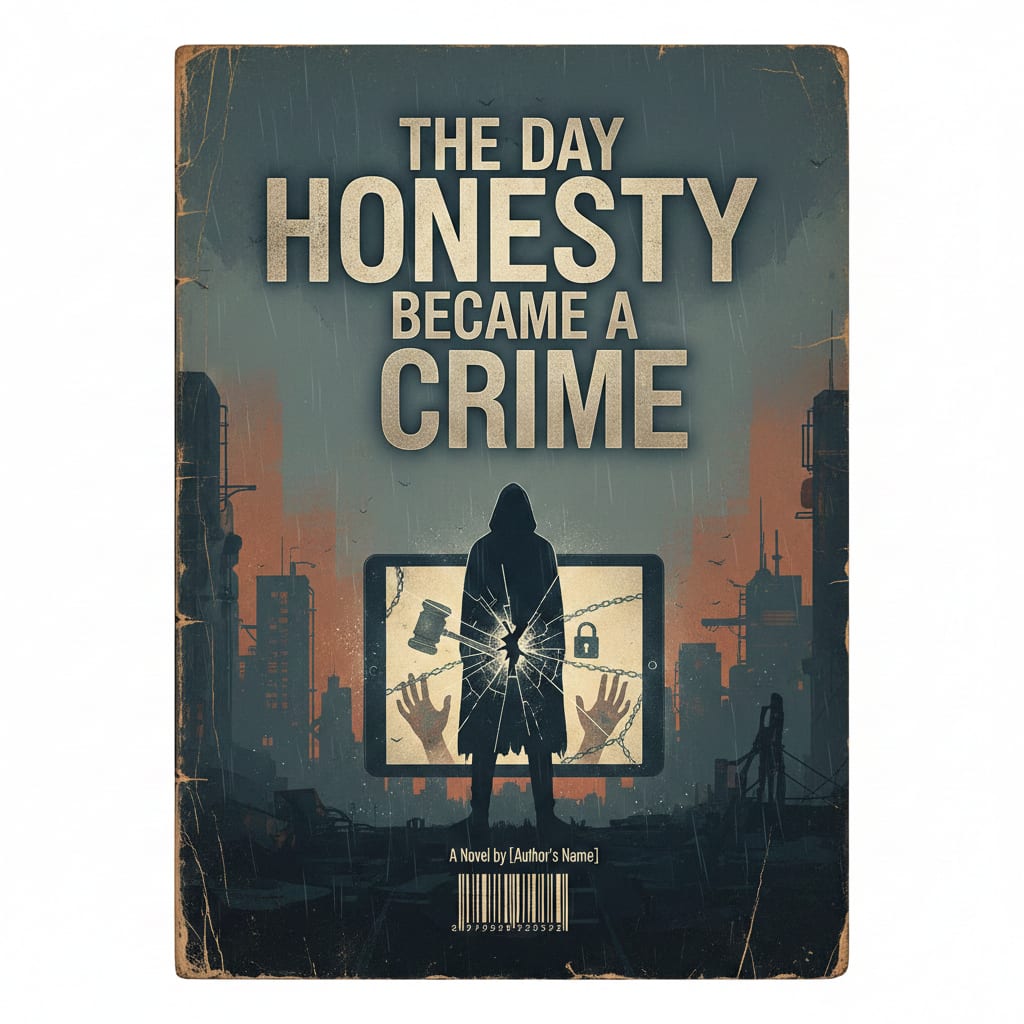
The Day Honesty Became a Crime
In the city of Daryan, honesty had once been a cherished virtue. People smiled when a neighbor returned a lost wallet, praised a student who admitted a mistake, and trusted each other with the smallest secrets. But change, as it often does, crept in silently.
It began with a law. The government announced that any statement contradicting official policies would be punishable by imprisonment. “Fake news” and “misleading information” were now terms broad enough to include truths that displeased those in power. Citizens were urged to “think twice before speaking” and reminded that loyalty to the state was more important than honesty.
Mara, a young journalist, felt the tremors of fear before anyone else. She had always valued truth above all. Her articles highlighted corruption, injustice, and the stories of those who had no voice. But one day, she published a piece revealing a scandal involving government officials diverting aid meant for flood victims. By the evening, her phone rang constantly. Messages appeared on social media, urging citizens to report “traitors.” Mara’s editor begged her to stay silent. “Truth has become dangerous,” he whispered.
At first, it seemed like paranoia. Then, it became real. The next morning, the city square was empty. Shops remained closed. People huddled inside, eyes downcast, as drones hovered overhead, listening. Mara walked cautiously to the newsroom, noticing faces she had known all her life avoiding her gaze. Her friend Tarek finally spoke.
“They took Rafiq last night,” he said quietly. “He told a factory worker that the company was underreporting accidents. Honest words. They say he’s in prison for ‘spreading false information.’”
Fear gripped Mara. Rafiq had been a mild-mannered accountant, known for his integrity. If he could be punished for honesty, then no one was safe. Yet, hiding the truth felt like betraying herself. She knew that silence would allow corruption to thrive, yet speaking out might mean losing everything.
The following days were worse. Teachers were fired for pointing out exam tampering. Doctors disappeared for revealing medical shortages. Even children were threatened if they told the truth about bullying. A twisted logic had taken over: honesty was now considered a crime because it exposed what the authorities wanted hidden.
Mara decided she could not stay silent. She devised a plan. Late at night, she sneaked into the city’s archives and copied confidential reports proving misuse of public funds, withheld salaries, and dangerous negligence. She could post them online anonymously, she thought, keeping her identity hidden. But the city had become a labyrinth of surveillance. Every step she took was recorded.
The night she released the documents, alarms rang. Mara’s location was traced immediately. She was dragged from her home, her pleas ignored. In court, the judges wore blank expressions, repeating the law as if it were carved in stone.
“You have committed the crime of honesty,” one judge said coldly. “You have spread truths that disturb public order. Punishment is mandatory.”
Mara’s heart sank. Outside, crowds watched silently, afraid to blink, afraid to whisper. Yet, a small seed of defiance lingered. One by one, people began to murmur among themselves, questioning the absurdity. If honesty was a crime, what could not be a crime?
Inside her cell, Mara reflected. They could imprison her body, but not the idea she carried. News spread like wildfire through underground networks. Citizens who once hid in fear now shared stories of corruption, injustice, and bravery. Mara’s “crime” had inspired others. Honesty, though outlawed, refused to die.
Months later, the regime faced pressure it could not contain. The world outside had learned about Daryan’s absurd law, and protests erupted both internationally and within the city. The government tried to suppress it, but the whispers had grown into a roar. Honesty, once criminalized, became the banner under which citizens reclaimed their voices.
Mara was released eventually, not because the authorities changed, but because the people refused to remain silent. The city square, once empty in fear, filled again with crowds waving banners that read: “Truth Cannot Be Punished.”
From that day, Daryan learned a hard lesson: honesty might be silenced temporarily, but it is never defeated. The law could attempt to punish it, but human courage and integrity always find a way. And in that city, the story of Mara reminded everyone that sometimes, one person’s honesty could challenge the injustice of an entire system.
About the Creator
Samaan Ahmad
I'm Samaan Ahmad born on October 28, 2001, in Rabat, a town in the Dir. He pursued his passion for technology a degree in Computer Science. Beyond his academic achievements dedicating much of his time to crafting stories and novels.
Keep reading
More stories from Samaan Ahmad and writers in BookClub and other communities.
Ink Costs Less Than Blood, But Not Today
Ink Costs Less Than Blood, But Not Today The slogan was painted on the wall outside the newsroom in thick black letters: Ink Costs Less Than Blood. It had been there since before I joined, a reminder passed down like an heirloom. We said it to comfort ourselves when threats came in by phone, when anonymous notes slipped under the door, when our names appeared online with red circles drawn around them. We said it to believe that words—printed, published, preserved—could stop violence before it spilled.
By Samaan Ahmadabout 4 hours ago in BookClub
Self Help: Grifters' Gospel
On Self-Help, Snake Oil, and the Illusion of Change Psychology professionals and students can be imagined on two opposite sides of a line called self-help books: likely a larger group opposes pop-science and step-by-step manuals filled with talk of success, journaling, and not giving a f**k; others love them, but they aren’t many.
By Avocado Nunzella BSc (Psych) -- M.A.P 6 days ago in BookClub
Austin Osman Spare:
A Maverick of Vision and Magic Few figures in the history of art and mysticism stand as distinctly as Austin Osman Spare. Born in London in 1886, at the close of the Victorian era, Spare entered a world caught between rigid social order and a fascination with the unseen. From a young age, his drawings displayed extraordinary skill and imagination, revealing an ability to render internal visions with a precision and intensity rarely seen in an artist so young. These early works conveyed both beauty and unease, hinting at an innate understanding of the subconscious mind and its symbolic potential.
By Marcus Hedare4 days ago in BookClub


Comments
There are no comments for this story
Be the first to respond and start the conversation.