
How the Shatter Me Series Reflects Mental Health Struggles
novel the Shatter Me Series

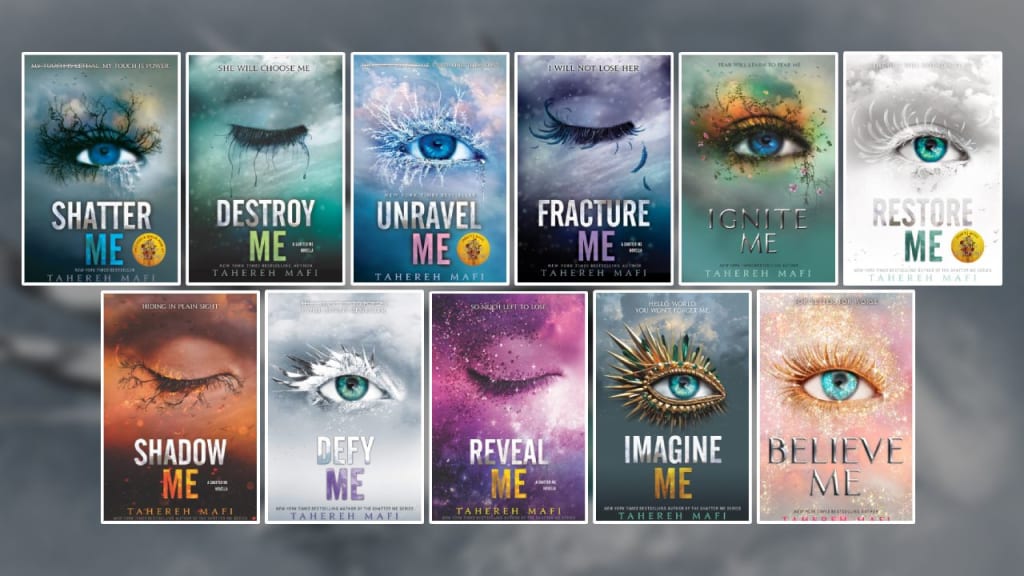
Mental health has become a central theme in modern literature, especially in young adult (YA) fiction, where emotional authenticity is deeply valued. One of the most compelling portrayals of psychological struggles in recent YA literature can be found in the shatter me series by Tahereh Mafi. This best-selling dystopian saga is much more than a story about supernatural powers and a crumbling society—it is an emotional journey through trauma, isolation, anxiety, and self-acceptance.
From the first book to the final installment, the series takes readers deep into the mind of its protagonist, Juliette Ferrars, whose internal battles are as intense as the external chaos surrounding her. This article explores how the mafi shatter me series mirrors real-life mental health challenges and why it resonates with so many readers worldwide.
Juliette's Isolation and the Struggle with Identity
At the start of the shatter me trilogy, Juliette is locked in a cell, isolated from the world because of her uncontrollable power—the ability to kill with a touch. While the dystopian setting may seem far removed from reality, Juliette’s emotional state is incredibly relatable. Her isolation is not just physical, but deeply emotional. She feels like a monster, incapable of human connection or love. These feelings echo the experiences of many individuals who struggle with mental health conditions such as depression and social anxiety.
Juliette’s early narration is fragmented, with crossed-out sentences and disjointed thoughts that vividly reflect her broken sense of self. This unique writing style immerses the reader in her mental state and shows how deeply she struggles with her identity. Her fear of herself, the guilt she carries, and her internalized belief that she is dangerous mirror the distorted self-perceptions often experienced by those dealing with trauma and emotional abuse.
The Evolution of Self-Worth and Acceptance
As the shatter me series progresses, we witness a transformation—not just in Juliette’s powers, but in her self-perception. Through her relationships with characters like Warner and Kenji, Juliette begins to challenge the lies she’s believed about herself. Warner, in particular, helps her realize that she’s not a monster, but a person who has been deeply hurt and misunderstood. This transformation speaks volumes about the importance of support systems in mental health recovery.
Juliette’s journey is one of reclaiming her voice, her power, and her place in the world. The progression from “I am not insane” to “I am enough” is subtle yet powerful. It represents how healing is not linear, but possible with patience, empathy, and self-love. This arc is deeply encouraging for readers who are on their own paths of recovery.
Anxiety, PTSD, and Internalized Trauma
One of the most powerful themes throughout the mafi shatter me series is the realistic depiction of anxiety and post-traumatic stress disorder (PTSD). Juliette frequently experiences panic attacks, nightmares, and overwhelming guilt. She reacts viscerally to touch and confrontation, and she often withdraws when overwhelmed. These behaviors are not dramatized for effect—they are sensitively written and realistic reflections of psychological trauma.
Tahereh Mafi does not shy away from showing how past abuse and fear shape a person’s present. Juliette's reactions to conflict, her desire to flee rather than fight, and her struggle with intrusive thoughts are all hallmarks of someone grappling with deep emotional scars. The fact that these elements are consistently present throughout the shatter me trilogy makes them feel authentic rather than tokenized.
Even Warner, another central character, exhibits signs of mental health struggles. His cold exterior hides deep-seated emotional pain, trauma from an abusive father, and intense pressure to suppress vulnerability. His and Juliette’s relationship becomes a safe space for both of them to acknowledge their pain, making their connection feel grounded in more than just romance—it’s about mutual healing.
Power, Control, and the Need for Agency
Mental health struggles often involve a loss of control—over one’s thoughts, emotions, and environment. The shatter me series uses Juliette’s supernatural power as a metaphor for this loss and eventual reclamation of control. At first, her abilities are a curse. She fears them and what they represent. But as she grows and begins to accept herself, her powers become an extension of her confidence and autonomy.
This shift is significant because it reflects how healing can empower people. For readers struggling with anxiety, depression, or trauma, Juliette’s evolution is a reminder that they too can learn to take control of their lives again. The metaphor of power, when handled with care—as it is in Mafi’s work—becomes a powerful allegory for mental resilience and self-empowerment.
Breaking the Stigma through Representation
Mental illness is often stigmatized or misrepresented in fiction. The mafi shatter me series breaks this mold by presenting characters who are flawed, emotionally complex, and deeply human. Juliette is not a perfect heroine—she is fragile, emotional, and sometimes irrational. But that’s what makes her real. She is not defined by her illness or her trauma, but rather by her courage to face them.
Additionally, the series shows that recovery doesn’t mean the absence of struggle. Even in later books, when Juliette has found her voice and her leadership role, she still wrestles with doubt, fear, and panic. This continuity is critical, as it reflects how mental health is not a one-time battle, but an ongoing process.
Kenji, another fan-favorite character, adds a layer of humor and lightness, but he too shows vulnerability. His role in supporting Juliette without trying to “fix” her reflects a healthy, platonic relationship that values empathy and respect over pity. These nuanced portrayals help dismantle harmful stereotypes around mental health and offer readers a new way to view their own challenges.
Conclusion: Why It Matters
The shatter me trilogy and its subsequent books have resonated with millions, not just for their action-packed plots and swoon-worthy romance, but for their raw and honest portrayal of mental health. Juliette’s journey—from self-loathing and isolation to empowerment and acceptance—offers hope to anyone who has ever felt broken.
Through lyrical prose, emotionally complex characters, and a story that never shies away from pain, the shatter me series provides a powerful commentary on what it means to struggle and to heal. It’s a reminder that even in a world filled with chaos and cruelty, there is always a way forward. By reflecting real mental health struggles in a fictional setting, Tahereh Mafi gives voice to countless readers who see their own experiences mirrored in Juliette’s story.
About the Creator
Novelstory
Discover the complete Shatter Me series order by Tahereh Mafi, including all books and novellas in the Shatter Me trilogy. Get detailed summaries and learn the order of Shatter Me books with our thorough guide to the Mafi Shatter Me series.
Keep reading
More stories from Novelstory and writers in BookClub and other communities.
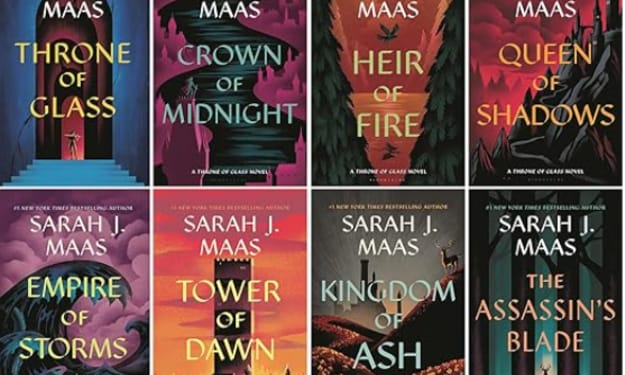
Ranking All Throne of Glass Books From Best to Worst
Sarah J. Maas’s Throne of Glass series is a high-fantasy masterpiece filled with magic, assassins, fae warriors, and deeply complex characters. With a fanbase spanning the globe, the series has captivated readers with its intricate world-building, gripping plot twists, and the evolution of the fierce heroine, Celaena Sardothien.
By Novelstory9 months ago in BookClub
Rachel Reviews: The Spiral Archive by Pieter Hendrik
It's difficult for me to know where to start with a review of this book as it was, for me, an entirely unique experience and one that I'll probably never have again. I don't want that to be interpreted as unenjoyable but it has left me scratching my head a little and ruminating on its content, its themes and its characters.
By Rachel Deeminga day ago in BookClub



Comments
There are no comments for this story
Be the first to respond and start the conversation.