
How Does It Feel to Be the Protagonist?
Unpacking the Unique Engagement and Challenges of Immersive Storytelling


The Art of Second-Person Novel Writing
When diving into the world of storytelling, writers often explore various narrative perspectives. Among these is the relatively rare second-person perspective, a technique that engages readers in a unique and immersive way. This article seeks to unravel the concept of writing a novel in the second person, exploring its intricacies, advantages, and challenges.
Understanding Second Person Narrative
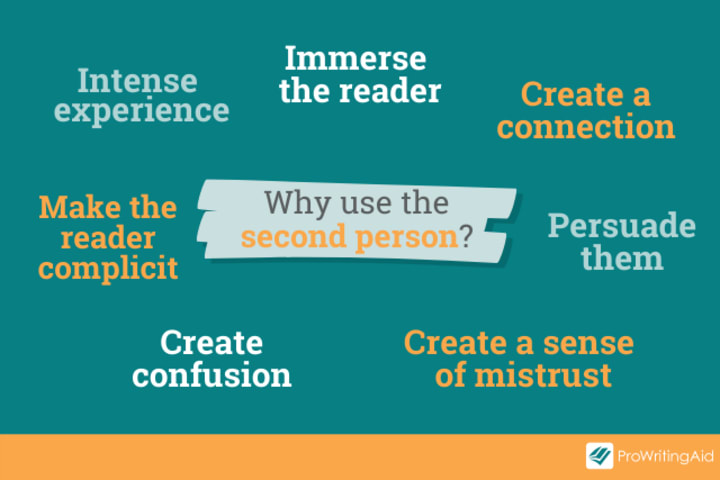
In literary terms, the second person narrative addresses the reader directly using the pronoun "you." This approach places the reader in the shoes of the protagonist, creating an intimate connection between the reader and the narrative. Unlike first-person narratives, where "I" is the focal point, or third-person narratives with "he," "she," or "they," the second person thrusts readers into the action as they become the main character.
Consider the opening lines of a second-person novel:
You wake up to the sound of rain tapping against your window. Today, you decide, will be different. You're ready to face whatever the world throws at you.
From this example, we can see how the second-person perspective elicits immediate involvement and an emotional response, as it transforms the reader into an active participant in the story.
The Drawbacks and Challenges
While second-person narration offers unique possibilities, it also presents considerable challenges:
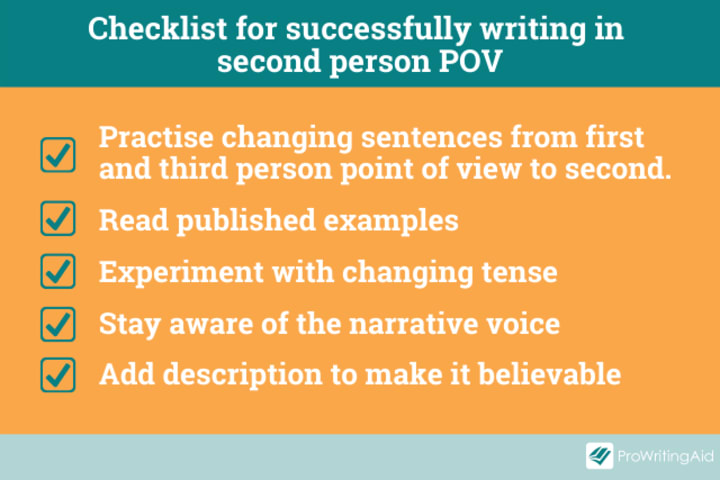
Reader Engagement: Some readers may find being addressed directly as "you" overwhelming or awkward. Unlike first-person where a character's voice develops organically, a second-person narrative risks alienating readers who may not relate to the actions or thoughts attributed to "you."
Narrative Limitations: The heavy reliance on the "you" pronoun can be restrictive. This viewpoint may limit the exploration of other characters' internal thoughts and motivations, making it difficult to develop subplots that require a broader perspective.
Pacing Control: The immediacy of second-person can complicate pacing. A slow, contemplative moment may feel rushed when framed as an interactive experience, disrupting the flow of the narrative.
The Advantages of Second Person
Despite its challenges, writing in the second person also offers several advantages that can be creatively leveraged:
Immersive Experience: By placing the reader directly into the narrative, second-person writing can create an unparalleled sense of immediacy. This immersion can drive emotional engagement, drawing readers closer to the conflict and stakes at hand.
Interactivity: This narrative style invokes a sense of agency; readers are not just passive observers but active participants in the unfolding story. This can lead to a more visceral and potent reading experience.
Impactful Simplicity: The simplicity of addressing the reader as "you" allows for clear and straightforward communication of thoughts, emotions, and actions. This can make themes and character decisions resonate more deeply.
Innovative Storytelling: The rarity of second-person narratives means they stand out in a crowded literary market. By employing this style, authors can carve out a niche and offer something fresh to their readers.
Notable Examples of Second-Person Narratives
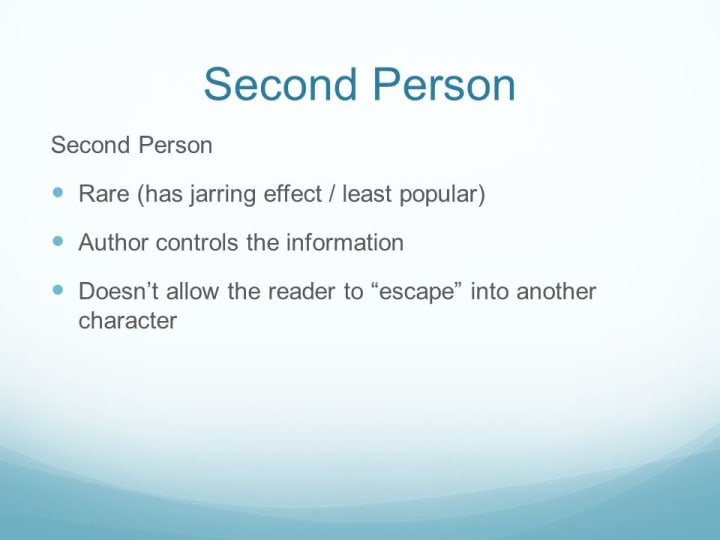
Several authors have successfully harnessed the power of the second person, creating memorable works that leave a mark on their readers. Some notable examples include:
"If on a Winter's Night a Traveler" by Italo Calvino: This playful novel addresses the reader as "you," guiding them through a labyrinthine exploration of reading, writing, and narrative structure.
"Bright Lights, Big City" by Jay McInerney: In this quintessential depiction of 1980s Manhattan, the use of second person enhances the sense of isolation and disorientation that the protagonist feels.
"Choose Your Own Adventure" series: Although primarily aimed at younger audiences, these interactive books engage readers by allowing them to make decisions, further immersing them in the narrative experience.

Tips for Writing in Second Person
If you're considering crafting your own novel in the second person, here are some tips to keep in mind:
Establish a Strong Voice: Your narrative voice should be distinct and consistent. Decide early on how you want to address readers—intimately, conversationally, or even sarcastically—and stick with it.
Use Sensory Details: To maintain engagement and create vivid imagery, incorporate rich sensory details. Describe sights, sounds, smells, and feelings that make the reader feel as though they are truly experiencing the story.
Build Relatable Characters: Craft characters and scenarios that resonate with readers. While they may be "you," the emotional connection is essential for sustaining engagement over the course of a novel.
Experiment with Structure: Play with narrative structure to keep the story dynamic. Consider alternating between “you” and third-person perspectives, or introducing choice moments that heighten interactivity.
Seek Feedback: Given the unique challenges of second-person narration, it’s crucial to share your work with others to gauge their responses and adjust your approach accordingly.
Conclusion
Writing a novel in the second person invites both writers and readers into a shared experience that can be thrilling, intense, and deeply resonant. While this narrative style is unconventional, its ability to pull readers into the heart of the action offers an exciting opportunity for creative storytelling. As authors experiment with this perspective, they open doors to new forms of connection and engagement, redefining the boundaries of narrative art. So, if you've ever envisioned yourself as a character in a novel, perhaps it’s time to explore the depths of second-person storytelling and experience the adventure firsthand.
About the Creator
Hannah miller
I’m an author dedicated to weaving engaging narratives across a variety of genres to resonate with readers.
Keep reading
More stories from Hannah miller and writers in BookClub and other communities.
What Makes a Plot Unforgettable?
In the realm of storytelling, novels often share similar structures—exposition, rising action, climax, falling action, and resolution. While following this traditional narrative arc can provide a solid foundation, the true magic lies in the elements that differentiate a plot and make it unforgettable. A plot that stands out captivates readers, resonates emotionally, and lingers in their minds long after the last page is turned. Below, we delve into the core elements that contribute to making a novel's plot truly remarkable, even when following a conventional structure.
By Hannah millerabout a year ago in BookClub
The 2025 Bibliophile Advent Calendar Special
There’s a moment every December when the world finally exhales. For me, it usually happens right after I pull out my favorite winter mug and I take that first deep breath of the season. The lights glow a little softer. The books on my shelves seem to lean toward me, waiting. And I remember why winter reading feels like a ritual.
By Kristen Barenthaler3 days ago in BookClub




Comments
There are no comments for this story
Be the first to respond and start the conversation.