
Cosmic Collision: The Devastating Future of the Milky Way and Andromeda's Inevitable Clash
A Terrifying Journey Through the Destruction, Chaos, and Unknown Horrors of Our Galaxy's Final Days
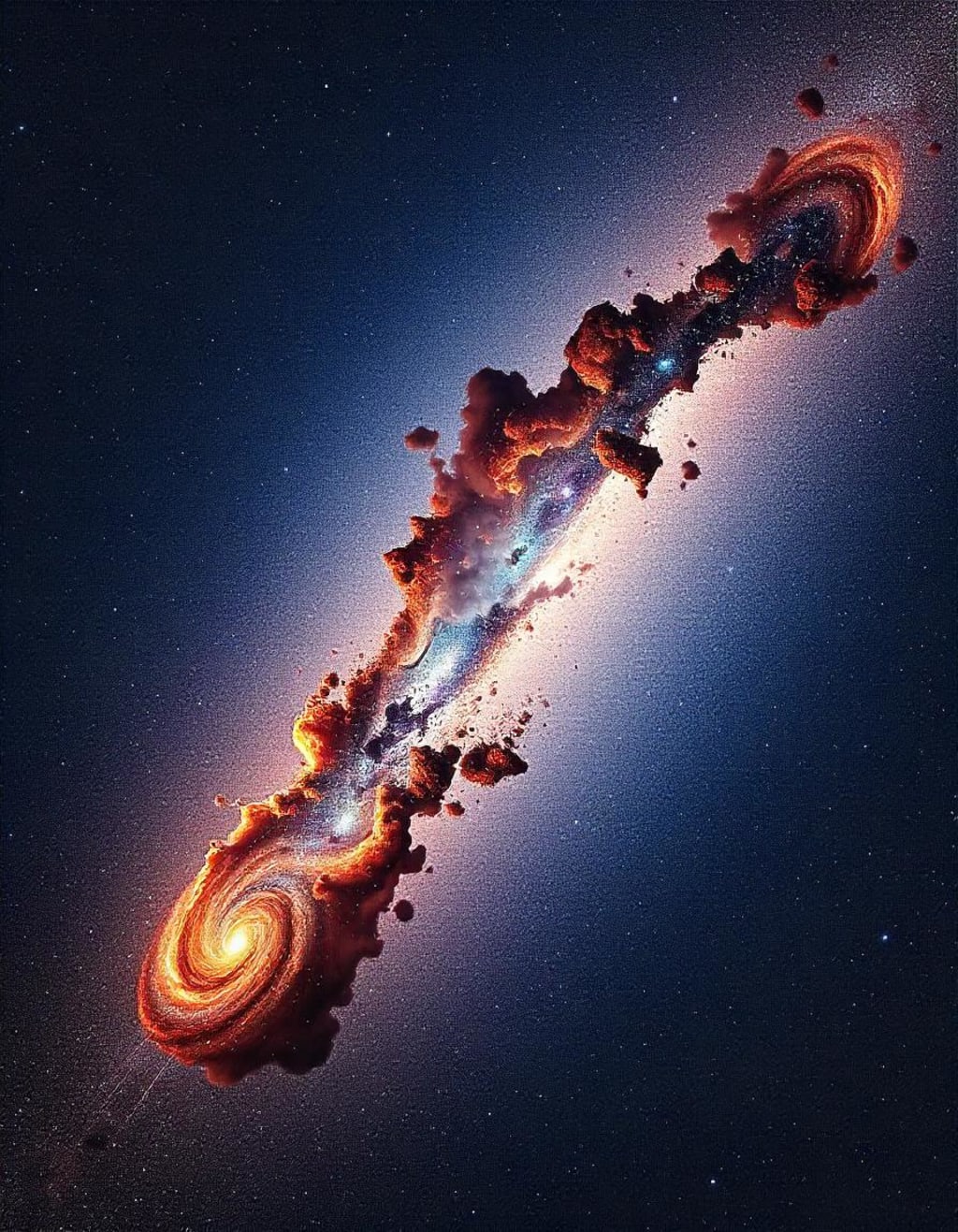
The neighboring galaxy poised to collide with the Milky Way is the Andromeda Galaxy, a colossal spiral of stars, gas, and dark matter hurtling toward us at a staggering 110 kilometers per second. What lies ahead in the distant future is one of the most catastrophic cosmic events ever imagined—a slow-motion apocalypse that will transform the night sky into a chaotic battlefield of colliding stars and gas clouds, eventually obliterating the familiar structure of both galaxies. The collision, which is predicted to occur in about 4.5 billion years, won’t merely be a passing event—it will be an existential threat to everything we know about our cosmic neighborhood.
The Gathering Storm
Picture the calm skies of our current Milky Way—stars gently spinning in an organized disk, the spiral arms stretching outward like peaceful streams of starlight. But now imagine, on the far edge of the galaxy, a looming monster steadily growing larger and more ominous. Andromeda, once a distant and faint smear in the night sky, will swell over the millennia, becoming a glaring presence. By the time it's fully visible to the naked eye, it will dominate the sky—a distorted, glowing spiral blotting out the familiar constellations. As the two galaxies draw closer, gravitational forces will begin to warp their shapes. Stars will be flung from their orderly paths, veering dangerously into interstellar space. This early phase will look like an eerie, slow-motion disintegration—galaxies twisting and contorting in ways unimaginable to our present-day minds.
The Cosmic Collision
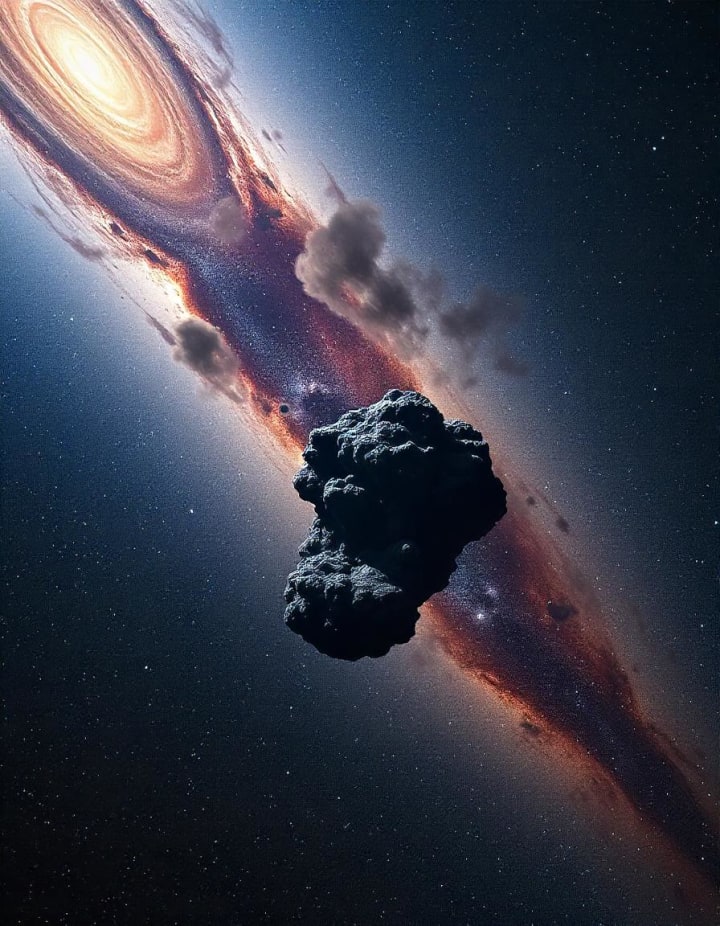
When Andromeda’s outer edges finally meet the Milky Way’s spiral arms, the true devastation begins. Despite the vastness of space between individual stars, the sheer gravitational chaos unleashed by two colliding galaxies is catastrophic. Gas clouds, stretching light-years across, will slam into each other at immense speeds, igniting massive star-forming regions. New stars will be born, but these stellar nurseries will be turbulent and violent. The intense radiation from the birth of countless new stars will fry entire star systems, boiling away any atmospheres or planets that might have supported life.
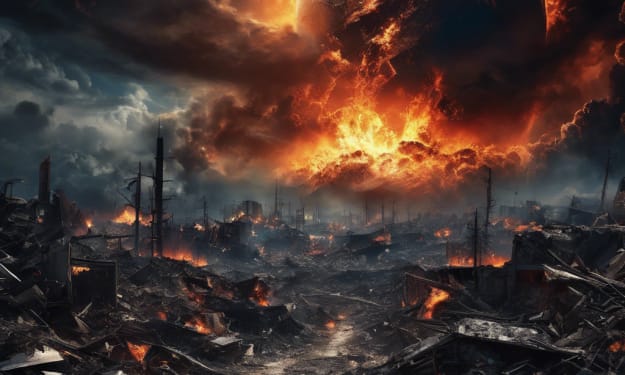
Meanwhile, the gravitational dance between the two galaxies will send stars careening into the void. Many solar systems, including potentially our own, will be ripped from their positions and flung into the cold, dark emptiness of intergalactic space. Our night sky will no longer be a tranquil canvas of distant lights but a chaotic, flashing web of stars as they collide, ignite, and explode in supernovae. This once stable region of the universe will become an unpredictable, lethal storm of cosmic violence.
The Fate of Earth and the Solar System
If Earth is still habitable by the time this apocalyptic event occurs, the future of the planet will hang in precarious balance. While it’s unlikely that individual stars will directly collide with one another due to the vast distances between them, the gravitational chaos caused by the collision could be enough to unseat entire star systems. The Earth’s own orbit could be thrown out of its delicate balance around the sun.
In a worst-case scenario, our solar system might be ejected from the galaxy entirely, cast into the cold, lifeless void between galaxies. The sun could burn out over time, leaving Earth a frozen, lightless wasteland, a desolate relic of a once thriving planet. Even if we remain within the merged galaxy, the proximity to regions of intense radiation, supernovae, and hyperactive black holes will pose a constant threat to life as we know it. Any hope of human survival would be dependent on advanced technology—if humanity still exists by then—or a sheer stroke of luck.
The Birth of a New Galaxy: A Final Act of Destruction
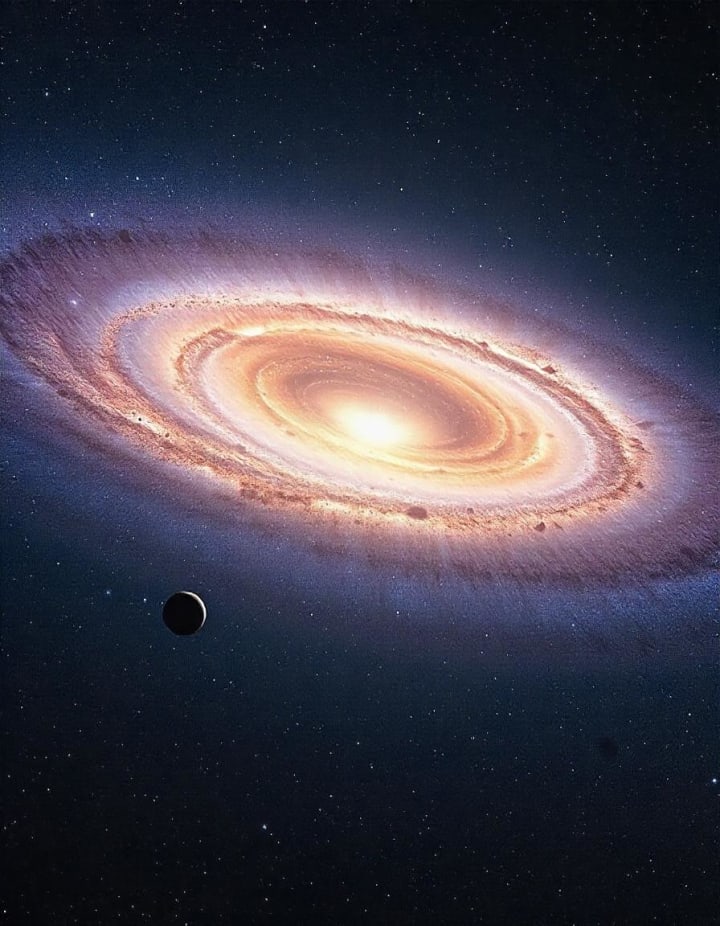
After billions of years of violent cosmic battles, the two galaxies will settle into a monstrous new structure—a single, massive elliptical galaxy, devoid of the majestic spiral arms that once defined both the Milky Way and Andromeda. The chaotic energy will eventually calm, but what remains will be a graveyard of stars, planets, and civilizations that didn’t survive the collision. The black holes at the centers of the two galaxies will eventually merge, creating a supermassive black hole with an insatiable hunger. It will consume whatever is left of the nearby stars and gas, creating a vast, deadly zone at the core of the new galaxy—a region from which nothing can escape. The event horizon of this supermassive black hole will stretch far beyond what we can currently fathom, growing ever larger as it feeds on the aftermath of the galactic collision.
The once familiar night sky, which inspired millennia of human wonder, will be forever altered. The serene beauty of the Milky Way will be replaced by the ghostly glow of a distorted galaxy—a fractured, misshapen version of what once was. The universe that humanity evolved in will no longer exist.
The Horrors of the Unknown
What makes this future even more terrifying is the sheer unpredictability of cosmic events. While astronomers can simulate the likely outcome of the collision, the true details will remain unknown until it unfolds. Will we survive, floating aimlessly through the void, or will we be caught in the gravitational death throes of two colliding star systems? Will Earth be incinerated by a nearby supernova, or will we be drawn into the swirling chaos of a black hole?
Andromeda’s collision with the Milky Way doesn’t just represent the destruction of a galaxy—it symbolizes the fragility of existence in a universe that operates on scales of time and space that are terrifyingly incomprehensible. We are but fleeting specks, clinging to a rock orbiting a star in an unimaginably vast and hostile cosmos. In the grand scheme, our solar system could be wiped from the galaxy without a trace, as if it never existed.
A Final Glimpse of the Future
The aftermath of this collision will leave a galaxy utterly transformed—a silent, elliptical behemoth, drifting through the void, devoid of the elegance and structure that once defined it. The familiar spiral arms, the birthplace of countless stars, planets, and perhaps even life, will be gone, replaced by a sea of ancient, dying stars.
If any civilization remains to witness the final stages of the merger, they will look upon a sky that is unrecognizable from the one we see today—a sky haunted by the ghosts of stars, swirling gas clouds, and the looming presence of an insatiable black hole, devouring what little remains of a once vibrant galaxy.
In the far future, the only reminder of this cosmic cataclysm will be the silent void that now surrounds us, a chilling testament to the unstoppable, destructive forces that govern the universe. This future is a reminder of the terrifying truth: that nothing, not even the most massive galaxies, is immune to the inevitable, violent hand of cosmic fate.
About the Creator
Cosmic Dread
A cosmic horror writer. I blend real science with chilling possibilities, exploring the terrifying forces of the universe—black holes, rogue planets, and cosmic horrors lurking in the cold void of space.
Keep reading
More stories from Cosmic Dread and writers in BookClub and other communities.
"The Lunar Cataclysm: When the Moon Falls and Earth Shatters"
A Slow Descent into Chaos For billions of years, the Moon has been Earth’s quiet sentinel, governing our tides, stabilizing our planet’s tilt, and illuminating the night sky. It has always been a symbol of mystery and serenity. But in this terrifying scenario, the Moon—our cosmic neighbor—has fallen from its orbit, doomed to collide with Earth in a catastrophic event that would shatter our world.
By Cosmic Dreadabout a year ago in BookClub
My New Book is Finally Here
My poetry collection Beautiful and Brutal Things is done. It's actually done and finally published over 270 pages. Over a year of my life went into this book. More than a year, really. Long days at my computer, sometimes seven days a week because I couldn't stop even when I probably should have. Then two months of editing that felt harder than the writing itself. But it's finished, and I'm still standing, and the book is real.
By Tim Carmichael3 days ago in BookClub
Hildegard von Bingen
Light, Intellect, and Authority in the Medieval World Hildegard von Bingen stands as one of the most extraordinary intellectual figures of the Middle Ages, a woman whose range of achievement resists narrow definition. Born in 1098 in the Rhineland region of what is now Germany, Hildegard entered a world shaped by monastic reform, theological debate, and emerging centers of learning. From this environment emerged a thinker whose influence reached far beyond the walls of any cloister. Across a long life, Hildegard produced visionary theology, original sacred music, works of natural history and medicine, and a vast body of correspondence that circulated among the most powerful religious and political leaders of the twelfth century. Recognition during life was not limited to local admiration but extended across the Holy Roman Empire and into the highest ranks of the medieval Church.
By Marcus Hedare4 days ago in BookClub



Comments (1)
Very interesting and humbling to ponder.