
A Glimpse into The Intriguing Funeral Rites of Ancient Egypt
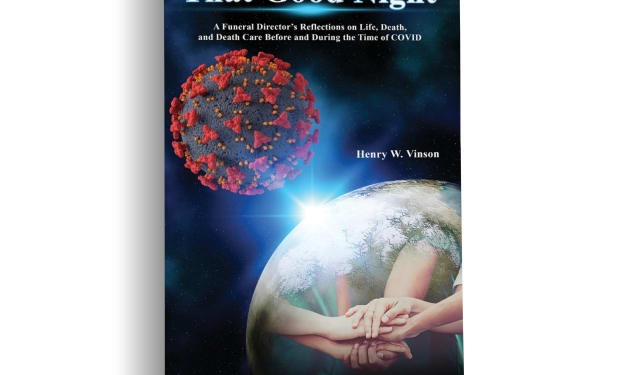
That Good Night by Henry W Vinson

From enigmatic pyramids to mysterious hieroglyphs, there is something about ancient Egypt that has absorbed a lot of imagination for centuries. Nothing, however, is as fascinating or bizarre as the funeral rites of this ancient civilization. Far from being mere ceremonies, the funeral rites of this ancient civilization were structured, multilayered practices interlaced with religious zeal, social hierarchy, and sometimes just plain oddities. It was mind-blowing!
If you find yourself captivated by the rituals surrounding death, then That Good Night by Henry Vinson is a must-read. As an expert in funerals and mortuary sciences, Vinson guides you through the history and contemporary practices of death rituals.
Imagine now a world where death wasn't feared but revered, where the journey to the afterlife had the same magnitude as life itself. To the ancient Egyptians, this wasn't just a belief system but a reality that completely consumed them. The Egyptians treated death not as an end but as a transition into some other realm that called for thorough preparation and, quite curiously, an obsession with immortality.
Mummification was among the most fascinating practices during Egyptian burials. It is easy to imagine: the careful embalmment of a body, the removal of organs and placement in canopic jars, anointing the skin with oils and resins. That was not just a way to preserve but rather a spiritual necessity.
If one's body had to be intact for the soul to identify itself in the afterlife, the unpredictable thing is that the brain, considered worthless, was pulled out from the nose and thrown away. Then, even more unpredictably, the heart, believed to have intelligence and emotions that were crucial for the soul to present itself in the afterlife and be judged, was left inside the body.
However, these rituals did not stop at just mummification. The tomb itself was conceived as a kind of gateway to eternity, coated with various spells from the Book of the Dead, which protected the deceased from perils in the underworld. These very spells, inscribed on the walls of the tomb, became something tantamount to an ancient GPS to guide the soul through treacherous landscapes of the afterlife. Not to mention the really elaborate funerary offerings—food, wine, even furniture—intended to be of comfort in the next world. And some tombs actually included—rather bizarrely, if you ask me—'Shabti' dolls, small figures meant to do the labor for the deceased in the afterlife. Indeed, even in death, the ancient Egyptians had a workforce available at their beck and call.
Yet, not all funerals were grand and elaborate. The social hierarchy was deeply entrenched in these rites. While the Pharaohs were entombed in lavish pyramids, the common folk had to make do with modest graves. However, even the simplest burial had its rituals. The deceased would be buried with a few possessions, perhaps a favorite amulet or a small offering of bread, to ensure they didn't go hungry in the afterlife.
The fact that Egyptian funeral practices are so enhanced by their use of magic makes them so uncertain. There were certain amulets and charms that went along with the mummy's wrappings, and all served their reason. Some were to protect the body, and others were to ensure the body's safe passage to the afterlife. One of the most interesting amulets to be attached to anything was an amulet called the 'Eye of Horus,' supposedly used for both healing and protection. The symbol, usually displayed on the coffin, was believed to keep evil spirits away and also to guide the soul safely to his heavenward journey.
Certainly, the most interesting among all other ancient Egyptian funerals is their belief in 'ka' and 'ba.' To them, 'ka' was a spiritual counterpart of the body, while 'ba' was the personality or soul. This required the two entities to reunite each night if the dead were to resurrect in the afterlife. This prompted the building of elaborate tombs with false doors and windows for the 'ka' to pass freely through to locate the 'ba.'
In a world where death is often shrouded in mystery and fear, the ancient Egyptians embraced it with an almost macabre fascination. Their funeral rites, both bizarre and deeply symbolic, reflect a culture obsessed with the afterlife and the quest for immortality. So, the next time you think about ancient Egypt, let your mind wander beyond the pyramids and consider the strange, unpredictable world of their funeral practices—where death was not an end but a complex, ritualistic journey into eternity.

About the Creator
Henry W Vinson
That Good Night is a cubist depiction of death and death care because they're viewed from multiple perspectives. The book will illuminate the evolution of funerary rites in the United States from the earliest Puritans to "green funerals."
Keep reading
More stories from Henry W Vinson and writers in BookClub and other communities.
Unveiling Fascinating Funeral Rites Throughout History
The rites surrounding death have long been a reflection of the beliefs, fears, and hopes of different cultures, from the majestic to the bizarre in funeral practices. This history unveils fascinating imagery of how humans have thought of death.
By Henry W Vinsonabout a year ago in BookClub
My New Book is Finally Here
My poetry collection Beautiful and Brutal Things is done. It's actually done and finally published over 270 pages. Over a year of my life went into this book. More than a year, really. Long days at my computer, sometimes seven days a week because I couldn't stop even when I probably should have. Then two months of editing that felt harder than the writing itself. But it's finished, and I'm still standing, and the book is real.
By Tim Carmichael5 days ago in BookClub
7 Deep Books You Can Finish In A Single Day
In a world that moves at breakneck speed, many of us crave depth without overload. We want books that challenge our thinking, expand our emotional range, and linger in our minds—without requiring weeks of commitment. The good news? Profound reading doesn’t have to be long reading.
By Diana Merescabout 19 hours ago in BookClub



Comments
There are no comments for this story
Be the first to respond and start the conversation.