
Unveiling Fascinating Funeral Rites Throughout History
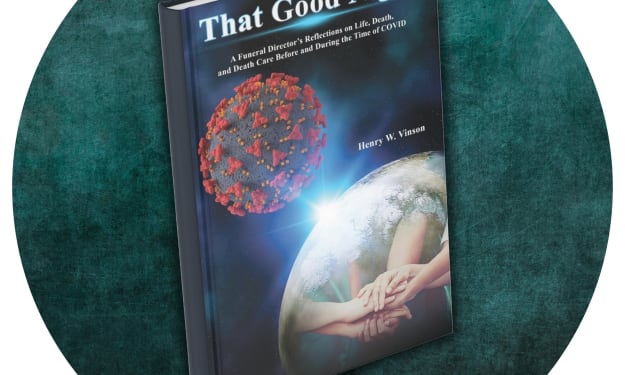
That Good Night By Henry W Vinson

The rites surrounding death have long been a reflection of the beliefs, fears, and hopes of different cultures, from the majestic to the bizarre in funeral practices. This history unveils fascinating imagery of how humans have thought of death.
If you are one of those fascinated with the rituals surrounding death, then That Good Night by Henry Vinson is a must-read. Vinson, the expert in funerals and mortuary sciences, will walk you through the history and modern practices of death rituals.

Now, let's dive into an intriguing and sometimes unpredictable journey through some of the most unique funeral rites history has recorded.
The Viking Ship Burials: A Passage to the Afterlife
Mentioning a Viking funeral to most people would probably bring forth the image of a blazing ship drifting away. More than being a dramatic scene worthy of film reel material, this rite was an act steeped in deep belief. The Vikings believed that a warrior's journey to their paradise, Valhalla, should be one to remember.
High-ranking Vikings were often buried in their ships, surrounded by treasures and weapons, and occasionally even sacrificed slaves to accompany them into the afterlife. Thus, the ship itself—a vessel of life—now became a vehicle of death, buried in the earth or set aflame on the sea. The flames licking up the night sky symbolized the soul's journey up to the gods—a sight just as awesome as terrifying.
The Sky Burials of Tibet: A Feast for the Vultures
Quite the opposite of the Vikings' over-the-top sendoff, Tibetan Buddhists have a funeral ritual that is at once as practical as it is spiritual: the sky burial. Following a death, the body is not buried or cremated but is taken to the top of a mountain and left exposed to wind and weather, serving as food for scavenging vultures. This ritual was created to serve a dual purpose and thus related to a belief that the body is a vessel for the spirit.
It is both a final act of charity—providing sustenance for animals—and a grim reminder of the transience of life. To the vultures, considered sacred, it is an act of the divine carriers of the soul to heaven. It means serene acceptance of nature's cycle, a humbled return to the earth from which life sprang.
The Endocannibalism of the Yanomami: Consuming the Dead
Endocannibalism may sound like a grotesque practice of consuming one's own deceased body, but for the Yanomami tribe in the Amazon, it is an act of profound reverence. The Yanomami think that this way, the spirit of the deceased will keep living within the community since the ashes are said to be mixed with plantain soup.
This ritual, done only after cremation, symbolizes unity between the living and the dead so that it is promised that the spirit shall not be lost in nothingness but part of the existence of the tribe. This is a far cry from the more common—Western—concepts of death, where the dead are generally removed from the living, placed in graves, and locked away.
The Yanomami believe death to be yet another beginning, an entry point into an existence where the deceased does not leave.
The Mummification of the Pharaohs: Preparing for Eternity
Probably the most famous funeral practice in history, the technique of mummification was a ritual in many respects about life, wrapped up in linen-wrapped bodies and gold-laden tombs. That is, the ancient Egyptians believed a person's soul needed its body to be preserved in order to survive in the afterlife.
It was a careful preparation for eternity, with elaborate processes of organ removal, drying of the body, and wrapping it in linen.
Goods from food to furniture were placed in the tombs so that the dead person might continue his existence without want in the afterlife. It was a world where death was a doorway to another life, and the grandeur of the burial reflected the importance of the life yet to come.
The Funeral Pyres of India: Liberation through Fire
Cremation on funeral pyres, especially on the sacred River Ganges, is deeply grounded in Hinduism. To Hindus, therefore, fire purifies, and cremation is the release of the soul from the body, further attaining the next step in the journey: rebirth or moksha—liberation from life's and death's cycle.
The Ganges is seen as the holiest of rivers; being able to wash away sins and have one's ashes scattered in it is believed to bestow moksha or liberation from rebirth. Seeing these funeral pyres burning simultaneously, hauntingly, and profoundly along the Varanasi ghats speaks to something basic in human beings: the transient nature of life and the hope of what lies beyond.
These funeral rites, though varied, share a common thread—they are all expressions of how different cultures understand and honor the dead. They reveal a deep connection to the natural world, a respect for the passage of life, and an enduring belief in the continuation of the spirit. In exploring these rituals, we see not just how cultures deal with death but how they celebrate life, continuity, and the eternal.
Available on Amazon: https://a.co/d/c1LokaN
About the Creator
Henry W Vinson
That Good Night is a cubist depiction of death and death care because they're viewed from multiple perspectives. The book will illuminate the evolution of funerary rites in the United States from the earliest Puritans to "green funerals."
Keep reading
More stories from Henry W Vinson and writers in BookClub and other communities.
A Glimpse into The Intriguing Funeral Rites of Ancient Egypt
From enigmatic pyramids to mysterious hieroglyphs, there is something about ancient Egypt that has absorbed a lot of imagination for centuries. Nothing, however, is as fascinating or bizarre as the funeral rites of this ancient civilization. Far from being mere ceremonies, the funeral rites of this ancient civilization were structured, multilayered practices interlaced with religious zeal, social hierarchy, and sometimes just plain oddities. It was mind-blowing!
By Henry W Vinsonabout a year ago in BookClub
My New Book is Finally Here
My poetry collection Beautiful and Brutal Things is done. It's actually done and finally published over 270 pages. Over a year of my life went into this book. More than a year, really. Long days at my computer, sometimes seven days a week because I couldn't stop even when I probably should have. Then two months of editing that felt harder than the writing itself. But it's finished, and I'm still standing, and the book is real.
By Tim Carmichael5 days ago in BookClub
Rachel Reviews: Paradise Cove - They Escaped the Cuckoo's Nest by Pini Dunner
On starting Pini Dunner's book, I was grateful for the thorough history that is provided at the start. This gives a much-needed context in order to enjoy the subsequent letters contained therein. The letters belong to George Nagel, an octagenarian pursuing a psychology degree which in itself would be remarkable; however, it is soon clear that this is just one remarkable thing in a life full of them.
By Rachel Deeming4 days ago in BookClub



Comments
There are no comments for this story
Be the first to respond and start the conversation.