
Weight Is Not an Issue: How a 250kg Kangaroo Could Still Hop on Two Legs
Fossil and biomechanical studies reveal how a 250kg prehistoric kangaroo retained the iconic hopping ability of its smaller relatives


New research reveals the biomechanics that allowed prehistoric giant kangaroos to hop efficiently despite their massive size
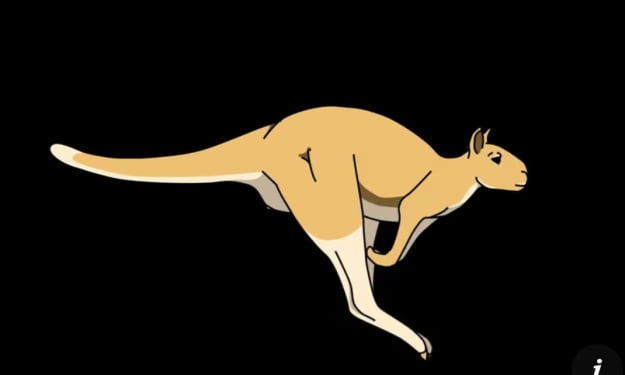
When most people think of kangaroos, they imagine the agile, hopping marsupials bounding across Australia’s open plains. But what if we told you that some ancient kangaroos weighed as much as 250 kilograms—more than twice the mass of the largest modern species—and could still hop on two legs? Recent studies in paleontology and biomechanics are challenging long-held assumptions about the limits of marsupial locomotion, showing that even these enormous creatures were capable of springing across the landscape with surprising efficiency.
The Giant Kangaroo Discovery
Fossils of a prehistoric kangaroo species, dating back to the Pleistocene epoch, reveal an animal of extraordinary size. Estimated at 250 kilograms, these giants would have towered over modern red kangaroos, which typically weigh up to 90 kilograms. Initially, scientists assumed that such a massive animal would be forced to adopt a walking or slow bounding gait rather than the iconic hopping for which kangaroos are known.
However, detailed examination of fossilized limb bones, pelvic structures, and tendon attachment points tells a different story. The skeletal anatomy shows remarkable similarities to modern kangaroos, suggesting that these prehistoric giants retained the adaptations necessary for bipedal hopping.
Biomechanics Behind Hopping
Modern kangaroos are masters of energy-efficient locomotion. Their tendons act like elastic springs: they stretch when the foot lands and recoil when the kangaroo pushes off, conserving energy and reducing the metabolic cost of long-distance travel.
Scientists applied biomechanical modeling to the fossils of the 250kg kangaroo to determine whether hopping was feasible at such a large size. The results were surprising. Despite the enormous mass, the leg bones and tendons were proportionally robust enough to store and release energy efficiently, enabling powerful leaps. The giant kangaroo’s hind limbs were well-suited to bear the stresses of landing and takeoff, while the pelvis and spine allowed for stability and balance during motion.
Dr. Emily Rogers, a biomechanical researcher involved in the study, explains: “We discovered that the same principles that allow a modern kangaroo to hop—elastic tendons, strong hind limbs, and balance—scaled up surprisingly well. Even at 250 kilograms, hopping was not only possible but likely an effective way for these animals to move across their environment.”
Evolutionary Advantages
Hopping offers several evolutionary advantages, and retaining this mode of locomotion would have been critical for survival. First, hopping allows kangaroos to cover vast distances quickly in search of food and water, an essential adaptation in Australia’s often harsh and variable climate.
Second, hopping is energy-efficient compared to running or walking, especially for animals covering large distances. For a massive kangaroo, energy conservation would have been crucial to sustain day-to-day activities without overtaxing its metabolism.
Lastly, hopping provides a rapid escape mechanism from predators. Despite their size, these giant kangaroos would have been able to flee threats efficiently, ensuring they were not easy targets for carnivorous megafauna of their era.
Challenges of Size
Of course, hopping at 250 kilograms was not without challenges. The greater the weight, the higher the impact forces on the joints during landing. The study’s models suggest that while the giant kangaroo could hop, its speed and agility were likely lower than those of smaller species. Landings would have needed careful coordination to prevent injury, and the animal’s range of motion may have been somewhat limited compared to modern kangaroos.
Nonetheless, the scaling of muscle, tendon, and skeletal structure appears to have mitigated these risks, allowing these giants to maintain an impressive degree of mobility.
Fossil Evidence Supports Mobility
Fossilized limb bones show strong muscle attachment sites and reinforced joints, evidence of the stresses these kangaroos’ bodies endured. Tendon attachment points indicate the presence of powerful elastic structures that store and release energy, much like modern kangaroos.
The pelvic structure is particularly telling. A wide, stable pelvis would have supported the weight of the abdomen while allowing for efficient transfer of force from hind legs to the rest of the body during hopping. These anatomical features collectively suggest that the giant kangaroo’s locomotion was not a slow shuffle, but an adapted form of hopping optimized for its size.
Implications for Understanding Marsupial Evolution
The finding that a 250kg kangaroo could hop challenges assumptions about the relationship between body mass and locomotion in marsupials. It demonstrates that kangaroos’ unique musculoskeletal design allows for extreme scaling while retaining energy-efficient movement.
This research also helps scientists understand the dynamics of Australia’s Pleistocene ecosystems. Efficient locomotion would have enabled giant kangaroos to compete for resources, evade predators, and traverse diverse terrain, contributing to their evolutionary success during that period.
Future Directions
Ongoing research aims to refine biomechanical models and explore other aspects of giant kangaroo physiology, such as endurance, jumping range, and speed. Scientists hope that further studies will illuminate how these remarkable creatures thrived in prehistoric Australia and reveal insights into the limits of mammalian locomotion.
Dr. Rogers concludes, “The giant kangaroo reminds us that nature often defies our expectations. Even at immense sizes, these animals retained the hopping ability that defines kangaroos today. It’s a testament to the ingenuity of evolutionary design.”
About the Creator
Keep reading
More stories from Salaar Jamali and writers in Beat and other communities.
Autonomy Is The Real Privilege
Good morning, freedom-seekers! Today we’re gonna be looking at autonomy. A strange word, I know; one many would probably look at blankly and run away from on sight. We’re gonna figure out what it actually means, consider how it’s achieved, and decipher just how deeply most of us are tangled up in dependence without realising it.
By That ‘Freedom’ Guy4 days ago in Humans



Comments
There are no comments for this story
Be the first to respond and start the conversation.