80s music
The 80s were chockful of New Wave power ballads, synthesizers, drum machines, and no shortage of Madonna and Michael Jackson.
My Mix Tape From The 80s
My first job was at McDonalds when I was 14 and 9 months. That was the age that you could get a job in Australia in the 80s. My parents were divorced, probably the first amongst the parents at my school, but no-one seemed to care. A nurse, a full-time working mother, she couldn’t afford to give us much pocket money so we made do with what we had and since I loved a good bargain and a mooch around second hand clothes stores it didn’t really phase me. The only thing I missed was having my own tape player.
By Melanie Charles5 years ago in Beat
BWIM: A Salute to the Party!
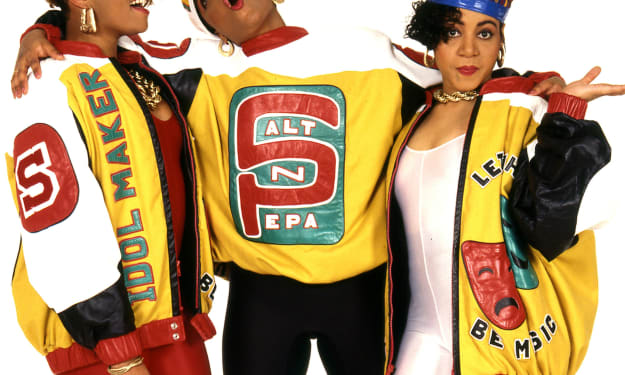
Party Hardy! Is what they used to call me. I am an Old School R&B party girl. The Eighties was my turf. Going to the Club was an Art to me. It could have been a science too. I would either go with my sister DD and my brother-in law, Steven and Tina, Diane and E-Fraj. That was the older crew. Then I had my crew - Terri, Nadine, DD and myself. Oh, these two crews were exclusively the Weekend. During the week I would party with Michelle. Michelle and I worked across the street from each other and after work we would hit the club usually on a Tuesday, Wednesday or Thursday.
By Simone Hardy 5 years ago in Beat
I Want To Dance With Somebody
Growing up in a small coal mining town in western Pennsylvania there was never much to do so music was very important. One thing I can vividly remember are the weekly dances at an area church hall. I think that was the highlight of the week back in the early eighties. To be honest, I hated those dances! I went for a few years but finally I couldn’t pretend that I enjoyed them anymore so I mustered up enough nerve to tell my best friend I wasn’t going anymore. I was afraid that she would be mad at me and although I don’t think she was mad, our friendship did sort of fizzle out after I stopped going. It wasn’t so much that I didn’t like to dance but I got bored going to the same place week after week. Considering how I felt about these dances it is sort of funny I am writing about a song called I Want to Dance with Somebody.
By Margie Anderson 5 years ago in Beat
I Listened to "Temporary Secretary" by Paul McCartney for Five Hours and Had a Brilliantly Miserable Time. Top Story - January 2021.
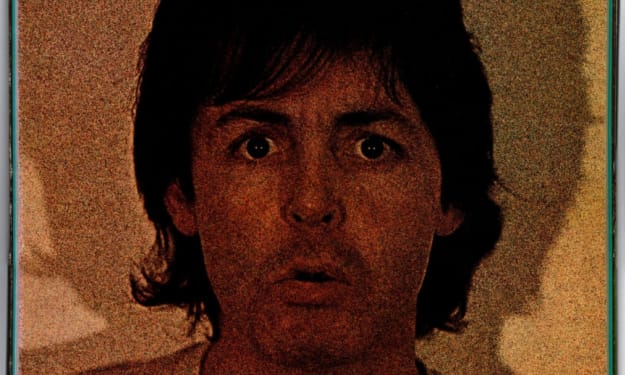
I’ve begun to believe of late that Paul McCartney is immortal, if not by natural means, then by supernatural means in the very least. In some form or another, Paul McCartney petitioned some eldritch being to grant him eternal life. It’s in the science, and I can prove it. Take a moment to listen to Temporary Secretary by the aforementioned Beatle. Go on. I’ll wait. Now tell me, after listening to that song just once, that the only reason that it exists isn’t to come in contact with some creature from the deepest, darkest recesses of the human psyche, in a plane of existence beyond our very observation. Somehow, Paul McCartney tapped into there, and-
By Steven Christopher McKnight5 years ago in Beat
Edge of ‘21. Top Story - December 2020.
If you’re reading this, you got through 2020 somehow. What did it for you? Was it looking towards the next year, the future? Was it focusing on the things that make you feel most comfortable? Was it exploring your creative outlets? It was probably a combination of all of these things. A lot of us spent this year “hiding”; hiding from the plague, hiding from our feelings, hiding from responsibility. One of the easiest ways to hide is to escape, and escaping is best done through media: television, movies, music, etc.
By Molly Caitlin Long5 years ago in Beat
Totally Radical '80s Workout Montage. Top Story - November 2020.
Y’all. Am I the only one who doesn’t have a set workout routine? When I think of exercise, I don’t imagine a planned list neatly organized in sets of reps. If I tried to workout that way, I would give up after a week. Hour long pilates videos and weight-lifting have never worked out for me. Instead, I like to think of working out as a set of activities that I enjoy doing throughout the day. Everyday.
By Daniela Bishop5 years ago in Beat
Purple Rain: 3:46
It was 1984. Mama and I were on our way to spend some quality time together at the movies. We had originally planned to see the movie “Bambi,” but I had a master plan. My 7 year old mind did not want to see an animation about a deer; I had already had my weekly cartoon fill on Transfomers, Smurfs, and He-Man. Samantha wanted to see a grown up movie, her first, about a man in purple. He wore ruffled shirts and had big, curly hair like the ladies at the beauty shop. As mama drove, I imagined our brown Firebird to be a “Little Red Corvette.” However, unlike in the song, my mom did not drive much too fast. Looking back, she was more like “The Slow and the Curious.” We cruised to the small AMC theater tucked in the back of our local Kmart and parked in front. I had rehearsed my devious, temper tantrum scheme in case mama said no to seeing the movie. As we approached the ticket booth and saw the showtimes, she began to request two tickets to Bambi when I nervously exclaimed, “Ma, I want to see THAT movie!” I pointed to the picture of the man with an intense stare on a motorcycle shrouded in semi-darkness.
By Samantha Moorer6 years ago in Beat
My Radio Show Recap
Greetings everyone, hope you are all well. First off, i just want to thank you for stopping by to read my humble little article. What I will be writing about is basically a recap of the songs I played on my internet radio shows this past week. I do a number of different show throughout a given month featuring all types of music. In this article I will be taking a look back at my shows entitled The Kevin Clarke Show, 80's Flashback, Klassik Kutz and Star 80s.
By Kevin Clarke6 years ago in Beat