
From Ritual to Identity: A Sociological Analysis of the Songs “Asta Boro” and “Hena Biarin” in Afghan Musical Culture
Exploring Symbolism, Cultural Identity, and Social Roles in the Ritual Songs ‘Asta Boro’ and ‘Hena Biarin’ within Afghan Musical Tradition

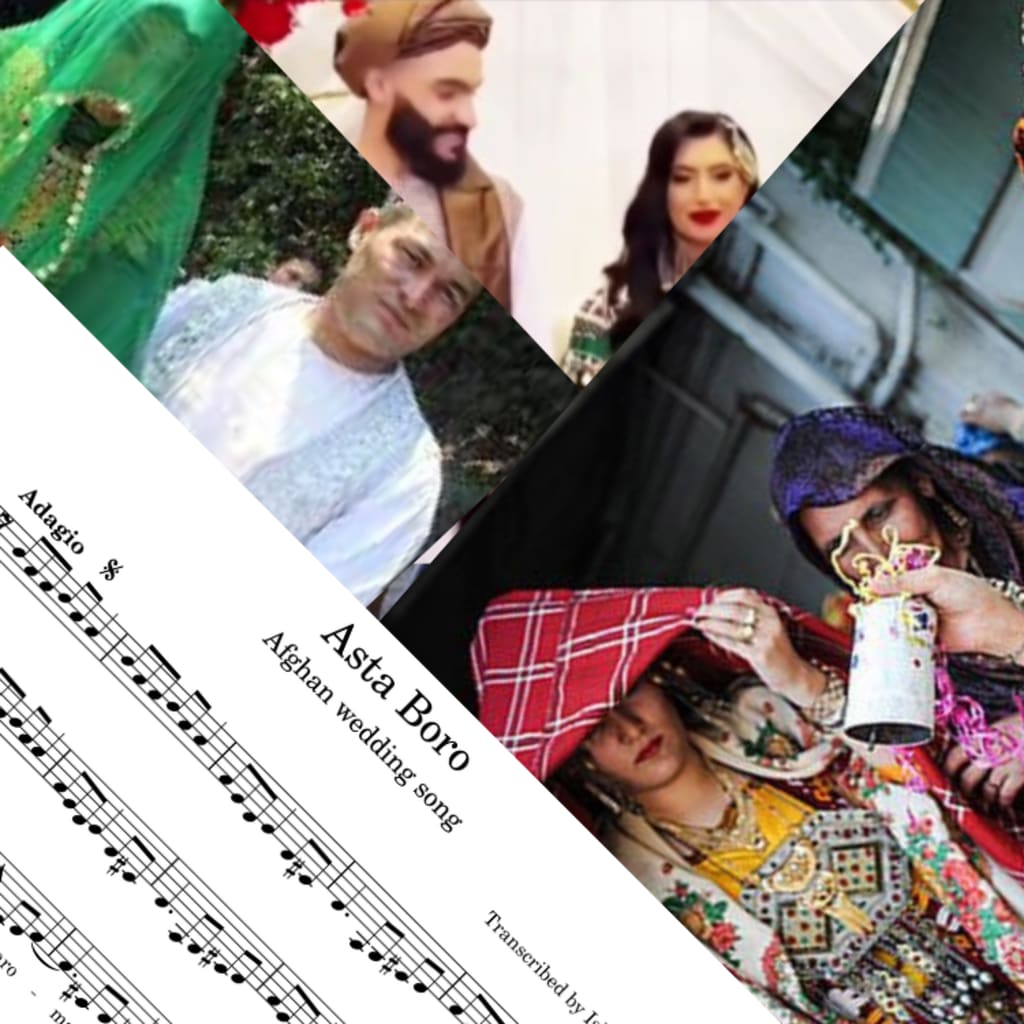
From Ritual to Identity: A Sociological Analysis of the Songs “Asta Boro” and “Hena Biarin” in Afghan Musical Culture
Author: Islamdudin Feroz, Former Lecturer, Department of Music, Faculty of Fine Arts, Kabul University
Abstract
Traditional Afghan music, as part of the nation’s intangible cultural heritage, plays a fundamental role in representing the social and historical identity of this land. Among the numerous forms of local music, the songs “Asta Boro” and “Hena Biarin” hold a privileged place due to their direct connection with wedding rituals and collective ceremonies. This article, through an analytical approach, examines the historical background, modes of performance, popularity, and collective memory associated with these two songs. The findings demonstrate that their continuity and reproduction reflect the dynamism of folk culture and highlight the significance of music in fostering social cohesion.
Keywords: Traditional Afghan Music, Asta Boro, Hena Biarin, Wedding Rituals, Folk Culture, Collective Memory
Introduction
In Afghanistan, music has long carried functions beyond mere entertainment, serving as a medium for transmitting values, expressing collective emotions, and strengthening social bonds. Wedding rituals, as one of the most important cultural arenas, have provided fertile ground for the creation and continuity of many folk songs. Among these, “Asta Boro” and “Hena Biarin” stand out as emblematic examples composed and performed specifically for wedding nights and henna ceremonies. The study of these two songs provides a clear perspective on the deep relationship between music and the social life of Afghan communities.
Historical Background
The roots of “Asta Boro” and “Hena Biarin” can be traced to the ancient traditions and customs of Afghan weddings. These musical works, as part of the intangible cultural heritage, have been transmitted orally across generations within families and local communities, maintaining a special position in social ceremonies to this day. Their significance lies not only in their artistic dimension but also in their role as carriers of folk culture, reflecting the customs, traditions, and values of Afghan society.
In earlier times, before the emergence of modern media such as radio and television, these songs were primarily performed by women within families and neighborhoods, often accompanied by simple instruments such as the daf. The simplicity of their structure and lyrical content made them easy to preserve and transmit within collective memory.
However, the turning point in their widespread popularity came with the establishment of radio and later television in Afghanistan. During this era, “Asta Boro” and “Hena Biarin” were reinterpreted by prominent male and female vocalists and, through the power of mass media, achieved nationwide recognition. Consequently, they transcended the local and familial context to become embedded in Afghanistan’s collective cultural memory.
Popularity and Social Significance
The popularity and social status of “Asta Boro” and “Hena Biarin” stem from a combination of cultural and ritualistic factors. The first lies in their inseparable association with wedding ceremonies, one of the most significant social and familial events in Afghan society. The second is their strong emotional and nostalgic value; hearing these songs evokes memories of joy, solidarity, and shared experiences such as the henna night and wedding celebrations.
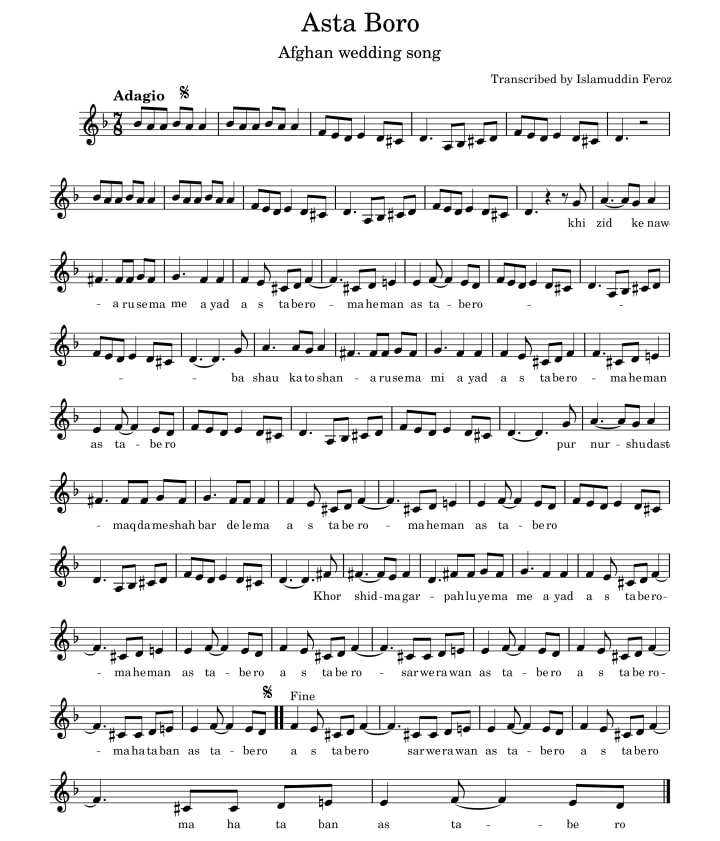
Lyrics of Asta boro
Khizid ke no-arus-e ma mi-ayad // Asta boro mah-e man asta boro Ba shokat o shan arus-e ma mi-ayad // Asta boro mah-e man asta boro Pornoor shode ast moghadame shah bar dele ma // Asta boro mahe man asta boro Khorshid magar pahlou-ye mah mi-ayad // Asta boro mah-e man asta boro
Asta boro sarv-e ravan asta boro Asta boro mah-e taban asta boro
Farzand-e aziz-e man ke damad shodi // Asta boro mah-e man asta boro Sad shokr khoda javan shodi shad shodi // Asta boro mah-e man asta boro Ba taze aruse hamcho shamsad qadesh // Asta boro mah-e man asta boro Ey sarv-e pedar kharide shamsad shodi // Asta boro mah-e man asta boro
Asta boro sarv-e ravan asta boro Asta boro mah-e taban asta boro
English Translation of the Song Lyrics Asta Boro
Rise up, for our new bride is coming — Go gently, my moon, go gently. With splendor and majesty, our bride is coming — Go gently, my moon, go gently. Her arrival shines like the king’s presence upon our hearts — Go gently, my moon, go gently. As if the sun itself walks beside the moon — Go gently, my moon, go gently.
Go gently, flowing cypress, go gently. Go gently, shining moon, go gently.
My dear child, now you have become a groom — Go gently, my moon, go gently. A hundred thanks to God — you have grown, you have found joy — Go gently, my moon, go gently. With the young bride whose stature is tall like a sapling — Go gently, my moon, go gently. O cypress of your father, now you too stand tall like the sapling — Go gently, my moon, go gently.
Go gently, flowing cypress, go gently. Go gently, shining moon, go gently.
خیزید که نو عروس ما می آید/ آستا برو ماه من آستا برو با شوکت و شان عروس ما می آید/ آستا برو ماه من آستا برو پر نور شده است مقدم شاه بر دل ما/ آستا برو ماه من آستا برو خورشید مگر پهلوی ماه می آید/ آستا برو ماه من آستا برو آستا برو سرو روان آستا برو/ آستا برو ماه تابان آستا برو
فرزند عزیز من که داماد شدی/ آستا برو ماه من آستا برو صد شکر خدا جوان شدی شاد شدی/ آستا برو ماه من آستا برو با تازه عروس همچو شمشاد قدش/ آستا برو ماه من آستا برو ای سرو پدر خرید شمشاد شدی/ آستا برو ماه من آستا برو آستا برو سرو روان آستا برو / آستا برو ماه تابان آستا برو
A unique feature of “Asta Boro” is its ritualized performance: the bride and groom are expected to enter the wedding hall with slow, measured steps. The song’s recurring refrain, “Asta boro, mah-e man, asta boro” (“Walk slowly, my moon, walk slowly”), guides their movement in a symbolic and ceremonial manner. Once inside, they take their places in a specially decorated and designed area, with the performance sometimes extending for more than ten minutes, adding grandeur and solemnity to the ritual.
By contrast, “Hena Biarin” is exclusively dedicated to the henna night, performed at the exact moment when relatives adorn the bride’s or groom’s hands with henna. With its symbolic weight and ritualistic significance, this song not only enhances the emotional atmosphere but also underscores the centrality of the henna ritual itself.

Lyrics of henna biarid
Ey ayene manzelet mobarak bashad, Hana biarid bar dastash bemalind.
Shod jelve moghabelet mobarak bashad, Hana biarid bar dastash bemalind.
Amad ze safar kasi ke del ba ou bud, Hana biarid bar dastash bemalind.
Bidel aknun delet mobarak bashad, Hana biarid bar dastash bemalind.
English Translation of the Song Lyrics Hena Biarid
O mirror of honor, may your place be blessed, Bring the henna and place it upon her hands.
The radiance has appeared before you, may it be blessed, Bring the henna and place it upon her hands.
The one has returned from the journey, the one who held our hearts, Bring the henna and place it upon her hands.
O heart without rest, now may your heart be blessed, Bring the henna and place it upon her hands.
ای آیینه منزلت مبارک باشد/ حنا بیارید بر دستش بمالیند شد جلوه مقابلت مبارک باشد/ حنا بیارید بر دستش بمالید آمد ز سفر کسی که دل با او بود/ حنا بیا ریند بر دستش بمالید بیدل اکنون دلت مبارک باشد/ حنا بیا رید بر دستش بمالید
Taken together, these two songs hold importance beyond their musical qualities, resonating deeply within the social and cultural layers of Afghan life. They awaken collective memories and are consistently associated with the cherished moments of weddings, ensuring their privileged status in Afghan musical and ritual culture.
Performance Style
The song “Asta Boro” is characterized by a slow, elongated 7/8 rhythm, often repeated multiple times throughout the wedding ceremony, producing a poetic, ritualistic, and serene atmosphere. Its extended performance—sometimes lasting over ten minutes—imbues the ritual with both musical beauty and ceremonial gravity, guiding the bride and groom’s movements in a symbolic procession.
Meanwhile, “Hena Biarin” exists in two performance styles: a faster version that injects energy and excitement into the gathering, and a slower, more solemn version emphasizing the ritual and emotional dimensions of the henna ceremony. This rhythmic variation illustrates how music in Afghan weddings is not merely for entertainment, but adapts to the symbolic needs of different ritual moments.
Performance contexts have also evolved over time. In rural and familial settings, the songs were traditionally performed by women with the daf, a simple yet powerful instrument often considered a symbol of women’s music in Afghan folk culture. In contrast, in urban areas—particularly in large and luxurious restaurants that host weddings—these songs are performed by professional musicians and ensembles. This shift reflects the gradual transformation of traditional music from a private and local practice into a public and formal performance.
Lyrically, the songs rely on folk quatrains that praise the bride and groom and celebrate the marital union. Their linguistic simplicity and popular themes foster emotional resonance with audiences across social backgrounds.
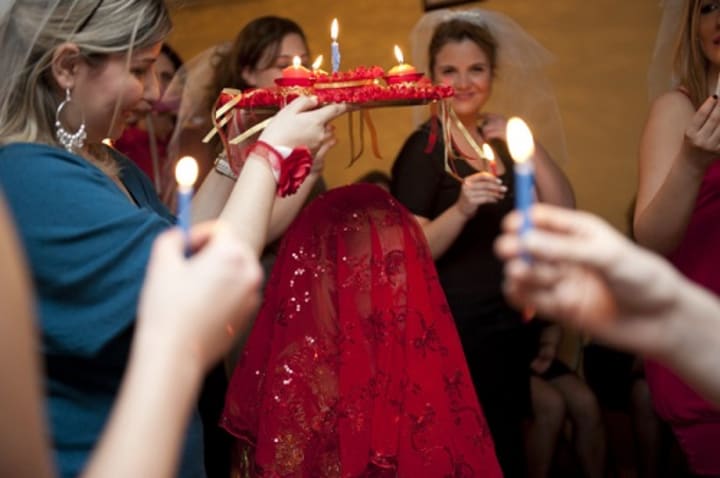
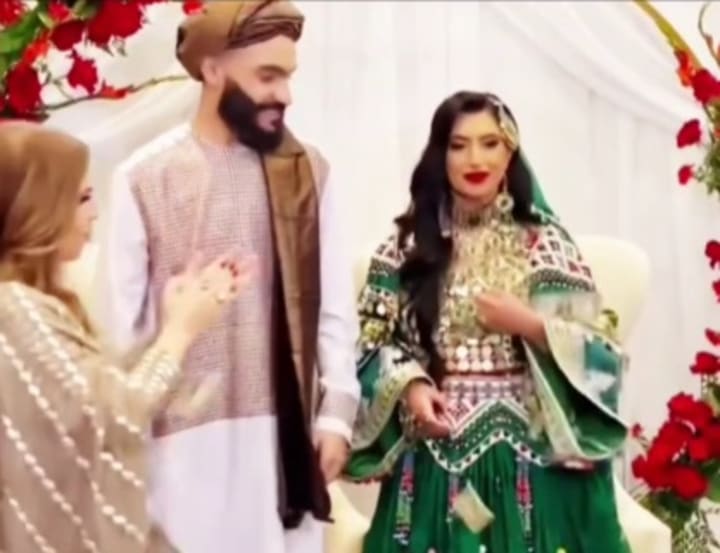
Beyond their musical and poetic elements, the ritual dimension of performance also holds significance. The bride and groom’s attire forms an inseparable part of the ceremony: the bride in colorful traditional garments and the groom in formal attire. Performed in this context, the songs not only enhance the splendor of the event but also reaffirm the cultural and social symbols of marriage in Afghanistan. Thus, the performance style represents a synthesis of music, poetry, ritual, and visual symbolism, creating a unique and memorable collective experience.
Collective Memory
A fundamental factor in the endurance and popularity of “Asta Boro” and “Hena Biarin” is their role in shaping Afghanistan’s collective memory. These songs are not mere musical pieces performed during ceremonies; they function as emotional triggers that revive generational experiences and shared memories. For many Afghans, hearing the opening melodies of these songs instantly recalls their own henna night, the weddings of loved ones, or intimate family gatherings—revealing the deep intertwining of music with everyday life and social rituals.
This collective memory elevates the songs beyond individual experiences, embedding them within the cultural memory of society as a whole. Each performance of “Asta Boro” or “Hena Biarin” recreates not only the joy of the immediate moment but also the echoes of past celebrations, thereby demonstrating music’s capacity to sustain cultural continuity and reproduce social identity.
From a sociological perspective, these songs act as shared codes that strengthen social cohesion, uniting participants in a common experiential framework. Consequently, they are not only significant in musical terms but also play a defining role in the cultural and social identity of Afghan society.
Comparison with Other Wedding Songs
Although numerous songs are performed during Afghan wedding rituals—such as the wedding night, henna night, and takht-e juma (the post-wedding Friday gathering)—“Asta Boro” and “Hena Biarin” maintain a unique and distinguished status. While many wedding songs serve a general purpose of creating joy and festivity, applicable to various moments of celebration, these two songs are specifically dedicated to particular rituals within the wedding sequence.
The first distinction lies in their ritual exclusivity: “Asta Boro” is reserved for the bride and groom’s ceremonial entrance, while “Hena Biarin” is tied directly to the henna ritual. The second lies in their musical and lyrical structure: the elongated rhythm and guiding refrain of “Asta Boro” align with the solemnity of the entrance ritual, while the symbolic meaning and rhythmic variations of “Hena Biarin” reflect the ritual significance of henna application.
As a result, whereas other wedding songs may fade, transform, or be replaced over time, “Asta Boro” and “Hena Biarin” have retained their authenticity and cultural prominence due to their inseparable connection to key stages of the wedding ceremony. This elevates them from the realm of ordinary songs to the status of ritual symbols, firmly embedded in Afghanistan’s cultural memory.
Conclusion
The study of “Asta Boro” and “Hena Biarin” reveals that these songs are not merely examples of traditional Afghan music but constitute fundamental elements of the cultural and ritual identity of Afghan society. Their continued performance across generations demonstrates that music in Afghanistan has always played a role far beyond entertainment, actively contributing to the reproduction of values, reinforcement of social cohesion, and transmission of oral traditions.
Content and performance analysis shows that their deep connection with wedding rituals accounts for their distinction and resilience compared to other folk songs. Furthermore, the capacity of these songs to generate collective memory reinforces their central place in Afghanistan’s cultural consciousness. Thus, “Asta Boro” and “Hena Biarin” stand as living evidence of the ritual function of music and its power in representing social identity.
Accordingly, the preservation, documentation, and transmission of these works to future generations are not only cultural responsibilities but also scholarly and social imperatives for safeguarding Afghanistan’s intangible heritage. Academic investment in ethnomusicology and ritual studies can deepen our understanding of such phenomena while fostering public awareness of their cultural and social significance.
About the Creator
Prof. Islamuddin Feroz
Greetings and welcome to all friends and enthusiasts of Afghan culture, arts, and music!
I am Islamuddin Feroz, former Head and Professor of the Department of Music at the Faculty of Fine Arts, University of Kabul.
Keep reading
More stories from Prof. Islamuddin Feroz and writers in Beat and other communities.
Afghan Music: Between Cultural Commonalities and Dependencies in the Heart of Asia
Afghan Music: Between Cultural Commonalities and Dependencies in the Heart of Asia Author: Professor Islamuddin Feroz, Former Professor of the Department of Music, Faculty of Fine Arts, Kabul University
By Prof. Islamuddin Feroz4 months ago in Beat
Ludacris and Nelly draw backlash over bookings at MAGA-coded music festival
Ludacris and Nelly headlining a mostly right-wing event is good for them. It’s also great for the genre of hip hop. The two rap veterans have showcased their talents on other stages. Why can’t they perform for mostly MAGA folks and grab that bag?
By Skyler Saunders5 days ago in Beat


Comments
There are no comments for this story
Be the first to respond and start the conversation.