
The Last Beat of the Night
One night, one rhythm, one fleeting connection—where music became more than sound

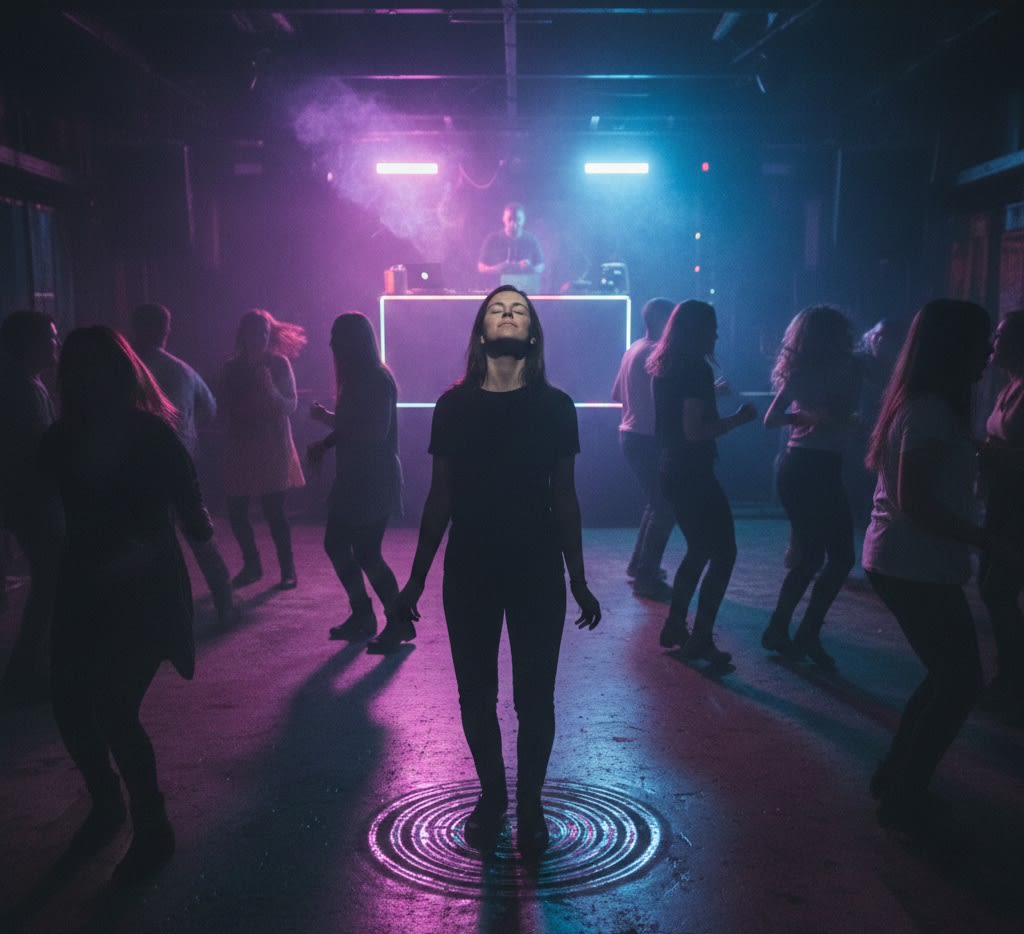
The bass hit first. Not subtle, not polite, just a body-shaking thrum that rattled the floor and promised chaos. I had heard it before in dreams I couldn’t place, in memories I didn’t know were mine. But here it was, live, loud, and unforgiving. The club smelled of sweat, cheap alcohol, and ambition.
I had come for the music, for the crowd, for the feeling that somehow, somewhere, the world still made sense when you moved in time with it. My name was Alex, and I knew beats the way a sailor knows the sea. You don’t just hear them—you feel them, map them, survive by them.
The DJ was a shadow behind the decks, arms flying like a conductor possessed. Each track was a story, each drop a confession. And tonight, the rhythm wasn’t just music—it was a lifeline.
I noticed her in the crowd first because she didn’t move like the others. Everyone else was lost in the chaos, letting the bass dictate their limbs. She stood still, eyes closed, small nods syncing with the subtle undercurrent. She had a calm I envied, a control that made me feel chaotic even as I tried to match the beat.
Something about her made me follow. Not because I wanted to talk—words are always too slow—but because the music spoke in a language only we could understand. When the lights dropped to strobing blue and red, we moved closer, weaving through bodies and smoke, two separate beats beginning to overlap.
The DJ dropped a new track. The kind that starts quiet, builds tension, teases a fall that never comes. Everyone jumped at the first drop, but she didn’t flinch. She smiled, just slightly, as if she had been expecting it all along. That’s when I knew—the music had chosen her as much as it had chosen me.
We didn’t speak. There was no need. Hands brushed. Eyes met. Heartbeats synced not to each other but to the rhythm that held the room together. A beat here, a hi-hat there, a vocal sample looping just long enough to make the pulse addictive. We weren’t strangers anymore. We were temporary partners in something larger than ourselves.
Somewhere along the third track, the crowd thinned. The club wasn’t empty—never empty—but we were isolated in a pocket of sound. Someone always notices the ones who aren’t just dancing, who aren’t just existing—they were watching, waiting. But tonight, nothing could reach us. The beat was a shield, a living, breathing force.
I reached into my pocket, pulled out a small notebook. I had been sketching rhythms all week—combinations that no one else could feel the way I did. I scribbled down a syncopation inspired by her movements, a tiny rebellion against the ordinary. She glanced at it, raised an eyebrow, and laughed. Not loud, not obnoxious, just a sound that melted tension into the air. She was dangerous, not because she hurt people, but because she made them forget caution.
The final track began. It wasn’t on the playlist; it never was. The DJ, a maestro of shadows, dropped something improvised, chaotic, unpredictable. I realized we had been waiting for this all night. The bassline twisted around us, pulled us apart and together, and in that moment, I saw her completely—someone untethered from the world outside.
I wanted to stay in that rhythm forever, but nothing lasts forever, not even the perfect beat. When the lights came back on, she was gone. I looked everywhere, but only her echo remained. The crowd dispersed. The sticky floor reclaimed its solitude. The basslines disappeared into memory.
I left the club, notebook in hand, ears still ringing with fragments of the night. The city was silent compared to the pulse we had shared. And somewhere, in the corners of alleys and empty streets, I felt her presence in the spaces between beats.
Weeks later, I replayed the tracks in my mind, trying to reconstruct the night, to find the rhythm that had tied us together. I couldn’t. But that was okay. Music, like life, isn’t meant to be captured. It’s meant to hit you once, leave you raw, and fade.
Sometimes, in a quiet room, I close my eyes, feel the bass in my chest, and remember her. That one night where beats became more than music—they became connection, rebellion, and memory.
And maybe that’s the real magic of rhythm: it doesn’t ask for permission, it doesn’t care for rules, and it never waits. You either surrender to it, or it disappears forever.
About the Creator
Ludacris and Nelly draw backlash over bookings at MAGA-coded music festival
Ludacris and Nelly headlining a mostly right-wing event is good for them. It’s also great for the genre of hip hop. The two rap veterans have showcased their talents on other stages. Why can’t they perform for mostly MAGA folks and grab that bag?
By Skyler Saunders2 days ago in Beat
Best Underground Rappers Right Now (2026 Edition)
Hip-hop in 2026 is defined as much by independence and creativity as by mainstream visibility. The underground rap scene is no longer just a proving ground—it’s where the future of the genre is actively being built. Artists are leveraging streaming analytics, social platforms, and direct-to-fan engagement to create momentum that major labels once dictated.
By RapRadarDigest5 days ago in Beat




Comments
There are no comments for this story
Be the first to respond and start the conversation.