
Afghan Music: Between Cultural Commonalities and Dependencies in the Heart of Asia
Afghan music at the crossroads of regional traditions: a study of cultural commonalities and musical dependencies with neighboring countries.

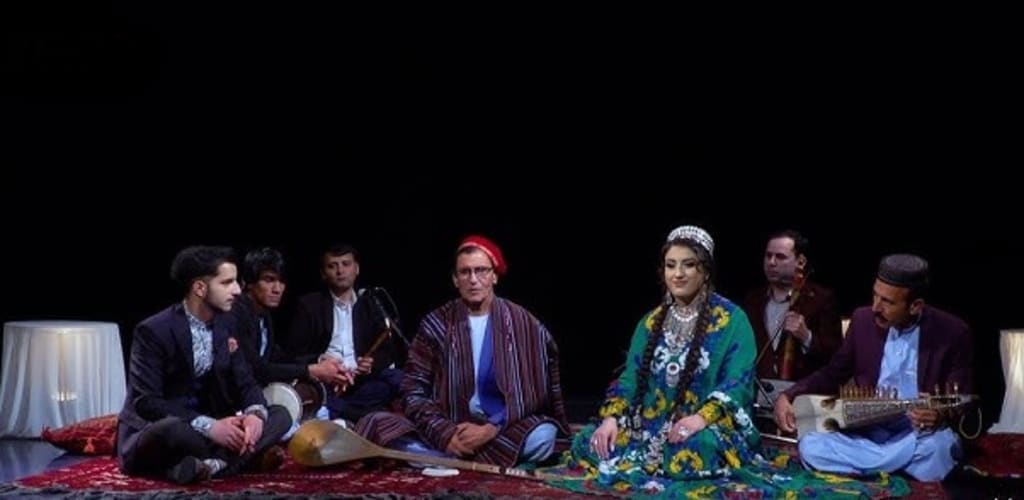
Afghan Music: Between Cultural Commonalities and Dependencies in the Heart of Asia
Author: Professor Islamuddin Feroz, Former Professor of the Department of Music, Faculty of Fine Arts, Kabul University
Abstract
Afghan music is a reflection of the complex history and geography of this land. Situated in the heart of Central Asia and bordering diverse nations, Afghanistan’s music simultaneously holds shared ethnic and historical roots with its neighbors and reveals forms of cultural dependency due to uneven processes of musical development. This article, with a focus on the music of ethnic groups such as Tajiks, Pashtuns, Uzbeks, Turkmens, and Baloch, demonstrates how music can serve as both a common bond and a dependent relationship between Afghanistan and surrounding countries. This dual perspective offers a deeper understanding of Afghanistan’s place in the regional cultural landscape.
Keywords :Afghanistan, ethnic music, shared culture, cultural dependency, Baloch, Central Asia
Introduction
The culture of any society can be understood as a collection of languages, beliefs, arts, and rituals that shape its collective identity. Among these, music — living and dynamic — has been uniquely capable of transcending geographical and political borders to preserve the connections among nations. Afghanistan, due to its special geographic location, has always been a crossroads for the passage of cultures and musical traditions. This article seeks to examine two central concepts — shared culture and cultural dependency — through the lens of Afghan music, and to show how these two concepts together shape the musical identity of Afghanistan.
Cultural Commonalities and Dependencies
Afghanistan’s unique geographical and historical position has consistently placed it within the path of cultural exchange. Music, as one of the clearest manifestations of this exchange, stands as living testimony to both cultural commonalities and cultural dependencies between this land and its neighbors. The study of the music of Afghanistan’s various ethnic groups reveals that this art form is simultaneously rooted in local traditions and enriched by regional interactions.
First, commonalities in music arise from historical and ethnic roots. Ethnic groups such as the Tajiks, Pashtuns, Uzbeks, Turkmens, and Baloch — living across today’s political borders — were once part of a wider cultural domain. For this reason, their instruments, melodies, rituals, and even performance styles are often identical or very similar. This is the foundation of what is known as shared culture.
On the other hand, dependency represents another dimension of these connections. When the music of an Afghan ethnic group is compared with that of the same group across the border, it becomes clear that the pace of musical development has not been equal. For example, Tajik music in Afghanistan shares the same roots with Tajikistan, but because of better institutions and resources, Tajikistan has advanced further in preserving and refining its musical systems and instruments. This creates a form of cultural dependency, meaning that in some respects Afghan music looks outward for inspiration and reinforcement.
The Baloch provide a clear example of this dynamic. The Baloch of Iran, Pakistan, and Afghanistan share a musical heritage rooted in instruments such as the sorud, tamburak, drum, and surna, as well as ritual songs. These are indicators of a shared cultural foundation. Yet, while Baloch music in Iran and Pakistan has developed significantly and linked with broader musical traditions, Baloch music in Afghanistan has remained largely in its indigenous and rudimentary form. This contrast illustrates how Afghan Baloch music, while retaining shared elements, is in practice more dependent on the musical traditions of its neighbors.
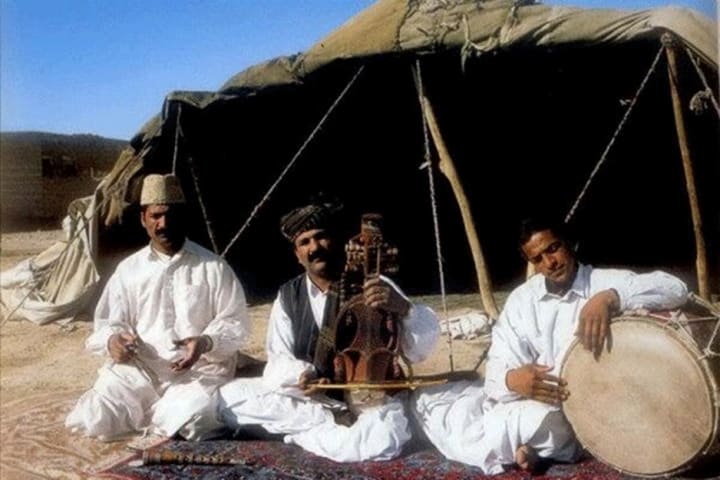
These two perspectives reveal that Afghan music is not only an expression of national identity but also a mirror of regional cultural interactions. Where historical and ethnic roots are shared, we encounter a common culture; where musical growth has been uneven, a form of cultural dependency emerges. The two are in fact inseparable, offering a more nuanced understanding of Afghanistan’s musical identity.
Conclusion
Afghan music embodies a synthesis of ancient commonalities and contemporary dependencies. Cultural commonalities are rooted in shared histories, languages, ethnicities, and traditions with neighboring societies, while dependencies often stem from unequal musical development and external influences. The case of Baloch music is especially illustrative: it both reflects a shared heritage among Iran, Pakistan, and Afghanistan, and simultaneously manifests a dependency on the more developed musical systems of neighboring regions.
Overall, Afghan music not only represents a vital part of the country’s national identity but also serves as a bridge among cultures, playing a central role in fostering regional cultural convergence.
About the Creator
Prof. Islamuddin Feroz
Greetings and welcome to all friends and enthusiasts of Afghan culture, arts, and music!
I am Islamuddin Feroz, former Head and Professor of the Department of Music at the Faculty of Fine Arts, University of Kabul.
Keep reading
More stories from Prof. Islamuddin Feroz and writers in Beat and other communities.
Ludacris and Nelly draw backlash over bookings at MAGA-coded music festival
Ludacris and Nelly headlining a mostly right-wing event is good for them. It’s also great for the genre of hip hop. The two rap veterans have showcased their talents on other stages. Why can’t they perform for mostly MAGA folks and grab that bag?
By Skyler Saunders5 days ago in Beat
How Much Does It Cost to Replace Guitar Strings? The Complete 2026 Price Breakdown
Look, if you're reading this, you probably already know strings wear out. But what does it actually cost to keep your guitars playing well? The answer depends on what you play, how often, and whether you're doing it yourself or paying someone else.
By Resyn Marketplace4 days ago in Beat
Miss Persephone's Manual to a Seemingly Ordinary Life
Miss Persephone was found at the dining table, her blue eyes swollen, her tears arriving and retreating like the tides of the ocean. Earlier that day, her family had visited her in the retirement home where she had lived for eight years. It was her eightieth birthday.
By Imola Tóth4 days ago in Fiction


Comments
There are no comments for this story
Be the first to respond and start the conversation.