TBH Agencia Exclusiva Colsanitas
Stories (85)
Filter by community
This Is 200 Calories
We're all told to eat healthy, and be aware of our calorie intake through the day. But have you ever stopped to see what does calories look like? For example, this is 200 calories worth of apple On the other hand, if we take 200 calories worth of cheese, it doesn't look quite the same in terms of volume throw 200 calories of wine into the mix for a nice wine and cheese And you have three very different looking versions of 200 calories Now compare that wine to beer or rum, and you have three very different party nights for your stomach Or how about the eggs you had for breakfast Compare that to 200 calories of sweet cereal you had the other day, or even some oatmeal And they're bound to seem a bit different But if you had gotten a sausage and egg breakfast sandwich, You'd be looking at even less Broccoli? You may be surprised by the amount you can eat before you hit 200 calories Not to mention this stuff is packed with nutrients and a great source of fiber A slice of pizza? Less than a slice if it has pepperoni on it And what about the classic Big Mac? Try a 200 calorie 'Small Mac' And since calories are simply units of energy, with the calories of 217 Big Macs You can drive your car 35 Kilometres So, wait. What is a calorie? Specifically, a calorie is the amount of energy, or heat it takes to raise the temperature of 1 gram of water By one degree celsius We need energy to survive, and we get it from food Carbohydrates, Protein and fats are the building blocks of our food, and each contribute a different amount of energy to our bodies The average person needs somewhere between 2000 to 2700 calories a day Depending on factors like height, weight, gender and age And some foods like peanut butter are calorie dense, filling this requirement faster Or that muffin you ate as a snack, chances are its calorie content is higher than you thought And those irresistible Doritos? Don't lie, you ate the whole bag Unlike Celery, which has very few calories, giving you lots to munch on Or carrots Not so much Hershey's Kisses And if you're eating salad to limit calories, watch out for creamy dressing Particularly, french dressing On its own, black coffee is quite low on calories You can have a lot before you hit 200 calories But once you add one cream and one sugar, those calories quickly add up Turn it into a specialty drink, like an Iced Peppermint White Mocha And you might be shocked at the amount left But, just because something has less calories Doesn't necessarily mean it's healthier or better for you Take for example this 200 calories of coke vs. 200 calories of whole milk While it's true that the coke contains fewer calories per litre, You can't forget that milk contains many nutrients and healthy fats Or like brown bread vs. white bread Yes, whole wheat bread often contains more calories per slice, but it also contains more nutrients and fiber So, counting calories isn't the be all and end all But thinking about what goes into your body is bound to make a difference At the end of the day, eat a healthy and balanced diet And if you'd like to see even more 200 calorie examples, check out the WiseGeek post we've linked in the description Which puts even more food into perspective Got a burning question you want answered? Ask it in the comments, or on facebook and twitter And Subscribe for more weekly science videos!
By TBH Agencia Exclusiva Colsanitasabout a year ago in Chapters
Everyone is freaking out about this graph
everyone is freaking out about this graph showing that the world's population is going to Peak soon and then start to decrease so this is true demographers think that the world's population is going to Peak around 10.9 billion before starting to decrease quite soon so today we're going to explain why the world's population is declining why some people think this is the end of us while others think this could be the best possible situation for Humanity this is some of the most fascinating information I've learned in years so let's get into it we first started recording population size in 4000 BC when the Babylonians used birth and death census data to understand population size to figure out how much food they needed to produce and how to plan for the future in many ways now we're still doing the same thing current governments use Census Data such as birth and death certificates to understand their own population size and understand how much food again that they need but now Society is more complex so we design income tax for future investments plan infrastructure to keep our citizens healthy and happy and organize Healthcare and education around our population sizes now when we want to understand the whole Earth's population we have to rely on overarching bodies like the UN in 1968 the UN projected that by 1990 the global population would be 5.44 billion the real figure ended up being 5.34 billion the UN also predicted that by 2010 the population would be 6.8 to 7.2 billion and the correct number was 7 billion with the same un data we know that in as recent as 1974 the world's population was only 4 billion now it's over 8 billion that means that in the last 50 years the population on Earth has doubled this has to do with scientific breakthroughs in medicine crop yields and sanitation but now the fertility rate is plummeting so much in specifically wealthy Nations that the UN thinks that will Peak at 10.9 billion around the year 2100 and then the population size on Earth is going to slowly start to decrease or stabilize they make these predictions by using the statistical idea of fertility rate in order for a population to grow the fertility rate needs to be above replacement level which is 2.1 children being born per woman in that Society 2.1 represents the average number of children a woman would need to have in order for one of their kids to be a daughter who survives to childbearing age so truly all data about the future population statistics on Earth are based on how many kids women are having and the average number it takes for at least one of those kids to be a girl so in many ways one of the most important things in the world is girls now the reason our overall population is soon going to decrease is because the fertility rate is below replacement level in the U.S all of Europe Canada Australia New Zealand All of southern Asia all of Eastern Asia Latin America and the Caribbean in fact in the next 25 years almost all of the population growth on Earth is going to be coming from only eight countries that's Pakistan the Philippines India Egypt Ethiopia Ethiopia Tanzania the Democratic Republic of Congo and Nigeria in fact in Nigeria children and adolescents currently make up half of the population Nigeria with just one tenth the land of the United States is projected to soon hold 377 million people becoming the planet's third most populous nation ahead of the U.S and just behind only India and China now even though populations might be growing in sub-Saharan Africa their consumption of resources is minuscule to those in for example North America in January 2022 a study found that the average carbon dioxide emissions of one American is the equivalent of 22 people living in sub-Saharan Africa now even in sub-Saharan Africa their fertility rate is decreasing it's now at 4.72 children on average being born per woman in sub-Saharan Africa that's down two points from just 20 years ago another big reason the Earth's population is going to decrease soon is China in January 2022 China announced for the fifth year in a row that their country's birth rate had fallen Island in 2021 10.6 million children were born in China compared to 12 million the year before in China over the past seven years the number of births has fallen by almost half from 18 million in 2016 to 9.6 million in 2022. all of this is going to lead to an earth that a new cpan paper predicts will peak in population as early as 2064 at around only 9.7 billion people and then plummet back to 8 billion people by the time it's 2 100. according to this paper we'll increase by another 2 billion people by 2064 then by the end of the century we will be back to where we are right now at 8 billion people even though this study was peer reviewed by many scientists and demographers still the most trusted numbers come from the U.S now it's also really important to understand how the future population shifts are going to change so much depending on which country you're in in fact using current census data without immigration by 2100 Spain Italy Thailand and Japan will see their population sizes cut in half Japan a country that's immigration averse by 2045 May statistically have one quarter of their population with dementia and without increased immigration their social systems could collapse and be unable to sustain the proper health of their aging population I currently live in Canada we have an extremely low fertility rate our population is declining and the only way our population can stabilize or increase is by allowing 500 000 newcomers into Canada each year and even demographers and politicians think we need to allow more newcomers into Canada to deal with the decreasing population we currently have so demographers agree that to deal with the imbalance infertility rates around the world we need to increase the amount of immigration that is happening right now only two to four percent of the world's population lives outside of the country they were born in that is crazy to me I think maybe because I'm from Toronto which is extremely diverse the idea that only two to four percent of people live outside of their country of origin is like I it's I don't understand that that's that makes you realize clearly that immigration is not happening enough between the year 2000 to 2020 according to the UN the number of international migrants and refugees who had fled conflict or crisis or prosecution human rights violations things like that has increased from 17 million to 34 million this is due to increased conflict on Earth this is an amazing opportunity for wealthy countries to welcome newcomers and immigrants but sadly poorer countries take on that burden in fact 85 percent of forcibly displaced people currently live in Turkey Jordan and Kenya I repeat 85 of force will be displaced people are currently in Turkey Jordan or Kenya this shows how effectively wealthy nations with decreasing population sizes are keeping refugees and newcomers out a lot of this has to do with xenophobic governments that create this false idea that immigrants are a burden to society when in fact they're the only way that these wealthy Nations will ever be able to continue to grow some corporations public figures and politicians are freaking out about the world's population declining because they think it's going to mess with economic markets to the point of Destruction but many other economists and scientists think we can reframe this information to be extremely positive first of all fertility rate decreases as a society gains more gender equality partly because women tend to have children later in life and fewer children overall within countries that have higher gender equality statistics the fertility rate in Nigeria has decreased as women gained more Independence more rights more happiness and more jobs this is a good thing so fertility rate decreasing is a sign of women getting more rights and this actually helps societies overall a new study found that when countries have more women legislators they have decreased poverty decreased hunger and increased climate action which leads to the next point that population stability or decline may be a good thing for the climate crisis a new study found that the lower fertility rates around the world will result in decreased emissions by 2055 and a per capita income increase of 10 percent per citizen so it's been found that wealth is distributed more evenly as fertility rates decrease as well when fertility rates decrease women take on more government and corporate jobs and studies show that when women are in leadership roles they are more likely to advance initiatives that fight climate change and protect nature when it comes to this fear of a stabilizing population size or a decrease in population size on Earth it's always linked to a fear of a failing economy but economists agree that we can't have this current infinite economic growth on a finite Planet if we focus on the fossil fuel industry which controls much of current market trends the current economic growth expected for fossil fuel companies the way they are right now will lead to extraction and Emissions that create an ecosystem Collapse by 2030 which economists think will cost the world 2.7 trillion dollars per year Deloitte recently estimated that without significant decreases to fossil fuel extraction climate chaos will cost the U.S alone 14.5 trillion dollars per year by 2070 this will be due to wildfires droughts and floods destroying communities Farms businesses and housing so the population is going to soon decrease and people are going to be freaking out about this but I think this information gives us a new context or lens to think about who's freaking out about the population decrease and why if less people means more gender equality healthier people wealthier people an ability for us to live more in tandem with nature and a decrease in the climate chaos that we're seeing today why does it have to be such a bad thing I'll link to our podcast here where we have even more population statistics thank you so much for watching share this with friends and family this is a fascinating concept and I can't wait to do more research and see what happens to the earth's population in the future
By TBH Agencia Exclusiva Colsanitasabout a year ago in Futurism
Only 12% of People Can See This!
stare at this image for five seconds and without realizing it the photoreceptors at the back of your eyes will start to become fatigued so much so that when this image turns white you see the green birds as red and the red background is green all of this happens because of biological processes in your eyes that link you to the lives of pollinating insects can help you design bedrooms or rooms in your house to be more satisfying and can also explain why women can see better than men seeing color is so freaking cool it kind of mixes science with sensation and over millions of years our eyes have evolved to see wavelengths on the electromagnetic spectrum roughly between 380 nanometers to around 700 nanometers that's it wavelengths longer than this you get into radio waves and microwaves which our eyes cannot see but they can send a text wavelength shorter than this you get into uv rays and gamma rays again your eyes cannot see but they can damage your cells and cause cancer but if we hone in on the wavelengths of color there are specific patterns that our eyes pick up most people see less than 450 nanometers as violet 450 to 485 nanometers as blue 500 to 550 nanometers as green 570 to 590 nanometers as yellow 590 to 625 nanometers you got gold 625 nanometers and above you get red now no object actually possesses any color which is so weird to say all an object does is absorb certain wavelengths of light and then reflect others for example this gorgeous teal seafoam coral blue is absorbing all the colors except for that seafoam teal gorgeous blue which is being reflected to your eye and your brain is interpreting this as color for example if you're looking at one of my favorite flowers the goldenrod which blooms in august the flowers are absorbing every wavelength of light except for the ones between 590 to 625 nanometers again as we said earlier which most people see as gold this light is sent to your cornea which bends it towards the pupil that controls the amount of light hitting the lens which focuses the wavelengths onto the back of your eye called the retina at the back of your eye the retina is covered in photoreceptor cells called cones you have around six million cone cells which absorb light and pass it onto the brain's visual cortex to be interpreted as color this is a biological process that's happening all the time you're looking at this screen i'm looking at this blue sky you're looking at me i'm looking at you and oh this is a connection my friends now your cone cells at the back of your eye are divided into three different types you got red cone cells green cone cells and blue cone cells rgb since you have three types you are visually trichromatic so you can walk around order your coffee and say by the way you me we're trichromatic some other animals for example are tetrachromatic and can even see within the uv wavelengths some birds some fish which i'm sorry are cooler than us that's a rad thing to do they are superheroes we are measly trichromats sit down folks because this science is complicated but the red cone optimal for perceiving the color red the blue cone optimal for perceiving the color blue and you guessed it the green cone optimal for perceiving the color grain but these cells work in combination for you to see over 10 million different colors unless you're 12 percent of women who can see way more than that more on that later but the nature of these cone cells are what create complementary colors that we perceive as satisfying now a complement is something that lacks a hole so for example this circle is a complement of this rectangle with the missing section together they make a hole that's a whole wh w-h-o-l-e not a hole like here here here or a couple down here if i showed you the ones down here we'd be on a different tube site according to the physics of light a complementary color for your eye are two colors that when combined produce white light it's a law of nature it's fascinating it's why we have complementary colors for our eyes and it has to do with how our cones work look at this black and white image if we put on the complementary colors of the original picture and you stare at this dot for a few seconds due to the specific stimulus on your eye the background we used and the perception of your red green and blue cone receptors when we put back this black and white image you see the color i do this all the time just for fun i'm like gosh dang my eyes and brain are insane the reason that this happens is because your eyes are so sensitive to these wavelengths that the cones become overused and oversaturated when looking at the same color the stimulus can start to spread to other cones nearby and when the stimulus is taken away the tired cones and your visual cortex default to seeing the complementary colors this is why we love looking at complementary colors beside each other they have energetic reciprocity going back to this image when staring at the green your green and blue cone cells become fatigued but the red isn't really being used in these sections so when you switch to white your brain reads these sections as red the red cone start to trigger your brain to see red it's all just about perception it's wild because it's like through these two little things that i'm seeing everything and living my life purple and gold are a reciprocal pair that our trichromatic eyes and the eyes of bees see very similarly golden rod and purple asters grow together so that bees find them attractive and this increases their pollination these flowers evolve to grow together to help pollination with bees they weren't for us but because of the energetic reciprocity of our cones being similar to that of bees we get to reap the benefits of this energetic beauty when looking at flowers when you see gold and you see purple and it feels good thank the bees when designing a room take a look at this light complementary color wheel if you focus on the complements of each other throughout your room you're going to be designing pleasing scenarios for the cones of your eye this can really help you make decisions about how you're going to design your room just think about the physiology of your freaking brain now for men seeing color can be more of an issue this is because the genes that encode red and green cones show high sequence homology on the x chromosome so although gender and sex can fall on a spectrum for the most part people who identify as women have xx chromosomes and people who identify as men have x y chromosomes and it's this y chromosome for people like me who have a y chromosome we are more likely to not be able to see red and green as well this is why statistically men are much more likely to be colorblind but on top of this there's a lot of new research but it is starting to be found out that 12 of women are actually tetrachromats they have an extra cone and can see a hundred times more color than the rest of us i got into a rabbit hole of all this research after being in nature and just looking at all these beautiful colors that were so soothing to my eye my brain my perception and it almost just was like what is beauty science has a hard time defining beauty you know beauty is in the eye of the beholder but when you look at these complementary light color wheels you start to realize there are some things we can do in our lives to better understand the physics of light our eyes and our brain and utilize this thinking to benefit our lives essentially this is just a video enticing you to get out there and of course stop and smell the flowers but also stop and look at those flowers see you next week for a new science video peace
By TBH Agencia Exclusiva Colsanitasabout a year ago in Chapters
What Happens When You Quit Salt?
salt consumption has increased by 50 percent over the last 40 years in the US with the average American consuming 3 400 milligrams of salt a day which is nearly double the amount of salt that's recommended but given that high salt intake is associated with high blood pressure kidney disease stroke and heart disease what actually happens if you quit salt to tackle this question we're first going to start with what happens when you decrease your salt and then we'll move into what would happen if you completely cut salt out of your diet because spoiler alert the results are very different first up a low salt diet which could range from around 1500 milligrams to around 2300 milligrams per day after one week you might not physically feel the difference but your body has already lowered its blood pressure your kidney is responsible for this by regulating what's inside your blood vessels when you're well hydrated and drinking fluids it tells your body to excrete any extra water and if you're dehydrated it sends a signal to not only increase thirst but to cause reabsorption of your fluids in the kidney making your body hold on to more water water this is all in an effort to keep the perfect balance of water and salt between your blood and cells but consuming lots of salt can sometimes get in the way of this process since your body can't produce its own we consume salt through the diet where it's eventually absorbed into your blood normally your kidney would eliminate any excess salt that your body doesn't need similar to how it regulates excess water but over time with high salt intake your kidney can't exactly keep up with filtering it all out which means your blood stays more concentrated with sodium this extra sodium in your blood ends up pulling water from your cells into your blood through osmosis because the water wants to be where the sodium is and that ideal concentration gradient between them is thrown off this ultimately leads to an increase in your blood volume which increases blood pressure and years of research has shown increased blood pressure over long periods of time is associated with many health conditions so by consuming a low sodium diet you minimize the risks of having chronic high blood pressure a few weeks into low sodium and you may be feeling less stressed recent Studies have shown that high levels of salt not only increases stress hormones in the body but that when you're challenged with a stressful situation the hormonal response to it is much more Amplified while these early Studies have been done on mice further research aims to look directly at stress hormones in humans and also examine Salt's role in anxiety and aggression after four weeks you might start feeling lighter because reducing sodium in your diet can reduce bloating the dash sodium trial one of the biggest trials looking at blood pressure and diet showed that high sodium increased bloating in a dose-dependent manner regardless of the type of diet in other words as you decrease salt you're likely to decrease bloating proportionately now the short-term benefits of a low sodium diet are great but the real benefits are long-term a recent study completed in 600 villages in rural China had individuals with a history of stroke or those over the age of 60 with hypertension consume low salt diets they found that reducing salt in the diet reduced Strokes major cardiovascular events and death within five years so how do they actually cut their salt intake they simply substituted 30 percent of sodium chloride typical table salt with potassium chloride salt while it doesn't taste the exact same it's actually a really clever way to make something a little more salty without having to add sodium which is the main culprit and health issues because it's so often over consumed potassium consumption on the other hand is typically under consumed and adequate potassium intake can help improve blood pressure regulation so there's benefits of reducing salt for many people particularly those who have hypertension but what would happen if you completely cut sodium out of your diet it would be pretty hard since nearly everything you consume has some level of salt in it but let's play it out it's obviously important for your body your nerves signal what the use of salts are muscles contract and relax thanks to salts it's also involved with helping transport nutrients throughout the body so when you don't have enough your body enters a state known as hyponatremia just like too much salt not enough can cause problems between the blood and cells but this time in an attempt to get the salt concentration and gradient back to normal your body starts excreting Water by getting rid of water it helps to solve one problem but this can lead to severe dehydration within one week you might begin to feel nauseous and start vomiting of course vomiting can also reduce any sodium left in our body which would make the condition worse after two weeks you may start to get random muscle twitching because our muscles require sodium for Contracting and relaxing and after three weeks it's likely that the brain would begin to increase in size because the vessels surrounding the brain have less salt compared to the tissue so the water moves into the cells the osmosis resulting in swelling this will first lead to confusion and can eventually cause seizures and bring you into a coma and I know what you're thinking just add some salt back into the diet and you're back to normal but there's a catch we actually can't correct our blood sodium too fast or we can cause osmotic demyelination because the brain gets dehydrated this is why going too extreme on salt reduction can be risky particularly for people who are not at risk for hypertension in the first place some data suggests that low sodium diets can not only impact your mental Clarity and focus but taken too far can actually increase the risk of cardiovascular disease as well while many people do eat too much salt if you're a healthy person eating mainly Whole Foods or low carbs which hold on to water for your body or doing a lot of exercise it's important to maintain or ingest salt into your system and if you don't have hypertension or a risk for high blood pressure studies generally show it's not something you need to overthink it's really about finding that Goldilocks range not too high and not too low which guidelines typically say is around 2 300 milligrams per day for most people for many people your body will tell you what you need if you're craving it or feeling grossed out by salt just listen to your body but of course does always talk to your Healthcare professional to figure out whether on either end of the extreme Spectrum after all some individuals are more sensitive to Salt than others for example women of all ethnicities and age groups have been shown to fall into this category so higher salt diets may be a bigger risk like everything in life the dose is the poison and in this case too much or too little can hurt you but what for watching hopefully this has been useful and educational for you if you liked it make sure you like the video otherwise subscribe for more science in the very near future peace
By TBH Agencia Exclusiva Colsanitasabout a year ago in Chapters
The Image You Can Only See Once
understand this sentence for most people both seem random and confusing but by the end of this video you will be able to see this image and understand that sentence based on new theories of how consciousness works also write in the comments below what you think this sentence is saying as by the end of the video what you wrote will give you an interesting clue into who you are as a person it was only in the late 1800s that the scientific study of consciousness began by studying animal brains and patients with epilepsy humans started to understand that electrical signals in the brain send and process information and these neural pathways are likely leading to our sentient consciousness but even now scientists are still trying to grapple with how our consciousness is formed like our brain this jelly-like organ sealed in our skull away from everything in complete silence and darkness is what creates our ability to hear and see things like wow we know that outside of you there is a reality that exists outside of your body and mind is a world full of real materials and objects and our complex bodies use our senses as windows per se to observe touch smell hear and detect the real world around us and don't ever let someone tell you only have five senses what is this 350 bc you have proprioception which is the sense of your body's position like I'm standing up or falling over you have thermoception the sense of temperature and heat that your body is able to pick up so using our senses we convey the information about the world around us to the brain where complex electrical signals process and read the information and create our perceptions leading to consciousness visually it would look like this you a person looking at a coffee cup your sense of vision gathering the information to send to the brain where it does all the work to understand ooh yay that is a coffee cup but if this were fully true you'd be able to see this image and hear this sentence and this is where a new theory of consciousness comes in to try and explain what's going on there is contemporary thought saying that the brain is actually constantly making predictions based on knowledge and context of the world around you and your senses are only there to tie these predictions to reality known as perception error minimization your senses are just confirming what your brain has already predicted visually it would look something like this your brain is predicting to see a coffee cup and your senses are just backing up or your brain already predicted with the sense of vision if you make a cup of coffee then you put it down on a table next time you look at it your brain predicts probably there's going to be a coffee cup there and then your vision is there to back it up this helps you control your perception of the world our brain is a predicting making machine so much so that there are even times where the predictions get in the way of reality this illusion is a great example called Adelson's checkerboard your perception of greatness is not due to actual sensory input or you would be able to tell that these tiles are actually the same color since your brain is relying on past knowledge and context of how shadows work you see these tiles as separate colors and even when you know they are the same color if you go back with the shadows you still can't really unsee it your brain is a prediction-making machine that can't fix itself in this moment this means that this illusion is cognitively impenetrable now let's look at the image from the beginning of the video you don't have any knowledge or context of this image which is why you can't see it but it is actually a two-tone image of a woman kissing a horse uh here's her head uh here's the horse she's obviously into some interesting things with her life gorgeous photo in my opinion but now when we go back to this image you can likely make out what it is now the sensory input of this image has not changed at all the only thing that has changed is your brain's predictions based on knowledge and context which now changes what you consciously see you can see the girl you can see the horse now the sentence that i played for you is just a sentence with the high frequencies taken out without any context it has very r2d2 energy you can't really understand what is being said now let's play the real sentence for you the man's painting a sign and we play the original audio and you now can hear it there's a lot of contemporary science now that our consciousness is much more controlled by our brain's predictions based on the context of our lives so when you go and look at the comments of what you thought that sentence was or what other people thought it might give insight into the context of your life for example many people in call centers thought that the sentence was saying who is calling you maybe that's something that they were just used to hearing a lot or they're just constantly thinking about picking up the phone me obsessed with understanding how consciousness works because um consciousness is my whole entire life so this information to me has honestly changed my whole perspective on everything you can click
By TBH Agencia Exclusiva Colsanitasabout a year ago in Chapters
The fastest way to reduce stress (in seconds)
breathing something that seems so natural and simple and yet apparently we're all doing it completely wrong most people don't know how to breathe you're probably breathing wrong 95% of are breathing wrong you've been breathing wrong your entire life okay so people say a lot of things on the internet but today we're going to talk about breathing and breath work and what the science actually says first is there a proper way to breathe in everyday life that can optimize your body and brain or hurt you if you're not doing it right second can practicing breath work make you a healthier less anxious and happier person and finally we're going to finish off this video with a really simple breathing trick that has been shown experimentally to calm down the nervous system and minimize stress within seconds to minutes first let's quickly understand what's happening to your body when you breathe apart from the oxygen entering into your bloodstream and being taken around your body to your cells and CO2 and other waste gas leaving your body when you breathe out every time you breathe you activate a lot of nerves in your body breathe in and the sympathetic nervous system is activated your heart rate increases and noradrenaline is released which can perk you up breathe out and the parasympathetic system gets triggered which relaxes the body in fact every time you breathe in your diaphragm moves down and stretches the heart a little making it bigger this means the blood travels a little more slowly and your brain sends a signal to speed up your heart rate and whenever you breathe out the heart gets a little smaller pushing the blood through faster and the Brain tells the heart to slow down a little because of this mechanism focusing on your out breath can actually bring down your heart rate and bump your parasympathetic activity ultimately calming you down and when you focus on slowly breathing there's evidence it can even increase the activity of the neurotransmitter Gaba in your brain which further calms down nerves now research has found when it comes to emotional regulation breath work may actually be more effective than something like mindful meditation one study had four different breath work groups studied one that breathed in and out equally using something called called box breathing one that focused on longer inhales one that focused on longer exhales and finally the mindful meditation group as a control which didn't focus on their breathing they would spend 5 minutes a day doing this for a month and the study found that while all groups saw Improvement the breath work groups felt more positive less stressed and less anxious than the control but the group that performed best was the long exhale group this type of breathing is called cyclic sighing which we'll go over later and in the study this group's breathing actually ended up slowing down the most suggesting they were the most physically relaxed not just while they were doing the breathing their average respiratory rate over the month went down and many Studies have found similar results when it comes to overall stress mood and anxiety levels but it's important to take a step back and emphasize that the effect size of this wasn't like Monumental it's not like the subjects suddenly became Buddhas or the happiest people you know just that there is is a measurable Improvement that makes you feel better which makes the next claim a little more surprising breathing exercises have actually been found to help with things like depression and PTSD in these cases the subjects worked with therapists or very focused breathing workshops that they would take for a week and then continued on their own for 20 minutes a day over 6 weeks in these instances depression scores dropped significantly a study on US veterans found breath work techniques to be as effective as traditional therapy in reducing PTSD though it is important to note that some of these studies included faster breathing techniques that weren't just focused on slow exhales now are you breathing through your mouth or through your nose take a second to check in general it's suggested that nose breathing is better some studies show it provides more oxygen because the higher resistance in the nose allows you to actually inflate the lungs more but your nose also has a better capacity to protect against infection after all you've got nose hairs and membranes to help moisturize and warm up the air before it goes to your lungs mouth breathing at night can also cause issues you're more likely to snore trigger sleep apnea where you stop breathing at night and get an extremely dry mouth less saliva can impact your teeth health as well some research even suggest that mouth breathing over long periods especially for kids can change your face shape so in general physicians do recommend you focus on nose breathing if you can but of course most people are switching back and forth between them especially depending on your activity level at the moment if you're an average person without any specific breathing issues you're probably already balancing the two pretty well so don't hyper fixate on this and just know that nose breathing is generally considered better breathing exercises can also improve your sleep this has even been found in studies on atrisk kids who were given mindfulness training and breath work techniques in fact this study was not even about sleeping or telling the kids how to improve their sleep but the result from the practices had them sleeping an hour more on average and when measuring their brain waves saw a marked improvement in REM sleep which is critical for brain development we even see improvements in memory this claim gets made a lot and I personally find the evidence a little less compelling but it's still worth mentioning research has shown examples of people retaining more information when nose breathing than mouth breathing and when doing breath work that focuses on more rigorous inhalation some Studies have found that memory and reaction times improve so if you're studying or trying to learn maybe make a breath work focus on inhalation and the sympathetic nervous system as opposed to trying to calm down the system and while obviously false claims about curing cancer or other diseases get thrown around from time to time there is evidence that breath work can help with pain management whether it's patients undergoing chemotherapy or those recovering from physical injuries pain scores regularly decrease with breath work training some Studies have even shown that in the moment of taking on pain whether it's extreme cold or heat breathing techniques can lower pain Sensations though it's still unclear why some hypothesize that the cardiovascular changes in the body are somehow minimizing the pain while others believe it's because of attentional reality ocation expectations stress reduction Andor emotional modulation but perhaps the most amazing thing that I've come across when it comes to breath work is that as little as 5 minutes a day can change physical health markers particularly blood pressure more than some exercise and even prescription drugs there's a specific maneuver called high resistance inspiratory muscle strength training or imst and it was developed as a way to help critically ill respiratory disease patients strengthen their diaphragm and other breathing muscles the difference here is that they're inhaling through a handheld device that provides resistance or suction in the other direction it's almost like sucking a milkshake through a straw after using the device for 5 minutes a day over 6 weeks systolic blood pressure dropped nine points on average which is more than you would typically see from adding a 30-minute walk five times per week or the effect seen from some prescribed drugs and this is a huge deal given that 65% of adults over 50 have high blood pressure and the majority do not meet the recommended exercise guidelines this could play a role in minimizing one of the leading killers of cardiovascular disease not only is it efficient it's effective but even without the use of a Contraption we can all get the benefit of breath work in minutes and we're going to go over the most effective technique right now it's called cyclic sighing which I mentioned earlier doing even one of these breaths is the fastest physiologically verified way to reduce your levels of stress and reintroduce calm in seconds According to some scientists and if repeat it for 5 minutes once a day can greatly reduce stress in your life just make sure that you're doing this somewhere safe and relaxing cuz it could cause you to become a little light-headed or dizzy temporarily so the idea here is that you're going to do a quick and intense breath through your nose hold it for a split second and then breathe in again that little bit extra that you can then you're going to release that breath more slowly through your mouth together it's like this try it with me do you feel better do you feel more calm you can find some guided versions of this with Andrew huberman online if you want to do the practice that goes for minutes at a time the idea here is that extra little breath not only forces your alvioli to open up more and allows you to take in more oxygen but it also allows you to offload more carbon dioxide when you breathe out and doing it just a few times is enough to trigger your parasympathetic nervous system and calm down your nerves especially in a moment of high stress whereas doing it for 5 minutes a day can boost your overall mood anding bring down your stress levels in a more sustained way that's supported by research let's do it one more time all of this to say that breath work can have a significant impact on your body and mental health but it's important to remember that a lot of the claims do get exaggerated I think my main takea away from all this research is that it's a lot like meditation it can be profoundly positive in your life but it's become super trendly so a lot of claims get over exaggerated it's just a super simple and time efficient way to address anxiety and stress in your life both in the immediate and in The Chronic forms not to mention it's free with very low risk so I say it's worth a try see if it does anything for you and now that of you who leave likes and comments I'd love to hear your perspectives or experiences with breath work thank you to all the subscribers of the channel and we'll see you ASAP for some more science peace
By TBH Agencia Exclusiva Colsanitasabout a year ago in Education
Why You Shouldn’t Fear Death
One thing I can say about you right now, is that you are going to die, and yes this is scary, that is why today i am going to use scientific principles to help you understand and cope with the inevitable ending of your life. Grade 7 was the first i ever processed the concept of dying. I remember freezing in my tracks and thinking, wait so, this is all just going to end? Mommy! I eventually agreed with my own brain to suppres this fear and just go through the motions of life. I put excessive energy into schoolwork, got pimples, started date girls, realizing I only wanted to to them about the Lizzie McGuire movie, so I started dating guys, but it wasn't until my brilliant high school teachers made me fall head over heals in love with science, that a healthy perspective on death began to emerge. Your body is controlled by genes that code for proteins that lead to the formation of neural impulses that make constantly search out for meaning in life. This was first shown in a slightly violent study in the 1960. Participants visualized videos of victims suffering electrical shocks. the participants watching the videos would harshly judge the victims of the shocks as bad people. Psychologists and bioligists began to posit that humans feel an inate impulse to create meaning. In this case if you had to watch someone get electrically shocked, then they must have deserved it. It is now understood that according to your biology, you and everyone else on the planet will constantly be looking for meaning to life, and to death. So according to science at least you know you're not alone in any attempt to explain your own death. Now lets zoom out . Look at the night sky and you see the milky way galaxy full of an estimated 100 billion stars. That is is just one galaxy, there this a billion other galaxies in our observable universe, which is only expanded and getting bigger. How can we matter in such an expansive universe? Well, put both of your firsts together like this. That is roughly the size of your brain. An organ that has evolved over millions of years to have 86 billion neurons and even Glial cells to support it. There are more cells in your brain than stars in the milky way galaxy. You have an incredibly biological machine tucked wonderfully into your skull right now, that is astonishingly capable of conceptualizing the very idea that our universe is huge, expanding and vast. Science essential proves you are exceptionally smart. Before you die, you have unique opportunity to live a complex and wonderful life. Like all other forms of life on earth, you are made of atoms and atoms and molecules smashing into one another, absorbing energy from your environment, but unique to you, in your amazing brain, is the ability to contemplate your actions, make decisions, and care. Now let's zoom in. As a science teacher I know you should all remember drawing the electron diagrams of the first 20 elements of the periodic table. This is part of most, worldwide, high school science curriculum's. If you don't remember doing that, then on behalf of all science teachers everywhere... clap clap Eyes on the board please? Thank you. Can we all pay more attention in class? These diagrams were meant to show you that everything in our known universe is made up of protons, electrons, and neutrons. Yes we can get even smaller into the realm of quarks, Bosons or neutrinos, in fact, the sun is constantly emitting neutrinos with 100 trillion of them passing through your body every second. But let's stay on topic, we're talking today about death. We'll save neutrinos for another day. These protons, neutrons and electrons are all governed by forces that help explain, well, everything. How you evolved how you move, and yes, most importantly, how your phone works (hello?) You can describe your whole life based on the positions , velocities, and orientations of all of these atoms in your body, and this is called kinetic theory. You can use the kinetic theory to explain how plants absorb energy from the sun through photosynthesis. We eats plants or animals that have eaten plants, in order to gain that energy. Our bodies use that energy to power the process of the special molecule a called ATP, which powers every part of your life. Muscle contraction, transporting molecules throughout the body, synthesizing DNA etc. And yes, ATP is synthesized in the mitochondria, making the mitochondria the powerhouse of the cell. Infact, to stay alive, you'll typically create and use your whole bodyweight inATP molecules in one day. But, this also means that according to the kinetic, theory, regardless of your religion or spirituality, dying means that life as we know it ends. As your body loses the capability of creating ATP, and you start to physically fall apart. And one study found that when given the option to essentially produce ATP forever and live for eternity, overwhelming people said no, they want to eventually die. The fact that death is looming is what makes life so special. And in a wonderful way, death is really the only thing that we all have in common. In many ways, death is the meaning of life. Also passionately learning about science offers the unique opportunity to grasp what science can't explain. And knowing what science doesn't know can bring clarity. Takes these 3 examples of Shawn Caroll's epic book, the big picture. 1 the universe is expanding, 2 humans and chimpanzees share a common anscestor, 3 we should live happier and longer lives. The first 2 statements are rooted in science. We use impericism, resoning and observation to explain them. The last statement is not rooted in science. Science doesn't involve doing experiments to decide if people should lead happier, longer lives. Science just observes the world and it doesn't say whether something is right or wrong. Another way of looking at this is through evolution. Evolution is an incredible process based on millions of years of change, adaptation, and impulses. It just follows the laws of nature, but can't explain how to live your life. You have the power to change your life. You have the power to care about others, and you have the power life love laugh, babe, and that is incredible. After you do inevitably die, you live on in the memories of others for the time being. And then, you'll be forgotten in the change and passing of life. There are this any atoms in your body which insanely amazing but, these little guys will eventually stop being you. And even though collectively they will no longer be you, it is comforting to know that they will remain on earth after you have left. Once gone, even if the whole human race vanishes, the universe will still be here doing its thing, moving along according to the laws of nature. But sticking to right now, according to science, we are all sharing this universe, sharing the same laws of nature and sharing the same task of creating meaning to what is happening around us. It is estimated that you have around 3 billion heat beats in a life time, so it is up to you to make them count. So, some scientific reasons to not fear death is 1, we humans are meaning making machines, we can choose to not make death a dreadful thing, and choose to live a meaningful life. 2, you might feel insignificant, but there lies within you more neural cells than stars in our universe. 3, eventually you will stop making ATP, but the fact that it ends, is what makes life so great. 4, science can't explain everything, so it us to you to choose to live your life to your fullest. And 5, eventually your atoms will atoms will stop being you, but you were made of will likely carry on for eternity. Science is a brilliant way to view the complexity of your life and help inform how you live it, while here, and thankfully, if you are still watching this, congratulations, you are alive, but again if there's one thing I can say about you right now, it is that you, yes you are going to die. I'm constantly on a quest to deal with my own fear of death and this book helped me with this video a lot, its called the picture by Shawn Carroll it is amazing, check it out. It talks about morality, consciousness, life, death, and all through the realm of science. We'll leave the link to get the book below and make sure you subscribe for more science videos, peace.
By TBH Agencia Exclusiva Colsanitasabout a year ago in Chapters
It's way different than you think
what does it feel like to die it's a question that many are curious if not a little scared about but scientists are now closer than ever to understanding what actually happens while you're dying recently researchers studied the brains and bodies of dying people to gain new insight into what it feels like as you die first up relaxation a recent meta analysis found that most people in the Western World will die in medical institutions where the first sign of death is a loss of hunger and thirst Physicians call this the beginning of active dying and it is caused by an intense feeling of relaxation where you will likely only be capable of handling small spoonfuls of food and water step two of death extreme fatigue and unconsciousness one study found that 72% of patients in this phase of death reported pre-death dreams involving reuniting with people who had already died 59% said that they dreamed about getting ready to travel somewhere and 28% dreamed of meaningful experiences from their past these pre-death dreams are happening because at this time you are mostly asleep and even dipping into unconsciousness this means that if someone tries to physically wake you up nothing will happen the thing is studies of unconscious patience show that when they did eventually wake up from being unconscious they thought they were only just asleep essentially you are not going to be aware of going in and out of Consciousness some Reports say that this stage of dying feels a bit like when you can't get out of bed from an intense cold or flu but when you are dying the sleep is no longer rejuvenating and the fatigue is consistent because at times you are now unconscious it's harder to plan for oral medications so at this point you might be hooked up to syringe pumps or suppositories in order to get oral medications or dying AIDS before death step three of death seeing light at this point studies show that your heart will beat less forcefully your blood pressure will fall and your organs including your brain will function less essentially your brain is trying to Ser serve energy as it slowly dies and this causes your brain to lose the power of inhibition you may have heard people talking about seeing the light or moving towards the light during near-death experiences brain studies on Rats show that a dying brain's lack of inhibition causes the visual brain system to fire this has also been found in some human studies as well which may explain why many people report this phenomenon of seeing light as their brain begins to die step four of death scary breathing known as the death rattle an unconscious person's breathing still follows the automatic patterns generated by the respiratory system of their brain but they don't have proper awareness of their mouth and throat so saliva builds up the saliva in the back of the throat mixed with the automatic quick breaths creates loud breathing noises that many people will observe as disturbing but it's important to note that the person dying is actually feeling no distress in fact the reason that this is happening to the dying person is because physiologically they are so so relaxed step five of death brain surging a 2013 study on rat brains dying from Cardiac Arrest found that specific brain regions surged with synchronized low gamma waves more coherent than when the rats were alive and healthy the brain waves were similar to when rats were engaged in highlevel cognitive activity this of course got researchers interested in what's happening to our brains as we die as well in humans a study on 567 dying men and women had their brains scanned as they were being resuscitated with CPR it turns out that like the rats the brains fired in intense ways and those who survived the CPR reported Lucid experiences such as perception of separation from the body observing events with no pain or distress a meaningful evaluation of their life and assessing their own actions towards others throughout their life this is again all likely linked to the disinhibition of our brain as we done it was also found that this dis inhibition caused the part of the brain involved in memory to light up allowing some people to access stored memories while other patients when resuscitated couldn't remember anything that had just happened to them even though brain scans showed that their brains were firing in uninhibited active ways some of these patients reported knowing that they were dying but also that they were going towards a place that felt like home one other study of a man's brain while dying found that his brain activation was similar to people who were on the psychedelic drug DMT but more recent studies found resuscitated dying people reported that what they had experienced right before death felt different than hallucinations Illusions or even dreams but what are people thinking about before they die are there common regrets or emotions we actually did a whole
By TBH Agencia Exclusiva Colsanitasabout a year ago in Education
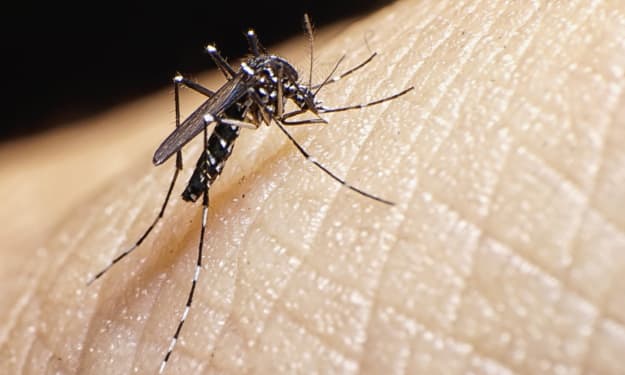
What If We Killed Every Mosquito On Earth?
a mosquito Factory in Brazil is about to unleash 5 billion infected mosquitoes across the country for the first time ever is this the beginning of a sci-fi film or one of the most ingenious bits of science I've come across in a Long Time spoiler alert it's the ladder we all hate mosquitoes right and not for no reason on top of being a pure nuisance with their buzzing and itchy bites they're actually the deadliest animal to humans literally they kill more humans than any other creature primarily through spreading disease but before we can understand and why scientists would want to make more of them we should ask ourselves the question couldn't we just destroy them all like would it really be so bad if we killed every mosquito on Earth nature Journal actually did an analysis on this exact question and found that there wouldn't actually be a huge Fallout if mosquitoes disappeared tomorrow at least not for humans and even then very few species heavily rely on mosquitoes the ones that do like some birds and fish would likely replace them with something else and while some mosquitoes do act as pollinators there's nothing humans rely on them exclusively for of course there's like 3,200 species of mosquito and only 200 of them bite humans so it seems unfair to kill them all but because of the ones that do bite us around 247 million people are infected with malaria every year not to mention a myriad of other diseases like Deni and zika but while destroying mosquitoes may be a net positive for humans one is it really that feasible to do and two can we really know the ecological Fallout from something of that magnitude in comes the idea to make more mosquitoes in a factory which sounds crazy until you realize it's not you see scientists have discovered a way to stop disease transmission from mosquitoes without the need for killing them all thanks to a bacteria called wakia wakia has sort of been in the background in mosquito biology if you like for the last 100 years but only quite recently attracting a lot of attention some of the work that we did a number of years ago now showed that if you had W back here in the mosquito that transmits viruses to people like yellow fever chcken Gia Dy the viruses couldn't grow very well in the mosquito if the head will back here in them this was confusing to the scientists at first but they realized that the bacteria is likely out competing any other pathogens like the Deni virus so if wakia is present the virus is unable to proliferate properly and ultimately can't spread to humans and if you take some of these wakia infected mosquitoes and let them loose into the wild they'll end up infecting other mosquitoes with wakia if an infected male mates with a noninfected female the eggs She lays won't hatch if the female has it and the male doesn't her eggs will hatch but they'll all be infected with wakia and the same happens if both are infected after a few Generations the number of wakia carrying mosquitoes increases rapidly we've done you know deployments in 14 countries usually our release programs last anywhere from a couple of months to maybe 6 months and that provides the opportunity for those mosquitoes to make little wild mosquitoes and then pass W back here into that wild mosquito population most importantly Den cases dropped significantly one of the first comprehensive studies in Indonesia found the protective efficacy of the intervention was 77.1% that's the equivalent of being four times less likely to develop the disease if you were in those areas now some test sites saw results as low as 38% but still pretty major for the reduction of a disease the lower results may be because it takes longer in some communities depending on their size and environment for wakia to spread to the entire mosquito population however the most recent results from the abura valley Colombia which were just released in November 2023 actually saw a decline of 95 to 97% in D fever bringing it to the lowest rate in 20 years for the region what makes this result even more profound is that the rest of the Americas actually had the second worst year for Deni fever since 1980 so while some parts of Colombia were seeing record highs of Denay this region where modified mosquitoes were Unleashed saw record lows this Colombia project began releasing Wakia infected mosquitoes in 2015 so to see a 95% reduction in Deni fever is pretty astounding and now the teams are trying to figure out how to deploy these modified mosquitoes as effectively as possible over even larger areas Deni is a huge problem in Brazil as zika has then we are working together to produce a facility that will produce up to 100 million mosquitoes a week uh in Brazil so that we can deploy them over multiple Brazilian cities now you might be wondering are humans being infected with the Wakia in these mosquitoes like is there a larger risk of having so much of it in our environment so about 50% of all insects naturally have wakum I can guarantee that you and everybody that listens to this will have been bitten by what we call the common house mosquito that's the mosquito that's just IND descript Brown mosquito that will buzz around your ears and that mosquito naturally has vakia in it vakia was a problem we'd know about it there's not a link between wak here and any negative outcomes that anyone's been able to find currently the wh is evaluating this technology for use in other countries of course the scientists involved see this as a supplementary measure and not meant to prevent or discourage Deni vaccines in the regions that are at high risk but in the long run it could end up saving hundreds of millions of people from being infected by Deni and around 100 million people from getting sick it's all an amazing reminder how Innovation and sometimes an unexpected approach can literally change the lives of hundreds of millions of people for the better I want to send a big thanks to Dr O'Neal for helping me to break down this incredible science thanks so much for
By TBH Agencia Exclusiva Colsanitasabout a year ago in Education