
What Can You Do Without a Brain?
Without a brain
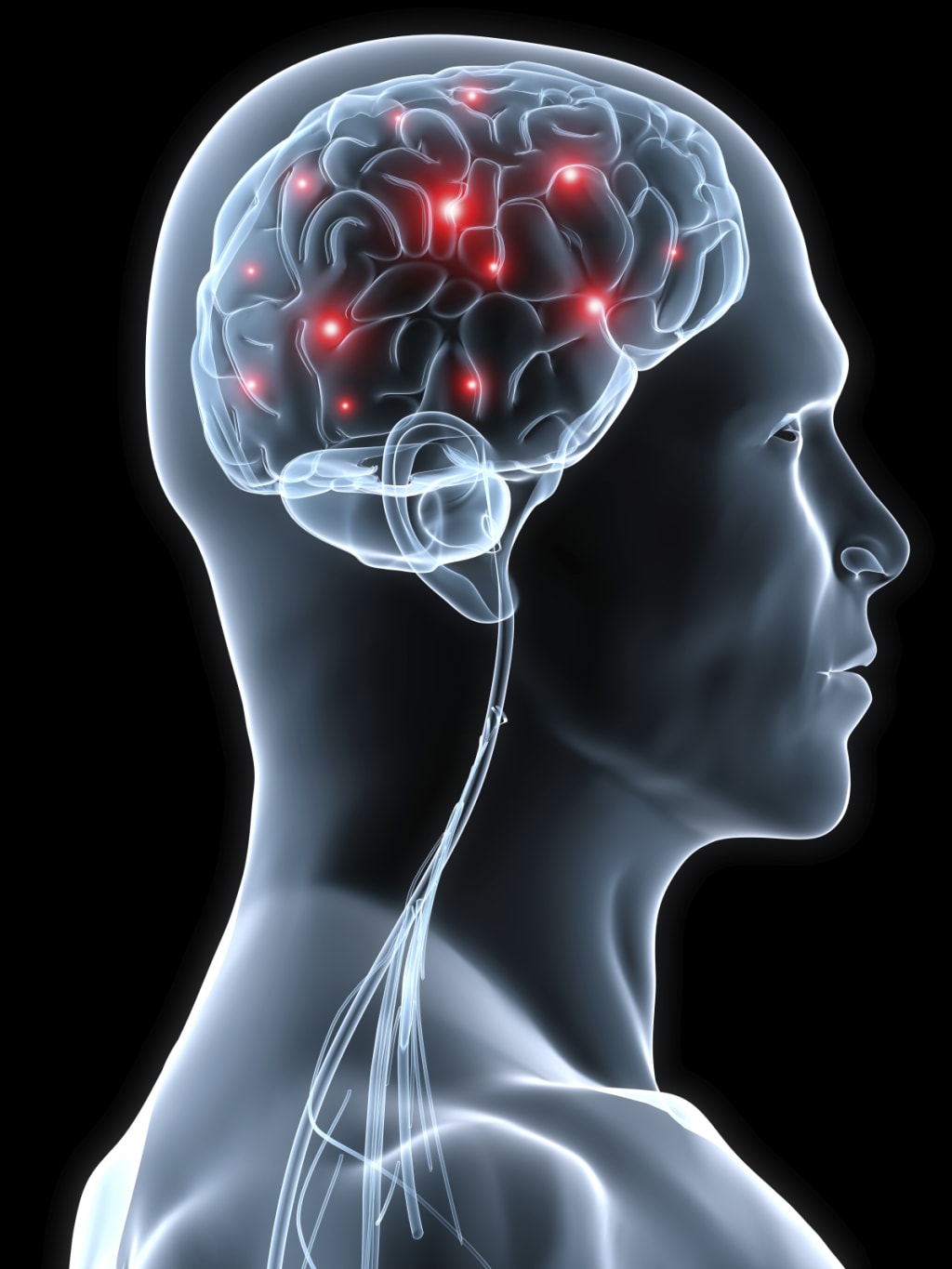
It is is a no-brainer, or is it? I mean, you would need your brain to understand the
words that I was speaking, and you would need your brain to decide whether or not you liked
what you were hearing. You would also need your brain to move your muscles in just the
right way to click the subscribe button. In fact, you need your brain to do a lot of stuff and without a brain, well, you can't do much of anything at all. So, literally speaking,
is there really such a thing as a "no-brainer?" Let's begin with no-header's...decapitation.
It's a macabre subject, I know, but what's the matter? Are you chicken? Ok, good.
Because Mike certainly was. In 1945, farmer Lloyd Olsen went out to grab a chicken for supper.
He cut the chicken's head off and it didn't die. Mike The Headless Chicken lived for another
18 months. He toured the country and surprised onlookers. He could walk and perch and was
fed by putting little drops of water or pieces of grain down his throat. But here's the thing.
Mike The Headless Chicken's actions weren't a no-brainer, because even though
he didn't have much of what we would call a "head" left,
he did have a bit of his brain stem. If we want a clearer no-brainer, we're going
to have to look at an even more simple creature, the cockroach. These guys don't even breath
through their heads so, without one, they're fine. Instead, they breath through holes all
over their bodies. And instead of being controlled by a big, massive brain, they have little
bundles of nerves, ganglia, throughout their body, and so, even without any head parts,
even when completely decapitated, a cockroach can live for weeks. It can walk around, respond
to movement. Really its only problem is that without its head it will eventually starve to death. Us humans are not nearly as fortunate. Without
a head and brain we die within seconds, if not instantly. But before you get jealous,
keep in mind that with our heads intact, we are capable of some actions that don't necessarily
require the brain: reflexes. When you snap your finger, your finger moves at about 20
mph. And a really big sneeze can expel air at nearly 30-40 mph. But nerve impulses, they're
really quick. They can clock in at 250 mph, but sometimes, that's not even fast enough.
For instance, if you accidentally put your hand on a hot stove, cells are dying quickly.
And 250 mph doesn't cut it, you need to take an action fast. It's not worth it to tell
your brain what's happening right away. And so instead, your immediate reaction to pull
away is mediated by other parts of your nervous system. The same can be said for involuntary
and unconscious processes. So, in a way, these unconscious, involuntary,
or reflexive behaviors could be considered no-brainers. But I'm not quite satisfied
yet because they still require that your brain be there, keeping you alive. So, what if you
weren't alive? Well, in your dead, brainless body, your muscle cells still contain a little
bit of energy in the form of ATP. Backyard Brains, right here on YouTube, demonstrates
this with insect parts. This leg is no longer connected to a brain or a body, but energy
remains in the cells. And so, researchers can detect electrical signals when the leg
is touched or even simply breathed on. "Whoa, that popping sound you're hearing is
the spontaneous discharge rate of the living neurons in the still-living leg." The muscle cells of a human limb would respond
in just the same way. But you don't need wires to observe behavior like this. Salt can also
do the trick. The introduction of sodium ions can cause a process similar to an action-potential
in a living animal. Salt added to these fresh frog legs makes them dance, though not for
very long. The cells will eventually run out of energy or simply decay. But to be sure,
there are many other brief candidates for no-brainers at the moment of death. For instance,
muscles relaxing, causing a person to soil themselves. Technically, a no-brainer. But
it's a misconception that a corpse continues to grow fingernails and hair. Instead, it's
actually the skin itself shrinking as it dries, making hair and nails appear longer. But let's take a closer look at these skin cells,
because we might be on to a quite satisfactory no-brainer. Your skin cells live on the periphery
of your body and they don't require a constant stream of new nutrients from your blood.
And so even though you are dead and your brain is no longer calling the shots, your skin
cells can continue to live, gathering nutrients through osmosis and dividing for days.
In fact, you can harvest skin cells from a corpse after 24 hours. On a related note - digestion.
Sure, a lot of the digestive process is completed by you being alive and having a nervous system that
works. But part of the work is done by bacteria that just happens to live inside your gut.
And when you're dead or your brain is gone, they'll continue digesting.
So, in a way, making poop, at least part of that process, is a no-brainer. But here's the thing. These bacteria that
live inside you are foreign bacteria. Are they you? For that matter, what about the
skin cells that can continue to live after you're dead? Are they you or are they merely cells
that you have made a good home for? We're getting pretty philosophical here because
we're basically asking if you are merely your brain and everything else that goes on when
you no longer have one is just other stuff that you aren't doing? You could argue that without a brain your body
no longer has your intentions. It no longer does things because you have decided to do them.
In other words, a no-brainer may be impossible for you to do,
because it requires not using you. If you are merely what your brain does and
not what your cells do off on their own when the brain is gone then, in a way, being you,
being alive, is a yes-brainer.
About the Creator
Keep reading
More stories from TBH Agencia Exclusiva Colsanitas and writers in Chapters and other communities.
This Is 200 Calories
We're all told to eat healthy, and be aware of our calorie intake through the day. But have you ever stopped to see what does calories look like? For example, this is 200 calories worth of apple On the other hand, if we take 200 calories worth of cheese, it doesn't look quite the same in terms of volume throw 200 calories of wine into the mix for a nice wine and cheese And you have three very different looking versions of 200 calories Now compare that wine to beer or rum, and you have three very different party nights for your stomach Or how about the eggs you had for breakfast Compare that to 200 calories of sweet cereal you had the other day, or even some oatmeal And they're bound to seem a bit different But if you had gotten a sausage and egg breakfast sandwich, You'd be looking at even less Broccoli? You may be surprised by the amount you can eat before you hit 200 calories Not to mention this stuff is packed with nutrients and a great source of fiber A slice of pizza? Less than a slice if it has pepperoni on it And what about the classic Big Mac? Try a 200 calorie 'Small Mac' And since calories are simply units of energy, with the calories of 217 Big Macs You can drive your car 35 Kilometres So, wait. What is a calorie? Specifically, a calorie is the amount of energy, or heat it takes to raise the temperature of 1 gram of water By one degree celsius We need energy to survive, and we get it from food Carbohydrates, Protein and fats are the building blocks of our food, and each contribute a different amount of energy to our bodies The average person needs somewhere between 2000 to 2700 calories a day Depending on factors like height, weight, gender and age And some foods like peanut butter are calorie dense, filling this requirement faster Or that muffin you ate as a snack, chances are its calorie content is higher than you thought And those irresistible Doritos? Don't lie, you ate the whole bag Unlike Celery, which has very few calories, giving you lots to munch on Or carrots Not so much Hershey's Kisses And if you're eating salad to limit calories, watch out for creamy dressing Particularly, french dressing On its own, black coffee is quite low on calories You can have a lot before you hit 200 calories But once you add one cream and one sugar, those calories quickly add up Turn it into a specialty drink, like an Iced Peppermint White Mocha And you might be shocked at the amount left But, just because something has less calories Doesn't necessarily mean it's healthier or better for you Take for example this 200 calories of coke vs. 200 calories of whole milk While it's true that the coke contains fewer calories per litre, You can't forget that milk contains many nutrients and healthy fats Or like brown bread vs. white bread Yes, whole wheat bread often contains more calories per slice, but it also contains more nutrients and fiber So, counting calories isn't the be all and end all But thinking about what goes into your body is bound to make a difference At the end of the day, eat a healthy and balanced diet And if you'd like to see even more 200 calorie examples, check out the WiseGeek post we've linked in the description Which puts even more food into perspective Got a burning question you want answered? Ask it in the comments, or on facebook and twitter And Subscribe for more weekly science videos!
By TBH Agencia Exclusiva Colsanitas2 years ago in Chapters
Firebug: Ch. 21 - The Queen Bee's Sting
Roman dropped Theo off back home a few minutes before dawn. There was just enough time for him to slip through the window and tiptoe to his room before he heard Thaddeus wake up and get ready for work. Theo laid in bed and stared at the ceiling until he heard his father leave the apartment, unable to stop smiling.
By Natalie Gray7 days ago in Chapters
Two Grumpy Old Men Solve the Problem
Marty and Steve were two grumpy old men who lived together. They had known each other for years. Marty had been a bachelor all his life. Steve said it was because no one could stand to ever live with. Marty’s standard reply was “Well, you are, so what sort of a moron does that make you!”
By Calvin Londona day ago in Humor


Comments (3)
Well Crafted
Thanks for sharing
Well deserved.