Paul Asling
Bio
I share a special love for London, both new and old. I began writing fiction at 40, with most of my books and stories set in London.
MY WRITING WILL MAKE YOU LAUGH, CRY, AND HAVE YOU GRIPPED THROUGHOUT.
paulaslingauthor.com
Stories (80)
Filter by community
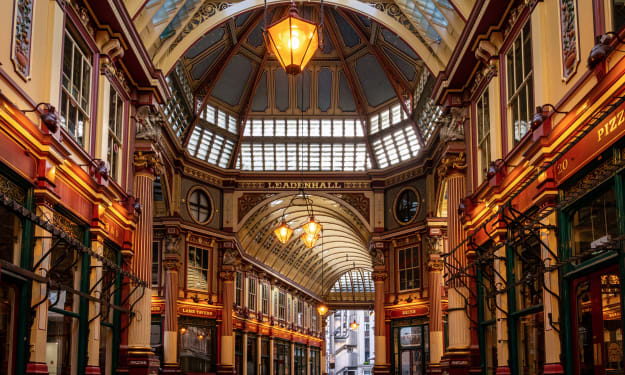
LEADENHALL MARKET LONDON
Leadenhall Market started life as a forum in Roman London and there’s been a market on the site since the 14th century. The market actually dates back to 1321. Leadenhall Market has endured changes in use, rebuilding, the blitz and even the Great Fire of London. Originally a meat and game market, it is now home to many boutiques, restaurants, cafes and wine bars.
By Paul Asling4 years ago in FYI
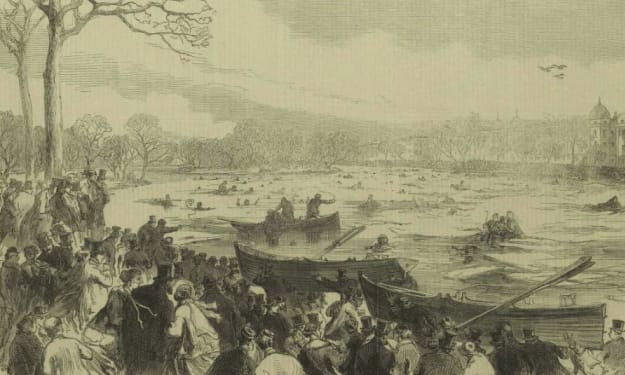
THE REGENT’S PARK TRAGEDY
The start of January 1867 was extremely cold throughout England and skaters all over the country were enjoying themselves on rivers and frozen lakes. At that time, Regent’s Park incorporated a zoo, gardens, paths for horse riding, and an ornamental lake. There was also a lake for boating. In freezing winters, when the lake froze over, it became a location for skating.
By Paul Asling4 years ago in FYI
BOSHAM CHURCH – West Sussex
Bosham is one of the earliest places of Christian worship in West Sussex and perhaps the most well-known. The church is represented in the Bayeux Tapestry, which features the events leading to the Duke William of Normandy’s conquest of England in 1066.
By Paul Asling4 years ago in FYI
LONDON BRIDGE AND THE IMPALED HEADS
Erected in 1999, most days, hundreds if not thousands of travellers and tourists pass an eighty-foot high, slanted grey stone spike at the southern end of London Bridge. Most people walk past it, but the feature has a great deal of historical meaning as it remembers a dark era of over three hundred years, when traitors’ heads were put on spikes for all of London to see. This cheery London ritual began around 1300 A.D.
By Paul Asling4 years ago in FYI
COSTERMONGERS IN VICTORIAN LONDON
Queen Victoria’s reign was the costermonger’s pinnacle, even though the word had been devised in the early sixteenth century. Costers were far from well-off; there were over thirty thousand of them, quite a big number in London, which was just under two and a half million.
By Paul Asling4 years ago in FYI
THE CEMETERY HIDING LONDON’S SEEDY PAST
It’s not often you stumble across a medieval burial ground that’s hidden in plain sight a couple of minutes stroll from London Bridge. If it wasn’t for the rows of flowers and ribbons in changing states of deterioration adorning the gate and railings, you might never know you’d come across Cross Bones Cemetery.
By Paul Asling4 years ago in FYI
DEADMAN’S ISLAND
Deadman’s Island is perhaps the most haunting places in the UK. Lying opposite Queenborough, Isle of Sheppey. It has long been the topic of grisly folklore with talk of dead bodies, headless skeletons and red-eyed devil dogs. The gruesome place sounds like something from a pirate film.
By Paul Asling4 years ago in FYI
WHY ARE SHOES SOMETIMES FOUND BURIED IN OLD BUILDINGS?
Most of the finds date to the 18th and 19th Century and many buildings in Britain are thought to have hidden shoes buried in their walls. But why did superstitious owners and builders believe in this mysterious ritual?
By Paul Asling4 years ago in FYI
WAS DECIMATION THE CRUELLEST OF PUNISHMENTS?
As we know the Roman army was an efficient war machine that produced one of the greatest domains in history. Roman legionaries obeyed their leaders and maintained formation throughout their battles. They were well known for their discipline, but what happened when legionaries deserted the battle or defied their superior? They would be subjected to one of the most ruthless retributions in military history and were called decimation.
By Paul Asling4 years ago in FYI
LONDON – WHERE DID IT ALL START? AND DO YOU THINK IT IS STILL A GREAT CITY?
Unlike other historic cities such as Rome or Athens, where there is a clear mix of areas from distinctive periods. London’s sites and listed buildings are singular structures, in many cases constructed progressively by parts from countless different periods. Greater London covers over six hundred square miles, although, until the 17th century, London was largely jam-packed into a solitary square mile.
By Paul Asling4 years ago in Wander