
WAS DECIMATION THE CRUELLEST OF PUNISHMENTS?
The punishments were carried out straight away irrespective of the victim’s rank or participation in the wrongdoing in question

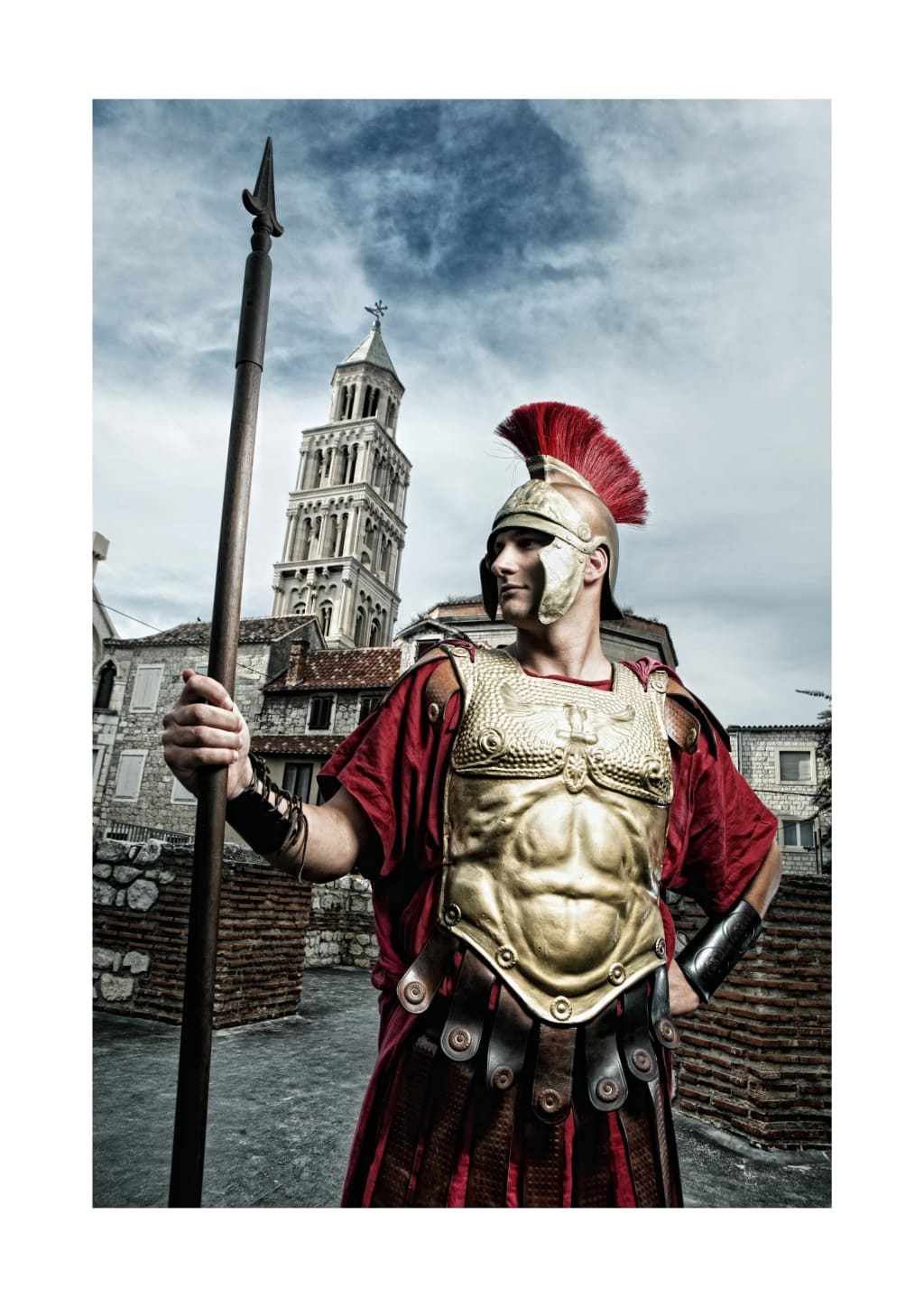
As we know the Roman army was an efficient war machine that produced one of the greatest domains in history. Roman legionaries obeyed their leaders and maintained formation throughout their battles. They were well known for their discipline, but what happened when legionaries deserted the battle or defied their superior? They would be subjected to one of the most ruthless retributions in military history and were called decimation.
The major advantage of the Roman army was their capacity to fight in formation. The Roman soldiers received plenty of food, standardised kit, and decent training. The regulation and obedience were of the highest importance. If the legionaries fled the battlefield, there was no way back in the eyes of the Roman leadership.
Decimation was one of the cruellest punishments carried out against rebellious or cowardly soldiers in the Roman army. The idea began in the era of the Roman legions. Army units that mutinied, fled in the foe’s face or under-performed in battle could be singled out for group retribution in the form of decimation. Nowadays, the term is used to depict a substantial defeat, the Latin word for decimation essentially means ‘the removal of a tenth.’
The first recorded decimation took place in 471. Roman troops were punished for absconding during the clashes with Volsci. What is significant, however, was this retribution was not only carried out on legionaries, it also encompassed centurions and officers.
The Roman legionaries often confronted death. The death sentence was not horrifying to them. It was the way the execution was carried out that made the decimation a cruel punishment. Under the sentence, the troops would be split into units of ten men. One soldier from each group would be chosen at random, normally through a lottery. The unsuccessful soldier would then be beaten to death by his companions. Imagine killing an acquaintance with whom you’ve been with for years, shared meals with, and fought side by side.
The punishments were carried out straight away irrespective of the victim’s rank or participation in the wrongdoing in question. The fatal blows were normally beaten with clubs. A practice the Romans called fustuarium.
Soldiers could also suffer clubbing for crimes of theft, desertion or lying to a superior. After the punishment of decimation was carried out, the surviving soldiers would be required to camp away from the bigger army. The abridged unit would have to exist for several days on barley. This diet they were forced to eat didn’t just taste dreadful, it was very hard on the stomach and bowels.
Decimation was used by Marcus Licinius Crassus in 71 BCE. During the Spartacus rebellion. As a result, over fifty people died after the decimation of the entire legion. Julius Caesar threatened decimation of his 9th legion in the war against Pompey to put down the disobedient mood.
The Romans seldom used decimation because it meant the loss of proficient soldiers. Thus, there are only a few recorded cases of decimation in the Roman army.
A renowned case of decimation was the legion of Theban. In 286 AD, the soldiers refused to fight other Christians. Emperor Maximillian ordered decimation, but they would not obey his orders. The emperor ordered more rounds of the decimation, but the soldiers again resisted. So, the decimations went on until the whole legion of over six thousand men were killed.
Decimation didn’t vanish with the fall of the Empire. And there are reports of decimation through world history. Some examples of decimation after the collapse of the Roman Empire include General Luigi Cadorna against the failing Italian soldiers in World War I. Leon Trotsky also ordered it against deserters during the Russian Civil War. And Russian generals ordered it as the penalty for the cowardice in the Battle of Stalingrad.
About the Creator
Paul Asling
I share a special love for London, both new and old. I began writing fiction at 40, with most of my books and stories set in London.
MY WRITING WILL MAKE YOU LAUGH, CRY, AND HAVE YOU GRIPPED THROUGHOUT.
paulaslingauthor.com
Keep reading
More stories from Paul Asling and writers in FYI and other communities.


Comments
There are no comments for this story
Be the first to respond and start the conversation.