Muhammad Saad
Stories (465)
Filter by community
Whispers of Humanity
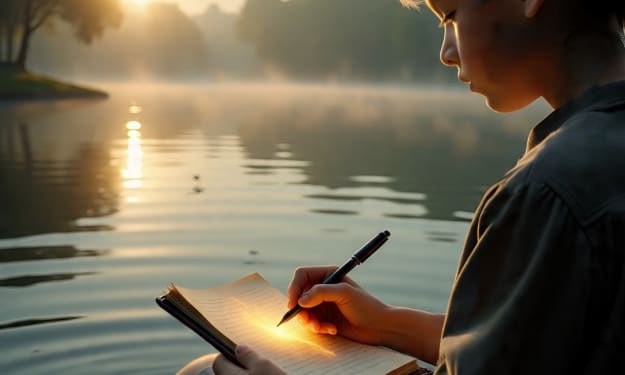
In a small valley cradled by ancient hills, there was a village where people rarely spoke in haste. Words mattered here. Every sentence was weighed like a stone before it was placed into the river of conversation. This wasn’t due to silence or fear—but reverence. The villagers believed that words, especially those shaped with care, held power. At the heart of the village stood an old tree known as the Listening Oak. Its roots curled like open hands, and its branches reached skyward as if it were in constant prayer. Beneath it, once a week, the villagers gathered for the “Evening of Whispers,” a tradition as old as the village itself. On these evenings, people recited poetry—written by themselves, their ancestors, or passed down through memory—each verse shared like a seed planted in the soil of community. Lina, a quiet girl of sixteen, had always attended but never spoken. She loved the way words danced in the air during the gatherings, how an old man’s rough voice could carry a tender truth, or a child’s scribbled rhyme could soften hearts hardened by time. She carried a leather-bound notebook everywhere, scribbling poems no one had seen. Her mother, Mira, once the most eloquent poet of the village, had lost her voice years ago after Lina’s father died in a mining accident. Mira hadn’t spoken since. She sat each week beneath the Listening Oak, eyes bright with unspoken memories, hands resting on her lap like unopened books. One golden autumn evening, the Evening of Whispers began like all others. The breeze was gentle, the air sweet with fallen leaves, and the lanterns flickered as villagers took turns speaking their truths. A boy read about losing his pet bird and the freedom it might now enjoy in the skies. A woman recited a lullaby written by her grandmother. An elder shared a haiku about the ache of growing old. As the night deepened, silence fell. Then, for the first time, Lina stood up. Her knees trembled, but she held her notebook like a shield and walked to the base of the tree. People turned to watch, their expressions gentle but curious. She opened her notebook, cleared her throat, and read: > “We are made of breath and brokenness, And yet we bloom. In silence, we carry stories That wait for the wind.” Her voice quivered, but she continued: > “I have watched my mother Speak without words Sing in her silence And teach me the language Of listening.” People stilled. The breeze hushed as if the world leaned in. > “Let us not forget That pain, when spoken, Can become a bridge. And poetry— Poetry is how we walk across.” She closed her notebook. For a moment, all was still. Then—soft clapping. A gentle rustle of approval. Some nodded, others wiped quiet tears. But Lina looked only at her mother. Mira, still silent, had risen to her feet. Her eyes shimmered, and for the first time in years, her lips parted. A breath. Then a word: “Thank you.” Gasps rippled through the crowd. Not for drama—but for the quiet miracle of a voice returning home. From that night on, Lina’s poems became a thread in the tapestry of the village’s tradition. Her voice, once hidden, helped others find theirs. Mira didn’t speak often, but she began to hum old songs, and when she did, others would join in. Years later, people would still tell the story of the girl who whispered truth beneath the Listening Oak and reminded them that poetry isn’t just for beauty—it’s for healing, for remembering, for becoming whole again. And every time a new voice rose in the circle, someone would smile and say, “Another whisper of humanity.”
By Muhammad Saad 6 months ago in Poets
Whispers of the Heart: The Timeless Beauty of Love Poetry
From ancient stone tablets to modern Instagram posts, love poetry has always found a way to speak to the human heart. In every culture and every language, people have written verses to express the most profound of all human emotions—love. But why does love poetry endure, even in an age of quick texts and fast connections? Love, after all, is both universal and deeply personal. It’s one emotion that can bring together strangers across time and space. When someone reads a love poem written centuries ago and still feels moved, that’s the magic of poetry—its power to transcend time, to preserve emotions, and to whisper truth from one heart to another. A Journey Through Time Some of the earliest love poems come from ancient Sumeria, carved into clay tablets more than 4,000 years ago. Even then, people were trying to capture that fluttering feeling in words. In Egypt, lovers composed verses filled with longing and admiration, comparing their beloveds to stars and flowers. In ancient India, the “Gita Govinda” celebrated divine love with sensual and spiritual poetry, while in China, the “Book of Songs” collected folk poems filled with tenderness and yearning. Across the world, cultures independently turned to poetry as a way to say what couldn’t be said any other way. Then came the great romantics of the world: Rumi with his spiritual longing, Shakespeare with his sonnets, Pablo Neruda with his passionate declarations. They gave voice to love in all its forms—joyful, aching, patient, and wild. Why Poetry Speaks So Deeply Unlike ordinary speech, poetry distills feeling into rhythm, metaphor, and music. A simple line like “I love you” becomes, in Neruda’s words, “I love you as certain dark things are to be loved, in secret, between the shadow and the soul.” That’s what makes love poetry so powerful. It says the same things we all feel—but in a way that’s beautiful, timeless, and unforgettable. Reading or writing love poetry can be healing. It helps people express emotions they may not fully understand. It allows lovers to communicate deeper feelings than a simple “I miss you” or “You’re special.” And for those who’ve lost love or are waiting for it, poetry can bring hope and peace. Modern Love, Eternal Words Today, love poetry is still alive—and thriving. You can find it on greeting cards, in wedding vows, on social media, and in bestselling books. Poets like Rupi Kaur, Lang Leav, and Atticus have made poetry popular again, especially among young people. But what’s beautiful is that anyone can write love poetry. You don’t need to be Shakespeare. You just need to be honest. One woman, Maya, started writing poems for her husband when they were dating. Years later, she compiled them into a small book as an anniversary gift. Her poems weren’t famous, but they captured their love story—and that made them priceless. Teaching Us How to Love More than just expressing love, poetry teaches us how to love better. It reminds us to slow down, to notice the details, to cherish the small moments. When you read a poem about someone watching their partner sleep, or walking hand in hand through the rain, it encourages you to do the same. To notice. To feel. To be present. Love poetry celebrates tenderness in a world that often rushes past it. It reminds us that love isn’t always loud or dramatic—it can be soft, patient, and enduring. A Poem for Every Heart Whether you’re deeply in love, healing from heartbreak, or dreaming of someone you’ve yet to meet, there’s a love poem out there that speaks for you. Try reading Rumi when you feel a spiritual longing. Neruda, when you want passion. Emily Dickinson, when you’re exploring quiet affection. Or write your own—just a few lines from your heart can become a lifelong treasure. In a world filled with noise, love poetry offers quiet beauty. In a time of distraction, it offers presence. And in moments of doubt, it offers hope. Because love, like poetry, never goes out of style. And the heart will always find a way to speak—sometimes, through a whisper in verse.
By Muhammad Saad 6 months ago in Poets
"Rest to Rise: The Power of a Healthy Sleep Routine"
Rest to Rise: The Power of a Healthy Sleep Routine A Short Story For as long as Maya could remember, sleep had always felt like an inconvenience. In college, she’d pulled all-nighters like badges of honor. In her twenties, her job in marketing demanded long hours, endless caffeine, and social media scrolling that often stretched past midnight. She told herself she was doing what she had to do—hustling, grinding, chasing the dream. But by the time she hit thirty, Maya was running on empty. Each morning started with a groggy head, puffy eyes, and a silent prayer that the coffee would kick in before her first Zoom call. She forgot things constantly—names, dates, even passwords she'd just reset. Her moods swung like a pendulum, and even the smallest inconveniences felt like mountains. Still, she never connected the dots. She blamed stress, the economy, hormones, anything but sleep. One evening, after snapping at her best friend for canceling dinner last-minute, Maya sank into the couch, exhausted and ashamed. She turned on a podcast she usually used as background noise while scrolling, but one sentence grabbed her attention: "The way you sleep determines the way you live. Rest isn't a reward; it's the foundation." She paused. Rewound. Listened again. The guest, a sleep scientist, explained how chronic sleep deprivation doesn’t just lead to tiredness—it rewires your brain, fogs your focus, dulls your mood, and even affects how your body heals and ages. Maya sat in silence long after the podcast ended. Something inside her shifted. That night, she made a decision—not to overhaul her life overnight, but to start with sleep. --- The first week was clumsy. She tried going to bed at 10:30 PM but ended up tossing and turning until past midnight. Her brain, used to stimulation, begged for screens. Her fingers itched to check email or scroll Instagram. So she created a routine. At 9:30, she’d shut down her laptop. She swapped scrolling for reading—a novel, not a business book. She sipped chamomile tea. She placed her phone across the room and turned her alarm clock to face the wall. Slowly, her mind started to quiet. By the end of the second week, she was falling asleep faster. Her body began waking on its own before her alarm. The difference was subtle, but it was there. She noticed it in the mornings. She didn’t feel like a zombie anymore. Her eyes weren’t bloodshot in video meetings. She didn’t need a third coffee to push through the afternoon. One morning, walking to her favorite café, she caught herself humming—a small thing, but it startled her. She couldn’t remember the last time she felt light without forcing it. --- A month into her new routine, Maya had a conversation with her manager that surprised them both. "You've been sharper lately," he said. "Clearer. And happier, I think?" Maya laughed. "Honestly? I started sleeping like an adult." He smiled. "Whatever you're doing, keep doing it." --- That night, Maya journaled under soft lamplight: "I used to think sleep was something I’d earn after everything else. Now I see it's the first thing I have to give myself. Rest isn't weakness. It's my reset button. And for the first time in a long time, I feel like I'm rising again." --- Six months later, Maya still has late nights. She still has deadlines and bad days and stressful emails. But she doesn’t face them depleted. She faces them grounded. When her friends ask her what changed, she tells them the truth: not a new job, not a new diet, not a fancy morning routine. Just sleep. Real, intentional, consistent sleep. It didn’t solve all her problems. But it gave her the strength to solve them herself. --- Moral of the Story: We live in a culture that celebrates hustle and ignores exhaustion. But real energy doesn’t come from coffee, motivation, or sheer willpower—it comes from rest. Sleep isn’t the end of the day; it’s the beginning of tomorrow. When you treat it like a priority, you give yourself the clarity, stability, and strength to rise into your best self.
By Muhammad Saad 6 months ago in Humans
The Quiet Flame: A Poet’s True Voice
The Quiet Flame: A Poet’s True Voice Elias Reed was not a loud man. In fact, most days he spoke only a handful of words. He lived in a quiet town near a quiet lake, where his only companions were a few aging books, a black cat named Thistle, and a leather journal that never left his side. He was a poet — not by profession, but by nature. While others chased the noise of the world, Elias listened for its silences. In the whisper of wind through birch trees, in the hush of snowfall against windowpanes, in the pauses between thunder and rain — that’s where he found his verses. He never thought they mattered to anyone else. Elias posted his poems online under the simple pseudonym QuietFlame, never attaching a photo, never answering comments. His words were sparse and deliberate, sometimes no longer than a few lines, but always exacting in their emotion. > “The world does not need shouting— it needs stillness that burns.” One evening, he sat by the lake as the sun fell behind the hills. Thistle curled at his feet, purring quietly. He opened his journal, not intending to write, but just to sit with the silence. That’s when he heard footsteps — unusual for this hour. A young woman approached, cautiously, carrying a dog-eared book. Her face was lit with something between nervousness and awe. “Are you… QuietFlame?” Elias blinked. “I am,” he said softly, unsure whether to be flattered or frightened. She smiled, and her voice trembled with sincerity. “I just wanted to say thank you. Your poems got me through the worst winter of my life. I didn’t think anyone else felt that way — that quiet could be… strong.” He didn’t know what to say. So he simply nodded. For Elias, that was enough. Word of his writing began to spread. Not virally — not in the way trending things burn bright and fast — but steadily, like a candle passed hand to hand. People shared his poems at open mics, wrote them on post-it notes for friends, stitched them into journals and wedding vows. Teachers printed them out in classrooms. A retired librarian sent him a handwritten letter, saying one of his poems helped her process the loss of her husband. Someone even painted a mural in a small café downtown with the lines: > “We are not lost — only quiet. And there is strength in that.” Still, Elias didn’t seek fame. He continued writing in the early mornings, sipping lukewarm tea, watching the mist drift off the lake. But now, something inside him had changed. Not pride — he had no need for that. It was purpose. He realized his silence wasn’t empty. It was full — of thought, of care, of fire that chose to burn inward rather than outward. One crisp autumn day, the town’s local paper invited him to a literary festival. They wanted him to read his work aloud. At first, he refused. Public speaking was not his nature. But after days of reflection, he agreed. When he stood on stage, the room was packed. Faces young and old looked back at him, waiting. He opened his notebook with steady hands and began to read — not loudly, but clearly, each word unfolding like a leaf on still water. His voice wasn’t booming. It didn’t need to be. Because everyone was listening. After his reading, the crowd stood in quiet applause — no shouting, no whistles, just genuine, heartful appreciation. That night, Elias walked home beneath the stars, his heart warm. He stopped by the lake and sat on his bench. Thistle leapt up beside him. He opened his journal again and wrote: > “Let this be the proof: Even a quiet flame can light the world — if it stays true to its fire.” --- And it did.
By Muhammad Saad 6 months ago in Poets
The Poetry of Us: Understanding Human Behavior Through a Poet’s Eyes
On a quiet park bench in the early blush of spring, an old poet named Elia watched the world unfold like a verse. Her fingers, long stained with ink and seasons, curled gently around a small leather-bound notebook. In it, she didn’t write about the stars or the sea anymore. She wrote about people. The way they laughed too loud to hide sorrow, how their hands twitched when they lied, how they leaned into one another without noticing. To Elia, human behavior was poetry in motion—chaotic, imperfect, but undeniably artful. Each morning, she came to the same spot, just beneath a flowering dogwood tree, and observed. She never judged. She simply noticed. Today, a boy no older than ten sat across from her, furiously kicking a pinecone down the path. His brows were stitched in frustration, but when his little sister toddled over, wobbling like a windblown dandelion, his face softened. Without a word, he picked up the pinecone and handed it to her like a treasure. Elia wrote one line: Anger melts quickest in the hands of innocence. She had learned over the years that emotions weren’t linear. They looped and danced and collided. People said things they didn’t mean when fear took hold. They apologized not always with words but with coffee left on a desk, or a blanket pulled up higher over a shoulder in the night. Her neighbor, Miriam, for instance, had never spoken about her husband who left. But every morning, she tended to her wilting geraniums with the kind of care reserved for things you’ve lost once and fear losing again. That, Elia thought, was love too—quiet, bruised, but persistent. One afternoon, a teenager slumped beside her on the bench, headphones in, eyes scanning a cracked phone screen. He sighed, deep and theatrical. Elia didn’t speak. Eventually, he did. “People suck.” She smiled gently. “Some do. But most are just scared.” He looked at her sideways. “Scared of what?” “Of being misunderstood. Of needing too much. Of being too much.” He stared ahead for a moment. “Yeah. That sounds about right.” He came back the next day. And the next. He didn’t always talk, but when he did, he told her about the fight with his dad, the pressure at school, the way he missed his mom even though she was technically still around. Elia didn’t offer advice. She offered lines. “One day you’ll see that silence isn’t always emptiness,” she said once. “Sometimes it’s just a space waiting to be heard.” He wrote that down in his Notes app. As the seasons turned, Elia filled her notebook with these small human truths. Not grand theories or psychological models, just moments. A woman stroking the collar of her absent dog’s leash. A couple arguing with their backs still touching. A man rehearsing a proposal alone under the stars. She noticed how we seek rhythm—in relationships, in daily rituals, in the repeated patterns of hurt and healing. We chase comfort in the familiar, even when it wounds us. And yet, we are also capable of great rewritings. She once saw a man return every Sunday to the same tree, laying a single white lily on the ground. For months, he never missed a week. Then one day, he came with a woman by his side. They laid the lily together. When they walked away, they held hands. Elia wrote: Grief does not leave us; it makes room. Over time, people began to know her. Not in the way they knew friends, but in the way one knows a steady landmark—the lighthouse in the fog. They nodded, offered her pieces of their lives, small and broken and beautiful. A thank-you letter never sent. A fear confessed. A poem scribbled on the back of a grocery receipt. And Elia collected it all—not to fix them, not to diagnose—but to understand. To witness. Because to her, the poetry of us was not in the perfection of our actions but in the way we tried. The way we failed and forgave. The way we yearned to be seen and held, even when we didn’t know how to ask. In her final days, the boy with the pinecone, the teenager with the heavy sighs, the grieving man and the couple, they all returned—one by one. They sat by her side and read aloud from her notebook. Her words, born from their lives, looped back to them. In her final entry, scrawled in slightly shaking hands, Elia wrote: We are stories pretending to be skin. We are verses still unfinished. We are the poetry of us. And then she rested. And still, beneath the flowering dogwood, the bench waits. For someone else to notice.
By Muhammad Saad 7 months ago in Poets
Voices That Inspire: The Timeless Power of Poets
Voices That Inspire: The Timeless Power of Poets How Poets Shape Culture, Stir Emotions, and Illuminate the Human Experience Through Words In every corner of the world, across centuries and civilizations, poets have captured the essence of what it means to be human. With just a few lines of verse, they have expressed joy, heartbreak, protest, and peace. They have given voice to the silent, language to the inexpressible, and comfort to those who seek understanding. Poetry, though often soft-spoken, has proven to be one of the loudest forces in culture, thought, and emotional resilience. Consider a poet sitting by a rain-slicked window, a notebook open, words flowing as naturally as the weather outside. Or think of another, standing before a microphone at an open mic night, performing spoken word that electrifies the room with truth and rhythm. These moments are small, but the impact can be profound. Poets are often seen as dreamers—people with their heads in the clouds. But they are also observers, historians, and emotional translators. They notice what others might miss: the way a child smiles at a stranger, the silence in a crowded elevator, the feeling of coming home after being away too long. Poets turn these details into art, and in doing so, help others see the world more clearly. Throughout history, poetry has played a central role in shaping societies. In ancient Greece, poets like Homer passed down legends and moral lessons. In Persia, Rumi explored the depths of love and spirituality, creating verses that still resonate today. During the Harlem Renaissance, Langston Hughes and other Black poets used poetry to express identity, struggle, and hope. And in more recent times, poets like Amanda Gorman have brought poetry to global stages, reminding the world of its relevance and beauty. Why does poetry endure when so much else fades? Because it speaks directly to the heart. A well-crafted poem can say more in a few stanzas than some speeches say in hours. Poets have a unique ability to compress truth into beauty, to take complex emotions and render them in language that feels simple, yet profound. Poetry also offers a form of healing. Many people turn to poetry in difficult times—during loss, heartbreak, or uncertainty. Whether reading or writing, poetry allows for emotional release. It helps people find meaning in pain and celebrate moments of peace. For some, a single poem read at just the right time can change everything. Take Maya Angelou’s Still I Rise—a bold and uplifting anthem of perseverance and dignity. Or Mary Oliver’s The Summer Day, which ends with the unforgettable question: “Tell me, what is it you plan to do with your one wild and precious life?” These poems do more than entertain; they inspire action, reflection, and growth. Poets today are as vital as ever. In classrooms, they teach children the power of language. In communities, they lead workshops that encourage self-expression and healing. Online, they share their work with global audiences, sparking conversations across cultures. And in quiet corners, they continue to write—sometimes without applause, but always with purpose. Even if you’ve never considered yourself a poetry lover, chances are a poem has touched you. Maybe it was read at a wedding or a funeral, printed inside a greeting card, or shared in a social media post. Poetry shows up when words need to carry more weight, when emotions run deeper than everyday speech can handle. In a world that often moves too fast, poetry asks us to slow down. To listen. To feel. And to connect—not only with each other but with ourselves. So the next time you pass by a book of poetry or hear a poet speak, pause. Give it a moment. You might find that the words on the page say exactly what you needed to hear. Poets are not just writers. They are guides, guardians of memory, and quiet revolutionaries. Their voices remind us that beauty exists, that emotions matter, and that language—at its best—can change the world.
By Muhammad Saad 7 months ago in Poets
"Banking at Your Fingertips: The Power of Online Banking"
Banking at Your Fingertips: The Power of Online Banking How Digital Banking Systems Are Making Financial Management Easier, Safer, and More Convenient for Everyone In the heart of a busy city, 32-year-old Maya sat by her window with a warm cup of tea and her laptop. With a few simple clicks, she transferred rent to her landlord, paid her internet bill, and checked her savings—all without stepping outside. What once required a trip to the bank, waiting in line, and filling out paperwork now takes minutes. Like millions around the world, Maya has fully embraced online banking, and it has transformed the way she manages her finances. Online banking, once a novelty, is now a fundamental part of modern life. With more people working remotely, shopping online, and managing digital lifestyles, online banking systems have grown not just in popularity but in quality. They’ve become more secure, more intuitive, and more inclusive than ever before. Convenience That Fits Any Lifestyle One of the greatest advantages of online banking is its 24/7 availability. Whether you’re a night owl, a frequent traveler, or just too busy to visit a physical branch during business hours, online banking is always open. You can transfer funds, check your balance, apply for loans, or even open a new account from virtually anywhere in the world. For people like Raj, a freelance graphic designer based in a rural town, this accessibility is a game-changer. “I used to travel 30 minutes to the nearest bank just to deposit checks or manage my savings,” he says. “Now, I do everything on my phone during lunch breaks.” Security in the Digital Age With digital services, security is often a top concern. Thankfully, modern online banking systems take cybersecurity seriously. Multi-factor authentication, encryption, biometric login, and instant fraud alerts are just a few of the tools banks use to protect user data. In fact, many online banks now offer features that allow users to instantly lock or freeze cards, set spending limits, or get notified of unusual activity. These features help users maintain better control over their finances and feel more secure than they might with a physical wallet. Sophia, a college student, recalls how she avoided a major loss thanks to her banking app’s alert system. “Someone tried to use my debit card across the country. I got a notification right away, froze the card in seconds, and contacted the bank. They blocked the transaction and sent me a new card the next day.” Financial Tools That Educate and Empower Beyond basic banking, many platforms now offer financial management tools that help users budget, save, and invest. With built-in trackers and AI-powered recommendations, customers can monitor their spending habits, set financial goals, and make informed decisions. Online-only banks, or “neobanks,” often provide intuitive dashboards that show real-time spending categories, upcoming bills, and even projected savings. This empowers users—especially young adults or those new to financial planning—to build healthier financial habits. For instance, Latoya, a young entrepreneur, credits her online banking app for helping her stay on top of her startup’s expenses. “It shows me where my money goes, reminds me of recurring payments, and even suggests ways to cut costs. It’s like having a financial advisor in my pocket.” Inclusivity and Reach Online banking also opens doors for people who have traditionally been excluded from traditional banking systems. In many parts of the world, mobile banking has enabled individuals in remote or underserved communities to participate in the formal economy for the first time. All they need is a smartphone and an internet connection. This shift has had a powerful impact. Farmers can now receive payments directly to their mobile wallets, small business owners can apply for microloans online, and students can manage tuition or scholarships with ease. The Future of Finance The continued rise of online banking shows no signs of slowing. As technology advances, we’re seeing integration with artificial intelligence, voice assistants, and even blockchain-based services. The future might include even more personalized financial guidance, instant global transactions, and seamless cross-platform banking experiences. Still, human support remains a key component. Most online banking systems offer robust customer service, including live chat, virtual assistants, or direct support lines—ensuring users are never left in the dark. Final Thoughts Online banking is no longer just a convenient alternative to traditional banking—it's a smarter, safer, and more empowering way to manage money. Whether you're a student learning how to budget, a parent saving for the future, or a retiree keeping track of investments, the digital tools available today can make the journey easier. For Maya and millions like her, online banking isn’t just about money. It’s about freedom, control, and the confidence that comes with managing finances from anywhere, at any time. And in a world that moves faster every day, that kind of peace of mind is priceless.
By Muhammad Saad 7 months ago in History
"Testing the Truth: Understanding Positive Results the Right Way"
Testing the Truth: Understanding Positive Results the Right Way How a single word can mean different things—and why that matters. When Maria received her routine medical test results, her heart skipped a beat. The word “positive” glared back at her from the screen. Like many, her immediate reaction was fear. Had something gone terribly wrong? But within a few minutes on the phone with her doctor, Maria learned a surprising truth: in the world of testing, “positive” doesn’t always mean “bad.” In fact, it simply means the test found what it was designed to detect—nothing more, nothing less. Whether that’s good or bad depends entirely on what the test was for. Maria’s experience highlights a common misunderstanding. In everyday language, “positive” is often associated with something good—like a positive attitude, positive feedback, or a positive outcome. But in medical and diagnostic testing, the word carries a more technical meaning. Understanding What “Positive” Really Means Let’s break it down: when you take a test—medical or otherwise—it’s designed to detect the presence (or absence) of something. A “positive” result means the test did detect that thing. A “negative” result means it didn’t. That’s it. For example, if you take a pregnancy test and it’s “positive,” it means the test found the pregnancy hormone hCG in your urine—confirming pregnancy. In this case, for someone hoping to conceive, a positive result is great news! But if you take a COVID-19 test and it’s “positive,” it means the test detected the virus in your system. That doesn’t necessarily mean you're severely ill—it just confirms that the virus is present. The key takeaway? “Positive” is not inherently good or bad. It’s just data. The context is what gives it meaning. Different Tests, Different Meanings Let’s look at a few common types of tests and what “positive” might mean in each case: Infectious Disease Tests (e.g., COVID-19, HIV, strep throat): A positive result means the test detected the presence of the virus or bacteria. It allows for early treatment and helps prevent the spread to others. Allergy Tests: A positive result indicates a reaction to a specific allergen—like pollen, nuts, or pet dander. This helps patients avoid triggers and manage symptoms effectively. Genetic Tests: Some genetic screenings check for the presence of genes associated with certain inherited conditions. A positive result doesn’t mean a person has the disease, just that they carry a gene that might increase their risk. Pregnancy Tests: As mentioned, a positive result confirms pregnancy—typically something expected or hoped for. Cancer Screenings (e.g., mammograms, colonoscopies): A positive result could indicate the presence of abnormal cells or early signs of cancer. Early detection is key to effective treatment, so even though the news might feel frightening, it can be life-saving. Why the Right Interpretation Matters Misunderstanding test results can lead to unnecessary stress—or false relief. That’s why doctors and healthcare professionals play such a critical role in explaining what results mean. A positive result is not a diagnosis on its own. It often requires follow-up testing, discussion of symptoms, and a deeper look at a person’s overall health. Maria, for instance, had tested positive for antibodies from a vaccine—meaning her immune system had responded well. It was, in fact, a good thing. Her doctor explained that the test wasn’t checking for illness, but for immunity. Knowing that changed everything. The Power of Information In a world filled with rapid tests, home kits, and online health portals, people have more access to their own health information than ever before. That’s empowering—but only if we understand what the information actually means. Words like “positive” and “negative” carry emotional weight, but in the medical world, they are neutral terms. The real power lies in using the results to make informed decisions. Final Thoughts: Stay Curious, Ask Questions The next time you receive a test result, take a moment to understand it fully. Don’t jump to conclusions. Ask your healthcare provider for clarification if something is unclear. Every test is a tool, not a verdict. Maria’s story reminds us that information is only as useful as our ability to interpret it. And sometimes, a “positive” result can be the best news of all.
By Muhammad Saad 7 months ago in Education
Rising Waters, Rising Resilience
Rising Waters, Rising Resilience How Communities Are Adapting, Innovating, and Thriving in the Face of Floods Floods have long been seen as devastating forces of nature—sweeping away homes, crops, and livelihoods. But in many corners of the world, communities are rewriting the narrative. Instead of merely bracing for disaster, they are preparing, adapting, and even finding opportunities to grow stronger. This is the story of resilience—of people who face the rising waters not with fear, but with innovation and unity. In the rural district of Gaibandha, Bangladesh, where monsoon floods are an annual certainty, families used to spend months each year displaced from their homes. But today, something remarkable is happening. Thanks to local initiatives supported by NGOs and climate-adaptive strategies, homes are being built on raised earthen mounds called plinths. These mounds rise above expected flood levels, keeping families dry even when surrounding areas are submerged. “When the floods come, we stay home now,” says Anika, a mother of three. “We used to lose everything each year. Now we can grow vegetables on floating gardens, and my children still go to school.” These floating gardens—constructed from water hyacinth, bamboo, and soil—are another example of how communities are adapting creatively. They allow for year-round farming, even during flood season. Crops like spinach, pumpkin, and okra are grown on rafts that gently rise and fall with the water, ensuring food security and income when traditional fields are underwater. Innovation is not limited to rural areas. In the city of Rotterdam, Netherlands, which lies largely below sea level, engineers and urban planners have turned water management into an art form. The city features flood-resilient infrastructure like water plazas—public spaces that serve as parks in dry weather and water catchment areas during storms. Buildings are constructed on floating platforms or elevated on stilts, and the city’s complex system of dikes, canals, and surge barriers are managed with cutting-edge technology. “We don’t fight water—we live with it,” says Pieter de Vries, a water management engineer in Rotterdam. “That’s the secret to our success.” In Jakarta, Indonesia, frequent floods once paralyzed the city. Today, local youth groups are leading awareness campaigns, helping clean drainage systems, and planting trees in urban wetlands to prevent runoff. They’ve also helped implement a digital flood-warning system that alerts residents via mobile phones hours before floodwaters arrive, giving them time to protect their homes and evacuate if necessary. Education plays a critical role in fostering resilience. In the Philippines, where typhoons and flooding are increasingly common, schools are teaching children how to respond during disasters, turning them into “young preparedness ambassadors.” These students often go home and teach their families what to do—how to build emergency kits, where to go, and when to act. Across the world, governments, scientists, and citizens are collaborating to develop more adaptive and inclusive flood strategies. Satellite data and artificial intelligence are being used to predict floods with increasing accuracy. Community leaders are working closely with scientists to integrate traditional knowledge with modern solutions. And more importantly, marginalized groups—often the most affected by flooding—are being included in planning and decision-making processes. Floods are no longer viewed solely as natural disasters but as challenges that can be managed and even anticipated. Through smart design, community education, and local empowerment, people are learning not just to survive, but to thrive in the face of rising waters. These stories of resilience carry a powerful message: Climate change may be intensifying floods, but human determination is rising even faster. “The water doesn’t scare us anymore,” says Anika, smiling as she pulls fresh tomatoes from her floating garden. “It reminds us to stay ready, to stay united, and to keep building better.” In every flooded field turned into a floating farm, every child learning disaster readiness, and every community reimagining how to coexist with water, a quiet revolution is underway. The world may be changing—but so are we. And in that change lies hope.
By Muhammad Saad 7 months ago in Earth
"Bound by Heart: The Strength of Deep, Unshakable Love"
Bound by Heart: The Strength of Deep, Unshakable Love An Uplifting Look at How Genuine Love Transcends Time, Distance, and Circumstance In a quiet village nestled between the folds of green hills, lived a woman named Ana. She was known for her laughter, her generosity, and the faded letters she kept in a wooden box beneath her bed — letters she had read so many times she could recite them from memory. The villagers often wondered about Ana’s story. She lived alone, never married, yet carried the warmth of someone deeply loved. When asked about the box, she would simply smile and say, “Some things are bound by heart.” The story began decades earlier, in that very village, when Ana was eighteen and he was a boy named Leo — a city kid visiting for the summer. They met by chance, under the old fig tree by the river. He had wandered off the trail, and she had helped him find his way back. That afternoon turned into weeks of conversation, laughter, and long walks under starlit skies. They were young, but the connection was unmistakable. Love didn’t feel like fire or thunder. It felt like the steady rhythm of the river — quiet, dependable, ever-flowing. When summer ended, Leo had to return to the city. They promised to write. And they did — every week. Sometimes just a few lines, sometimes long stories about their lives. Years passed, but the letters never stopped. They both went to university, pursued careers, lived in different worlds — but the thread between them never snapped. When Ana’s father fell ill, she returned to the village for good. She took care of the house, then the shop, then the old fig tree that had become their secret meeting place during Leo’s occasional visits. He came when he could — birthdays, holidays, whenever the world allowed. Their moments together were short but rich, each meeting strengthening what distance couldn’t weaken. One winter, the letters stopped coming. Days turned into weeks. Weeks into months. Ana feared the worst. Her heart ached, but she held onto hope. She reread the last letter — his handwriting still steady, his words still full of dreams. Then, nearly a year later, another letter came. This one was different. It was written by Leo’s sister. Leo had been in a car accident. He survived, but he could no longer speak or write. His hands, once so precise, could no longer hold a pen. His mind was sharp, but his body had betrayed him. Ana wept, but not because their love was over. She cried because love like theirs deserved more time — more sunrises, more letters, more whispered “I miss you”s under the stars. But Ana was not the kind to give up. She visited him. She found Leo in a quiet care facility on the edge of the city, surrounded by books and music. When he saw her, something in his eyes lit up — a light that no injury could extinguish. She stayed for a week. Then she came again. And again. She learned to read his expressions, the subtle movements of his eyes, the tilt of his head. They spoke in silence — and it was enough. More than enough. Eventually, Ana began bringing blank postcards. On each one, she wrote stories of the village, of the fig tree, of children playing in the river. She read them aloud as Leo listened, his eyes soft with recognition. The postcards stacked up. Hundreds of them. She kept sending them even when she couldn't visit. His sister said he smiled every time he saw the handwriting. Time moved on. Leo lived for many more years. When he passed, Ana was there — holding his hand, her other hand resting on a final postcard. After his funeral, Ana returned to the village. She planted a new fig tree beside the old one, and under it, she buried one of the postcards — the one where she had written, “Some loves don’t need words. They just need time.” She never married. She never needed to. Because love, as she often said, wasn’t about who stayed beside you every day. It was about who lived inside your heart, unchanged by years, untouched by absence. People who knew Ana would often say she lived a quiet life. But that wasn’t quite true. She had lived an extraordinary one — held together not by circumstance, but by something far stronger: a love that no distance, no silence, no time could undo. --- Because some hearts are not just touched — they are bound.
By Muhammad Saad 7 months ago in Humans
The Forest Throne
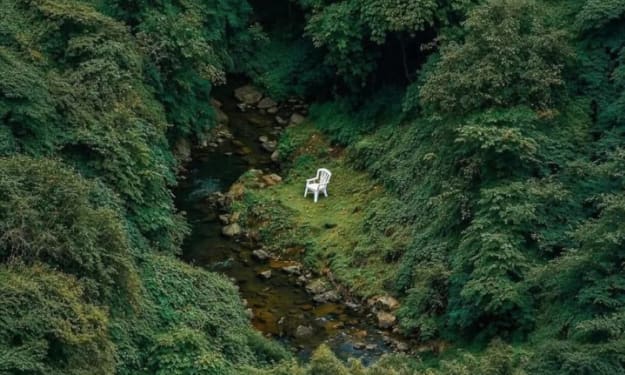
The Forest Throne How One Chair Became a Peaceful Symbol of Rest and Reflection in Nature Deep within the heart of Pineberry Forest, where the trees whisper secrets and the air carries the scent of moss and pine, there stands a single wooden chair. Weathered but sturdy, simple yet striking, the chair has no owner, no plaque, and no obvious reason for being where it is. Yet, over the years, it has quietly become a beloved part of the forest — known by locals and hikers alike as “The Forest Throne.” No one knows exactly who brought the chair there. Some say it appeared after a storm one spring, others believe an old carpenter placed it there as a quiet gift to the woods. The most popular theory is that it was carried in by an elderly woman who used to walk the trails every day with her dog. She was often seen resting on a folding stool, which she once called her “thinking seat.” When she stopped coming, some believe someone honored her memory by placing a sturdier chair in her favorite clearing. Regardless of its origin, the chair now sits peacefully on a small rise overlooking a stream. It faces west, catching the soft golden light of the setting sun through the trees. Birds often perch on its backrest, and squirrels occasionally climb its legs as if inspecting a monument. Wildflowers grow around its feet in the warmer months, and in winter, it wears a soft white coat of snow. More than just a curious object in the woods, the Forest Throne has become a gentle landmark and a destination. Hikers take breaks there, sipping water and listening to the sounds of the forest. Children sit on it like royalty, pretending to hold court with the trees. Artists sketch it, and photographers wait patiently for just the right lighting to capture its quiet charm. Some couples have even gotten engaged next to it, believing it adds a touch of natural magic to the moment. For many, the chair serves a deeper purpose. It invites people to pause — not just physically, but mentally. In a world that moves fast, where even nature walks can become goals to “complete,” the Forest Throne offers permission to stop, sit, and simply be. Local schoolteacher Maya Ellis first discovered the chair during a solo hike in early spring. “I was having a hard time,” she later shared in a community newsletter. “I’d been overwhelmed, anxious, and I wasn’t even sure why I was out there that day. But then I found the chair. I sat down, and everything just… softened. The stillness of the forest, the way the light moved through the trees — it made me breathe differently. I stayed for nearly an hour.” Since then, Maya has returned many times, sometimes with her students. They call it their “story seat,” taking turns to sit in it and tell made-up tales about forest animals and enchanted trees. She’s also helped organize a gentle path-clearing project around the area, ensuring that the chair remains accessible while keeping the surroundings wild and undisturbed. Interestingly, the chair has changed very little over the years. Though it’s been exposed to all kinds of weather, it has held up remarkably well. Some say it’s because it's made of old, seasoned oak. Others suggest it’s the forest itself that protects it — as if the chair, having become part of the ecosystem, now receives its care in return. The Forest Throne has even inspired a local movement called “Sit a While,” encouraging people to create simple resting spots in natural spaces. Wooden benches, upcycled chairs, and stone seats have begun to appear in quiet corners of parks and trails throughout the region, each one marked only by a small carved leaf symbol and the words, “Sit a While.” Despite its fame, the chair has never been vandalized. There is no graffiti, no carvings, and not even trash left nearby. People seem to instinctively respect its presence. Perhaps that’s because the Forest Throne doesn’t ask for anything — it offers. It gives rest to the weary, silence to the busy-minded, and beauty to anyone willing to see it. And so it remains, season after season — a simple chair in a quiet forest, waiting patiently for the next person who needs it. Some come with questions. Others bring sorrow. Many bring nothing at all but themselves. But all who sit in the Forest Throne leave with something: a little more peace, a little more stillness, and a renewed connection with the world around them.
By Muhammad Saad 7 months ago in Earth
Choosing the Right Field: A Path to Purpose and Success
Choosing the Right Field: A Path to Purpose and Success Aarav stood at the edge of the school auditorium stage, the noise of celebration ringing in his ears. He had just graduated, along with a hundred others, all full of dreams and uncertainty. As he looked out at the smiling faces in the crowd—his parents, friends, and teachers—he felt both excitement and a weight pressing on his shoulders. What next? The world outside school was wide and full of possibilities. Medicine, engineering, design, business, sports, teaching—the options seemed endless. But along with those options came pressure. Aarav’s parents hoped he’d pursue engineering like his older brother. His teachers thought he had the mind for science. His friends joked that he’d make a great entrepreneur. But what did he want? This question stayed with Aarav during the long summer that followed. Unlike some of his classmates, he didn’t rush into applying for college or picking a course just to keep up. Instead, he took a step back and allowed himself to explore. He read books on different careers, watched interviews with professionals, and even interned for a few weeks at a local marketing agency, a hospital, and a small tech startup. These experiences were eye-opening. It was during his time at the marketing agency that Aarav discovered something important. He loved storytelling, strategy, and connecting ideas with people. He wasn’t drawn to it because it was glamorous or high-paying—he liked it because it fit him. It brought together his creativity, communication skills, and curiosity in a way that felt natural and energizing. For the first time in months, he felt sure of something. When Aarav told his parents he wanted to pursue a career in marketing and communications, they were surprised. It wasn’t what they expected, but he explained his decision with clarity. He talked about his experiences, what he had learned about himself, and how he saw this field aligning with his strengths and interests. His confidence gave them confidence. They agreed to support his choice. Aarav enrolled in a communications program and thrived. He was more than just a student—he was someone building a future that felt authentic and exciting. He took on projects, joined student-led initiatives, and networked with professionals. The more he immersed himself in the field, the more doors opened. By the time he graduated, Aarav had a solid portfolio and a job offer from a respected firm. But more than the job or the title, what Aarav gained was a sense of purpose. --- The Power of Positive Field Selection Aarav’s story is not unique—but it is powerful. Choosing the right field isn’t just about getting a degree or a job. It’s about aligning your natural talents, interests, and values with the work you do. When that alignment happens, success becomes more than just financial—it becomes personal. Here are some of the positive benefits of correct field selection: 1. Greater Motivation and Energy: When you’re passionate about your work, it doesn’t feel like a burden. You’re more likely to push through challenges and stay committed for the long haul. 2. Improved Mental and Emotional Health: Being in the wrong field can cause stress, anxiety, and dissatisfaction. But when you’re in the right one, your self-esteem grows, and so does your sense of fulfillment. 3. Faster Skill Growth: When you enjoy what you do, you naturally seek improvement. Learning becomes exciting, not forced. 4. Better Performance and Opportunities: Passion leads to effort, and effort leads to excellence. And when you excel, opportunities follow—promotions, recognition, and professional growth. 5. Long-Term Satisfaction: A career chosen with self-awareness can bring decades of satisfaction. It becomes more than a job; it becomes a meaningful journey. --- Final Thoughts Field selection is not just a career decision—it’s a life decision. It shapes your routines, your relationships, your mindset, and even your identity. That’s why taking the time to explore, reflect, and choose with intention is one of the best investments anyone can make. Aarav’s journey shows us that when we choose wisely—based not on pressure but on purpose—we don’t just find a job. We find ourselves. So if you’re standing at your own crossroads today, remember: It’s okay not to have all the answers right away. Take your time. Ask questions. Try things out. Because when you choose the right path, you’re not just walking toward success—you’re walking toward a life that truly belongs to you.
By Muhammad Saad 7 months ago in Education