Muhammad Abuzar Badshah
Bio
Stories (20)
Filter by community
Midnight Rain
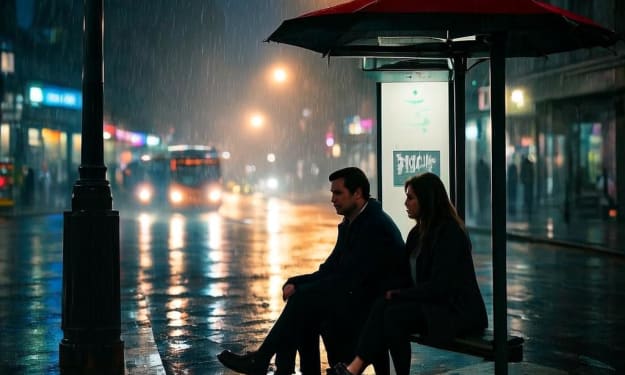
The rain started quietly that night. Not a storm. Not loud thunder. Just a soft drizzle brushing the stone streets of the old European town. It was well past midnight. The streetlamps glowed faintly in the mist, and the world felt like it was holding its breath.
By Muhammad Abuzar Badshah 6 months ago in Fiction
We Almost Happened
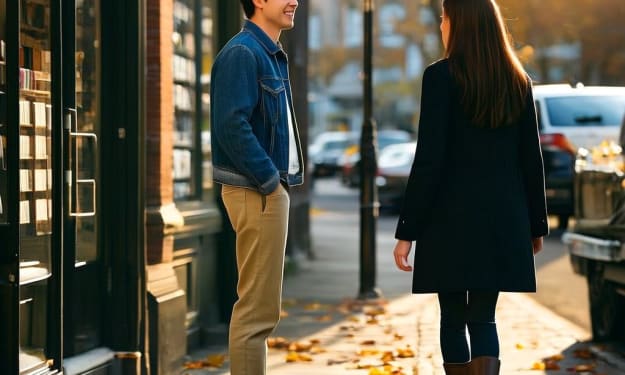
I met her on a Tuesday that felt like a Sunday. It was raining—light, persistent, like a whisper that wouldn't go away. The library was almost empty except for a few students and a girl in a red scarf, reading Norwegian Wood by Murakami.
By Muhammad Abuzar Badshah 6 months ago in Confessions
The Lantern at Willow Creek
Willow Creek was a sleepy town tucked between rolling hills and whispering pine trees—a place where everyone knew each other’s name and secrets. Every morning, the post lady would wave through open windows. Children biked to school, and neighbors stood along porches for their morning coffee. Life here moved at its own calm pace.
By Muhammad Abuzar Badshah 6 months ago in Fiction
The Warsaw Echo
The Tape in the Tomb Rain slicked the cobblestones of Warsaw’s Old Town, tracing old wounds through centuries of stone. Lena Kovac, a historian with more ghosts than colleagues, pulled her coat tighter against the cold. Her footsteps echoed as she approached St. John’s Archcathedral, heart pounding with disbelief.
By Muhammad Abuzar Badshah 6 months ago in Fiction
The Whispering Window
It was a cold September evening when Anna arrived at the cottage. She had never liked old houses. But this one — tucked in a forgotten European village — belonged to her late grandmother. The family wanted her to stay for two days, collect important documents, and prepare the house for sale.
By Muhammad Abuzar Badshah 6 months ago in Horror
The Last Firefly Summer
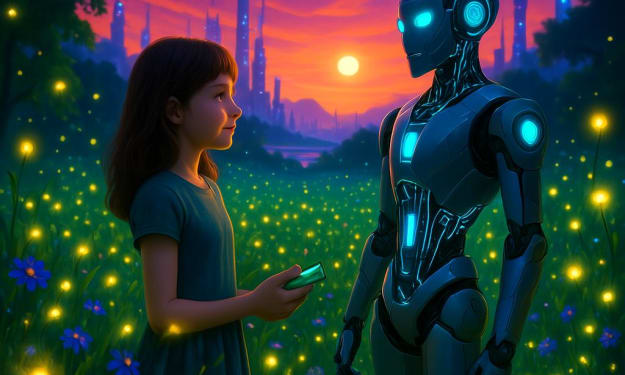
The summer of 2075 was supposed to be my last in Willow Hollow. The town was dying, just like the rest of the world. The air was thick with dust, the rivers were dry, and the trees were more brown than green. They said the planet was giving up, that we’d burned it out with our machines and greed. I was sixteen, and all I knew was that I didn’t want to leave. Not yet. My name’s Lila. I lived in a crumbling house with my dad, who spent his days fixing broken tech for the few families still hanging on. The city folks had already left for the domes—giant glass bubbles where the air was clean and the food was fake. But Willow Hollow had something the domes didn’t: fireflies. Every summer, they’d light up the meadow behind our house, tiny stars dancing in the dark. Dad said they were a miracle, a sign the world wasn’t done fighting. I believed him. That summer, everything changed. It started with Rusty, the robot Dad built from spare parts. Rusty wasn’t like the shiny bots in the city. He was clunky, with mismatched arms and a screen for a face that flickered when he talked. Dad made him to help with chores, but I thought of him as my friend. He’d follow me to the meadow, his joints creaking, and ask questions like, “Why do humans like glowing bugs?” I’d laugh and say, “Because they’re hope, Rusty.” One night, the fireflies didn’t come. The meadow was dark, silent except for the hum of Rusty’s circuits. I sat on the grass, my stomach twisting. “They’re gone,” I whispered. Rusty tilted his head, his screen glowing faintly. “Data suggests environmental collapse. Fireflies require clean water, stable temperatures.” His voice was flat, but it felt like a punch. I didn’t want data. I wanted my fireflies. The next day, I heard the news. Willow Hollow was being evacuated. The last transport to the domes was coming in a week. Dad started packing, his hands shaking as he boxed up tools. “It’s safer there, Lila,” he said. But the domes felt like giving up. I wanted to fight, like the fireflies did. I snuck out to the meadow every night, hoping for a glow. Rusty came with me, scanning the grass with his sensors. “No biological activity,” he’d say, and I’d glare at him. “Stop being so smart,” I’d snap. But one night, he didn’t scan. He just sat beside me, his metal hand brushing the dirt. “Lila, why do you stay?” he asked. I didn’t have an answer, not really. “Because this is home,” I said finally. “Because I believe they’ll come back.” On the last night before the transport, I was desperate. I ran to the meadow, my sneakers kicking up dust. Rusty followed, his screen flickering. “Lila, probability of firefly return is 0.03%,” he said. I ignored him and dropped to my knees, digging through the dirt like I could find hope buried there. That’s when Rusty did something weird. He knelt beside me and pressed his hand to the ground. A soft hum came from his chest, and his circuits glowed brighter, pulsing like a heartbeat. Then I saw it—a tiny green spark in the grass. A firefly. Then another, and another, until the meadow was alive with light. Emerald, sapphire, amber—they danced around us, brighter than I’d ever seen. I laughed, tears stinging my eyes. “You did this?” I asked Rusty. His screen flickered, almost like a smile. “I accessed dormant nanobots in the soil. Programmed them to mimic firefly bioluminescence. For you.” I stared at him, this clunky robot who’d given me a miracle. “Why?” I whispered. He tilted his head. “Because you believe in hope. I calculated it is worth preserving.” For the first time, I hugged him, his metal cold against my cheek. The next morning, we boarded the transport. I carried a jar with a single firefly—not a real one, but one of Rusty’s nanobots, glowing softly. Dad didn’t ask questions. He just squeezed my hand. As the dome gates closed behind us, I looked back at Willow Hollow, a dusty speck under a purple sky. The fireflies were gone again, but I wasn’t afraid. I had Rusty, and I had hope. In the dome, I started telling stories. Not just about fireflies, but about the world we could rebuild. Kids listened, their eyes wide, and even the adults leaned in. Rusty sat with me, his screen glowing. “You are changing probability,” he said one day. I grinned. “Good.” That summer, I learned something. The world might break, but hope doesn’t. It’s in the stories we tell, the friends we keep, even the ones made of metal. It’s in the fireflies, real or not, that light up the dark. What’s your firefly? What keeps your hope alive? Tell me below.
By Muhammad Abuzar Badshah 6 months ago in Fiction
The Summer I Found My Voice
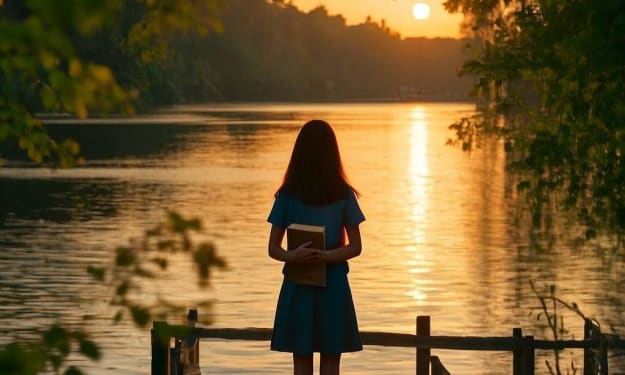
The summer I turned sixteen, I thought I’d spend my days biking through Willow Creek, eating ice cream with my best friend Mia, and sneaking into the town’s only movie theater. That’s what summers were supposed to be—carefree, loud, and full of laughter. But the summer of 2015 didn’t turn out like I planned. Instead, it became the season I found my voice, the one I didn’t even know I had. Willow Creek was a sleepy town, the kind where everyone knew your name and your secrets. My family lived in a creaky house by the lake, where the water shimmered like glass under the July sun. I was the quiet kid, the one who hid behind books and never spoke up in class. My mom called me her “little shadow,” always there but never making a sound. I didn’t mind. Words felt heavy, like stones I couldn’t lift. That summer, everything changed. It started with a fight—not the kind with fists, but the kind that leaves your heart bruised. Mia, my best friend since we were six, stopped talking to me. It wasn’t one big moment, just a slow drift. She started hanging out with the popular kids, the ones who laughed too loud and wore bright lipstick. I’d see her at the town fair, her arm linked with someone new, while I stood alone by the cotton candy stand. I didn’t know how to ask her why. My voice felt stuck, like a song I couldn’t sing. One evening, I wandered to the lake, my sneakers sinking into the muddy shore. The air smelled of pine and summer heat. I sat on the old wooden dock, my legs dangling over the water, and pulled out the journal Mom gave me for my birthday. It was leather-bound, with pages that smelled like old books. I’d never written in it. What was there to say? But that night, with the crickets humming and the stars peeking out, I started writing. I wrote about Mia. About how her laugh used to make me feel safe. About the ache of watching her walk away. The words spilled out, messy and raw, like paint splattered on a canvas. I didn’t stop to think. I just wrote. The lake listened, its ripples carrying my secrets away. Every night after that, I went back to the dock. I wrote about the time I saw a deer in the woods and felt like it saw me too. I wrote about the way Dad’s voice softened when he talked about his old guitar, the one he never played anymore. I wrote about the fear that I’d always be the quiet girl, the one nobody noticed. The journal became my friend, the one who never left. One day, I found a flyer taped to the town library’s bulletin board. It was for a storytelling night, a summer event where anyone could share a story. My stomach twisted at the thought. Me, speaking in front of people? I’d rather hide under my bed. But something about that flyer stuck with me. Maybe it was the way it said, “Every voice matters.” Maybe it was the journal, heavy in my backpack, whispering that I had something to say. I spent days rewriting one story from my journal. It was about the lake, how it held my secrets like a friend. I practiced reading it in my room, my voice shaking at first, then growing steadier. The words felt like they belonged to someone braver than me. But maybe that person was me, waiting to be found. The night of the event, the library was packed. Kids, parents, even the grumpy old man from the gas station were there, sitting on folding chairs. My hands shook as I held my journal, waiting for my turn. Mia was there too, in the back row, her eyes meeting mine for a split second. I wanted to run. But when my name was called, I walked to the front, my sneakers squeaking on the floor. I started reading. My voice was small at first, barely louder than the hum of the air conditioner. But as I told the story of the lake—how it listened when I felt alone, how it carried my words when I couldn’t speak—the room grew quiet. I could feel their eyes on me, not judging, just listening. For the first time, I wasn’t a shadow. I was a voice. When I finished, the applause was soft but warm, like a hug. Mia came up to me afterward, her eyes shiny. “I didn’t know you could do that,” she said. “I’m sorry I wasn’t there.” We didn’t fix everything that night, but we talked, really talked, for the first time in months. It wasn’t perfect, but it was a start. That summer didn’t give me the carefree days I expected. Instead, it gave me something better—a voice I didn’t know I had. I kept writing in my journal, not just for me but for the girl I was becoming. The lake still holds my secrets, but now I share them too, one story at a time. What’s the moment that changed you? The one that made you find your voice? Share it below—I’d love to hear.
By Muhammad Abuzar Badshah 6 months ago in Humans
Unspoken
I’ve always believed that the most powerful stories are the ones no one ever hears. They live quietly, tucked inside us — in half-written journals, in unfinished letters, in the moments when we stare at the ceiling and wonder what if. They never make it to stages or bookshelves. They don’t go viral. But they shape us more than any story we tell out loud.
By Muhammad Abuzar Badshah 6 months ago in Confessions
I Opened a Stranger’s Letter by Mistake — Then Everything Changed
I wasn’t supposed to read it. The envelope was plain — no return address, no sender, just my name scribbled in uneven handwriting that felt both unfamiliar and eerily intimate. It had been slipped through my door sometime during the night. No stamp, no postal mark. It shouldn’t have been there.
By Muhammad Abuzar Badshah 6 months ago in Confessions
The Garden That Forgot to Bloom
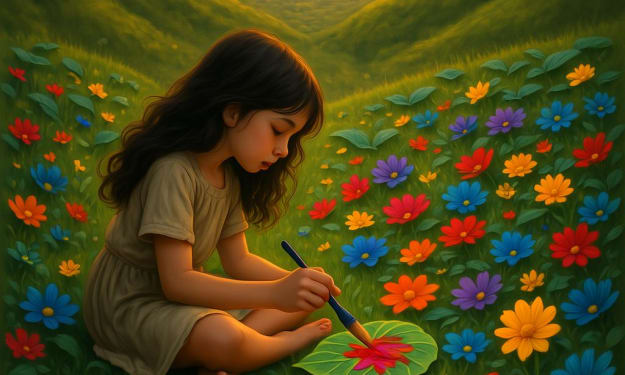
There was once a garden where no flower ever bloomed. It lay between two quiet hills, wrapped in the arms of a forgotten valley. The earth was not dead, and the sun did not hide. Rain visited kindly, and the wind whispered lullabies across its skin. Yet, no color ever rose from the ground. Only leaves. Only stems. Only green—and nothing else.
By Muhammad Abuzar Badshah 6 months ago in Fiction