
The Last Letter in Vienna
What I found in an old bookstore changed how I saw love, memory, and loss.

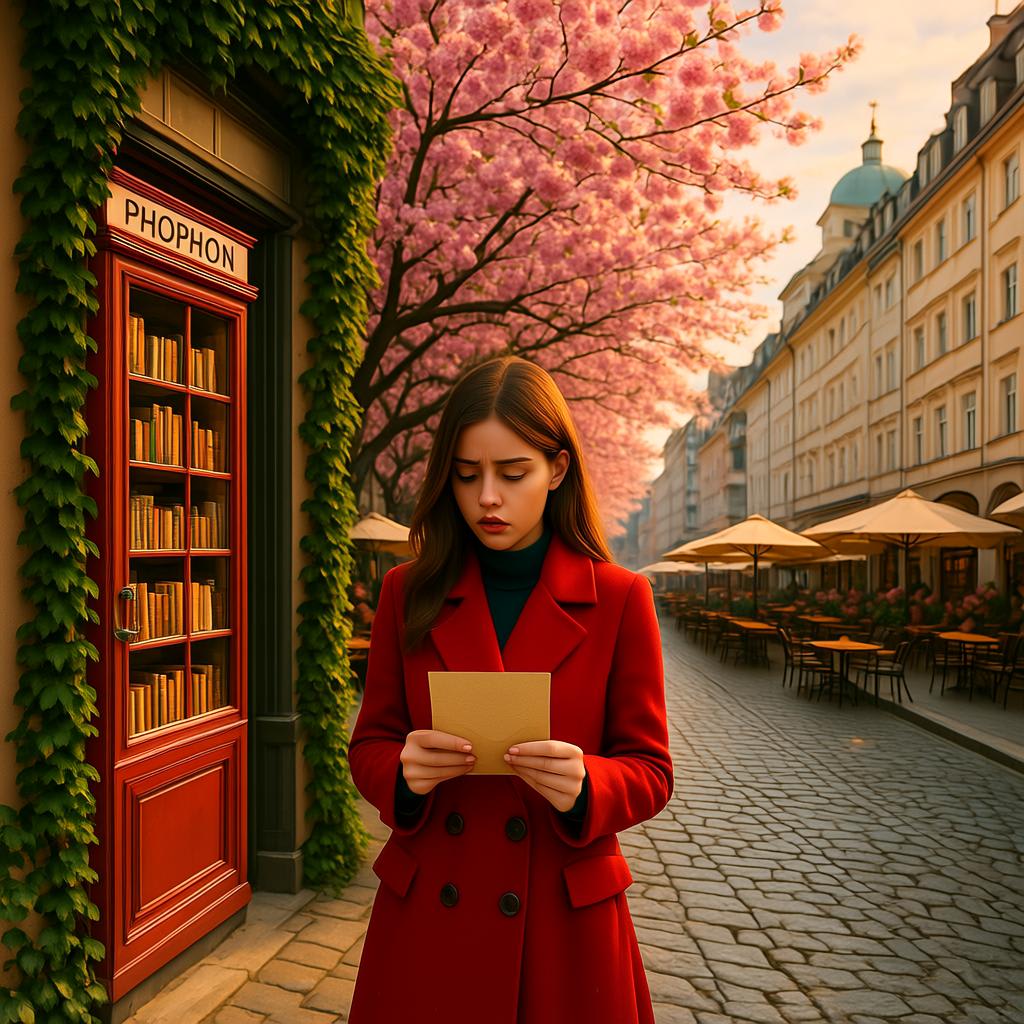
I didn’t go to Vienna looking for anything. Not love. Not meaning. And definitely not a letter that would change my life.
But stories, I’ve learned, don’t wait for permission.
They just show up—sometimes in dusty bookshops, sometimes in the hollow places inside you.
It was a narrow alley off Kärntner Straße, the kind you’d miss unless you were actively avoiding where you were supposed to be. I was meant to meet my tour group at the Mozart House—but guilt has a funny way of tugging your feet in other directions.
That’s when I saw it: Antiquariat Stein & Söhne. The name was almost invisible, its gold paint faded and peeling under a tangle of ivy. A cracked bell above the door jingled faintly as I pushed it open.
Inside, it felt like I’d entered another century. The air smelled like parchment, pipe smoke, and dreams people once had. Books towered in uneven stacks. Sunlight filtered through stained glass, casting patches of blue, red, and amber across the floorboards.
“Looking for anything special?” asked the old man behind the counter. His English had a crisp Viennese tilt. His eyes were sharp, curious.
“No,” I replied.
But that wasn’t the truth. I was looking for something I couldn’t name—something to fill the silence inside me since Nathan left.
I wandered the narrow aisles until a slender book caught my eye. Liebesbriefe von 1941. Love Letters from 1941. Its spine was worn, its cover soft with time.
As I flipped through its pages, something slid out.
A real envelope. Yellowed. Fragile. Sealed.
The name written in elegant cursive: Elena Hofstadter.
And beneath it: Für immer, Dein A. (Forever, yours, A.)
There was no address. Just a date: 20 April 1945.
I stared at it, heart racing. The past had slipped between the pages of fiction. And it had found me.
I sat in the back of the bookshop, letter trembling in my hands. Finally, I broke the seal.
> Meine liebste Elena,
If you're reading this, it means you found the book. It means I’m gone. But you must know: I never ran. I never betrayed you. What they said—I need you not to believe it…
He had been accused of helping Jewish families escape the Nazis. He had been taken. But he left her this letter, and instructions—cryptic, hurried—about something hidden behind a painting in their favorite café in Mariahilf.
It was a goodbye. It was a plea. It was a final breath sealed in paper.
I felt the lump in my throat swell. Whoever he was, A. had died loving her. Desperate to be believed. And now I was the only one who’d heard his voice.
I couldn’t sleep that night. I kept thinking about Elena. About A.. About the photo he said he’d hidden behind that painting.
By morning, I had made my decision.
I boarded the tram to Mariahilf. The café was still there—Café Rosenlicht—timeless and warm. The painting, a landscape of the Danube, hung in a quiet hallway near the restrooms.
My heart beat in my throat as I touched the frame.
It moved.
Behind it: a loose brick.
Inside the small crevice: a tin box, rusted at the corners but still intact.
Inside the box: a faded black-and-white photograph of Elena and A. in front of the Danube. A pressed violet. A second letter—still sealed.
I didn’t open it.
It wasn’t mine to read.
Back at the bookstore, I placed the tin box on the counter. The old man peered inside, then at me, his eyes glassy.
“My father mentioned a couple during the war,” he said. “They used to visit this shop. He said they disappeared... but he never knew what became of them.”
He looked at the photo gently, like touching history.
We put the letter, photo, and violet in a glass case by the shop’s entrance. I helped write the plaque:
The Last Letter of Vienna
A love preserved through war, time, and silence.
Tourists now stop to read it. Some take photos. Some just stare, the way I did when I first opened that letter.
I came to Vienna running—from a wedding that never happened, from a man who couldn’t even give me a reason why. I wanted quiet. I wanted to disappear into a city that didn’t know me.
Instead, I found love.
Not for myself—but through it. In it. Because of it.
A kind of love that crossed wars, walls, and time.
I still write letters now. To people who’ll never read them. Not because I expect a reply, but because someone, someday, might find one—and feel less alone.
Just like I did.
Some stories live in us quietly, waiting.
Others, like this one, crash into us unexpectedly—reminding us that even in endings, there are beginnings.
Even in silence, there’s a voice.
And even in forgotten bookshops, love survives.
About the Creator
Keep reading
More stories from Muhammad Abuzar Badshah and writers in Fiction and other communities.
The Last Letter in the Bottle
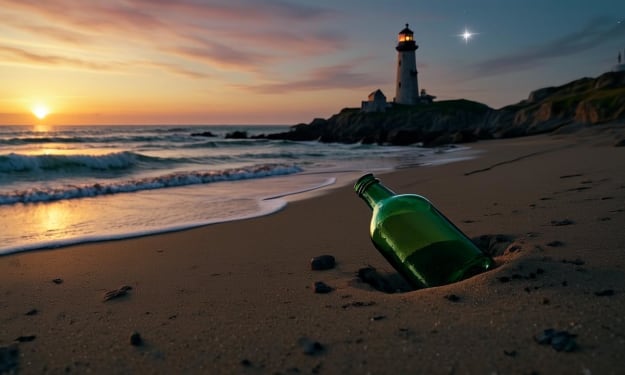
The glass bottle glinted under the fading sun, half-buried in the damp sand of Crescent Beach. Its green curves caught the light like a winking eye, a secret washed ashore by the restless tide. I’d come here every summer since I was six, chasing waves and dreams with my sister, Lila. She’d sprint ahead, her laughter brighter than the gulls’ cries, her bare feet kicking up foam as she dared me to find treasures in the sea’s offerings. Shells, driftwood, once even a shark’s tooth—she called them gifts from the ocean. But Lila was gone now, stolen by a riptide last July, the kind that snatches breath and futures in seconds. I was sixteen, and the beach felt like a graveyard, each wave a reminder of her absence.
By Muhammad Abuzar Badshah 6 months ago in Fiction
📢 Raise Your Voice Thread: 01/08/2026
Our “Raise Your Voice Threads” are hosted most alternating Thursdays at 12PM ET to offer creators more avenues to uncover exceptional stories on Vocal. As we are continuously searching for fresh creators and inspiring stories, this thread provides an opportunity to exchange and discuss the stories that have moved and motivated us on Vocal.
By Raise Your Voice by Vocal7 days ago in Resources



Comments
There are no comments for this story
Be the first to respond and start the conversation.