Mental health blogs
Bio
Stories (8)
Filter by community
Strategies for Coping with Mood Swings in a Long-Distance Relationship
Maintaining a long-distance relationship can be challenging, especially when one or both partners experience mood swings. Mood swings can make communication difficult and lead to misunderstandings, which can strain the relationship. However, there are strategies that can help both partners cope with mood swings and maintain a healthy relationship. In this article, we will explore these strategies and provide tips on how to deal with mood swings in a long-distance relationship.
By Mental health blogs 3 years ago in Psyche
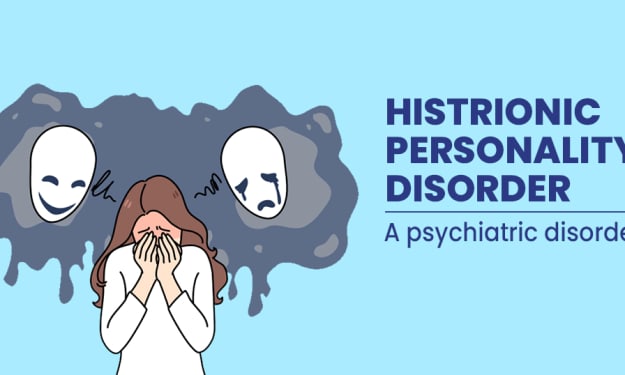
Psychotherapy for Histrionic Personality Disorder: What You Need to Know
Histrionic Personality Disorder (HPD) is a mental health condition characterized by an excessive need for attention, emotional instability, and a tendency to engage in dramatic and attention-seeking behaviors. People with HPD often struggle to form meaningful and intimate relationships, and their behaviors can cause significant distress to themselves and others.
By Mental health blogs 3 years ago in Psyche
Breaking Down Paranoia: Strategies for a Healthy Relationship
Paranoia is a feeling of extreme distrust or suspicion that others are out to harm you or deceive you. It can be a debilitating experience, affecting all areas of your life, including your relationships. When you are paranoid, it is difficult to trust others, which can make it hard to form and maintain healthy relationships.
By Mental health blogs 3 years ago in Psyche
The Toxic Cycle of Constant Arguing in Relationships: Understanding the Causes and Finding Solutions
Constant arguing in relationships can be a sign of a toxic cycle that can ultimately destroy the foundation of any relationship. Whether it's a romantic partnership, friendship, or family relationship, frequent arguments can leave both parties feeling drained, frustrated, and unfulfilled. In this article, we'll explore the causes of constant arguing in relationships, the negative effects it can have, and what steps you can take to break the cycle and build healthier relationships.
By Mental health blogs 3 years ago in Psyche
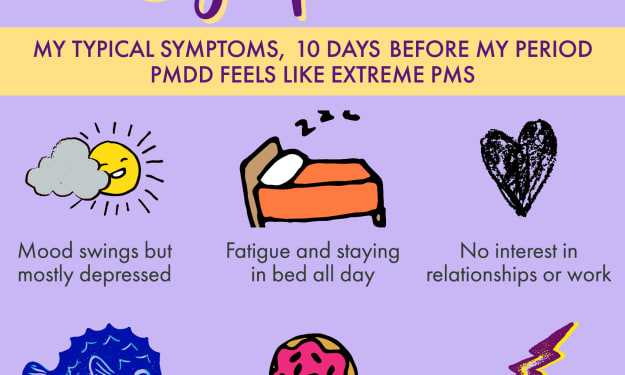
Post-Period Mood Swings: Causes, Symptoms, and Treatment Options
Post-period mood swings, also known as premenstrual dysphoric disorder (PMDD), affect around 5% of menstruating women. PMDD is a severe form of premenstrual syndrome (PMS), which is a common condition that affects up to 85% of women during their reproductive years. While PMS causes mild to moderate physical and emotional symptoms, post-period mood swings causes severe emotional symptoms that can disrupt daily life.
By Mental health blogs 3 years ago in Psyche
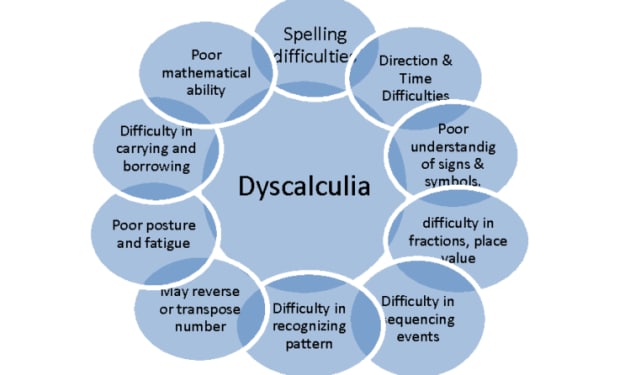
Exploring Dyscalculia: Differences Between Dyslexia and Other Learning Disabilities
Dyscalculia is a learning disability that affects a person's ability to understand and work with numbers. Individuals with dyscalculia struggle with basic arithmetic operations, such as adding, subtracting, multiplying, and dividing. They also have difficulties with more advanced mathematical concepts, such as algebra and calculus. Dyscalculia is a neurological condition that affects an estimated 5-7% of the population, making it as common as dyslexia.
By Mental health blogs 3 years ago in Psyche
Tips for Dealing with Your Girlfriend's Mood Swings
Having a girlfriend who experiences mood swings can be challenging, especially if you don't know how to handle them. Mood swings can be caused by many different factors, including hormonal changes, stress, anxiety, and depression. However, as her partner, it's important that you learn how to deal with her mood swings in a supportive and caring way. Here are some tips on how to handle mood swings of a girl:
By Mental health blogs 3 years ago in Psyche
Coping with PTSD and Panic Attacks: Effective Strategies for Recovery
Post-Traumatic Stress Disorder (PTSD) and Panic Attacks are two conditions that are closely related, and they can have a profound impact on an individual’s daily life. PTSD is a mental health condition that occurs after experiencing or witnessing a traumatic event, while Panic Attacks are sudden episodes of intense fear or anxiety that come without warning. Individuals who suffer from PTSD may experience Panic Attacks as a result of their condition, which can make it even more challenging to cope. Coping with PTSD and Panic Attacks can be a long and difficult journey, but there are many effective strategies for recovery that can help individuals regain control of their lives.
By Mental health blogs 3 years ago in Psyche