Stories (611)
Filter by community
Roman Aqueducts: Engineering Marvels of Ancient Civilization. AI-Generated.
Roman aqueducts stand as one of the most impressive feats of engineering from the ancient world, showcasing the ingenuity and technical prowess of Roman civilization. These remarkable structures, designed to transport water over long distances, highlight the Romans' advanced understanding of hydraulics, architecture, and urban planning. Built to supply cities, agricultural lands, and public baths, the aqueducts played a crucial role in sustaining the health and prosperity of Roman society, leaving a lasting legacy that continues to inspire modern engineering.
By Marveline Merab2 years ago in History
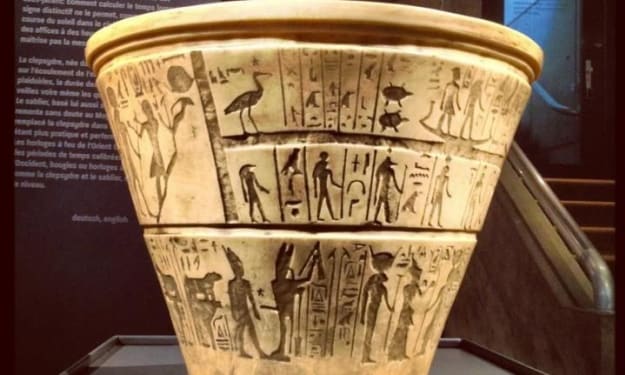
Ancient Egyptian Water Clocks: The Ingenious Clepsydra of Early Timekeeping. AI-Generated.
The ancient Egyptian water clock, also known as the clepsydra, stands as a remarkable example of early timekeeping technology, showcasing the ingenuity and scientific knowledge of ancient Egypt. This fascinating device, used as early as the 16th century BCE, highlights the Egyptians' advanced understanding of measuring time and their ability to create sophisticated mechanisms for practical purposes. The clepsydra's design and functionality offer a window into the daily lives and complex societal structures of one of history's most intriguing civilizations.
By Marveline Merab2 years ago in History
"Qin Shi Huang's Terracotta Army: Unearthing the Legacy of China's First Emperor". AI-Generated.
Qin Shi Huang's Terracotta Army is one of the most astonishing archaeological discoveries of the 20th century, captivating the world with its grandeur and historical significance. Unearthed in 1974 by local farmers near the city of Xi'an in Shaanxi Province, China, this vast army of life-sized clay soldiers offers a mesmerizing glimpse into the power and vision of China's first emperor, Qin Shi Huang. The Terracotta Army, buried for over two millennia, serves as a testament to the emperor's ambition, the technological prowess of ancient China, and the rich cultural heritage that continues to inspire awe and scholarly interest.
By Marveline Merab2 years ago in History
The Phaistos Disc: Unraveling the Mystery of an Ancient Minoan Enigma. AI-Generated.
The Phaistos Disc is one of archaeology's most intriguing mysteries, captivating scholars and enthusiasts since its discovery over a century ago. Unearthed in 1908 by Italian archaeologist Luigi Pernier in the ancient Minoan palace of Phaistos on the island of Crete, this enigmatic artifact has puzzled researchers with its unique inscriptions and unknown origins. The disc, made of fired clay and dating back to the second millennium BCE, is a testament to the advanced culture and craftsmanship of the Minoans. However, the true purpose and meaning of the Phaistos Disc remain shrouded in mystery, making it a subject of endless fascination and debate.
By Marveline Merab2 years ago in History
Unveiling the Black Book of Carmarthen: A Window into Medieval Welsh Heritage. AI-Generated.
The Llyfr du Caerfyrddin, or the Black Book of Carmarthen, is a captivating manuscript that offers a window into the medieval Welsh world. This ancient book, dating back to the mid-13th century, is not just a collection of texts; it is a treasure trove of early Welsh poetry, myth, and lore. Its pages are filled with stories and poems that echo the voices of a bygone era, providing insights into the cultural and literary heritage of Wales. The Black Book of Carmarthen is one of the oldest surviving manuscripts written in Welsh, making it an invaluable artifact for historians, linguists, and literature enthusiasts alike.
By Marveline Merab2 years ago in History
A STEAM Engine! (Hero's Engine). AI-Generated.
The Aeolipile, also known as Hero's Engine, stands as one of the earliest examples of steam power, illustrating the advanced engineering prowess of ancient civilizations. This remarkable device, attributed to Hero of Alexandria in the 1st century CE, showcases a fundamental understanding of steam propulsion long before the Industrial Revolution brought steam engines to prominence.
By Marveline Merab2 years ago in History
The FEARSOME Greek Fire. AI-Generated.
Imagine a weapon so formidable that it struck fear into the hearts of enemies and safeguarded an empire for centuries. This is the story of Greek Fire, an ancient incendiary weapon that epitomized the ingenuity and tactical prowess of the Byzantine Empire. Devised in the 7th century, Greek Fire was a state secret, a lethal weapon that could devastate enemy fleets and fortifications with a ferocity that has echoed through history.
By Marveline Merab2 years ago in History
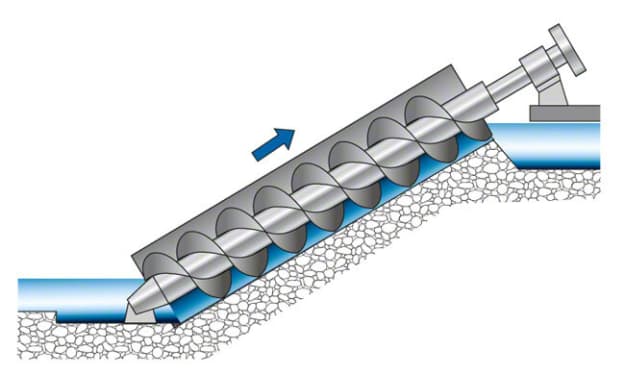
The SCREW That pumped Water!(The Archimedes' Screw). AI-Generated.
Imagine a device so ingenious that it revolutionized water management in ancient civilizations and still finds applications in modern technology. This is the story of the Archimedes' Screw, an invention attributed to the brilliant Greek mathematician and engineer Archimedes. Crafted in the 3rd century BCE, this simple yet highly effective device transformed the way water was lifted and transported, showcasing the exceptional ingenuity of ancient engineers.
By Marveline Merab2 years ago in History
Albert Einstein: The Genius Who FORGOT. AI-Generated.
Introduction to Albert Einstein Albert Einstein, the iconic theoretical physicist, is renowned for his groundbreaking contributions to science, particularly his development of the theory of relativity. Despite his towering intellect and scientific achievements, Einstein was famously absent-minded and forgetful in his daily life. This paradox between his profound genius and his forgetfulness has intrigued many, offering a unique lens through which to understand the nature of brilliance.
By Marveline Merab2 years ago in History
Benjamin Franklin's 'AIR BATHS': A Curious Elixir of Health. AI-Generated.
Introduction to Benjamin Franklin and His Innovations Benjamin Franklin, one of the Founding Fathers of the United States, is renowned for his multifaceted contributions to science, politics, and literature. Among his lesser-known yet intriguing practices was his routine of taking "air baths." This concept, originating in the 18th century, underscores Franklin's progressive approach to health and wellness, which remains relevant today.
By Marveline Merab2 years ago in History
The TERRIFYING Truth Behind Bermuda Triangle Disappearances. AI-Generated.
Introduction to the Bermuda Triangle The Bermuda Triangle, also known as the Devil's Triangle, is a loosely defined region in the western part of the North Atlantic Ocean. Its vertices are typically considered to be Miami, Bermuda, and Puerto Rico. This area has been infamous for an unusually high number of aircraft and ship disappearances, leading to a plethora of theories and speculation. The term "Bermuda Triangle" was first coined by writer Vincent Gaddis in 1964, and since then, the area has become synonymous with mystery and fear.
By Marveline Merab2 years ago in History
The UNSOLVED Mystery of The Mary Celeste. AI-Generated.
Introduction The Mary Celeste, often referred to as the quintessential ghost ship, remains one of the greatest maritime mysteries of all time. Found abandoned and adrift in the Atlantic Ocean on December 4, 1872, the brigantine was discovered without its crew, leaving behind a tale that has fascinated and puzzled historians, sailors, and mystery enthusiasts for over a century.
By Marveline Merab2 years ago in History