Kure Garba
Stories (270)
Filter by community
Dennis Nilsen ("Muswell Hill Murderer")
Dennis Nilsen, infamously known as the Muswell Hill Murderer was a British serial killer who terrorized London during the late 1970s and early 1980s. His heinous crimes shocked the nation and left a lasting impact on criminal psychology and the study of serial killers. Nilsen's criminal activities began in 1978 and continued until his arrest in 1983. He primarily targeted young men, often homeless or vulnerable individuals, luring them to his home under the pretense of companionship or shelter. Once inside, he would strangle or drown his victims, later engaging in disturbing rituals involving their bodies. Nilsen's modus operandi reflected a complex interplay of control power and a desire for intimacy, albeit through twisted means. The true extent of Nilsen's crimes came to light in February 1983 when a plumber discovered human remains blocking the pipes of Nilsen's residence in Muswell Hill, London. This led to Nilsen's arrest, and he was subsequently charged with multiple counts of murder and attempted murder. During police interrogations, Nilsen chillingly detailed his crimes, shedding light on the mind of a remorseless serial killer. His candid and matter-of-fact confessions provided a rare glimpse into the psychology of a murderer, as he recounted the gruesome details of each killing.
By Kure Garba3 years ago in Criminal
Yang Yongxin ("Monster Killer")
Yang Yongxin, commonly known as the Monster Killer, gained notoriety for his involvement in a controversial and widely criticized program aimed at treating internet addiction in China. Born in 1962, Yang was a Chinese psychiatrist who developed and promoted an extreme form of therapy known as "electroconvulsive therapy" or "Internet Addiction Treatment," which earned him the moniker "Monster Killer" due to the severe methods used on vulnerable youth.In the early 2000s China faced a growing concern about internet addiction among its youth population. This led to the creation of various treatment centers and programs, with Yang Yongxin emerging as one of the prominent figures in this movement. He claimed that the use of electric shocks combined with psychological counseling could cure young individuals of their internet addiction. However Yang's methods quickly garnered international attention and widespread criticism. The use of electric shocks as a form of therapy raised ethical concerns and was widely seen as a violation of human rights. Reports emerged of physical and psychological abuse within these treatment centers, causing outrage among human rights organizations, mental health professionals, and the general public. Critics argued that Yang's methods were not only ineffective but also deeply harmful, causing lasting trauma to the individuals subjected to such treatment.
By Kure Garba3 years ago in Criminal
Dr. Death: Medical Serial Killer
Michael Swango is an infamous figure in the annals of medical history known for his dual life as a doctor and a prolific serial killer. Born on October 21, 1964in Tacoma, Washington, Swango exhibited disturbing tendencies from an early age. He was drawn to the medical field, showing an interest in medicine and gaining admission to Ohio State University's College of Medicine in the 1980s. However his promising career took a sinister turn as his dark urges began to manifest. During his time in medical school Swango's obsession with death and violence intensified. He was suspected of poisoning fellow students and colleagues, earning him the grim moniker "Dr. Death." Despite these suspicions, he managed to graduate in 1987. Soon after, Swango's actions caught up with him as he was found guilty of tampering with patients' medical records, resulting in his dismissal from the hospital. Swango's reign of terror continued as he managed to secure positions at various hospitals across the United States, leaving a trail of suspicious deaths in his wake. His method of choice was poisoning, often using lethal drugs to end the lives of his victims. This allowed him to satiate his sadistic desires while maintaining a façade of a caring medical professional.
By Kure Garba3 years ago in Criminal
Patrick Kearney ("Trash Bag Killer")
Patrick Kearney, infamously known as the Trash Bag Killer was a notorious American serial killer who terrorized Southern California during the 1970s. His disturbing spree of violence and murder came to light as law enforcement painstakingly connected the dots and unveiled the extent of his heinous crimes. Kearney's story is a chilling reminder of the darkness that can lurk within seemingly ordinary individuals.Born on September 24, 1939 in East Los Angeles, Kearney exhibited signs of a troubled childhood. He struggled with his sexuality and felt isolated from his peers, which likely contributed to his later deviant behavior. After a brief stint in the military Kearney settled into a seemingly normal life, marrying and fathering three children. However, beneath this facade of normalcy, a sinister transformation was taking place. Kearney's killing spree began in the early 1970s. His modus operandi typically involved luring young men, often drifters or those involved in sex work, to his home. There, he would shoot or strangle them, dismember the bodies and dispose of the remains in trash bags, earning him the macabre moniker "Trash Bag Killer." This method of disposal made it difficult for law enforcement to connect the dots initially, as the victims' remains were scattered and difficult to trace.
By Kure Garba3 years ago in Criminal
Hillside Stranglers: Los Angeles
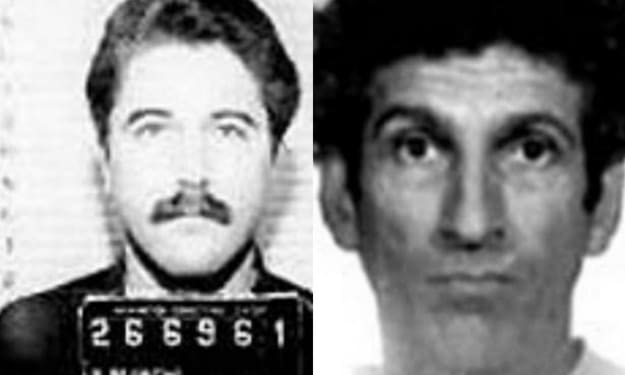
Kenneth Bianchi and Angelo Buono known as the Hillside Stranglers were a notorious pair of serial killers who terrorized the Los Angeles area in the late 1970s. Their heinous crimes shocked the nation and left a lasting impact on criminal profiling and law enforceme nt practices.Bianchi and Buono's killing spree began in 1977 and continued until their arrest in 1979. They targeted young women, mostly prostitutes and runaways luring them with promises of money or drugs. Once in their control, the victims were subjected to a horrifying ordeal of sexual assault torture and ultimately, murder. The killers would then dump the bodies in various locations around Los Angeles. What made the Hillside Stranglers particularly perplexing to law enforcement was their ability to evade capture for an extended period. The killers employed a variety of tactics to mislead investigators including staging crime scenes to resemble the work of multiple perpetrators and utilizing different disposal sites for their victims. This deliberate attempt to confuse law enforcement made it challenging to link the crimes and establish a clear pattern.The breakthrough in the case came when Bianchi moved to Washington state and began his own series of murders, mimicking the methods used by the Hillside Stranglers. This attracted the attention of law enforcement who eventually apprehended him. Faced with the prospect of the death penalty Bianchi struck a deal with prosecutors. He agreed to testify against Buono in exchange for a life sentence instead of execution.
By Kure Garba3 years ago in Criminal
Michael Ross: Inside a Serial Killer's Mind
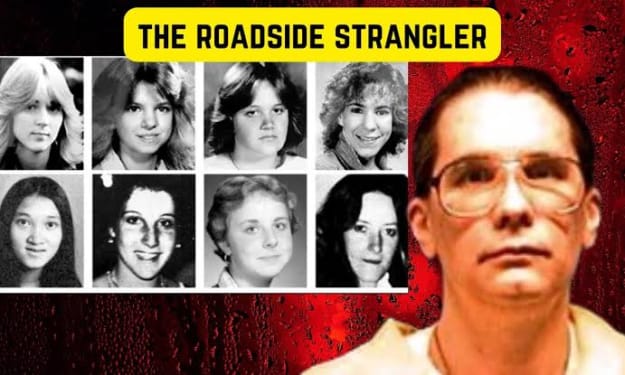
Michael Ross, infamously known as The Roadside Strangler was a chilling and remorseless serial killer whose heinous acts terrorized the state of Connecticut and left a lasting impact on the field of criminal psychology. Born on July 26, 1959 Ross's twisted path began to unfold in the 1980s, when he embarked on a spree of abductions, sexual assaults, and murders that would claim the lives of several young women.Ross's modus operandi was a blend of calculated planning and brutal violence. He would typically target young women, often hitchhikers or those in vulnerable situations, luring them into his car with the pretense of offering them a ride. Once he had his victims in his control, he would subject them to horrifying acts of sexual assault and eventually strangle them, earning him the chilling moniker The Roadside Strangler. His crimes were characterized by their disturbingly methodical nature and the stark absence of empathy or remorse.
By Kure Garba3 years ago in Criminal
Robert Black: Twisted Crimes
Robert Black (April 21, 1947 – January 12, 2016) was a notorious Scottish serial killer and child rapist who gained infamy for his heinous crimes committed during the late 20th century. His case shocked the world and highlighted the importance of child protection and law enforcement collaboration.Born in Grangemouth, Scotland Black displayed troubling behavior from an early age. He had a traumatic childhood, marked by his adoption and the death of his adoptive mother. Black's criminal tendencies began to emerge when he was just a teenager, with incidents of petty theft and violence.However, it was his job as a delivery driver that provided him with the opportunity to commit his horrifying crimes. Black's modus operandi involved stalking, abducting, and sexually assaulting young girls. He was known to meticulously plan his kidnappings and often drove long distances to find his victims. His predatory instincts were well-hidden beneath a seemingly normal exterior.
By Kure Garba3 years ago in Criminal
Israel Keyes: Meticulous Serial Killer
Israel Keyes (January 7, 1978 – December 2, 2012) was an American serial killer and criminal who gained notoriety for his heinous crimes and meticulous methods of evading capture. Born in Cove Utah, he displayed a disturbing pattern of violence from an early age. Keyes meticulously planned and executed a series of murders, leaving a trail of terror across the United States. Keyes' criminal activities are believed to have begun in the early 2000s but he didn't come to the attention of law enforcement until later. What made Keyes particularly unsettling was his ability to blend into society and his lack of a specific victim profile. He didn't stick to a particular modus operandi, making it challenging for investigators to link his crimes. One of his first known murders occurred in 2001 when he abducted a young woman named Samantha Koenig from a coffee stand in Anchorage, Alaska. He held her captive sexually assaulted her, and eventually murdered her. Keyes then dismembered her body and disposed of it in a frozen lake. This method of body disposal and his careful planning became recurring themes in his crimes. Keyes' chilling behavior extended beyond his murders. He engaged in what he called kill kits, stashes of weapons, tools and other items that he buried in various locations across the country. These kits allowed him to quickly access what he needed for his crimes without leaving a trace back to his home base. Keyes was also known for targeting remote areas, making it less likely for witnesses to stumble upon his crimes.
By Kure Garba3 years ago in Criminal
Serial Killings: Boston's Terror Unveiled
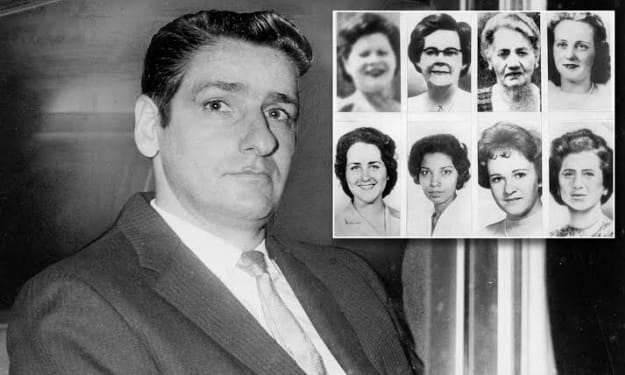
Albert DeSalvo, infamously known as the Boston Strangler was a serial killer who terrorized the city of Boston during the early 1960s. His heinous crimes and the subsequent investigation captivated the nation and left an indelible mark on the history of criminal profiling and law enforcement techniques.Born on September 3, 1931, in Chelsea, Massachusetts, DeSalvo exhibited troubling behavior from a young age. He faced a tumultuous upbringing marked by a dysfunctional family and numerous run-ins with the law. DeSalvo's criminal record included charges of robbery, sexual assault, and breaking and entering. However, his most sinister acts began in 1962 when a series of brutal murders gripped Boston.Between 1962 and 1964 a total of thirteen women were strangled to death in the Boston area each with evidence of sexual assault and binding. The chilling nature of the crimes and the seemingly random choice of victims created a sense of panic and fear within the community. The Boston Strangler's modus operandi varied, making it difficult for law enforcement to connect the dots between the murders.
By Kure Garba3 years ago in Criminal
Richard Kuklinski: The Chilling Iceman Killer
llRichard Kuklinski, better known as The Iceman was a notorious American contract killer and hitman who operated during the latter half of the 20th century. His gruesome and chilling methods of murder earned him the infamous moniker that he would come to be known by. Kuklinski's life story is one marked by violence, crime, and a lack of empathy.Born on April 11, 1935, in Jersey City, New Jersey, Kuklinski's early life was marred by a dysfunctional family environment. He claimed to have endured physical abuse from his father and grew up in a household filled with violence. This tumultuous upbringing likely played a significant role in shaping his later criminal behavior. As a young man, Kuklinski began his criminal activities by engaging in small-scale crimes, such as theft and burglary. However, it wasn't long before he found himself involved in more serious criminal enterprises.
By Kure Garba3 years ago in Criminal
Murder of Rina Shnerb
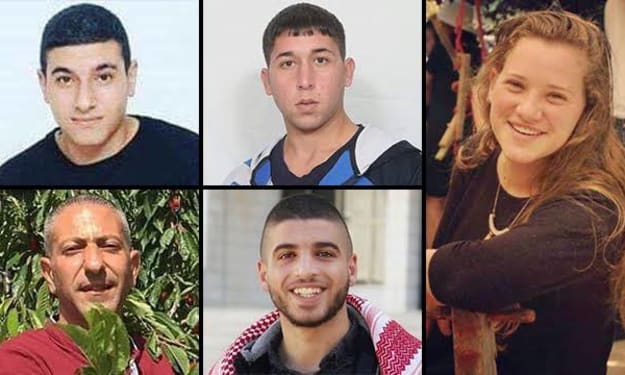
Four years ago on this day, a heart-wrenching incident unfolded that would forever leave a mark on the lives of those involved. Seventeen-year-old Rina Shnerb accompanied by her father and brother, embarked on a hike, unaware of the tragedy that would soon befall them. As they ventured into the serene beauty of the outdoors, their journey took a devastating turn when they encountered an act of violence that would change their lives forever. On that fateful day, Rina Shnerb, her father Eitan Shnerb, and her brother Dvir Shnerb were out for a hike in a picturesque area. Little did they know that their hike would be interrupted by a horrific act of terror. Palestinian terrorists struck, ending Rina's young life and causing irreparable damage to her family and community. The senseless act shattered the peaceful atmosphere and left a deep scar in the hearts of those who knew and loved her.
By Kure Garba3 years ago in Criminal
Serial Killer Saga: Carl Panzram's Path
Carl Panzram June 28 1891 – September 5 1930 was a notorious American criminal and serial killer known for his extreme acts of violence and brutality. His life story serves as a dark example of the potential consequences of a troubled upbringing and a lack of rehabilitation within the penal system.Panzram's early life was marked by a series of hardships that likely contributed to his criminal path. He was born in East Grand Forks, Minnesota, and his childhood was marred by poverty abuse and abandonment. His parents separated when he was young, and he was sent to various institutions, where he faced physical and sexual abuse. These traumatic experiences seemed to shape his worldview and contribute to his violent tendencies. Panzram's criminal career began at a young age, and he was involved in numerous burglaries thefts, and acts of arson. He was frequently in and out of correctional facilities, where his behavior only worsened due to a lack of effective rehabilitation programs. In his teenage years, he was already showing signs of extreme aggression and defiance against authority figures.
By Kure Garba3 years ago in Criminal