
Serial Killer Saga: Carl Panzram's Path
Carl Panzram (1891-1930) was a violent American criminal and serial killer with a traumatic upbringing. His spree of burglaries, assaults, rapes, and murders marked his notoriety.
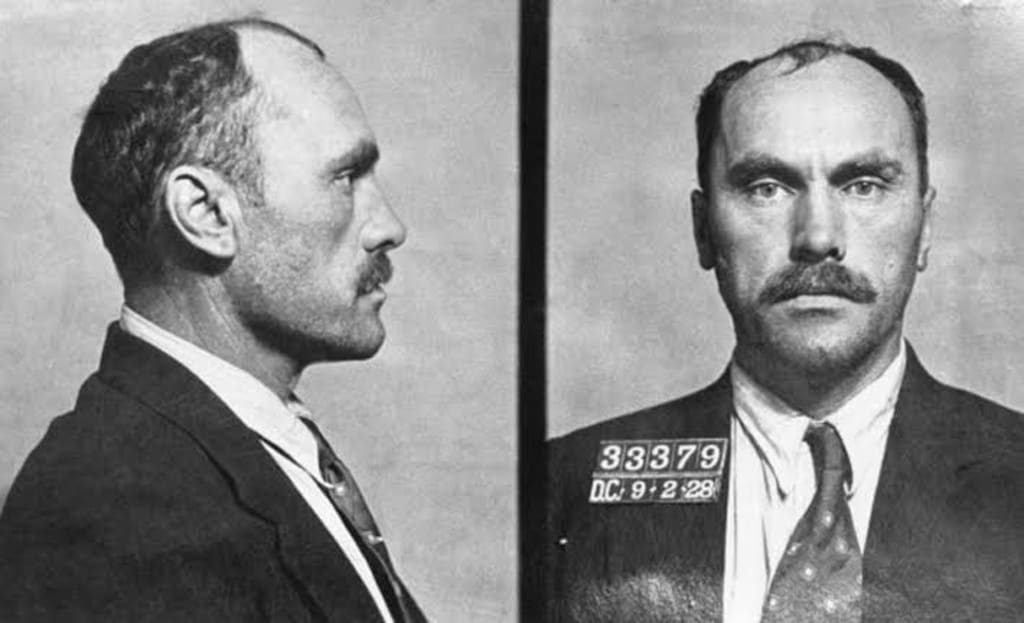
Carl Panzram June 28 1891 – September 5 1930 was a notorious American criminal and serial killer known for his extreme acts of violence and brutality. His life story serves as a dark example of the potential consequences of a troubled upbringing and a lack of rehabilitation within the penal system.Panzram's early life was marked by a series of hardships that likely contributed to his criminal path. He was born in East Grand Forks, Minnesota, and his childhood was marred by poverty abuse and abandonment. His parents separated when he was young, and he was sent to various institutions, where he faced physical and sexual abuse. These traumatic experiences seemed to shape his worldview and contribute to his violent tendencies. Panzram's criminal career began at a young age, and he was involved in numerous burglaries thefts, and acts of arson. He was frequently in and out of correctional facilities, where his behavior only worsened due to a lack of effective rehabilitation programs. In his teenage years, he was already showing signs of extreme aggression and defiance against authority figures.
However, it was his most heinous crimes that gained him notoriety. In the early 1920s Panzram embarked on a spree of violence, including rape and murder. He claimed to have raped and killed over 20 people, and his victims ranged from young boys to adult men. He often disposed of their bodies in remote locations. Panzram's complete disregard for human life and his utter lack of remorse set him apart as a truly disturbing figure.In 1928, Panzram was arrested for burglary and sent to Leavenworth Federal Penitentiary. While there he continued to display his rebellious and aggressive nature, frequently clashing with both inmates and guards. It was during his time at Leavenworth that Panzram's story took an unexpected turn. He formed an unlikely friendship with Henry Lesser, a prison guard who showed him kindness and treated him as a human being. This relationship led Panzram to open up in a series of letters in which he recounted his life story and his crimes.
Panzram's letters, later compiled into a book titled Killer A Journal of Murder provided a chilling insight into the mind of a sociopath. He expressed his deep-seated hatred for society, his contempt for authority, and his belief that he was beyond redemption. Panzram's writings also highlighted the failures of the penal system, which had failed to address the root causes of his criminal behavior and instead had perpetuated his cycle of violence.Tragically, Panzram's story ended as violently as it began. In 1930, while still incarcerated at Leavenworth, he killed a fellow inmate during a prison break attempt. This act sealed his fate, and he was sentenced to death. On September 5, 1930 Carl Panzram was executed by hanging.
The legacy of Carl Panzram continues to be a subject of fascination and horror. His life and crimes have been explored in various books, documentaries and films serving as a cautionary tale about the dangers of neglecting rehabilitation and addressing the root causes of criminal behavior. Panzram's experiences also underscore the need for comprehensive mental health support and intervention for troubled individuals, especially during their formative years.In conclusion, Carl Panzram's life was a disturbing journey through a world of violence, brutality, and despair. His troubled upbringing, coupled with the failures of the penal system shaped him into a remorseless and violent criminal. His crimes shocked society and shed light on the consequences of neglecting rehabilitation and failing to address the underlying causes of criminal behavior. While Panzram's story is undeniably grim, it serves as a reminder of the importance of compassion rehabilitation, and prevention in our criminal justice system.
About the Creator
Keep reading
More stories from Kure Garba and writers in Criminal and other communities.
Chilling Serial Killer Story
Hadden Clark's life is a chilling and perplexing tale of a man who led a double life as a seemingly average individual while harboring a sinister secret: he was a serial killer. Born on July 31, 1952 in Troy New York, Clark's early years were marked by a turbulent family environment and unsettling behavior. As he grew older, his disturbing tendencies escalated, ultimately leading to a trail of heinous crimes that shocked the nation.
By Kure Garba3 years ago in Criminal
The Murder of Cynthia Carver
Cynthia Carver’s mother, Ann, knew immediately something was wrong when her daughter failed to show for her new job on February 22, 2019. She spoke to Cynthia the night before; she was excited. Around 1 p.m., she drove past Cynthia’s house in Newsoms, Virginia, and saw the front door open. She stopped to investigate, as any mother would. Already frightened, her fears were exasperated when she saw blood at the front door. More blood spatter in the living room. A knife is sitting in front of the sofa. The 35-year-old mother of two is nowhere to be found. Ann called the police.
By Criminal Matters6 days ago in Criminal




Comments
There are no comments for this story
Be the first to respond and start the conversation.