Julio Javier
Stories (59)
Filter by community
History of cheese
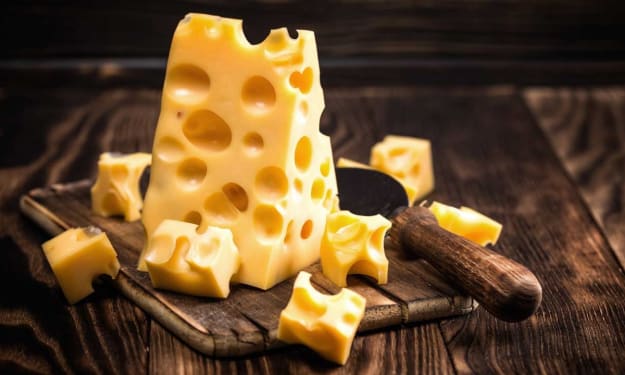
Long before kings and queens, before people made things out of clay and wrote things down, and before people had metal tools and weapons, there was cheese! Way back in 8000 BCE, people who lived in the Fertile Crescent started making cheese. They were farmers who had sheep and goats, and they would get milk from them. When the milk was left out in the warm air for a while, it would start to get sour and clumpy. The farmers figured out that they could eat the clumps, which were called curds. They could also drain the liquid part, which was called whey. The curds were the start of cheese! People could eat cheese instead of drinking milk because it had less lactose, which is a sugar that some people can't digest well. Cheese was really important because it could be saved for later and eaten during times when there wasn't much food. People in Mesopotamia, which was a big city a long time ago, loved cheese so much that they wrote down how much cheese they had and what kinds of cheese they had. Cheese was really good for people because it had lots of important things like protein, fat, and minerals.
By Julio Javier3 years ago in Education
What if all insects suddenly disappeared?
Insect are arthropod invertebrates that belong to the class Pancrustacea. They make up the largest group in the phylum Arthropoda. Insects have an exoskeleton made of chitin, a body with three distinct parts (head, thorax, and abdomen), three pairs of legs that are jointed, compound eyes, and a single pair of antennae. Unlike other animals, insects have some blood that circulates in an open cavity known as haemocoel and is not completely enclosed in vessels. The insect group is the most varied, comprising of over a million species and more than half of all living organisms known to humankind. It is estimated that there are around six to ten million species of insects, potentially making up over 90% of animal life on earth. Though insects can be found in almost all environments, only a small number of species live in oceans. Research shows that insects are nested within another arthropod group, crustaceans, which dominate marine ecosystems.
By Julio Javier3 years ago in Education
What will happen if the moon is gone?
The moon, Earth's natural satellite, holds a crucial role in our planet's existence. The Moon has a diameter that is roughly one-quarter the size of Earth, comparable to the width of Australia. This makes it the fifth largest satellite in the Solar System and the largest and heaviest relative to its parent planet. Additionally, it is bigger than all identified dwarf planets in the Solar System. The Moon is a planetary-mass entity with a differentiated rocky body, classifying it as a satellite planet under geophysical definitions. It does not possess a significant atmosphere, hydrosphere, or magnetic field. Its surface gravity is 0.1654 g, which is about one-sixth of Earth's. Jupiter's moon Io is the only known satellite in the Solar System with a greater surface gravity and density. The Moon orbits Earth at an average distance of 384,400 km (238,900 mi), which is about 30 times the diameter of Earth. Its gravitational impact is the primary force behind Earth's tides and gradually lengthens Earth's day. The Moon's sidereal period, which is the time it takes to orbit Earth once, is roughly 27.3 days. Every synodic period of 29.5 days, the amount of visible surface illuminated by the Sun varies from none to 100%. This results in lunar phases that serve as the basis for the months of a lunar calendar. The Moon is tidally locked to Earth, which means its same side (the near side) always faces Earth because the length of its full rotation on its axis is equivalent to the synodic period. Because of cyclical perspective shifts (libration), 59% of the lunar surface is visible from Earth. According to the prevailing theory, the Moon came into existence approximately 4.51 billion years ago, shortly after the formation of Earth. This occurred due to a colossal collision between Earth and a theoretical, Mars-sized object referred to as Theia, resulting in debris that eventually formed the Moon. Over time, the Moon moved further away from Earth due to the interaction of tides. The dark volcanic maria, or "seas," are visible on the Moon's near side and occupy the areas between the ancient bright highlands and significant impact craters.
By Julio Javier3 years ago in Education
The Best Fruits for Diabetes
Fruits are like nature's candy! They're sweet, tart, and delicious. But if you have diabetes, you might be worried about eating too much sugar. Don't worry, though - you can still enjoy fruit! In fact, fruit is really good for you. We're going to tell you about the five best fruits for people with diabetes. Plus, we'll share a secret fruit that's super healthy and yummy. We're here to help you learn about diabetes and how to stay healthy. Stick around to find out how you can get some free gifts from us!
By Julio Javier3 years ago in Education
Certain types of fish that you should avoid eating
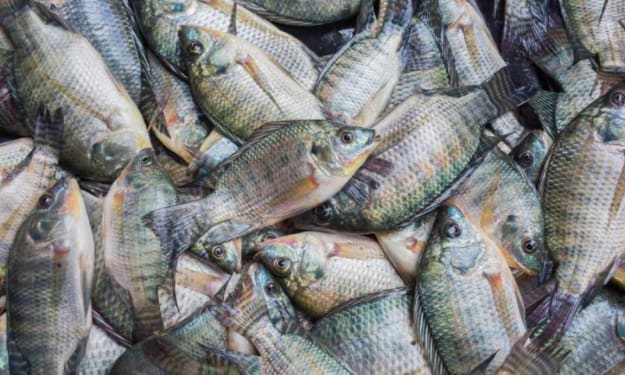
Let's discuss the benefits and potential risks of consuming fish. Fish is a rich source of vital nutrients, including protein and omega-3, which promote a healthy heart and overall well-being. However, not all types of fish are equal in terms of nutritional value, and selecting the wrong kind could have negative consequences. It's important to be aware of the best options available when purchasing fish. Additionally, we'll identify a type of fish that is frequently featured on restaurant menus and can live up to 150 years, but we advise against consuming it due to the accumulation of toxins over time. Toxins can have a detrimental impact on both the body and brain once they enter the bloodstream. Before we delve deeper, we ask that you remain with us to learn about two heart-healthy gifts that you will love. Tilapia, a commonly consumed fish in the United States, should be consumed with caution due to its high omega-6 to omega-3 ratio.
By Julio Javier3 years ago in Education
Facts That You Didn’t Know About Your Body
Science wasn't everyone's favorite subject in school, but today's topic will be more exciting and easier to understand. We have interesting facts about the human body that may be hard to digest, but worth listening to. Did you know that your brain can generate enough electricity to power a small light bulb? When you're awake, your brain produces about 15 to 25 watts of electricity, enough to keep a low-wattage LED lamp shining. Additionally, your brain generates around 50,000 random thoughts per day. Contrary to common belief, people use most of their brain capacity, even when they're asleep. Brain scans have debunked the myth that we only use 10% of our brain. Lastly, human teeth are as strong as sharp teeth.
By Julio Javier3 years ago in Humans
Countries with no snakes
Snakes belong to a group called Serpentes and are elongated, limbless creatures that consume meat. Certain species of snakes possess unique skulls that enable them to devour prey that exceeds the size of their heads. Due to their slim physiques, their organs are arranged differently from other animals to fit within their bodies. Unlike most animals, snakes typically have only one lung. Although some legless lizards share the elongated and limbless traits of snakes, they are a separate species altogether and possess eyelids and ears, which snakes lack.
By Julio Javier3 years ago in Education
Seven spots on our planet that scientists still can't figure out
Hey there! Did you know that there are some places on Earth that even scientists can't explain? It's true! And you don't have to go to outer space to find them. Lucky for us, we live on planet Earth, which is full of wild and baffling secrets. Get ready to be amazed as we explore seven of the world's most unbelievable mysteries and phenomena. Don't forget to hit the subscribe button and turn on notifications to join us on the bright side of life. Let's start with number seven: the Devil's Kettle waterfall in Minnesota, USA. This waterfall looks like a regular one, but it's special because it has two different bodies of falling water. One side falls into Lake Superior, and the other falls into a huge natural hole in the ground. But where does the water go after it falls into the hole? No one knows! People have even tried dropping sticks and other objects down the hole, but they never come out. It's a mystery!
By Julio Javier3 years ago in Earth
Earth Facts That Will Surprise You
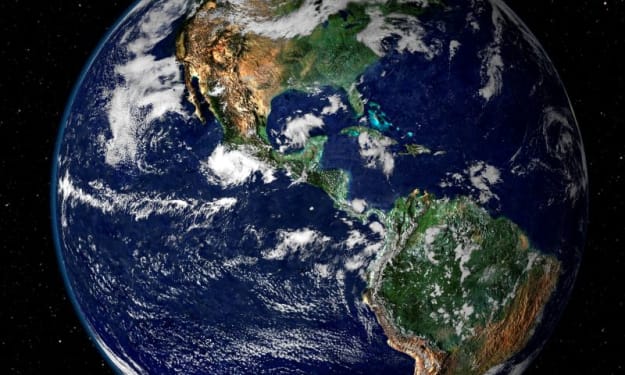
The third planet from the Sun, Earth, is the sole location in the universe where life has emerged and can survive. It is also the only planet that is capable of supporting liquid surface water, which encompasses over 70.8% of its surface area, effectively making it an oceanic planet. The majority of the remaining water resources is contained in the polar regions, where vast ice sheets extend over the oceans and land, significantly overshadowing the quantities of groundwater, lakes, rivers, and atmospheric water found on Earth.
By Julio Javier3 years ago in Earth
What If Earth Was Half Land and Half Water?
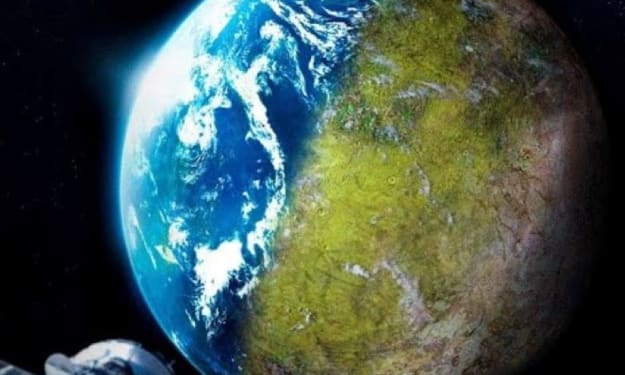
Imagine earth with an excellent 50 50 split between continents and oceans our planet blanketed ½ through land and ½ through water how would this change the planet as you know it what new varieties of vacations could this make viable for you and what does the coloration of your pee have to do with this this is what if and here's what might show up if the earth changed into half of land and half of water in terms of making life possible on a planet water is an absolute have it is why we look for alien life on worlds where liquid water ought to exist when it comes to our very own planet seventy-one of its floor is blanketed via water most of that is in our five oceans together they form one international ocean now if you changed nearly ¼ of our ocean water with land how quickly could earth develop into simply some other lifeless rock in area way to international warming earth's sea stages are presently growing however in case you wanted to stability the planet's land to water ratio you would see the ocean tiers surely plummet and now not only a few meters however round three kilometers earth might appearance very extraordinary the areas round both the north and south poles would be absolutely dried out and each continent on the planet might make bigger and not only a little either all this newly emerged territory round the arena would be roughly identical to the current surface areas of Asia, Europe, Africa and North the us blended that could be a big amount of unused area everything extending off the vintage coasts could be notably flat but a number of the regions that was deep ocean would reveal huge corridors and steep crevasses as you explored this new land you would discover that the only worldwide ocean might be no extra all the oceans could be separated from every different and all of the continents could be one connected landmass and this will be proper information for evolution early people did not have any ships or planes we unfold across the globe truly by way of walking venturing away from Africa some seventy thousand to a hundred thousand years in the past we found our manner to Europe and Asia ultimately we had been able to cross a land bridge connecting Asia to the Americas in all likelihood as far again as 20, 000 years in the past with the 50 50 cut up in place you'd now be able to cowl even more ground ultimately you can take that around the global trip you've got constantly dreamed of all for your personal feet but this moving balance of water and land wouldn't be all fun and games with so much less water overlaying the surface our ocean currents could be disrupted and this will significantly destabilize the climate currents distribute the warmth this is absorbed by the oceans around the world disrupting them could suggest even colder temperatures around the north and south poles while the already warm equatorial regions could get even warmer weather change might accelerate too all due to the fact oceans would not be capable of take in a lot carbon dioxide from the air that extra carbon dioxide could blanket the planet and raise temperatures rain levels might additionally drop off and this might create risky droughts as properly as new deserts in lots of inland regions so even as there may be an abundance of new land available large stretches of earth should emerge as uninhabitable plant life animals and human beings could all need to conform to being less depending on water or at the least start the usage of it more efficiently water shortage may want to bring about animals evolving to be smaller with more making the jump to a strictly carnivorous eating regimen and lamentably the abundance of existence that modern day oceans guide might battle to survive and maybe the maximum surprising outcome which you'd need to get used to is that your pee would possibly alternate forever normally urine is made of greater than 90% water however with much less water on your day by day lifestyles yours would emerge as an awful lot darker and start to smell like ammonia I imply matters might be worse you could drain the oceans of each drop of water they have.
By Julio Javier3 years ago in FYI