Jignect Technologies
Bio
At JigNect Technologies, we believe that software testing is an art, a science, and a passion. Our team of experts combines years of experience, cutting-edge technology.
Stories (73)
Filter by community
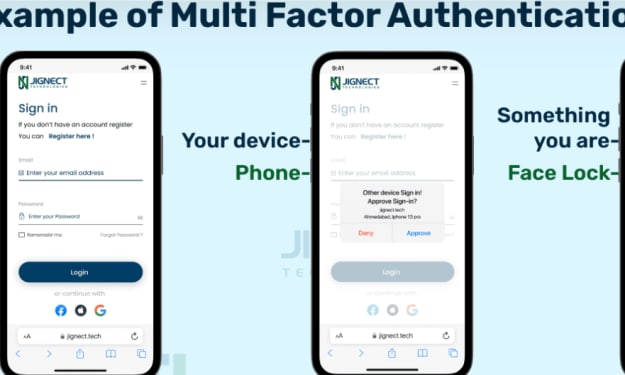
4 Effective Strategies for Test Automation with MFA
Introduction Multi-factor authentication (MFA) is a layered authentication approach of granting access to an application, account, or device. MFA serves as a fundamental security measure for bolstering application defense against unauthorized entry. Nevertheless, the adoption of MFA presents a set of challenges for test automation teams. These teams must navigate the delicate equilibrium between comprehensive automation and the augmented security brought about by MFA. In the subsequent discourse, we delve into a compilation of optimal test automation practices tailored to environments where MFA plays a pivotal role. These guidelines work in unison to facilitate efficient automation without compromising the integrity of security protocols.
By Jignect Technologiesabout a year ago in 01
Monolithic vs Microservices Architecture: Choosing the Right Approach for Your Application
In today’s fast-paced digital world, businesses are constantly seeking ways to optimize their software development processes. One crucial decision that organizations often face is choosing between a monolithic architecture and a microservices architecture. Both approaches have their own set of advantages and disadvantages, making it essential to carefully evaluate which one is best suited for your specific needs.
By Jignect Technologiesabout a year ago in 01
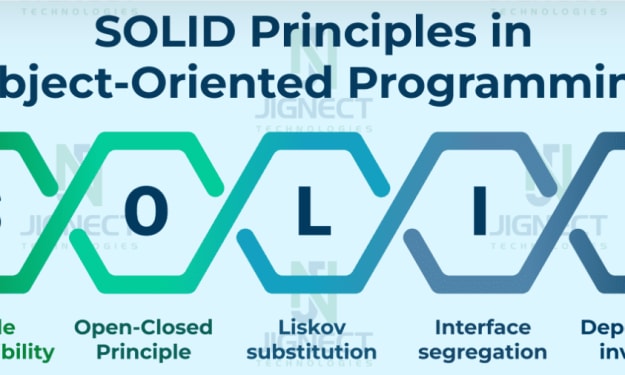
Understanding the Core of SOLID Principles in Object-Oriented Programming
Understanding the Core of SOLID Principles in Object-Oriented Programming solid principles are crucial for any QA professional aiming to ensure high-quality software. SOLID principles encompass solid coding principles, solid programming principles, and solid object-oriented principles, all designed to make the code more maintainable, scalable, and robust. By adhering to these guidelines, QA teams can create systems that are easier to understand, test, and debug, ultimately leading to a more efficient and effective testing process. In this blog, we will delve into each of the SOLID principles, exploring their significance and how they can be applied to enhance your software testing and quality assurance practices.
By Jignect Technologies2 years ago in 01
Apache JMeter: Your Gateway to Performance Testing and Beyond
Introduction to JMeter Apache JMeter is a free and open-source tool adapted for load testing and measuring the application’s performance. It’s a flexible platform with the capability to analyze web applications, perform functional tests, and evaluate the performance of database servers. JMeter is a Java desktop application with a graphical interface built with the Swing graphical API. This allows it to run on any environment or workstation that supports a Java virtual machine, including Windows, Linux, Mac, and more. JMeter creates user groups that generate requests to networks or servers, following, providing statistical data analysis through easily understandable visuals and diagrams.
By Jignect Technologies2 years ago in 01
Lombok Unleashed: Elevating Java Efficiency with Getters, Setters, Constructors, Builders, and More
Introduction to Project Lombok Project Lombok is a popular Java library that aims to reduce boilerplate code and enhance coders productivity by saving lots of time and their energy by providing annotations to automatically generate common Java code during compile time
By Jignect Technologies2 years ago in 01
Examples of SOLID Principles in Test Automation
Introduction As the demand for high-quality software continues to increase, the role of SDET (Software Development Engineer in Test) has become increasingly crucial. SDETs are tasked with ensuring that the software being developed meets the necessary quality standards, and test automation plays a vital role in achieving this objective. However, as test automation code expands in size and complexity, it becomes susceptible to issues like code duplication, tight coupling, and fragile test suites. This is where the SOLID principles come into play.
By Jignect Technologies2 years ago in 01
Security Testing – An Effective Guide for Businesses
What is Security Testing? Security testing is an integral software testing technique implemented to validate an application, system, network, etc. For security threats or vulnerabilities. This testing method is significantly helpful in improving a business’s security posture and ensures that they are protected from all kinds of cyber threats. The implementation of security testing also helps guarantee that the business application or system is safe from weaknesses or loopholes that hackers could exploit. The fundamental concepts in security testing include Confidentiality, Integrity, Availability, Authenticity, Authorization, Non-repudiation, and Resilience.
By Jignect Technologies2 years ago in 01
Top 5 Best Automated Software Testing Tools
In today’s digitally driven world, software testing has been growing exponentially. Not to mention that the need to deliver functional and optimal software solutions to audiences promptly is rising. As a result, performing extensive software testing becomes challenging without compromising the development deadline. Therefore, to overcome this hurdle, businesses can enlist the help of automated testing tools.
By Jignect Technologies2 years ago in 01