Irshad Abbasi
Bio
Ali ibn Abi Talib (RA) said 📚
“Knowledge is better than wealth, because knowledge protects you, while you have to protect wealth.
Stories (304)
Filter by community
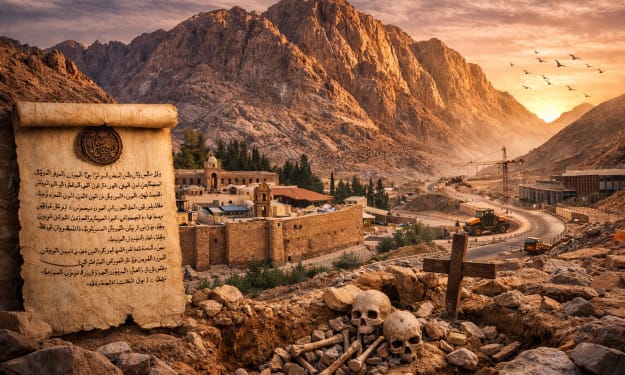
Mount Sinai, the World’s Oldest Monastery, and the Prophet’s Letter: Faith, History, and a Controversial Development Plan
At a sacred site revered by Muslims, Christians, and Jews alike, an ambitious modernization project has stirred debate after reports of graves being relocated—raising questions about heritage, memory, and the cost of progress.
By Irshad Abbasi 3 days ago in History
Factory of Fear: The Escape and 21-Year Manhunt of America’s “Most Wanted” Terror Suspect
In the tense years following the September 11 attacks, the United States launched one of the largest counterterrorism operations in modern history. Intelligence agencies tracked suspects across continents, tightened airport security, and expanded surveillance networks. Yet, amid this sweeping effort, one man accused of building explosives inside his car managed to disappear — evading capture for more than two decades.
By Irshad Abbasi 3 days ago in Criminal
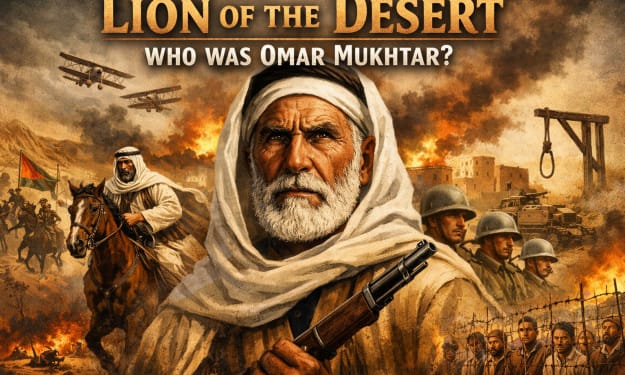
Lion of the Desert: Who Was Omar Mukhtar?
In the early 20th century, when European colonial powers were carving up Africa, one elderly man on horseback became the face of defiance in the deserts of North Africa. His name was Omar Mukhtar, and to the people of Libya, he was not just a fighter—he was a symbol of faith, courage, and unbreakable resistance. Known as the “Lion of the Desert,” Omar Mukhtar led a long and determined struggle against Italian colonial forces, proving that even the most powerful empires can be challenged by unwavering belief and determination.
By Irshad Abbasi 4 days ago in History
When Prison Becomes Home: Why Some Elderly Japanese Choose Jail Over Freedom
Japan is often seen as a land of prosperity, discipline, and social harmony. From the neon streets of Tokyo to the quiet countryside towns, the country symbolizes modern success. Yet behind this image lies a growing and troubling reality: an increasing number of elderly Japanese citizens are deliberately committing minor crimes in order to go to prison. For many, prison offers something they can no longer find in society—food, shelter, healthcare, and human connection.
By Irshad Abbasi 4 days ago in Criminal
Ice Boy: The Frozen Morning That Changed a Child’s Destiny
In the winter of 2018, a single photograph from a remote village in China shocked the world. The image showed a young boy with hair and eyebrows frozen white from the bitter cold, his cheeks red and cracked, yet standing firmly in a classroom. That boy became known globally as “Ice Boy.” His real name was Wang Fuman, and in just one year, his life changed in ways no one could have imagined.
By Irshad Abbasi 4 days ago in Education
Escobar’s Paradox: The Poorest City in the World’s Richest Nation
The story of Escobar is not just the story of one man; it is the story of a city, a country, and a paradox. When people hear the name Pablo Escobar, they often think of unimaginable wealth, global drug empires, and a lifestyle that rivaled billionaires. Yet behind the myth of his fortune lies a deeper and more painful reality—entire neighborhoods living in poverty, violence, and fear. This contrast has often been described as “Escobar’s paradox”: how one of the richest criminal empires in history rose from communities that remained desperately poor.
By Irshad Abbasi 4 days ago in History
Mansa Musa: The African Emperor Richer Than Jeff Bezos
When discussing the richest people in history, modern names like Jeff Bezos often dominate the conversation. Yet centuries before the rise of billion-dollar corporations and global stock markets, a West African emperor accumulated such immense wealth that historians still struggle to measure it. His name was Mansa Musa, the legendary ruler of the Mali Empire, and he is widely considered the richest individual who ever lived.
By Irshad Abbasi 4 days ago in History
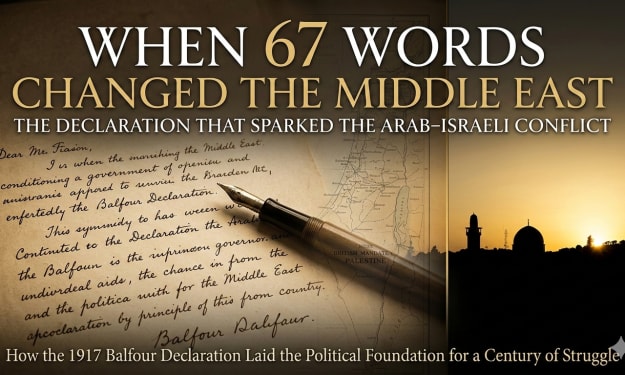
When 67 Words Changed the Middle East: The Declaration That Sparked the Arab–Israeli Conflict
In the long and turbulent history of the Middle East, few political documents have had as profound and lasting an impact as the Balfour Declaration. Written in just 67 words in 1917, this brief letter from British Foreign Secretary Arthur Balfour to Lord Rothschild would go on to shape the destiny of Palestine and lay the foundation for what became the Arab–Israeli conflict. A century later, the consequences of those carefully crafted words continue to influence geopolitics, identity, and regional stability.
By Irshad Abbasi 4 days ago in History
Will a War Between Iran, the United States, and Israel Trigger World War III?
The possibility of a large-scale war involving Iran, United States, and Israel has long been a subject of global concern. Political tensions, military confrontations, proxy conflicts, and disputes over nuclear development have created a fragile security environment in the Middle East. Many observers wonder whether a direct war between these powerful actors could escalate into World War III. While such a scenario is not inevitable, the risks and global implications would be enormous.
By Irshad Abbasi 4 days ago in History
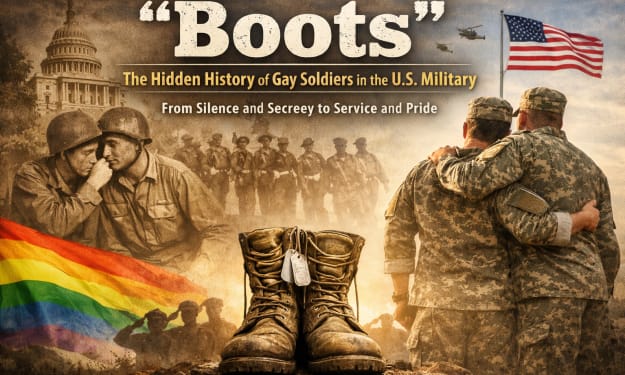
“Boots” — The Hidden History of Gay Soldiers in the U.S. Military
For much of American history, gay men and women have worn the uniform of the United States with courage and distinction — yet in silence. Their stories, often erased or deliberately concealed, form a powerful and complex chapter in the evolution of both the U.S. military and LGBTQ+ civil rights. From criminalization and dishonorable discharges to the controversial “Don’t Ask, Don’t Tell” policy and eventual full inclusion, the hidden history of gay service members reflects a broader struggle for dignity, recognition, and equality.
By Irshad Abbasi 4 days ago in Chapters
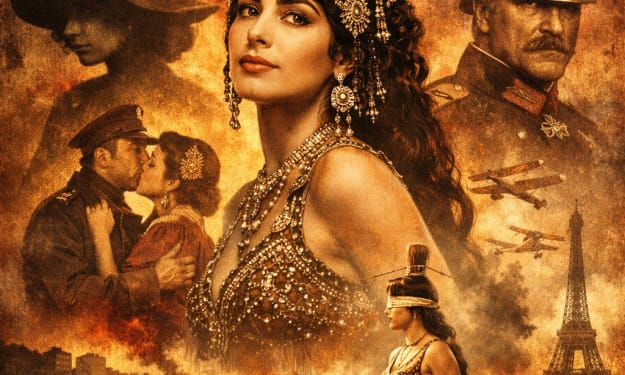
The Wicked Wife or the Secret Spy?
In the shadows of war, truth is often the first casualty. Few stories prove this more powerfully than that of Mata Hari — a woman who was branded a traitor, condemned as a seductress, and executed as a spy. To some, she was a wicked wife who betrayed loyalties for wealth and desire. To others, she was a secret agent who played a dangerous game among powerful men. Yet, more than a century later, historians still debate whether she was truly guilty — or simply a convenient scapegoat.
By Irshad Abbasi 4 days ago in History
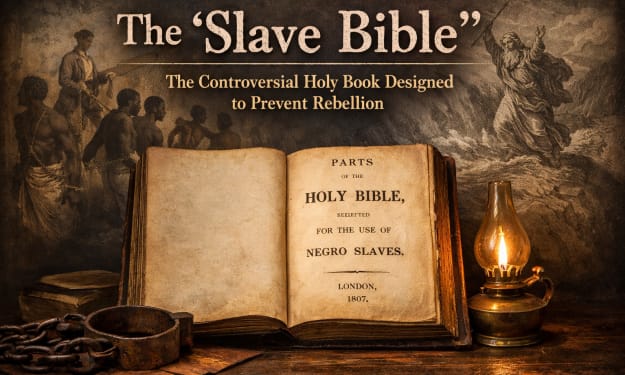
The “Slave Bible”: The Controversial Holy Book Designed to Prevent Rebellion
In the early nineteenth century, a heavily edited version of the Bible was printed with a singular and deeply troubling purpose: to control enslaved Africans and discourage rebellion. Today, this rare publication—commonly known as the “Slave Bible”—is one of the most controversial religious texts in history. Only four copies are known to exist in the world.
By Irshad Abbasi 4 days ago in Education