Henrik Leandro Laukholm Solli
Bio
Free thinker, traveler and humanist <3
Stories (110)
Filter by community
Pegasus and the Tragic Ascent
Shielded from the Gorgon's stone-cold gaze, Perseus ventured through the treacherous cave of Medusa. With a deep breath, he swiftly drew his sickle and severed her head, which birthed two remarkable offspring. One was Chrysaor, a towering figure wielding a golden sword, while the other was the majestic winged horse known as Pegasus. With unparalleled swiftness, Pegasus could shape mountains with the stomp of his hooves and conjure streams from dry rocks. No bridle could restrain him, until fate intervened.
By Henrik Leandro Laukholm Solli3 years ago in History
The Paradox of Forbidden Desires
If I told you not to press this big red button, what would you do? For many individuals, there is an innate motivation to defy such restrictions, as being told "no" often triggers a strong desire to do exactly what is prohibited. This intriguing behavior finds its roots in reactance theory, a psychological explanation for the phenomenon. Reactance occurs when individuals perceive a threat to their freedom and feel compelled to take actions that restore their sense of autonomy.
By Henrik Leandro Laukholm Solli3 years ago in Humans
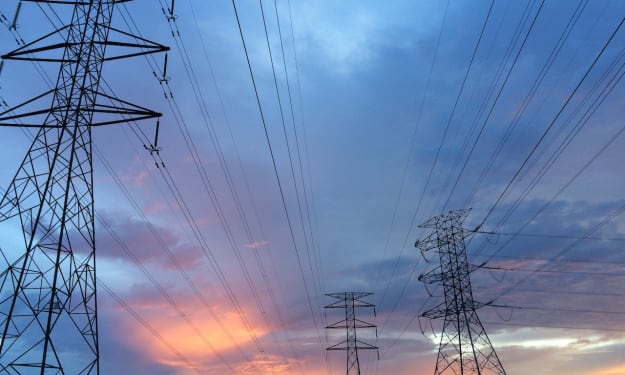
Harnessing Load Flexibility
On February 7th, 1967, Homer Loutzenheuser, with a flick of a switch in Nebraska, realized a dream that had been in the making for over five decades. The power grids of the United States seamlessly joined together, creating one interconnected machine that spanned from coast to coast. Today, the US power grid stands as the largest machine in the world, comprising over 7,300 electricity-generating plants and linked by approximately 11 million kilometers of power lines, transformers, and substations. These power grids, spanning continents, tirelessly transmit electricity around the clock, representing monumental engineering achievements. However, their success hinges on maintaining a delicate balance.
By Henrik Leandro Laukholm Solli3 years ago in Earth
Unraveling Economic Inequality
In South Africa, renowned for its staggering inequality, the richest one-tenth of 1% possesses nearly 30% of the nation's wealth, surpassing the combined ownership of the bottom 90%. Income and wealth disparities are not novel phenomena, as economists and historians have traced their existence throughout history, finding no society devoid of such inequality. This disheartening reality begs the question: is inequality an unavoidable facet of our world? To gauge inequality, one commonly used measure is the Gini index, which compares the distribution of income or wealth in a society with that of a perfectly equal society.
By Henrik Leandro Laukholm Solli3 years ago in Humans
The Smartest Age
Tomorrow's annual Brain Clash event is approaching—a decathlon of mental challenges and competitions where teams of two test their wits. Amir is faced with the challenging task of selecting the smartest teammate from a pool of candidates. Gabriela, an 8-year-old with exceptional linguistic skills and creative thinking; Ama, a technologically adept individual with an impressive memory and culinary prowess; or Mr. Taylor, an experienced chess player and a seasoned Brain Clash champion. Determining the smartest choice requires a closer examination of intelligence across different categories and stages of life.
By Henrik Leandro Laukholm Solli3 years ago in Humans
The Elusive Common Cold
In 2000, ViroPharma conducted clinical trials for pleconaril, a novel pill aimed at treating the common cold. While the medication proved effective for many patients, researchers discovered a disheartening reality. Within just a few days of treatment, seven individuals developed mutated virus variants that were highly resistant to pleconaril. This particular virus strain exhibited an astonishing rate of mutation, rapidly outmaneuvering years of research and development. This highlights the ongoing challenge of combating the common cold, especially for individuals with compromised immune systems or those taking immunosuppressant drugs.
By Henrik Leandro Laukholm Solli3 years ago in Earth
Sleepwalking
Sleepwalking, often characterized by mumbling nonsensical phrases, engaging in peculiar behaviors like eating blocks of cheese in the nude, urinating in inappropriate places, or even jumping out of windows, is a relatively benign but occasionally hazardous phenomenon. It is estimated that approximately 18% of individuals experience sleepwalking at least once in their lives. So, what exactly is sleepwalking, and what factors contribute to it?
By Henrik Leandro Laukholm Solli3 years ago in Humans
Unraveling the Cycle
At 5 p.m., the realization strikes that the report you've been avoiding is due tomorrow. The familiar cycle of procrastination sets in as you contemplate opening your computer but find yourself checking your phone or indulging in YouTube instead. Perhaps making dinner seems like a reasonable diversion, even though the work looms over your head. Before you know it, it's late, and the thought of starting again in the morning tempts you. Procrastination is a common struggle that we can all relate to, but why do we persist in this behavior when we know it's detrimental?
By Henrik Leandro Laukholm Solli3 years ago in Humans
The Machinery of Capitalism
In the realm of economic systems, each country is represented by a machine with three crucial inputs: labor, capital, and natural resources. The machine's purpose is to convert these inputs into goods and services, ultimately creating value through transactions. The question arises: what determines the nature of the economic system—whether it be capitalist, communist, socialist, or something else? Three dials hold the key.
By Henrik Leandro Laukholm Solli3 years ago in Trader
The Power of Active Listening
In today's fast-paced world, it's easy to recognize when someone isn't paying attention to us. However, understanding what constitutes excellent listening can be surprisingly elusive. Behavioral scientists have discovered that good listening is not only crucial for improving relationships but also for expanding our worldview and potentially influencing others' perspectives. So, how can we become better listeners?
By Henrik Leandro Laukholm Solli3 years ago in Humans
The Art and Science of Calcium Carbonate
Despite their unassuming exteriors, oysters and other marine creatures possess hidden treasures that captivate the eye. Pearls, with their lustrous colors and smooth surfaces, are formed from the same material that comprises their rugged shells. This common building block is none other than calcium carbonate (CaCO3), a chemical compound found abundantly in both land and sea. The remarkable diversity of structures crafted from this single ingredient begs the question: how does calcium carbonate give rise to such an array of materials?
By Henrik Leandro Laukholm Solli3 years ago in Earth
Ethical Dilemmas in Scientific Research
The eradication of smallpox, one of the deadliest diseases in history, is a triumph of public health. However, concerns arise from the existence of virus samples, which could potentially be weaponized by rogue actors. To counter this threat, the US government funds research to improve smallpox treatments and vaccines. Since it is unethical to expose humans to this highly lethal virus, laboratories turn to our closest biological relatives as research subjects. This raises a moral dilemma: is it justified to harm these animals to protect humanity?
By Henrik Leandro Laukholm Solli3 years ago in Earth