
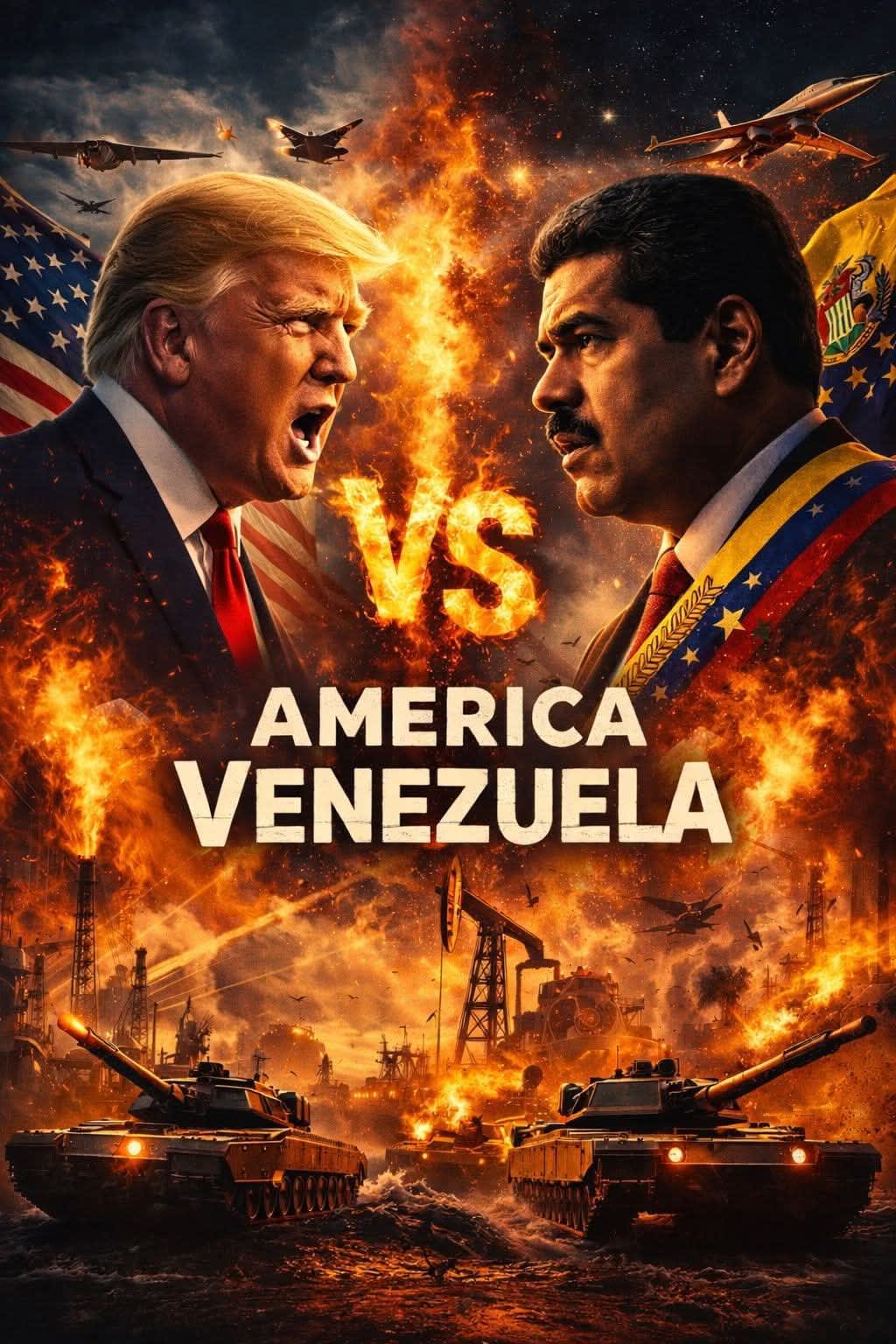
To understand the roots of the conflict, one must look back more than a century, to the time when Venezuela’s vast natural resources—especially oil—became the focus of foreign interests. From 1920 to 1976, for nearly fifty years, Venezuela’s oil industry was almost entirely controlled by foreign corporations. Three multinational companies owned approximately 98 percent of the country’s oil reserves, two of which were American. During this period, Venezuela remained politically independent in name, but economically dependent in reality. Its most valuable resource was extracted, managed, and profited from largely by foreign powers, while the Venezuelan people saw limited benefits.
In 1976, Venezuela officially nationalized its oil industry. On paper, this was a historic step toward sovereignty. However, in practice, American influence did not truly disappear. The structures of control, technical dependence, and market influence ensured that U.S. companies continued to shape Venezuela’s oil sector behind the scenes. As a result, despite nationalization, real economic independence remained incomplete.
A major shift occurred in 2007 under President Hugo Chávez. His government moved decisively to reclaim control over oil production by securing at least 60 percent state ownership in major oil projects. This marked a turning point. For the first time, Venezuela asserted genuine authority over its most important resource and openly challenged American economic dominance. From 1920 to 2007, Venezuelan oil had effectively remained under the grip of American imperial interests. Chávez’s actions represented a break from this long history.
This assertion of independence was not acceptable to imperial powers. Economic freedom, political autonomy, and control over strategic resources threatened the established global order. From this moment onward, relations between Venezuela and the United States entered a phase of tension, confrontation, and strategic maneuvering—a prolonged game of cat and mouse between a global superpower and a defiant developing nation.
Tensions intensified further due to Hugo Chávez’s close relationship with Cuba. At a time when the United States had long isolated Cuba politically and economically, Chávez openly embraced Cuban leadership and cooperation. For Washington, this alliance was deeply provocative, comparable to pouring fuel on an already burning fire. Venezuela was no longer just resisting U.S. influence; it was actively aligning itself with America’s long-standing ideological adversary.
At one point, Chávez’s government was forcibly removed from power in a sudden political upheaval. However, massive public support and loyal elements within the military restored him to office within just two days. This event further deepened mistrust between Venezuela and the United States, reinforcing the belief among Chávez supporters that foreign forces were unwilling to tolerate Venezuela’s independent path.
After Hugo Chávez’s death, one of his loyal allies assumed the presidency, pledging to continue the same political and economic course. Despite severe American sanctions aimed at crippling Venezuela’s economy, the country did not surrender or submit. Instead, it endured immense hardship while maintaining its refusal to bow to external pressure. These sanctions, widely criticized for their humanitarian impact, further entrenched hostility between the two nations.
In an effort to de-escalate tensions, the President of Venezuela reportedly invited the United States to negotiations on two separate occasions. Dialogue was proposed as an alternative to confrontation. However, these invitations did not lead to meaningful engagement. Instead, relations continued to deteriorate, culminating in direct acts of aggression and heightened conflict.
In this context, the war did not begin with weapons or armies. It began with oil, sovereignty, and resistance. It began when Venezuela decided to reclaim what it believed was rightfully its own—and refused to return to the shadow of imperial control.
From that moment onward, economic pressure, political interference, and indirect confrontation gradually replaced open dialogue, paving the way for prolonged instability and ongoing conflict between the two nations.
About the Creator
Keep reading
More stories from Hafeez Alam and writers in Journal and other communities.
The Third World War is no longer a mere hypothesis; its signs are now far more visible than ever before.
Dark clouds of war are currently hovering over the blue waters of the Caribbean Sea, where the world’s greatest powers are moving toward a confrontation that has forced the entire globe to hold its breath. The thunder of American naval fleets near the shores of Venezuela and fighter jets circling the skies have marked the beginning of a silent war whose outcome remains unknown.
By Hafeez Alam2 months ago in Journal
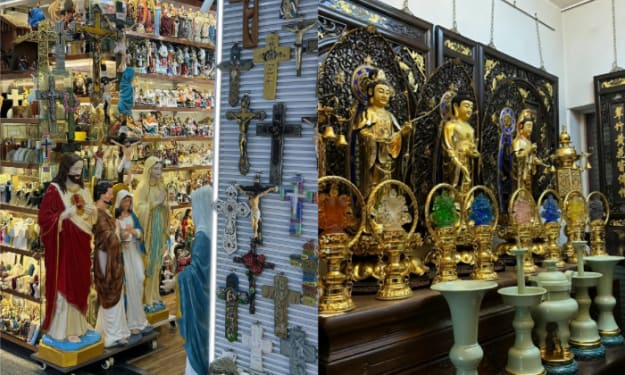
China’s Faith Factory for All Religions
The little angel you bought in the Vatican might actually come from a small Chinese town called Yiwu. Known as the world’s largest wholesale hub, Yiwu presents a unique phenomenon: a place where the faiths of the world sit side-by-side in the same aisle. As the world's leading small commodity distribution center, Yiwu has a rich history and plays a crucial role in global trade. Here, the sacred meets the industrial.
By Jingsourcing.com 7 days ago in Journal
When the Shelter Closes
Across the street from my house, a man slept under a tree, his dog by his side. My first, naive thought: he must be traveling through. But he kept coming back, often sleeping there during the day. Then it hit me—that person might not have a home.
By Bride of Sound5 days ago in Humans



Comments
There are no comments for this story
Be the first to respond and start the conversation.