

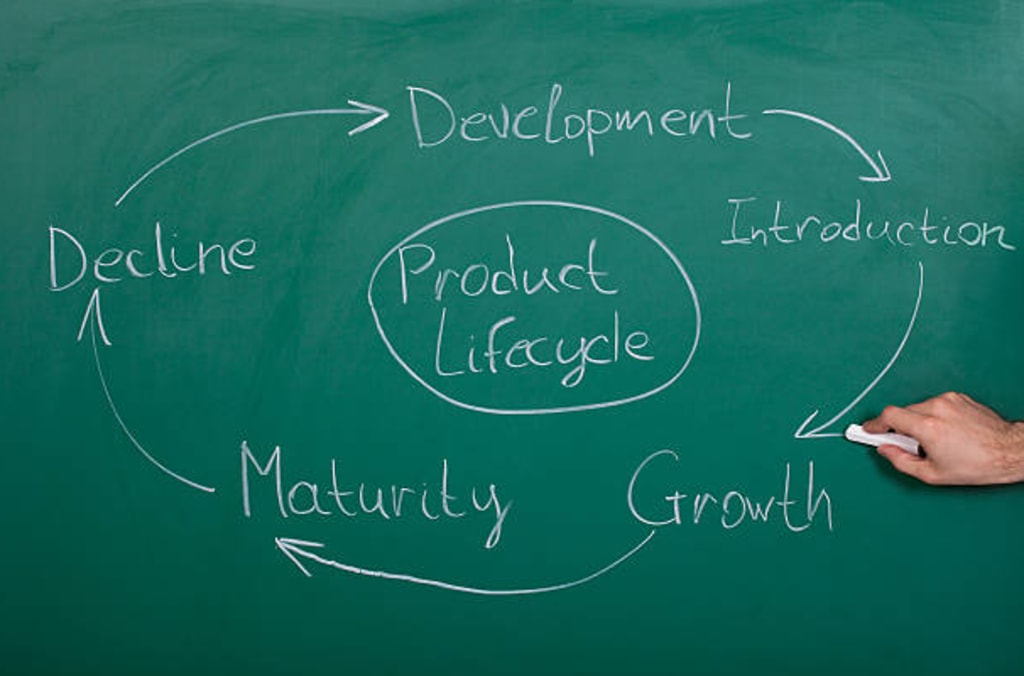
Most users only see the surface of a software feature—the button, the animation, the interface that “just works.” But behind every feature lies a long, winding, and often chaotic journey. What starts as a simple idea eventually becomes part of a product’s story, evolves through countless revisions, and sometimes outlives the people who built it. Features aren’t static objects. They have life cycles, personalities, and even histories.
Understanding this lifecycle matters. It helps teams build more intentionally, maintain more effectively, and retire with less pain. It gives context to decisions that affect users, developers, designers, and the business. And most importantly, it reminds everyone that features aren’t just built—they grow, age, and eventually fade.
Below, we’ll walk through the four major stages of a feature’s lifecycle: Birth, Growth, Maturity, and Legacy. Each stage reveals what teams often overlook and why thoughtful stewardship can save products from technical debt, user frustration, and unnecessary complexity.
Birth: Where Ideas Become Possibilities
Every feature begins in a place that feels both exciting and uncertain. Someone notices a gap, a customer complains, a designer imagines a better workflow, or leadership wants to differentiate the product. These sparks gather in brainstorming sessions, planning documents, whiteboards, or random Slack threads. But the beginning of a feature is rarely clean or linear.
Ideas need friction to take shape.
Teams debate scope, argue about value, sketch prototypes, or run small experiments. What seems simple at first—“let’s add a sharing button”—reveals hidden layers as soon as people ask the right questions:
Who will use this?
Why do they need it?
What happens if we do nothing?
How will this interact with the rest of the system?
Can we build a minimal version before committing fully?
These questions separate impulsive ideas from meaningful features.
Constraints are part of the birth process.
Great features don’t emerge from unlimited resources; they emerge from thoughtful limits. Time, budget, platform, technical debt, or team expertise all shape what the first version can realistically be.
Specifying without suffocating.
Product teams have to capture requirements clearly enough that developers understand the goal, yet loosely enough that the team can adapt during the build. Too much detail kills creativity; too little invites disaster.
The emotional side of feature birth.
People get attached to their ideas. Designers defend user flows. Engineers defend technical realities. PMs defend timelines. Healthy conflict during this stage ensures that the feature has a strong foundation rather than a fragile ideal.
By the end of this stage, the team has a shared understanding of what they are building, why it matters, and what the first version needs to deliver. A feature is officially “born” the moment the team commits: Yes, let’s build this.
Growth: Where Code Meets Reality
Once the build begins, the feature moves from theory to implementation—and reality quickly pushes back. Assumptions break, constraints tighten, and new questions emerge from every corner of the system.
Building exposes hidden complexity.
A simple feature touches more parts of the product than anyone expected. Authentication. Permissions. APIs. UI consistency. Edge cases that no user will encounter except the one who writes an angry message to support.
This is the part no roadmap captures: the messy, unpredictable growth phase.
Iteration becomes survival.
You build. You test. You adjust. You test again.
The refinement loop is where the feature becomes real:
UX gets polished.
Slow queries get optimized.
Unexpected errors get handled.
Data models get reshaped.
Copy gets rewritten for clarity.
The feature grows not just in size, but in maturity.
Feedback fuels direction.
Internal reviews, beta testing, and early adopter feedback push the feature forward—or send it sideways.
Some features:
shrink to reduce complexity
expand because users want more
pivot because assumptions were wrong
pause because the business strategy shifts
A feature can grow in a straight line, but it rarely does.
The release isn’t the finish line.
Shipping is a milestone, not an ending. What the team delivers is only the first version of something that will continue evolving. The moment the feature hits real users, new insights pour in. Bugs appear. Metrics shift. People use the feature in ways nobody predicted.
In this phase, the feature transitions from an internal project to a living part of the user’s experience. And once it’s out in the world, it enters its longest stage.
Maturity: When the Feature Becomes Part of Everyday Life
A mature feature is one that users rely on. It no longer feels new or experimental—it feels essential. It blends into workflows, shapes habits, and becomes part of how people think about the product.
But maturity comes with its own challenges.
Stability becomes more important than speed.
In early growth, teams move fast. In maturity, caution becomes critical because millions of users depend on the feature's behavior. A small change can create big problems.
Maintenance outweighs innovation.
The hidden truth of software is that maintaining features consumes more time than building them. Mature features require:
- bug fixes
- compatibility updates
- security patches
- performance tuning
- UX refreshes
- documentation updates
Teams often underestimate this stage because maintenance is less glamorous than creating something new. But neglect leads to the slow decay of quality and trust.
Features evolve based on real-world behavior.
User analytics reveal surprising truths:
- A flow people thought was intuitive isn’t.
- A button people ignore hides something they actually need.
- A popular feature becomes the backbone of a new competitive strategy.
Mature features teach teams how users truly behave—not how they assumed users would behave.
Technical debt accumulates.
The longer a feature lives, the more outdated assumptions it carries:
- old frameworks
- temporary hacks
- deprecated APIs
- inconsistent design
- complex dependencies
This debt complicates every future change. Mature features become difficult to touch, not because they are flawed, but because they are deeply woven into the product.
The emotional shift: familiarity breeds caution.
Teams become protective of mature features. They fear breaking them, disrupting workflows, or angering long-time users. This caution is healthy—but it can also prevent necessary reinvention.
In maturity, a feature is stable, useful, and deeply embedded. But it is also slowly approaching the next phase of its life.
Legacy: When a Feature Outlives Its Original Purpose
All features eventually reach a point where they no longer fit the product’s direction, technology, or user expectations. Legacy doesn't mean bad—it simply means outdated or misaligned with the present.
Legacy arises from success, not failure.
A feature becomes legacy because:
- the product grew
- the market changed
- the user base evolved
- technology advanced
- the original constraints vanished
Sometimes a feature was so successful that it stayed longer than anyone expected, becoming a permanent fixture.
Legacy features slow development.
They introduce friction:
- Old patterns block new designs.
- Outdated code resists modernization.
- Dependencies limit architectural changes.
- Developers hesitate to touch fragile areas.
These features can feel like ghosts haunting the codebase—deeply rooted, misunderstood, and impossible to remove without pain.
Retirement is both technical and emotional.
Removing a feature triggers concerns:
- Will users be upset?
- Will workflows break?
- Do we have a replacement?
- Are we sure usage is low enough?
- What if a small group relies on it heavily?
Teams often delay removal until the cost of keeping the feature becomes higher than the cost of replacing it.
Sunsetting with intention.
Smart teams communicate clearly:
- timelines
- alternatives
- migration tools
- educational material
- transparency about why the removal is necessary
A graceful sunset honors the feature’s history instead of letting it die silently.
Legacy becomes learning.
Every retired feature teaches:
- how the product evolved
- what users valued
- where assumptions were right
- where assumptions failed
- how to design better next time
Legacy isn’t the end of the story—it’s the start of the next chapter.
About the Creator
Gustavo Woltmann
I am Gustavo Woltmann, artificial intelligence programmer from UK.
Keep reading
More stories from Gustavo Woltmann and writers in Lifehack and other communities.
How to Design Code That Explains Itself
Writing good code isn’t just about getting it to work — it’s about making it understandable. The best code doesn’t need long comments or explanations; it reveals its purpose through structure, naming, and simplicity. “Self-explanatory code” is not a luxury. It’s a habit that saves time, reduces bugs, and makes collaboration easier.
By Gustavo Woltmann4 months ago in Motivation
Zojirushi BB HAC10 vs BB SSC10: Which One Should You Buy?
Choosing between the Zojirushi bb hac10 vs bb ssc10 can feel confusing when both promise great homemade bread in a compact size. I like how each model focuses on small 1-pound loaves, which fit typical U.S. households and reduce waste.
By Mohammed mamun2 days ago in Lifehack
Moving With Intention: A Human Reflection on Smart Move Culture in Greenville
There is something deeply transformative about moving. It is not simply the act of transporting belongings from one place to another. It is a process filled with decisions, emotions, expectations, and quiet moments of reflection. Every move represents change, and every change invites uncertainty as well as possibility.
By House Doctor7 days ago in Lifehack


Comments
There are no comments for this story
Be the first to respond and start the conversation.