
Will Visual Programming Ever Replace Text-Based Code?
Developer Future

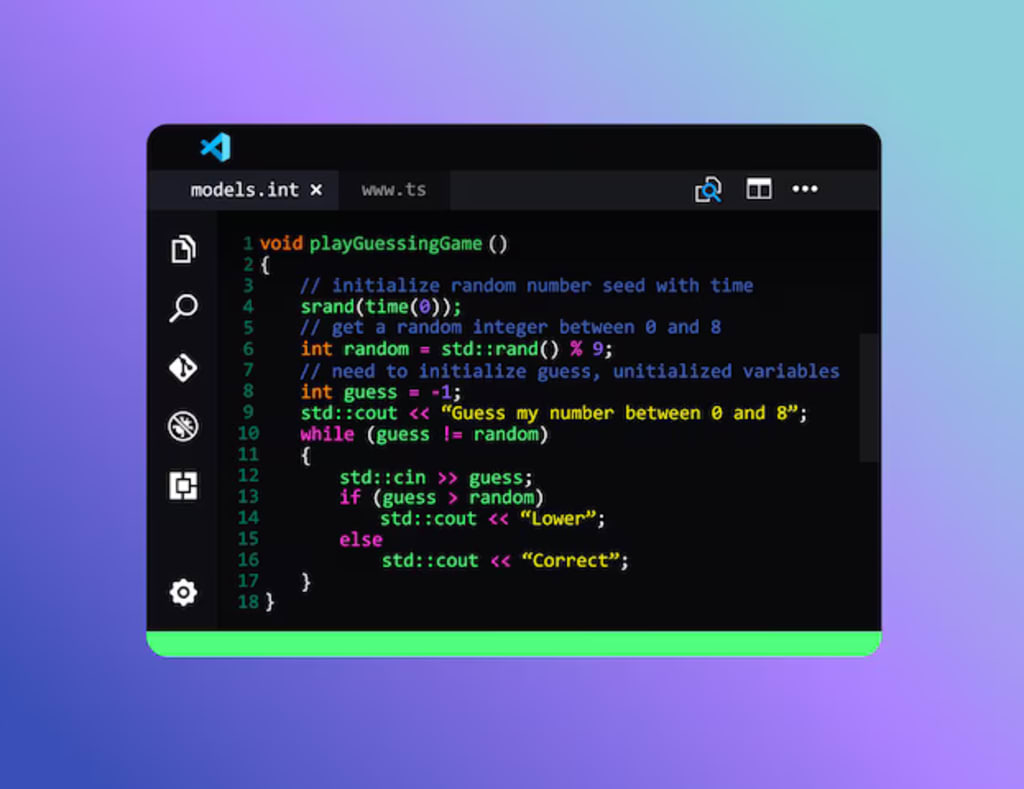
For decades, programmers have written lines of text—symbols, commands, and structures that make machines come alive. Yet, as technology evolves, a new paradigm has emerged: visual programming. These are tools and environments that let developers build applications by connecting blocks, dragging components, and using flow diagrams instead of typing commands.
The promise is seductive: a world where coding is intuitive, accessible, and maybe even beautiful. But can visual programming truly replace the text-based code that has defined software engineering for half a century? Or is it destined to remain a helpful complement rather than a complete replacement?
Let’s explore how visual programming works, what it offers, and where its limits lie in the ongoing evolution of how we tell computers what to do.
What Is Visual Programming?
Visual programming refers to creating software through graphical elements rather than traditional lines of code. Instead of typing functions, loops, or conditions, developers manipulate visual symbols—blocks, nodes, or flowcharts—that represent those same logical operations.
You can think of it as “coding with pictures.”
The concept isn’t new. Early examples include LabVIEW for engineering simulations, Scratch for educational programming, and Unreal Engine’s Blueprint system for game design. More recently, low-code and no-code tools like Bubble, Node-RED, and Thunkable have made it possible for non-programmers to build apps using simple drag-and-drop workflows.
Each visual element—whether a “data fetch” node, a “loop,” or a “condition”—represents underlying code. When connected in sequence, they form a logic flow that’s compiled or interpreted by the system.
The result is an environment that feels more approachable than syntax-heavy programming languages. Errors are reduced because the structure enforces logical relationships visually. For example, it’s hard to “forget a semicolon” when you’re connecting two blocks instead of typing code.
This approach appeals to beginners, educators, and rapid prototyping teams. It reduces the learning curve and makes programming feel more like design. But visual programming doesn’t just make coding easier—it reframes how we think about software creation entirely.
Still, the question remains: can visuals really capture the full expressive power of text?
The Appeal: Accessibility and Speed
The biggest advantage of visual programming is accessibility. By abstracting complex syntax and focusing on logic, it opens programming to people who might never have considered themselves “coders.” Designers, scientists, and business professionals can now build workflows without learning Python or JavaScript.
This democratization of development aligns with the rise of low-code/no-code platforms, which empower teams to build apps and automate tasks quickly. Visual interfaces accelerate development cycles, allowing users to prototype ideas and test functionality in hours rather than weeks.
In fields like game design and automation, visual programming has proven especially effective. Unreal Engine’s Blueprint system lets designers create gameplay mechanics visually without writing C++. Automation tools like Zapier or n8n connect apps through flowcharts that are intuitive yet powerful.
Moreover, visual programming reduces cognitive friction. Developers can see the relationships between components in real time, making debugging more intuitive. The visual feedback loop enhances creativity and collaboration, especially when multidisciplinary teams are involved.
In short, visual programming transforms coding from a technical activity into a creative construction process—more akin to building with LEGO than writing poetry.
But this simplicity comes with trade-offs.
The Limits of Visual Abstraction
While visual programming simplifies creation, it struggles with complexity. As projects grow, visual diagrams can become cluttered, tangled, and difficult to maintain. What starts as a clean flowchart can quickly turn into a maze of interconnected nodes—a “spaghetti diagram” that’s just as confusing as poorly written code.
Unlike text, which scales linearly and compactly, visuals expand spatially. Large projects require enormous screens—or endless scrolling—to manage their structure. This makes visual programming less suitable for systems with thousands of components or intricate business logic.
Another limitation is precision. Text-based code allows developers to express exact algorithms, patterns, and abstractions with clarity and reusability. Concepts like recursion, inheritance, or generic typing are often hard to represent visually without breaking simplicity.
Version control and collaboration also pose challenges. Text-based code integrates easily with Git, allowing teams to merge, compare, and track changes efficiently. Visual systems struggle here—tracking differences between visual states isn’t as straightforward as comparing lines of text.
Finally, there’s the issue of expressive ceiling. Most visual programming environments are built atop existing text-based languages. That means they depend on textual underpinnings to function. Even if you build with blocks, somewhere beneath the surface, your actions translate to JavaScript, Python, or C++.
In short, visual programming may simplify the entry point, but it rarely replaces the depth of textual logic needed for robust, scalable software.
Where Visual Programming Excels
Despite its limits, visual programming shines in specific contexts. It’s not meant to replace traditional coding everywhere—but to amplify it where visual thinking works best.
- Education: Tools like Scratch and Blockly make programming approachable for children and beginners by focusing on concepts like loops, variables, and conditionals without syntax anxiety.
- Game Development: Unreal Engine’s Blueprint visual scripting empowers designers to test ideas quickly without waiting for developers to implement them.
- Data Flow and Automation: Systems like Node-RED and Zapier make it easy to visualize data pipelines, automations, and integrations.
- Prototyping: Visual tools enable rapid experimentation, perfect for startups or designers testing user flows before committing to full-scale development.
- AI and Machine Learning Pipelines: Platforms like TensorFlow and KNIME use node-based designs to represent model architectures and data processing visually.
In these cases, visual programming doesn’t eliminate text-based coding—it coexists with it. Developers often toggle between the two, using visual tools to structure workflows and text to handle complex logic.
The result is a hybrid ecosystem, where visuals handle macro structure and text provides micro precision.
The Hybrid Future: Visual + Textual Integration
The future of programming may not be a battle between visual and textual approaches but a fusion of both. Emerging tools aim to combine the clarity of text with the accessibility of visuals, allowing developers to switch seamlessly between representations.
Imagine a world where you can write code and instantly visualize its logic flow, or drag components visually and have clean code generated automatically beneath it. This isn’t science fiction—it’s already happening.
Frameworks like Google’s Blockly, MIT App Inventor, and Framer allow such duality, blending graphical design with underlying code structures. Even professional development environments like Visual Studio Code and JetBrains IDEs are experimenting with visualization plugins that map dependencies, data flow, and architecture in real time.
AI-driven code generation further accelerates this shift. Developers can describe functionality in natural language, visualize it, and then refine it through code. The boundary between designing and coding is dissolving.
This hybrid approach could redefine collaboration. Designers, developers, and non-technical team members could all interact with the same system at different levels of abstraction—each using the interface that best suits their expertise.
The evolution of programming may not eliminate text, but it may render the distinction between “visual” and “textual” coding irrelevant. The future developer might be a composer, moving fluidly between writing, sketching, and describing software.
Conclusion: Replacement or Reinvention?
So, will visual programming ever replace text-based code? Probably not entirely. But it will redefine how we think about coding.
Text remains unmatched in precision, scalability, and flexibility. Visual programming, on the other hand, brings intuition, speed, and inclusivity. Together, they offer the best of both worlds—technical depth with creative accessibility.
Instead of replacing text, visual programming is reframing the purpose of coding. It reminds us that programming is not just about syntax but about problem-solving, communication, and design. As tools evolve, the emphasis may shift from “writing code” to “building systems,” where the visual and textual coexist seamlessly.
In that future, the most powerful programmers may not be those who type the fastest—but those who can think in both words and pictures.
About the Creator
Gustavo Woltmann
I am Gustavo Woltmann, artificial intelligence programmer from UK.
Keep reading
More stories from Gustavo Woltmann and writers in Education and other communities.
Are Modern Front-End Frameworks Over-Engineered?
In the ever-evolving world of web development, frontend frameworks like React, Angular, and Vue have become industry standards. They power everything from small websites to massive web applications. Yet, as these frameworks grow more complex, an important question emerges: are modern frontend frameworks becoming over-engineered?
By Gustavo Woltmann4 months ago in Education
How Intentional Listening Transforms Leadership and Team Excellence
Leadership has long been associated with decisiveness, direction, and the ability to articulate vision. While these qualities remain essential, the most effective leaders today are distinguished by a different capability: their ability to listen with intention. As workplaces become more collaborative and knowledge-driven, leadership success increasingly depends on understanding people rather than simply directing them. Intentional listening allows leaders to grasp not only what is being said, but also what remains unspoken. This deeper understanding strengthens relationships, improves decision-making, and fosters trust. In high-performing teams, listening is not passive but strategic, shaping how leaders connect with individuals and guide collective effort.
By Thomas Kuriakose, MDabout 9 hours ago in Education
Why Certification Protects Transcription Careers in the Age of AI
Artificial Intelligence has rapidly transformed the transcription industry. Speech-to-text tools now promise instant results, lower costs, and effortless productivity. For businesses focused purely on speed, AI often appears to be the perfect solution. However, beneath this promise lies a critical reality: speed without accuracy creates risk.
By Mahesh Kumarabout 17 hours ago in Education



Comments
There are no comments for this story
Be the first to respond and start the conversation.