Annie Kapur
Bio
I am:
🙋🏽♀️ Annie
📚 Avid Reader
📝 Reviewer and Commentator
🎓 Post-Grad Millennial (M.A)
***
I have:
📖 280K+ reads on Vocal
🫶🏼 Love for reading & research
🦋/X @AnnieWithBooks
***
🏡 UK


Stories (2895)
Filter by community
"Complete Letters" by Pliny the Younger
Pliny the Younger’s letters represent the way in which Roman everyday life is understood by the various correspondents and depends on the fact that the correspondents may be in a similar situation and social class as himself. These letters often concern different aspects of the human experience including: living arrangements, valuing and selling houses, family and friendships, funerals and the grieving process, inheritance and family connections, life and philosophies, morals and ethics and finally, the way in which learning and knowledge impact the lifestyle one will live. Pliny the Younger though, also goes through his own profession in which he details the requirements for good oration and the way in which he scripts his narratives.
By Annie Kapur5 years ago in Geeks
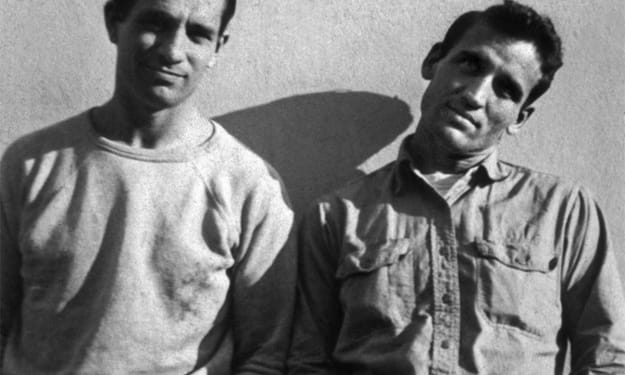
"On the Road" by Jack Kerouac
I first read this book when I was fourteen years’ old and I’m not going to lie to you, the very first time I read it - I didn’t actually enjoy it all that much. The reason was because it was written in a style that I was entirely used to and so, I didn’t end up understanding the entire drift of the novel. Instead, I put it aside for a while, hoping that someday I would figure it all out. And that’s exactly what happened. When I was sixteen years’ old, I saw the novel “On the Road” in a bookshop in my hometown and I was immediately taken back to those memories of trying to get into it at fourteen and failing miserably. The reason these memories were so pressed into my mind was because of the fact that it was just after my fourteenth birthday and I had a science test the day after completing the book. The copy in the shop window was absolutely beautiful and I went to buy it. Instead of just having the book, it had some explanatory essays I made use of as well and so, when I ended up re-reading it (well, I’ll call it reading for the first time, because it was the first time I understood it), I read the essays as well and referred to all this extra material for guidance. It slowly became one of my favourite books to re-read after that.
By Annie Kapur5 years ago in Geeks
A Filmmaker's Guide to: 20 Films of the 1970s
The 1970s were an interesting decade for film because we were moving more towards knowing our genres apart. In comparison to the 1960s and before, it was more difficult to tell whether your opinion was that "Rosemary's Baby" (1968) was a horror or a thriller because of its method of suggestiveness. But, by the time we get to the 1970s, I think through the way we get a very full-on approach to horror especially, nobody would even think to suggest that "The Exorcist" (1973) was a thriller film. We are very sure that is horror by the way in which we are now allowed to see exactly what's going on.
By Annie Kapur5 years ago in Geeks
A Filmmaker’s Review: The Confession Killer (Netflix, 2019)
“The Confession Killer” is a show about a serial killer whom we all know very well as being one of the most prolific killers in American History - Henry Lee Lucas. The question explored in this documentary is whether he was actually as prolific as he was made out to be. Confessing to over 200 murders and only having evidence of murdering under 10 people, this documentary seeks to clear up all the strangeness with the case that surrounded him. If you’ve paid attention to the Henry Lee Lucas case, you’ll notice that there was a big deal surrounding whether he was coaxed into confessing these random murders that kept appearing even though it was proven that when the murders happened, he must have been thousands of miles away. Various tickets from gas stations halfway across the country solidify the statement that Henry Lee Lucas probably didn’t kill most of these people at all. The documentary itself is filmed brilliantly. Alongside people who were actually at the case and hearings, people who worked on the prosecution, people who worked on the defence, people who released the story and even the DA who forced an investigation into the Texas Rangers only to get his ass handed to him in despair. This documentary turns over every single stone possible and shows us that not every law enforcement officer is there to look out for us. Some of them just want to close their open cases and be the hero of their time - at whatever cost necessary.
By Annie Kapur5 years ago in Geeks
"The Shadow in the Corner" by Mary Elizabeth Braddon
The first time I discovered this story I was about fifteen years’ old and I’m not going to lie, I had never even heard of Mary Elizabeth Braddon before. I had no idea when she lived, but I guessed by her name she might either be old by now or she was living in the 19th century and therefore, not alive anymore. I didn’t really bother to do any research on the author from when I discovered the story because of the way in which I discovered the story. It was a very rainy day at school and so, I took a usual trip to the library and there were other people there. Someone had read the Braddon story and placed it back on the shelf in the entirely incorrect place - near nonfiction. I picked it up to move it only to notice that the cover was a bit odd. I flipped the book, which was very thin, around to notice the blurb. I read the blurb only to scrunch up my face and wonder what it was all about. I took the book out later that day, read the whole thing during lunch and returned it to the library before the day was out. It was a short read. That’s why it was pretty much impossible for me to research the author before reading the text - it was during lunch and we were stuck indoors because of the rain. After I read it, however, I really did forget about it for some time until I encountered it in an anthology that same summer. That’s when I started to pay more attention to what the story was actually about.
By Annie Kapur5 years ago in Geeks
A Filmmaker's Guide to: 20 Films of the 1960s
The 1960s was the beginning of truly modernised cinema. Things were happening, stars were becoming superstars, cinema was getting bigger budgets by the minute and equipment was surely modernising with nearly all films of larger budget being made entirely in colour now. Things were looking up for film and Hollywood in an age where it was considered that the Golden Era was dead and gone with the 50s. The era of peace and love was here and the music of the psychedelic Beach Boys, the death of Buddy Holly and the crooning harmonica folk rock of Bob Dylan were about the set the world on fire. Hollywood was about to take the biggest u-turn this world had ever seen and film would never be the same again.
By Annie Kapur5 years ago in Geeks
A Filmmaker's Guide to: 20 Films of the 1950s
The 1950s are probably my personal favourite decade because of the fact there is such brilliant music from the era. Another thing about the 50s is that it is considered the true beginning of the Modern West. The Second World War is over, Hitler is dead and gone, American Production is up ten-fold and more and there are reparations all over the world. Peace and Love would come along in the form of the 1960s as a result of the Cold War (it isn't really a war, but it is a war - just nobody's fighting and just collecting random weapons).
By Annie Kapur5 years ago in Geeks
"American Notes" by Charles Dickens
Charles Dickens’ “American Notes” is a travelogue detailing a trip Dickens took to North America between the months of January and June in 1842. This was also part of the inspiration for his later writing of “Martin Chuzzlewit”. Charles Dickens and his wife sailed for North America just a month before Dickens’ 30th birthday and even though he was initially in good spirits, the journey on sea was no so positive. He would travel America by coach, by steamboat, and even writing a whole chapter on his journey on the American Railroad. Dickens could not forgive America for it having a continued use for slavery and comments about the treatment of black people in America as being incredibly horrid. He gives reasons and observations for major flaws in the society of the USA and makes analyses on everything from violence to prisons, hospitals and schools. Often enjoying the picturesque of the country, he comments on liking Boston the most in terms of sight and New York, it seems, the least.
By Annie Kapur5 years ago in Geeks
A Filmmaker's Guide to: 20 Films of the 1940s
By the 1940s, The Golden Age of Cinema was certainly well underway with the previous decade having done so well. During the Second World War, Hollywood would concentrate its efforts on making films to suit the darkness of the situation. Even Charlie Chaplin would go for dark humour this time.
By Annie Kapur5 years ago in Geeks
"Collected Maxims and Other Writings" by La Rochefoucauld
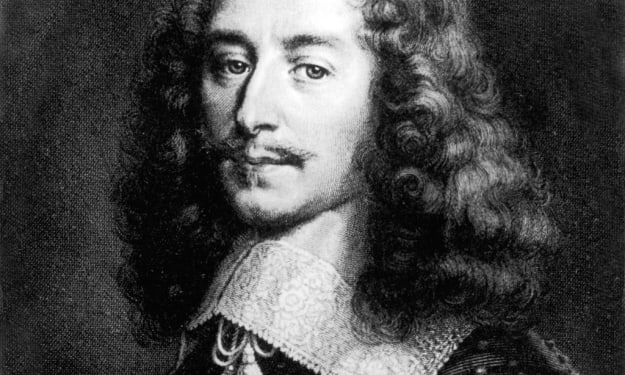
La Rochefoucauld was a French author and nobleman most famous for his memoirs and his maxims. Part of the literary movement of classicism, his maxims often dealt with very human struggles that can be related back to philosophies found in aspects of Plato, Socrates and even Xenophon and Zeno. There are three parts to his writings that are split accordingly and all include some sort of philosophical enquiry into his own times: there are the memoirs in which he details his own life alongside its importance or lack thereof, there are his maxims which are the most famous and famed for being existentialist questions interpreted as double edged swords of the human experience - relating both good and bad actions to the passion and the reason of human nature. Finally, there are the letters in which he corresponds often using aspects of his own philosophy to either rationalise or complicate his own feelings in a way that often only he can comprehend, leaving the correspondent imaginably quite baffled and introspective. Within the writing of the “Maxims” there has been frequent alterations made by the author during his life, a few made after his death and in translation and editing, the text has been again corrupted from its original source.
By Annie Kapur5 years ago in Geeks
A Filmmaker's Guide to: 20 Films of the 1930s
The Golden Age of cinema is synonymous with names such as Charlie Chaplin, Katharine Hepburn, Clark Gable and many more. The rise of Universal Studios through its Dark Universe of Horror films during the 30s resurgence was one of the greatest moments in horror film history. But, apart from horror, we had bigger budget films, bigger names being formed and some of the most memorable and loveable storylines in all of cinema history.
By Annie Kapur5 years ago in Geeks
The Filmmaker's Guide: The Classic and the Epic
Various films fall into the title 'classic' and yet when we look at the epic, there are only certain films that fall into it. When we talk about classic movies, normally we talk about the films of the Golden Age of Cinema. However, if we were to narrow it down to talking about epics of the time, we would be looking for some very rigid criteria. Be that as it may, the films we find within these two tick-boxes could not actually be more different. So how do we put a definition on it and what are we really looking for in this strange and vague set of categories?
By Annie Kapur5 years ago in Geeks