
Will AI Replace Artists? The Truth About Creativity in the Age of Machines
An Eye-Opening Words Read on AI, Originality, and the Future of Human Expression

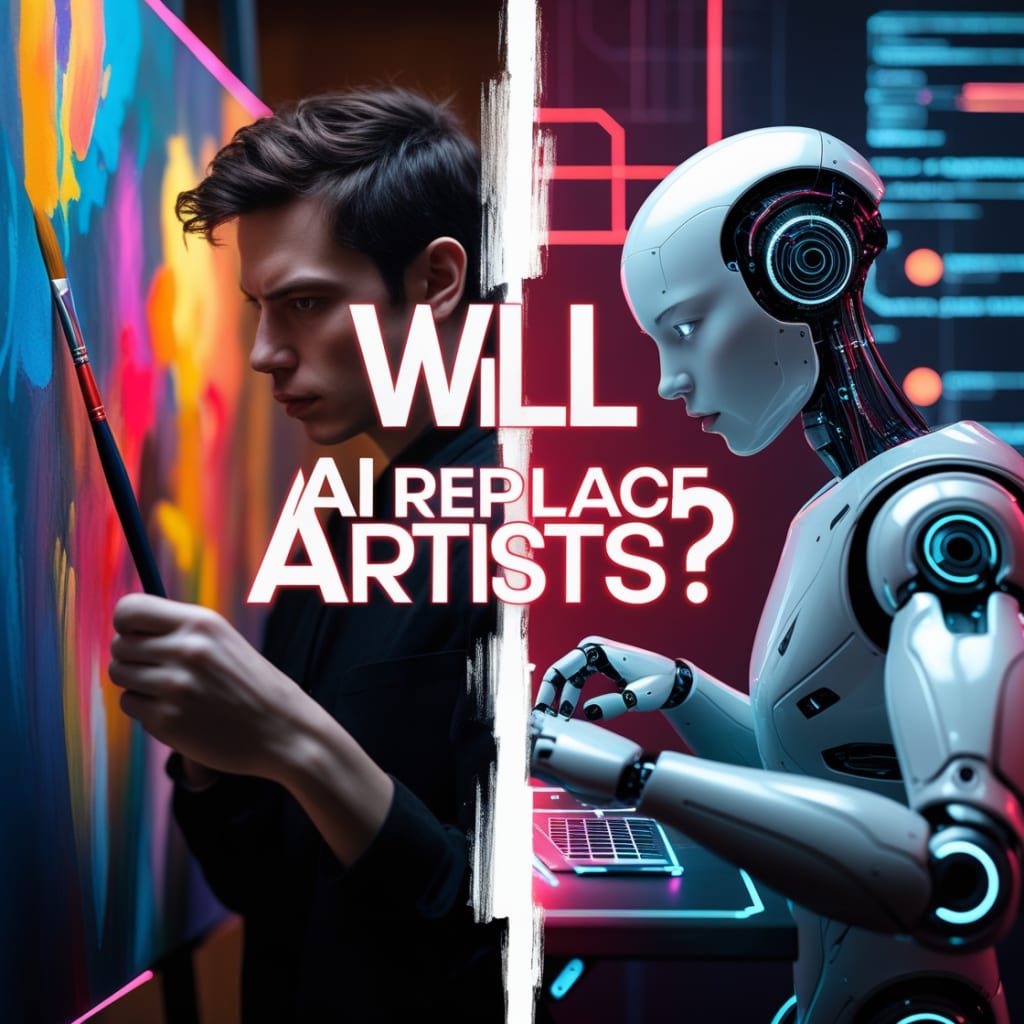
Artificial Intelligence is rapidly transforming creative industries.
From generating art and music to writing scripts and poetry, AI tools like ChatGPT and image generators have made it possible to imitate human artistic output with incredible speed and precision. But this rise of AI-generated content has triggered an important question: will AI make human artists obsolete?
To understand this debate, we must first consider how creativity itself is defined. Philosopher Jiddu Krishnamurti emphasized that much of our thinking is conditioned — shaped by the education and experiences we've had. Similarly, American author Mark Twain once stated, “There is no such thing as a new idea.” In his view, creativity is simply the reorganization of existing concepts — like a mental kaleidoscope.
With that in mind, how different is AI from us, really? AI is fed vast amounts of data — books, films, paintings, songs — and then it recognizes patterns to create new content. When asked to write a poem in Rabindranath Tagore’s style or produce a Ghibli-style image, AI mimics the patterns it has learned from thousands of examples. That might sound like imitation, but isn’t that exactly what we do in schools and art academies?
Human artists, too, are trained by studying the masters: Shakespeare, Van Gogh, Frida Kahlo, Tarkovsky, and more. Students analyze styles and recreate them, gradually building their own voices. When filmmakers cite Wong Kar Wai or Robert Bresson as inspiration, we celebrate it. Yet when AI does the same by learning styles and patterns, we call it imitation.
This contradiction brings us to the heart of the matter. If inspiration is valid for humans, can it also be valid for AI? And if AI is faster and more accurate, will it eventually outperform the very artists it imitates?
In some areas, this is already happening. Formulaic content — such as factory-style TV serials or repetitive action movies — relies heavily on templates. Directors reuse similar story arcs, camera angles, even music cues. This mechanical process is ideal for AI, which can analyze thousands of film scripts and generate similar or better content in seconds. Even Bollywood and Hollywood have relied on remakes and recycled material for years. With such predictability, AI becomes not just a replacement but an upgrade.
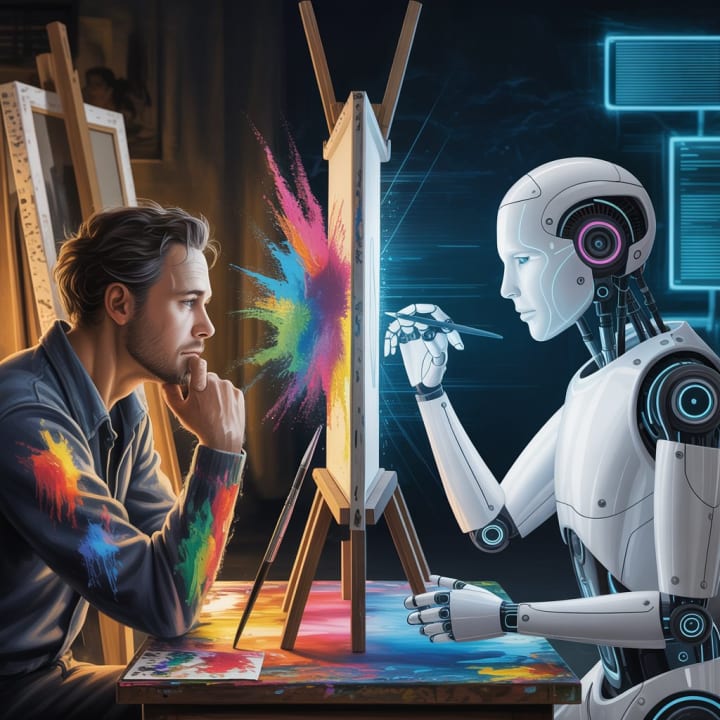
But there’s a line AI hasn’t crossed — and perhaps never will.
That line is personal experience. Take filmmakers like Anurag Kashyap or Dibakar Banerjee. Their films reflect deep personal journeys, societal critiques, and emotions born from lived experiences. Anurag’s experimental works like No Smoking or Dev D are unique not because of style alone, but because they embody his personal struggles and views. Similarly, Dibakar’s Oye Lucky! Lucky Oye! or Shanghai don’t follow formulas — they reflect an original, human perspective.
AI lacks that human depth. It can imitate, but it cannot feel. It cannot express heartbreak, hope, or revolution from personal pain. It cannot mourn a loss or celebrate a connection. And that’s where human creativity remains irreplaceable.
Still, it would be naïve to ignore the economic reality. Corporations, driven by profit, will adopt AI to cut costs. Writers, editors, musicians, even extras in films are already being replaced. The same way machines replaced weavers and craftsmen in the past, AI is poised to disrupt creative labor.
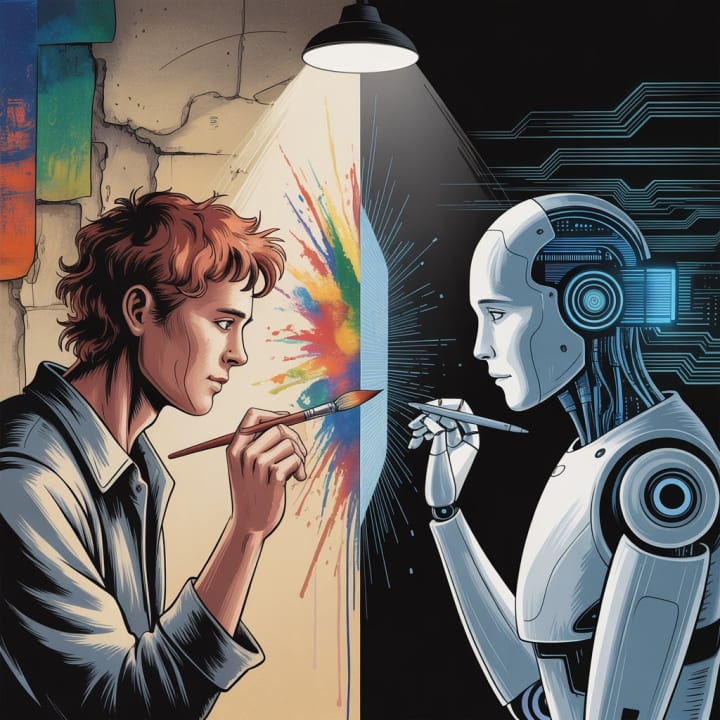
This isn’t a battle between AI and humans — it’s a battle between corporations and individual creators. While companies exploit AI to increase profits, individual artists can also use these tools to amplify their voices. AI can now help a writer illustrate their children’s book or assist a filmmaker with editing, research, or sound design — tasks that once required an entire team.
In fact, the most empowering perspective is to see AI not as a threat, but as a tool — much like a camera or a computer. Used wisely, AI can democratize creativity, allowing individuals to do what once took studios and agencies.
Authenticity, after all, comes from within. Filmmaker Jim Jarmusch once said, “Steal from anywhere that resonates with you… but always make it your own.” That’s the essence of true creativity. Let AI help you, not replace you.
So will AI replace artists? Not the true ones. It will replace those who repeat without reason, who mimic without meaning. But those who create from experience, from emotion, from insight — they will always stand apart.
The future of creativity isn’t man versus machine. It’s about how man uses the machine to tell stories that only a human can tell.
About the Creator
Zabih hijran
I'm from Nangarhar, Afghanistan, with a BBA in Economics from University Alfalah. Now an eCommerce entrepreneur, I leverage my business knowledge to run an online business, driven by innovation and a passion for global growth.
Keep reading
More stories from Zabih hijran and writers in Art and other communities.
Trading for Beginners: Your Essential Guide to Getting Started
Introduction In today’s fast-paced financial world, more and more individuals are turning to trading as a potential path to financial independence. With the rise of online platforms and mobile apps, trading has become more accessible than ever before. However, for beginners, stepping into the trading world can be both exciting and intimidating. Understanding the basics, managing risks, and developing a sound strategy are key components to becoming a successful trader. This article offers a comprehensive overview tailored specifically for beginners who are eager to learn the fundamentals of trading.
By Zabih hijran8 months ago in Education
What Voice Cloning Technology Means for Creators and Digital Identity
The rise of artificial intelligence has reshaped the creative landscape in countless ways, from AI-generated visual art to automated music composition, and one of the most intriguing frontiers today is voice cloning. With tools that let users clone your voice using only a short sample of speech, creators and digital communicators are discovering new ways to produce audio content that feels natural and expressive.
By aliyashahzadi6 days ago in Art


Comments (1)
The article makes a great point about how AI and human artists learn in similar ways. It got me thinking about how we judge AI's output. Just like human artists, AI is building on existing patterns. But we seem to have double standards. If AI can create faster and more accurately in some areas, should we embrace it or fear it? What do you think? It's interesting that AI mimics human styles. We train human artists by studying the greats, so why is it seen as imitation when AI does the same? Maybe we need to reevaluate our view of creativity and how it applies to AI. How can we better understand the role of AI in the creative process?