
Why Fiberglass Sculpture are Ideal for Custom Projects
Because of some reasons

Why Fiberglass Sculptures Are Ideal for Custom Projects
When creating a distinctive space—whether for a public park, commercial plaza, or private garden—the choice of material plays a decisive role. Among the many options available, fiberglass has become a widely used material for custom sculptures due to its balance of strength, flexibility, and long-term performance.

One of the most notable characteristics of fiberglass sculptures is their design versatility. Fiberglass can be molded into complex forms, fine details, and large-scale structures without losing structural stability. Compared with heavier materials such as stone or metal, fiberglass allows greater freedom in shaping curves, hollow forms, and intricate surfaces. This makes it suitable for custom projects where the design does not follow standard shapes or sizes.
Durability is another important factor. Outdoor sculptures are continuously exposed to sunlight, rain, temperature changes, and environmental stress. Fiberglass is resistant to moisture, corrosion, and UV exposure, which helps maintain both appearance and structural integrity over time. For long-term outdoor installations, this resistance reduces the risk of cracking, rusting, or rapid surface deterioration. In comparison, some traditional resin-based sculptures may show aging or brittleness when placed outdoors for extended periods.
Weight also plays a significant role in custom sculpture projects. Fiberglass is much lighter than stone, concrete, or metal, which simplifies transportation and installation. Large sculptures can be produced without the need for extremely heavy foundations or complex lifting equipment. This makes fiberglass a practical option for sites with structural load limits or locations where installation access is restricted.
Another advantage lies in surface finishing options. Fiberglass supports a wide range of surface treatments, including smooth painted finishes, textured coatings, and metallic effects. This allows the final sculpture to match different architectural styles or landscape environments without changing the underlying structure. Color customization and surface detailing can be adjusted according to the specific requirements of each project.
From a practical perspective, fiberglass is also relatively cost-efficient for custom work. While it may require careful mold-making and skilled fabrication, the material allows consistent reproduction of complex forms and large dimensions. Maintenance requirements are generally lower compared to materials that are prone to corrosion or weather-related damage, especially in outdoor settings.
Finally, fiberglass adapts well to project-specific constraints. Scale adjustments, internal reinforcement, and structural modifications can be made during the fabrication process to meet safety, installation, or environmental requirements. This adaptability makes fiberglass suitable for a wide range of custom sculpture applications, from small decorative installations to large public artworks.
Overall, fiberglass offers a combination of flexibility, durability, and practical performance that aligns well with the demands of custom sculpture projects. Its ability to support creative design while remaining stable in long-term use has made it a common material choice across many indoor and outdoor environments.
About the Creator
Shenzhen Ruiheng Crafts
https://www.craftsornaments.com/
Keep reading
More stories from Shenzhen Ruiheng Crafts and writers in Art and other communities.
Main differences Between Fiberglass Sculpture and Resin Sculpture
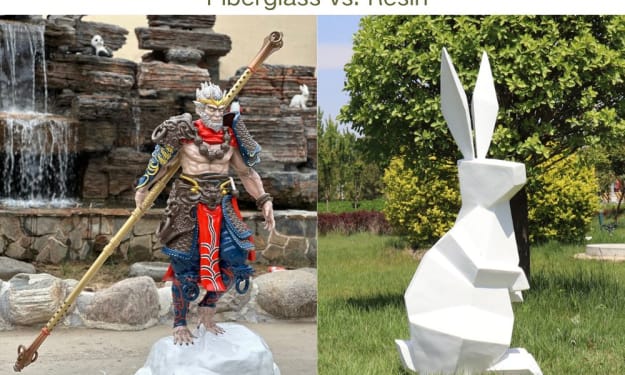
When planning custom sculptures, fiberglass and resin are often discussed together because both materials involve resin during production. Despite this similarity, fiberglass and resin are not the same material. In practice, their structural differences lead to clear distinctions in durability, scale suitability, and environmental performance, especially in outdoor applications.
By Shenzhen Ruiheng Crafts2 months ago in Art
'Till Death We Do Art
There would be nothing divine in this world without art. Nature may surpass the divine to all intents and purposes, but like everything it absorbs and is absorbed by, it remains here, stuck on the surface of this world, ever-present, physically bound to the universe.
By Avocado Nunzella BSc (Psych) -- M.A.P 21 days ago in Art
The Dress That Broke the Internet Was Gold and Nobody Could Agree on Why
She walked into the room and everything stopped. Not because of her confidence or music that was playing, though there was plenty of that. Everything stopped because of the dress. Floor-length, liquid, blazing gold, it caught every light in the room and threw it straight back.
By CurlsAndCommas5 days ago in Art
The Piggy Project
I’ve had so many names in this life I lose track of which ones were ever really mine and which ones I wore because someone needed me to. Some were handed to me before I had words to refuse them, before I knew what they meant, before I knew I could say no. Most weren’t meant to hurt. That doesn’t mean they didn’t leave marks. Marks that told me who I belong to, who I am by way of who claims me, recognizes me in the good and bad, who walks beside me.
By Fatal Serendipity5 days ago in Confessions



Comments
There are no comments for this story
Be the first to respond and start the conversation.