
Main differences Between Fiberglass Sculpture and Resin Sculpture
Mainly in Three Aspects

When planning custom sculptures, fiberglass and resin are often discussed together because both materials involve resin during production. Despite this similarity, fiberglass and resin are not the same material. In practice, their structural differences lead to clear distinctions in durability, scale suitability, and environmental performance, especially in outdoor applications.
At first glance, fiberglass sculptures and resin sculptures can appear almost identical. Both materials allow for smooth surfaces, accurate color finishes, and detailed forms. The key difference lies beneath the surface. Fiberglass sculptures are constructed by combining resin with layers of fiberglass cloth. These internal fiber layers provide structural reinforcement, allowing the sculpture to remain relatively lightweight while withstanding external stress and impact. This internal structure is the main reason fiberglass is commonly used for larger or structurally demanding projects.
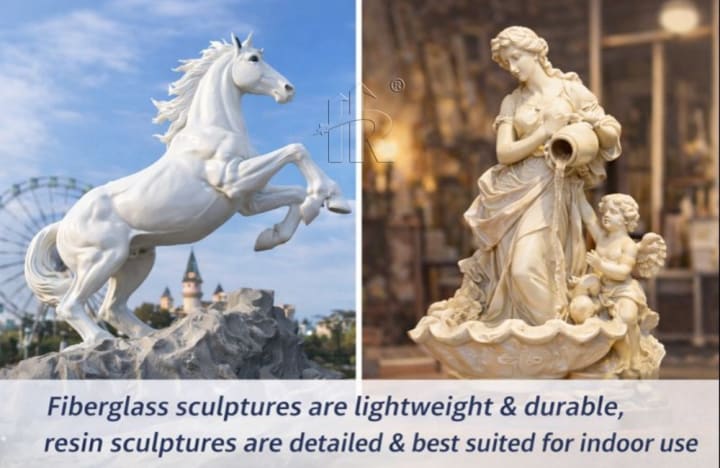
Resin sculptures, by contrast, rely primarily on resin itself, with little or no fiber reinforcement. This makes resin easy to mold and suitable for achieving fine details, particularly in smaller-scale works. For indoor sculptures, decorative pieces, or display items, resin performs adequately. However, as size increases, resin becomes more prone to cracking, deformation, and surface damage due to its limited structural support.
Scale is often the factor that highlights the practical difference between the two materials. Small sculptures and tabletop objects can function well when made from resin. When projects increase in size, the material must handle greater internal stress. Fiberglass distributes weight and pressure through its fiber layers, reducing the likelihood of structural failure. As a result, larger sculptures such as animal figures, themed installations, and landscape elements are typically produced using fiberglass rather than resin.
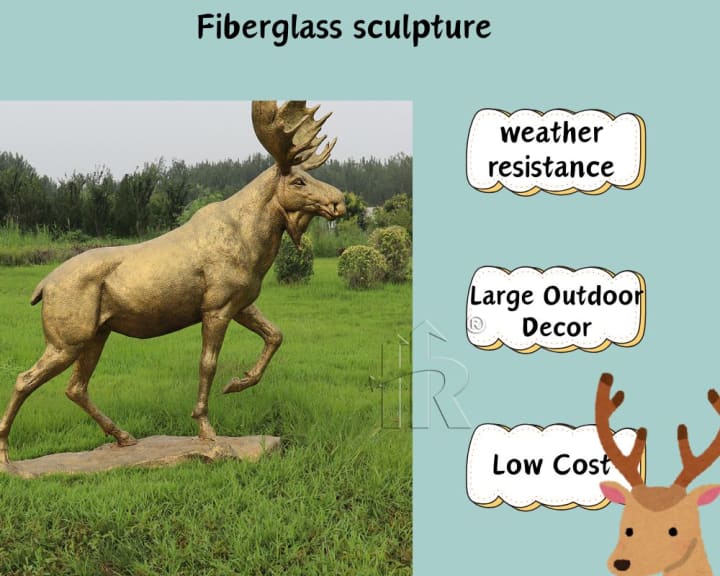
Environmental exposure further affects material performance. Outdoor conditions such as sunlight, moisture, humidity, and temperature fluctuations place continuous stress on sculpture materials. Fiberglass maintains structural stability under these conditions more effectively over time. Resin, while visually suitable, is more sensitive to temperature changes and is generally better suited for indoor or semi-protected environments rather than long-term outdoor placement.
Cost considerations also differ depending on project scale. Resin sculptures are often less expensive for small items due to simpler production requirements. For larger works, resin carries higher risks related to manufacturing defects, transportation damage, and long-term maintenance. Fiberglass may involve higher initial production complexity, but it generally results in fewer structural issues over time.
Choosing between fiberglass sculpture and resin sculpture depends on specific project requirements, including size, installation environment, handling conditions, and expected lifespan. Fiberglass is typically more appropriate for large-scale or outdoor sculptures, while resin remains suitable for smaller, detailed, and indoor applications where structural demands are lower.
About the Creator
Shenzhen Ruiheng Crafts
https://www.craftsornaments.com/
Keep reading
More stories from Shenzhen Ruiheng Crafts and writers in Art and other communities.
How to Clean and Maintain Outdoor Stainless Steel Sculpture
A meticulously crafted stainless steel sculpture can transform the ambiance of any space, adding a touch of sophistication, whether in corporate plazas or private gardens. However, like any valuable artwork, maintaining the luster and structural integrity of a stainless steel sculpture requires regular care. Neglecting maintenance can result in dulling, corrosion, and even damage over time. Understanding the correct cleaning and maintenance methods will help preserve its beauty and extend its lifespan.
By Shenzhen Ruiheng Crafts2 months ago in Art
'Till Death We Do Art
There would be nothing divine in this world without art. Nature may surpass the divine to all intents and purposes, but like everything it absorbs and is absorbed by, it remains here, stuck on the surface of this world, ever-present, physically bound to the universe.
By Avocado Nunzella BSc (Psych) -- M.A.P 20 days ago in Art
The Taylor Swift Paradox: Breaking Down the Critiques Behind the World's Biggest Pop Star
The Taylor Swift Paradox: Breaking Down the Critiques Behind the World's Biggest Pop Star Introduction Taylor Swift is undeniably the defining pop culture icon of our era. With her record-breaking Eras Tour, massive economic influence, and fiercely loyal fanbase, she has achieved a level of superstardom rarely seen in modern history. However, with unprecedented fame comes intense scrutiny. Despite her monumental success, Swift faces a growing wave of criticism regarding her artistic choices, public persona, environmental impact, and business practices. For some, these factors have led to "Swift Fatigue," causing them to distance themselves from her work. Here is a comprehensive breakdown of the most prominent critiques leveled against the pop phenomenon.
By Nivard Anna5 days ago in Art




Comments
There are no comments for this story
Be the first to respond and start the conversation.