
Where Horses Run Free
In the valley of wind and wheat, life rode gently — but with purpose.
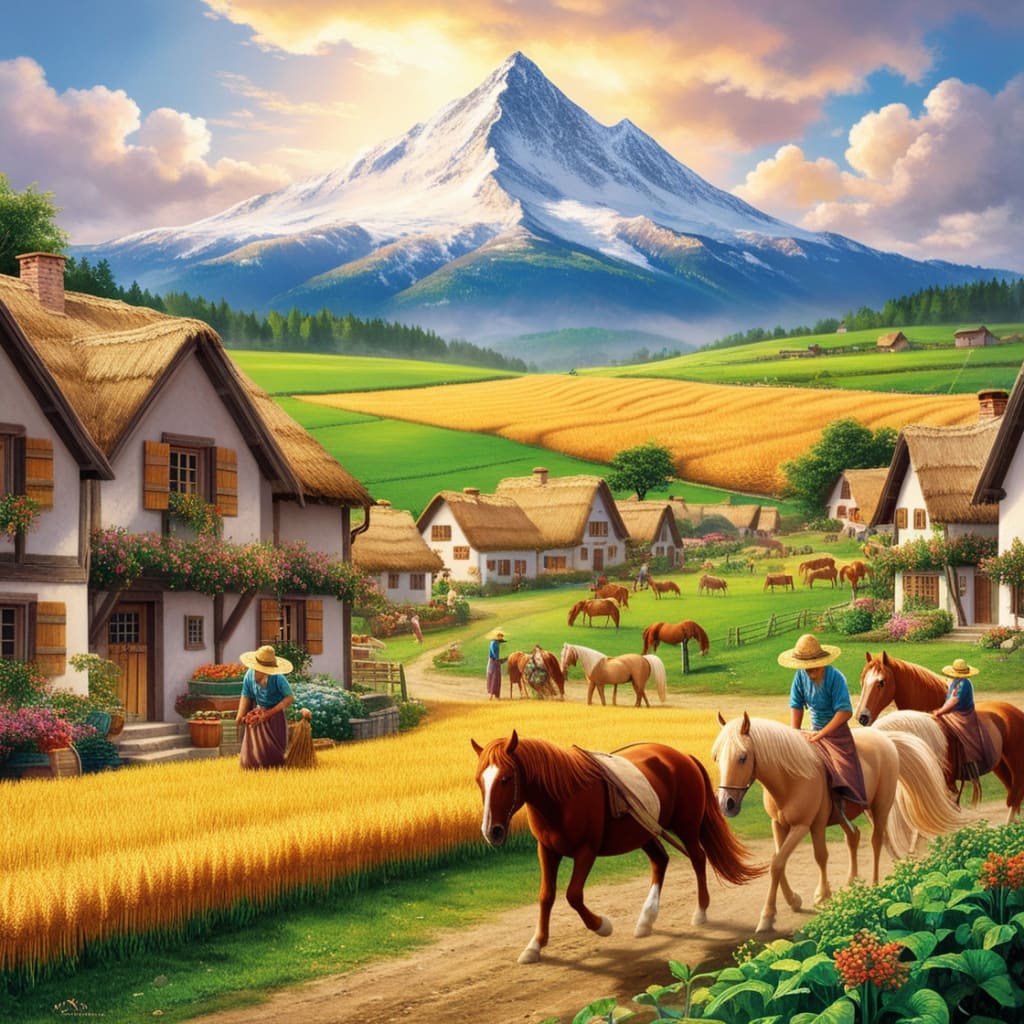
In the lush, rolling countryside of Mehrabad, time didn’t race like it did in the cities. Here, it flowed slowly, like the small river that curved through wheat fields and orchards. It was a land of golden mornings, the scent of wet earth, and the rhythm of hooves echoing through the valley.
Mehrabad was a village not marked on many maps, but its heart beat louder than any city. Men and women worked with their hands, their hearts, and their histories. Children ran freely, barefoot and joyful, weaving between buffaloes and haystacks, chasing butterflies instead of screens.
And among them was Asfand, a 20-year-old boy who lived with a spirit far older than his age.
🐴 The Boy and His Mare
Asfand was known for many things—his strength, his kindness, and his unwavering love for his mare, Surraiya. She was a proud chestnut horse with a white star on her forehead and a spirit just as wild as his. Together, they’d ride before the world awoke, as though they were carrying the morning on their backs.
He didn’t ride for show. He rode for the land.
Every morning, Asfand and five other young men from the village rode across the edges of the wheat fields. They checked for broken fences, wild animals, or blocked irrigation lines. They galloped by the riverbanks and slowed near the cattle sheds.
Their rides weren’t just duty—they were ritual, legacy, and love.
Old villagers would sit on their woven charpais, sipping tea and smiling as dust rose in the distance.
“These boys,” the elders would say,
“carry not just crops on their shoulders—they carry stories.”
🌾 The Rhythm of the Fields
As the sun climbed higher, Mehrabad blossomed into action.
Women gathered at the wells, drawing water and singing songs passed down from generations.
Men plowed the soil with oxen, wiping sweat with pride.
Grandmothers cooked roti on clay stoves, and their laughter mixed with the aroma of ghee.
Children helped too—feeding chickens, collecting firewood, or simply carrying water pots with wobbling steps.
Life in Mehrabad wasn’t easy. It was full of effort and simplicity. But it was honest, joyful, and full of meaning.
🏇 A Day That Changed Things
One spring morning, something unusual happened. A group of city visitors arrived—photographers, filmmakers, and bloggers, seeking the "real village life."
They were strangers in crisp clothes, surprised by the lack of Wi-Fi, yet fascinated by the richness of routine.
They watched Asfand and the riders mount their horses at dawn. One woman whispered, “This feels like a movie.”
Later, they followed villagers into the fields, capturing photos of women planting rice while humming lullabies, and old men sharpening tools with stories in their eyes.
When asked how they survived without modern luxuries, Asfand simply smiled.
“We live with the land.
It gives us food, light, strength — and silence.
We don't survive...we thrive.”
🌅 The Sunset That Stays
On the third evening, the visitors were invited to the village square. There was a bonfire. Folk music. Hot lentils, naan, and laughter under the stars.
An elder rose and said:
“You came to find beauty. But beauty was always here — in the dust, the grain, the gallop of a horse.”
When the visitors left, their hearts were fuller than their cameras.
💛 The Legacy of Mehrabad
Years passed, but Mehrabad never faded.
Asfand later opened a riding school for village youth, teaching them not just how to ride horses — but how to carry tradition. He helped bring solar lights, repaired old wells, and made sure no child in Mehrabad ever dropped out of school to carry buckets instead of books.
And every morning, as the sun rises behind the fields, the sound of hooves returns — reminding the valley that the spirit of its people still runs free.
🌻 Moral of the Story:
In a world rushing to chase comfort, some places still choose connection.
About the Creator
Keep reading
More stories from Abuzar khan and writers in Art and other communities.
'Till Death We Do Art
There would be nothing divine in this world without art. Nature may surpass the divine to all intents and purposes, but like everything it absorbs and is absorbed by, it remains here, stuck on the surface of this world, ever-present, physically bound to the universe.
By Avocado Nunzella BSc (Psych) -- M.A.P 23 days ago in Art
The Great Museum Scandal: Half of the Artworks in French Museums Found to Be Fake
France is home to some of the most famous museums in the world, attracting millions of visitors each year who come to admire priceless works of art and historical artifacts. However, a recent investigation has sent shockwaves through the art world after suggesting that a significant number of artworks displayed in certain French museums may actually be fake.
By Irshad Abbasi a day ago in Art



Comments
There are no comments for this story
Be the first to respond and start the conversation.