
What Are My Most Profitable Finds At Auction?
Anything You Can Find At An Auction That Will Inspire Others Is Definitely Worth Bidding For


‘Where there is ruin, there is hope for a treasure’ — Rumi
Every day I awake with new anticipation of the treasure I may find at Auction. So, gather around my lovelies, and see the treasures I have rescued from the uninitiated.

What a terrible photograph the above image is.
This necklace was listed at £45.00 — I was the only one bidding, perhaps everyone else got scared off by the colour of the pearls. I paid £75.00 (including Auction Fees and Postage).
In my defence, I thought, ‘Well, if the pearls are horrible, the diamond clasp will be worth that alone’.
This is one of the photos I listed on eBay:
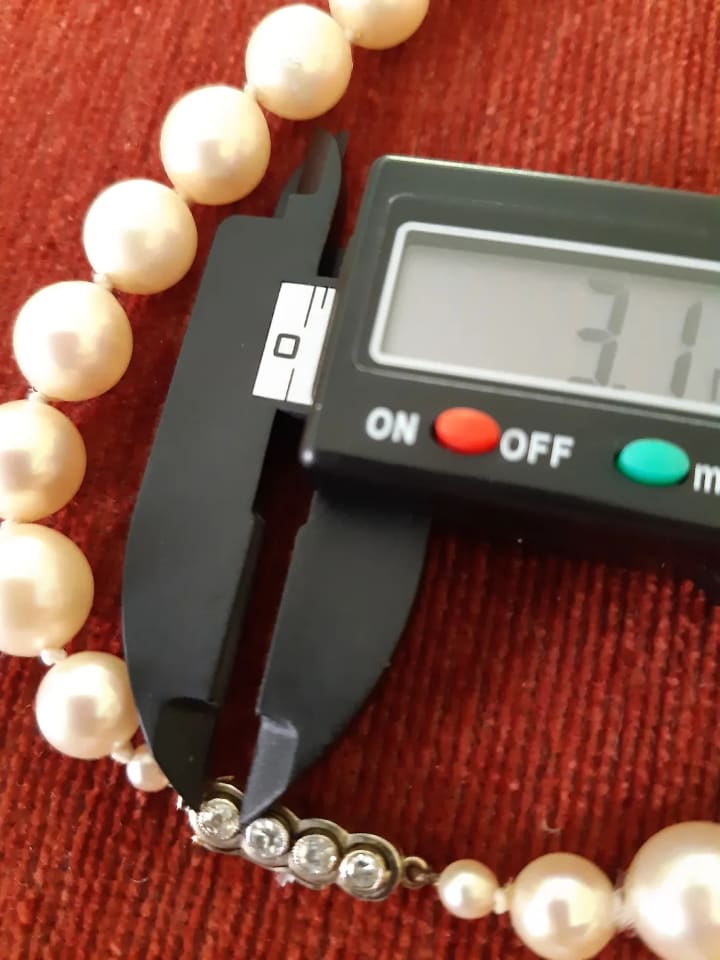
The pearls were stunning South Sea Pearls in a Light Gold, Champagne Shade, with half a carat of diamonds, set in a 14 carat Gold Clasp — Hammer Price: £75.00 — (HOW MUCH!) I hear you cry.
Final selling price on eBay was £650.00.
Pearls can be tricky. How do you tell the real thing from fakes?
The first thing is the weight, are they reassuringly heavy? Next, if you have a pair of measuring callipers, measure each pearl; each will be a slightly different size if they’re real pearls. Then, with a jeweller’s loupe or a pair of magnifying glasses, look for imperfections. Orange peel on the surface or small blemishes confirm their authenticity.
Now, find a luxury box to complete the presentation, making them look special, and Voila!
Selling Antique Jewellery: Identify and market exquisite Antique Jewellery for profit. Written by Jayne Austen
The Bible I use to help me navigate the complex world of antique jewellery is The book: Selling Antique Jewellery: Identify and market exquisite Antique Jewellery for profit. Written by Jayne Austen, and available on Kindle, costs $5.99 (US) £4.46 (UK)
The book guides the reader to identify real quality antique jewellery to sell online for profit.
Describing the historical periods and typical jewellery produced during that time. With beautiful colour photographs from the Author’s private collection, it’s a guide to help you navigate the complex world of antique jewellery.
The book describes the history and various eras, confirming the dates of Monarchs ruling at the time. Detailed descriptions of gems typically used and their settings.
The brilliant thing with Kindle is that you don’t have to buy the entire book; you can buy just a couple of pages, increasing your knowledge — and hopefully your BANK ACCOUNT!
My search is always narrowed to the topics I’m confident about, for to stray into unfamiliar territory is scary beyond words. Although it’s also very easy, it's costly to be misled by photographs and unclear descriptions.
People Seldom Believe Me
The following ‘Job-lot’ of costume jewellery cost me £22.00 on the hammer, and £35.00 with fees and postage.
To identify gold in the first sorting, I use a fridge magnet. If the item sticks to the magnet, then it’s not a precious metal. Then, with a Jeweller’s Loupe, or pair of magnifying glasses, I try to find the hallmark.
Gold-plated items also don’t stick to the magnet; that’s why it’s really important to find the hallmark.
It’s not obvious, but under the pair of Mother of Pearl Leaf earrings, in the centre of the photograph, there’s a 9-carat gold necklace (next to the silver bracelet).
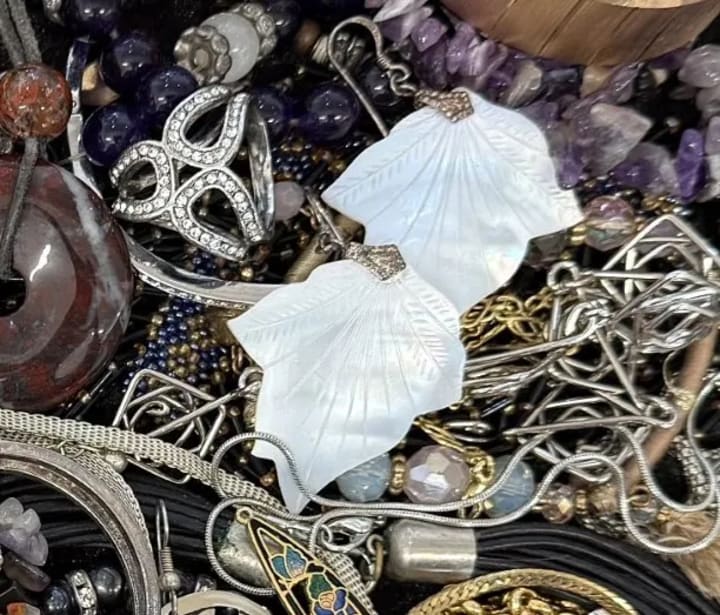
On this particular necklace, the hallmark was minuscule. The solution was to photograph it with my iPhone and then enlarge it until the hallmark was clear and readable.

From the same ‘Job-lot’, I also found a white gold diamond ring. The ring box is also vintage — just to add to the appeal.

If you put yourself in the shoes of the Auction House, they have hundreds of lots to deal with, from house clearances and individuals selling the ‘Family Silver’. It’s no wonder the porters and auction staff miss the occasional GEM.
Since the pandemic, my expertise has developed, and if I like something but am unfamiliar with the provenance, I research the item to improve my knowledge.
It’s not usual for me to put a ‘watch’ on the items, because I don’t want to alert other bidders about a fabulous bargain. On the occasions I have, the price has soared — now I make a note in my diary of the item number, with the name and date of the auction.
If you’re bidding online, don’t forget to register for the auction; otherwise, you may be too late and be unable to bid. Registration usually stops before the auction goes live.
There really is no need in this day and age to go out stealing or shoplifting if we can find treasures so easily.
Thank you for reading to … The End
About the Creator
Pamella Richards
Beekeeper and lover of the countryside. Writer, Gardener and Astrologer
Keep reading
More stories from Pamella Richards and writers in Art and other communities.
'Till Death We Do Art
There would be nothing divine in this world without art. Nature may surpass the divine to all intents and purposes, but like everything it absorbs and is absorbed by, it remains here, stuck on the surface of this world, ever-present, physically bound to the universe.
By Avocado Nunzella BSc (Psych) -- M.A.P 17 days ago in Art
How to Add Texture to Your Digital Coloring
First things first, the amazing artist who created this adorable hippo page and whose gel coloring tutorials helped me create this one by adapting the techniques to digital formatting: Anna Rose. Go, love her. Join her coloring club and come back.
By Maia Gadwall the metAlchemist5 days ago in Art




Comments (1)
I shall bear these tips in mind we're looking for jewelry!