
Watching Megalopolis
An art film worth seeing
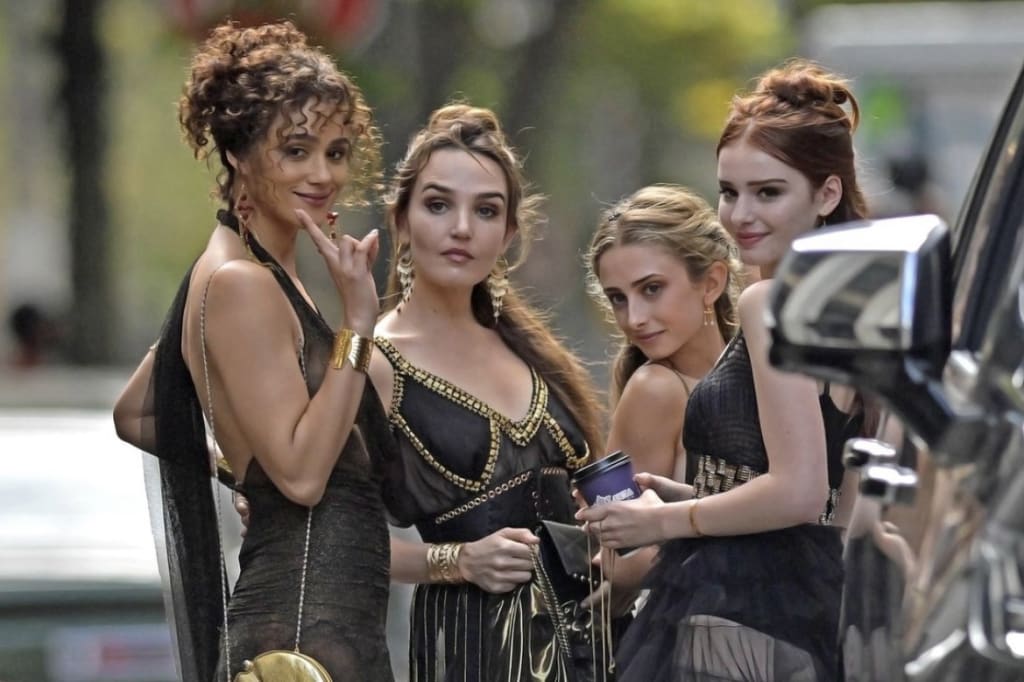
I have fallen out of the habit of going to the movies. Part of the reason is that I always enjoyed going with others. Last summer my granddaughter took me to Barbie. She says I laughed louder than anyone in the theater. Apparently there were moments when you could have heard a pin drop, but I was snorting and guffawing.
And then Megalopolis came along--a director I admire, a longterm effort. I knew I would not be overwhelmed by people wanting to go with me to watch Megalopolis. Reviews were mixed at best. The movie had been a tough sell to distributors; most turned it down. But still, Francis Ford Coppola is a fine director, and a project stretching over more than forty years... surely worth a viewing, I thought. I tried my daughter first: "I know you are a different generation but I think you could use a break and maybe your fiance who is a designer would like the visual elements, the cinematography." She told me I was right the first time. Different generation. A film about the decline of modern civilization was not for her. Next two friends my age. No thanks, Paul. News media predicted a box office disaster. 120 million of the director's own money spent and perhaps a 5 million dollar return the first weekend.
Other friends I approached found reviews. That dissuaded them. I don't usually read reviews before going to film because I am afraid of spoilers. One discerning, intelligent friend checked out reviews and advised me to "save my money."
All of the blowback got me thinking. I wondered about the music. I did not know the composer, and he was not without controversy. He had taken credit for music that he did not write, and some of his commissions had been cancelled because he was too slow fulfilling them. Also I understood he had been hired to write an underscore. Composers who are commissioned for operas or large works do not normally write underscores. An underscore needs to be felt, not heard. Composers like this one usually want to be heard. Years ago Howard Shore told my class that if the audience was paying attention to his music he was not doing his job as an underscore composer. In more recent years he has been called on to write some musical cues that are more prominent, in the open, for instance in Lord of the Rings.
Coppola has a tendency to be an auteur, the kind of director that controls every aspect of the production. Other directors understand film to be a collaborative art. Those like Coppola, or Kubrick, tend to enforce their idea on every element. The audience can feel that it is at the mercy of the director's viewpoint on everything.
I started to ask myself what I expected to get out of the film. Film directors are not expert historians. The Gangs of New York made real historians cringe. I don't go to the theater to learn what my political or social opinions ought to be--I arrive at those on my own. I don't go to be lectured on morality. I go for an interesting story, interesting characters, supportive music, and especially for strong cinematography. I decided that such a good director would have come up with good cinematography in forty years of work. It was the cinematography that enticed me for Megalopolis. My business associate pointed out that if I didn't like what I saw I could always write a crabby grandpa review and that would make me happy. She had a point. With that in mind, I went to the theater.
It was a Sunday afternoon showing. I think there were five of us in the theater. Three of the audience were young. I wondered if I should warn them about the generational thing, but I thought maybe they were seeing the show on points.
As advertised, the story was about the decline and fall of great cities, a blend of Ancient Rome and New York City. Coppola is not the first to have made that comparison. The protagonist is a visionary urban designer named Caesar (actually Cesar), played by Adam Driver. He has high flown literary and philosophical ideas, and he can make time stop at his command. We get glimpses of his designs and his designing process, and these are exciting.
He is opposed by Giancarlo Esposito playing Cicero, the mayor's daughter. The moral touchstone is the mayor's daughter Julia, played by Nathalie Emmanuel. American moral-philosophical films are usually structured along the lines of stage plays: the point is the pivoting of the audience feelings between one side and the other.
I'm not going to spoil the ending. The comparisons between New York and Ancient Rome generally play well. Some of the Shakespeare quotes, especially the famous Hamlet soliloquy, seemed misplaced to me, not in the right movie.
I did not hear the underscore. In fact I'm not sure there was much of it. I did enjoy everyone's favorite passage from Beethoven's 7th Symphony. Did I always know who to cheer for? Yes. Cesar is a widower still in love with his wife. I am too, so he had my vote right at the beginning. In fact director Coppola lost his wife earlier this year, so I gladly cut him some slack during the "To be or not to be" speech. And as for Julia, I cheered for her throughout.
I do recommend this movie to you. Yes it is an art film, not a blockbuster, and there is nothing at all wrong with that.
About the Creator
Paul A. Merkley
Mental traveller. Idealist. Try to be low-key but sometimes hothead. Curious George. "Ardent desire is the squire of the heart." Love Tolkien, Cinephile. Awards ASCAP, Royal Society. Music as Brain Fitness: www.musicandmemoryjunction.com
Keep reading
More stories from Paul A. Merkley and writers in Art and other communities.
Villa Schifanoia, Graduate School of Fine Arts
Mark Twain had two false starts in writing his autobiography. Both times he tried to set the events of his life out in chronological order, and both times he found the results false, and could not bear them. Then he took another tack. He allowed the events of the day to trigger memories, and he wrote about those memories, not ordering his work by the chronology of his life, but by the happenstance of what came up for him on that day, whether he read it in a newspaper, or came across it otherwise.
By Paul A. Merkleyabout a year ago in Art
'Till Death We Do Art
There would be nothing divine in this world without art. Nature may surpass the divine to all intents and purposes, but like everything it absorbs and is absorbed by, it remains here, stuck on the surface of this world, ever-present, physically bound to the universe.
By Avocado Nunzella BSc (Psych) -- M.A.P 20 days ago in Art
The Beauty of Nature
Once in a small village called Greenvale, surrounded by lush forests and towering mountains, lived a young girl named Lila. She was curious and adventurous, always exploring the beauty of nature that surrounded her. Lila had a special bond with her best friend, a boy named Kai, who shared her love for the outdoors. They spent countless hours wandering through the woods, discovering new plants, flowers, and hidden streams.
By Hamad Afridi 3 days ago in Art
📢 Raise Your Voice Thread: 03/05/2026
Our “Raise Your Voice Threads” are hosted most alternating Thursdays at 12PM ET to offer creators more avenues to uncover exceptional stories on Vocal. As we are continuously searching for fresh creators and inspiring stories, this thread provides an opportunity to exchange and discuss the stories that have moved and motivated us on Vocal.
By Raise Your Voice by Vocal3 days ago in Resources



Comments (1)
Nice